REVIEW · PARO
Bumdrak Trek – Tiger’s Nest Monastery Overnight Trek
Book on Viator →Operated by Bhutan Swallowtail Tours & Travels · Bookable on Viator
Tiger’s Nest shows a different face on this trek. The Bumdrak Trek in Paro is a short overnight hike with one night camping in the wild, plus sacred cave exploring tied to the Trek of the Thousand Dakinis idea—so you get big spiritual vibes without a week of trail time. I especially love how you reach views of Taktsang Monastery from a top perspective that most standard day-hike routes don’t give you.
I also like that this trip is set up for comfort and morale on the trail: camping equipment, all trekking gear, and a trekking chef are included, so you’re not doing logistics while your legs are burning. One drawback to plan for: you need strong fitness and the hike includes serious stair effort, and conditions matter—this experience requires good weather.
In This Review
- Key highlights you’ll actually feel on the trek
- Why the Bumdrak Trek feels different from the usual Tiger’s Nest hike
- Getting to Paro and setting your hiking pace from the start
- Stop 1: Paro Taktsang—how you see it when you hike for it
- Overnight in the wild: camping that’s planned, not improvised
- Stop 2: Paro Airport bird’s eye view—why the second viewpoint matters
- Price and logistics: what $850 buys you on this 2-day trek
- Fitness, stair reality checks, and weather rules you can’t ignore
- Who should book the Bumdrak Trek (and who should reconsider)
- Should you book Bumdrak Trek? My call
- FAQ
- Where is the Bumdrak Trek based?
- How long is the trek?
- What time does the experience start?
- Does this trek include an overnight?
- What are the key stops on the trek?
- What’s included in the price?
- What’s not included?
- Is this a group tour or private?
- Do I need special fitness for this trek?
- What happens if weather is poor?
Key highlights you’ll actually feel on the trek
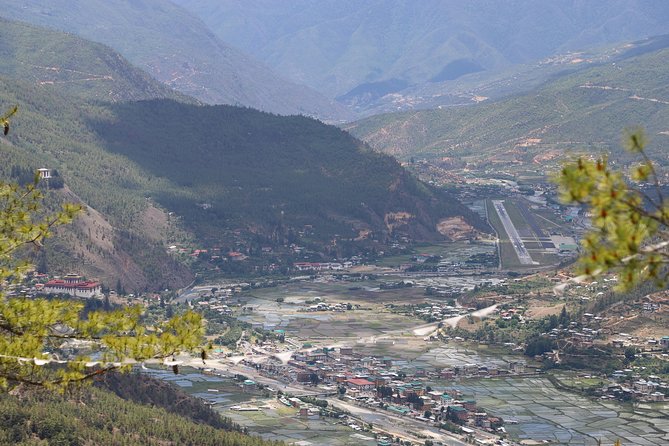
- A rare Taktsang perspective from higher up
- One night of wild camping with gear and chef support
- Sacred caves and the Thousand Dakinis theme
- Meals built in (breakfast, dinner, and lunch twice)
- Private group tour with pickup and a mobile ticket
Why the Bumdrak Trek feels different from the usual Tiger’s Nest hike
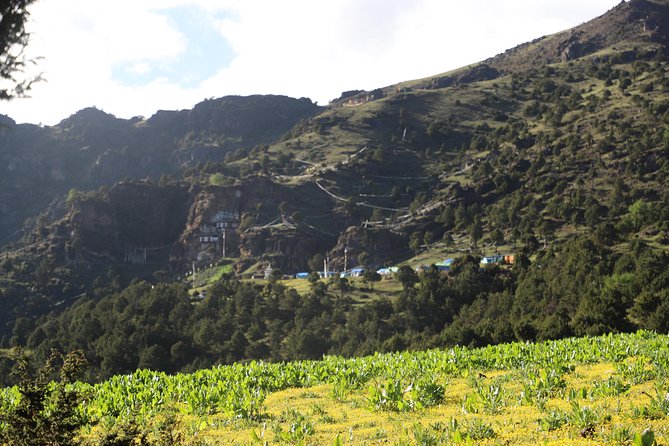
This is still about Tiger’s Nest. But it’s not the same show.
The Bumdrak Trek is built around getting to Taktsang from a less typical angle. Instead of just walking up to the monastery the way most visitors do, you hike your way to a top view that changes the whole feeling of the place. From above, the cliff-edge drama makes more sense. You also get the sense that you earned the view, not just arrived at it.
Then there’s the sacred-cave element. The trek is linked with the idea of the Trek of the Thousand Dakinis, celestial female beings. That matters because you’re not only doing steps—you’re moving through spaces that feel intentionally placed. The route includes opportunities to explore holy caves, which adds a quieter, more reflective rhythm to the day.
Practical takeaway: if you’ve already seen Tiger’s Nest from the common route (or you’re tired of the same photo spot), this is the kind of detour that feels worth the effort.
You can also read our reviews of more tours and experiences in Paro.
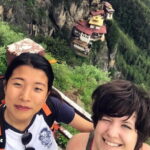
Getting to Paro and setting your hiking pace from the start
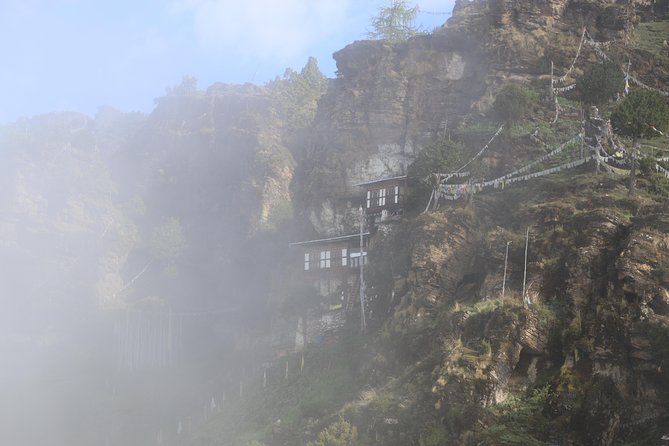
Your day begins at 8:00 am, and pickup is offered. That helps more than it sounds. In a place like Bhutan, time on the clock is time in the valley—less time wasted means more time hiking while conditions are still favorable.
This is a private tour, so you’re not sharing the schedule with a random crowd. That’s important for a short trek. In two days, you want the group to move like a unit—especially on steep sections.
You also have a mobile ticket, which usually simplifies paperwork on arrival. And because this company includes a trekking chef and trekking equipment, your energy stays on the main job: walking uphill steadily and enjoying the trail rather than managing gear failures.
One more reality check: the tour requires strong physical fitness. That doesn’t mean you need to be an athlete. It means you should be comfortable with sustained climbing and the mental grind of repeated stairs.
Stop 1: Paro Taktsang—how you see it when you hike for it
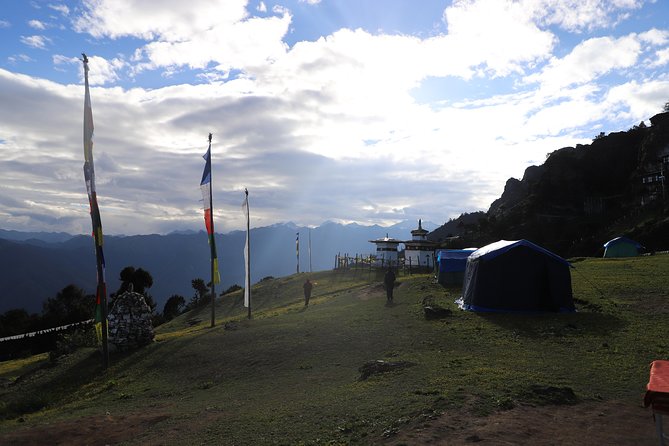
Stop 1 is Paro Taktsang. That’s the big target, but the “how” is the payoff.
On this trek, you’re working your way toward a view of the monastery that you likely won’t get from the usual visitor route. Expect the feeling of approaching the cliff area in stages—each turn gives a slightly new angle, and the higher you go, the more Taktsang stops looking like a landmark and starts looking like a structure pinned to the world.
This is also where the spiritual framing shows up. The trek is described as one that lets you explore sacred and holy caves connected with the Thousand Dakinis theme. Caves are a different kind of stop: less about sweeping scenery, more about atmosphere. If you like places that feel intentional and old, you’ll probably enjoy this part more than just another viewpoint.
Guide support is a key ingredient, too. In past similar Tiger’s Nest hikes arranged by this provider, guides like Pema and Lobsang Nima have been praised for being informative on the walk up and then thoughtful once you reach the monastery area. You should expect explanations to be part of the experience, not an afterthought.
Practical advice for Stop 1:
- Move slower than you think you need early on.
- Save energy for the final push, because the viewpoint payoff comes near the top.
- Bring a steady attitude. When your legs get cranky, your plan should be simple: one step, then the next.
Overnight in the wild: camping that’s planned, not improvised
The Bumdrak Trek includes one night camping in the wild, and that’s the heart of why it feels like a trek instead of a long morning walk.
Because camping equipment and all trekking equipment are included, you’re not trying to rent or assemble gear at the last minute. The inclusion matters because camping setups can make or break morale. If you have warm layers, a functional setup, and a calm plan, you’ll sleep better and wake up ready for the second day.
Dinner is included—Dinner 1—and you’ll also have coffee and/or tea with snacks two times. That kind of trail rhythm matters. It keeps the day from turning into pure grind. The longer the climb, the more you need small moments of warmth and routine.
Also: a trekking chef is included. That’s a big deal in a remote context. You’re not just “fed,” you’re cared for in a way that lets you stop thinking about logistics. It’s one of those quiet advantages that can change your whole mood during the hike.
What to expect emotionally: overnight in the wild tends to make even a short trek feel long enough to create memories. You’ll come back with that specific trek feeling: you were away from the normal flow of sightseeing, even though it’s only two days.
Stop 2: Paro Airport bird’s eye view—why the second viewpoint matters
After the main climbing day and the overnight, you get Stop 2: Paro Airport bird’s eye view point. This is a classic Bhutan bonus: the second stop often gives you a way to “reset” your eyes after the monastery cliff drama.
A bird’s-eye view point tends to do two things:
- It shows the area in context—roads, valleys, and how Paro sits in the bigger geography.
- It turns your hard work into a wider scene, not just one featured monument.
This is especially useful after a day of close-up steep terrain. Once you’ve spent hours focusing on footing and pace, a higher wider view can feel like a deep breath.
Practical note: because the trip runs on a 2-day schedule (approx.), you’ll want to keep your energy for this viewpoint instead of burning it all in the first hours. If you’ve ever reached a viewpoint exhausted and only half enjoyed it, you already know what I mean.
Price and logistics: what $850 buys you on this 2-day trek
The price is $850, and for a private 2-day trek in Bhutan, you’re paying for more than “a guide walking with you.”
Here’s what you’re getting in the package:
- Pickup is offered
- Camping equipment and all trekking equipment are included
- A trekking chef is on the trek
- Meals: lunch twice, dinner once, breakfast
- Coffee/tea and snacks twice
- Mobile ticket
So yes, $850 isn’t cheap. But it can be good value if you compare it to what it takes to assemble camping gear, arrange meals, and coordinate experienced logistics yourself (and in Bhutan, “yourself” is rarely smooth).
You’re also buying less stress. On a short trek, stress reduction is not a luxury—it affects your pace, your enjoyment, and how you remember the trip.
One small thing: alcoholic beverages are not included. If you want celebratory drinks, you’ll need to plan separately.
Fitness, stair reality checks, and weather rules you can’t ignore
Let’s talk about the part that determines whether you enjoy this trek: effort and conditions.
First, the tour says travelers should have a strong physical fitness level. That lines up with the kind of walking this area is known for—long uphill climbs and plenty of stairs.
Second, good weather is required. If weather is bad, the experience can be canceled, and you’ll be offered a different date or a full refund. In other words, don’t lock your Bhutan schedule in tight with no flexibility.
Third, stair expectations deserve honesty. One person noted that the steps can be far more than light “number-of-stairs” promises you might see elsewhere—plan your legs and mindset for a heavy day of ascent. Another person described a Tiger’s Nest hike as not too difficult. That gap usually means the real variable is your pace, your hiking experience, and the day’s conditions.
My advice to you:
- Train your calves and quads before you go (even 2–3 weeks helps).
- Wear footwear with grip you trust on stone.
- Go slow. Slow is fast when you’re climbing.
Who should book the Bumdrak Trek (and who should reconsider)
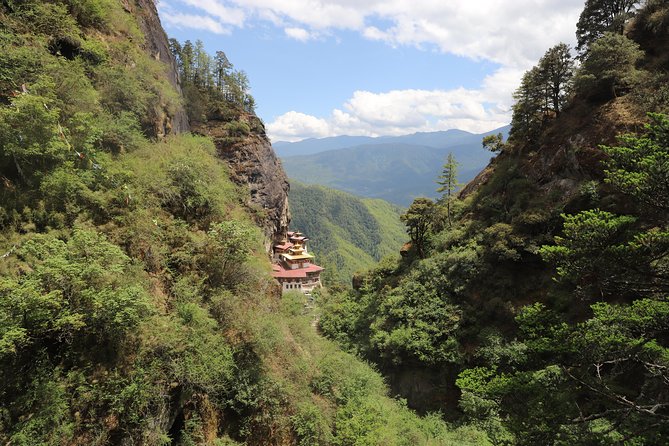
This trek makes sense if you want a short Bhutan trek with a real overnight. It’s also a good match if you care about spirituality and atmosphere, not just “walk + view.” The cave factor and the Thousand Dakinis theme are exactly the kind of cultural lens that turns a physical hike into something more meaningful.
You’ll probably enjoy it if:
- You’re comfortable with steep uphill walking
- You like guided context while hiking
- You want a private schedule and included equipment
- You want to see Taktsang from a different angle
You should reconsider if:
- You’re not confident with a physically demanding hike
- You’re traveling with tight scheduling and little weather flexibility
- You hate camping nights outdoors, even if the gear is provided
Also, if you’re solo and you want extra reassurance, you may appreciate the provider’s reputation for dependable guiding and supportive logistics seen in their other Bhutan itineraries. Names that have come up with this company include Singye, Tshering, Padang, Kinza, Pema, and Lobsang Nima—good to know when you’re choosing who will be shaping your day.
Should you book Bumdrak Trek? My call
I’d book it if you want an experience that feels like a trek, not a checklist. The overnight wild camping, the included chef-and-gear setup, and the payoff of Taktsang Monastery views from above make this feel purpose-built.
If you’re fit enough for steep climbs and you can roll with weather-dependent timing, this is one of the best ways to experience Paro without repeating the standard route vibe. Just go in with realistic stair expectations, keep a steady pace, and let the caves and cliff views do the talking.
FAQ
Where is the Bumdrak Trek based?
The Bumdrak Trek is located in Paro, Bhutan.
How long is the trek?
It runs for about 2 days.
What time does the experience start?
The start time is 8:00 am.
Does this trek include an overnight?
Yes. You camp for one night in the wild.
What are the key stops on the trek?
The itinerary includes Paro Taktsang and a Paro Airport bird’s eye view point.
What’s included in the price?
The package includes lunches (2), dinner (1), breakfast, coffee and/or tea with snacks (2 times), camping equipment, all trekking equipment, and a trekking chef.
What’s not included?
Alcoholic beverages are not included.
Is this a group tour or private?
This is a private tour/activity, so only your group participates.
Do I need special fitness for this trek?
Yes. The experience notes that travelers should have a strong physical fitness level.
What happens if weather is poor?
This experience requires good weather. If it’s canceled due to poor weather, you’ll be offered a different date or a full refund.