REVIEW · PARO
Best of Bhutan Tour( Culture- Hikes- Short Trek- Monastic Stay)
Book on Viator →Operated by Bhutan Best InBound Tour · Bookable on Viator
This Best of Bhutan Tour from Paro packs sacred sights, manageable walking days, and real Bhutanese culture into just five days. I like the mix of short treks plus spiritually focused moments like morning prayer at a monastery, and I also like the human side—dinner at a local farm with a family feel to it. One heads-up: the schedule depends on weather, so plan for a little flexibility if fog or clouds roll in.
In This Review
- A short note on the one catch
- Key highlights you’ll actually feel
- Why This Paro-Centered 5 Days Works for Most People
- Day 1: Thimphu Valley Architecture, Prayer Flags, and a Farmers Market
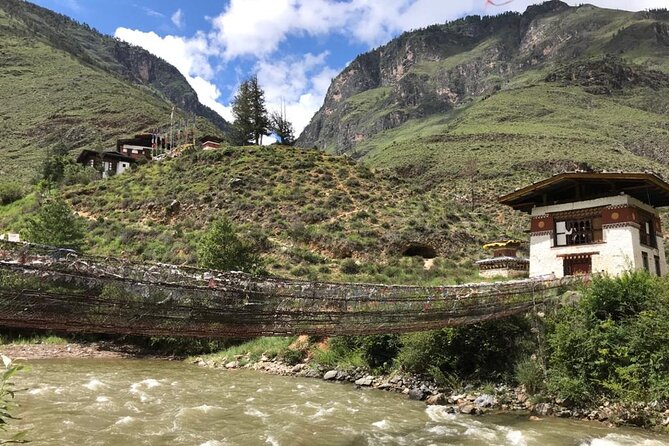
- Tachogang Lhakhang Bridge (Paro River)
- Simtokha Dzong: the oldest fortress viewpoint
- Buddha Dordenma: Kuensel Phodrang’s giant statue
- Wangdi-tse Monastery: an easy hike through apple country
- Centenary Farmers Market: local life, not just shopping
- Day 2: North of Thimphu with Pangri Zampa and the Longer Hilltop Hike
- Pangri Zampa Monastery: astrology and the 21 Tara Devi temple
- Dodedrak Buddhist Monastery: a real hike to a sacred hilltop
- Day 3: Morning Prayer at Dodedrak, Dochula Pass Views, and Punakha Dzong
- Morning prayer at Dodedrak: join the monks’ rhythm
- Dochula Pass: 108 shrines and Himalayan views when skies allow
- Chimi Lhakhang: a short temple hike near Sopsokha Village
- Punakha Dzong: rivers meet, and the winter monastic world begins
- Day 4: Tiger’s Nest (Paro Taktsang) Morning Hike to a Cliffside Monastery
- Paro Taktsang early start and a 3,120-meter monastery perch
- Day 5: Back to Paro Airport for a Clean Finish
- What You’re Paying For: Value Breakdown of the $1,370 Price
- Guide and Driver Care: Tandin Dorji, Pema, and the Family-Feeling Touch
- Practical Tips for the Hikes and Monastery Mornings
- Start thinking about footwear early
- Plan for early mornings
- Respect monastery timing and tone
- Weather is part of the itinerary
- Should You Book This Best of Bhutan Tour?
- FAQ
- What’s included in the $1,370 per person price?
- How much hiking is involved, and what fitness level do I need?
- Is this tour private, and is pickup offered?
- Where does the tour start and end?
- What are the main costs not included?
- What happens if weather is bad?
A short note on the one catch
The walking is not extreme, but you are on your feet for multiple days. If you’re not used to hikes, this moderate fitness requirement is the main thing to think through ahead of time.
Key highlights you’ll actually feel
- Tiger’s Nest day in Paro: early start, a cliffside monastery at about 3,120 meters, and a full morning/afternoon hike.
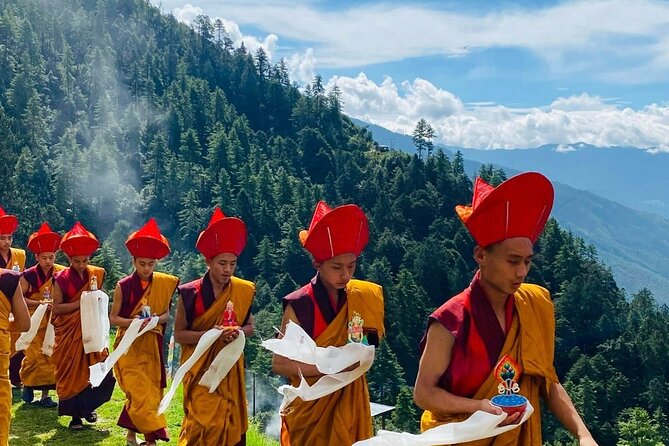
- Dodedrak Monastery experience: a longer hilltop hike plus the chance to join morning prayer with monks.
- Historic stops with meaning: Simtokha Dzong, the oldest fortress in the kingdom, and a walk on the Tachogang Lhakhang Bridge.
- Food and family time included: multiple included meals, plus a farm dinner where you meet the family.
- SDF and visa handled: Bhutan SDF fee, visa, transport, guide, taxes, and fees are wrapped into the price (good value versus piecing it together).
- Private group comfort: it’s private, so you’re not stuck with slow walkers or random add-ons.
You can also read our reviews of more tours and experiences in Paro.
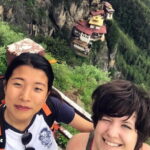
Why This Paro-Centered 5 Days Works for Most People
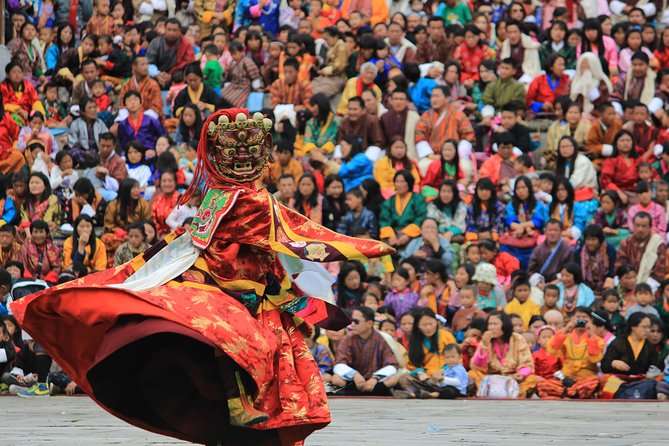
This tour is built around the Bhutan you can feel in a short trip: monasteries perched above valleys, temples that come into view after climbs, and daily life woven in through markets and family meals. Starting and finishing in Paro also makes the logistics simpler than when a route bounces you all over the country.
The big win is the pacing. You get several shorter hikes rather than one punishing trek, and you still reach Bhutan’s best-known spiritual sites like Tiger’s Nest (Paro Taktsang). And since it’s a private tour with a guide and vehicle, you get time to stop, listen, and ask questions without feeling rushed.
Who it suits best: people who want culture and walking, but don’t want to commit to a long multi-day trek. If you want lounging the whole time, this isn’t that kind of trip.
Day 1: Thimphu Valley Architecture, Prayer Flags, and a Farmers Market
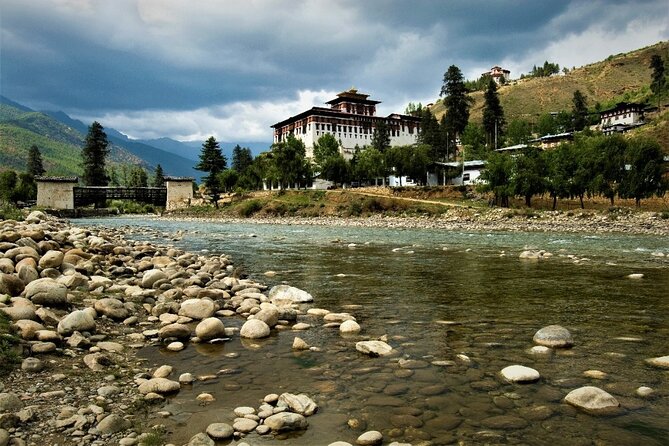
Day 1 is a “Bhutan highlights with context” day. You start with a scenic, low-pressure introduction to local sacred spaces, then you work up to bigger landmarks.
Tachogang Lhakhang Bridge (Paro River)
You’ll stop at the Tachogang Lhakhang Bridge across the Paro River. It’s known for its iron bridge walk lined with prayer flags, with a temple-oriented feeling that makes the walk feel purposeful rather than just scenic.
Practical tip: this is a nice warm-up day for your feet. The walk won’t be the hardest part of your trip, but it gets you into the rhythm of Bhutan temple visits.
Simtokha Dzong: the oldest fortress viewpoint
Next comes Simtokha Dzong, described as the oldest fortress in the Kingdom of Bhutan. It sits on a ridge and overlooks the entire Thimphu Valley, so you get that “strategic Bhutan” sense—fortresses weren’t built for looks, they were built for protection and control.
A cool architectural detail you’ll hear about: the central tower has 12 sides. It’s the kind of detail that makes a fast stop feel more than just a photo stop.
Buddha Dordenma: Kuensel Phodrang’s giant statue
Then you see the Buddha Dordenma, a 51.5-meter sitting Buddha at Kuensel Phodrang. It’s an easy stop time-wise, and it helps you understand how Bhutan uses massive spiritual art to anchor the landscape.
Wangdi-tse Monastery: an easy hike through apple country
Wangdi-tse Monastery is where the day turns into a gentle hike. You’ll walk through a thick pine forest along the Thimphu valley side, crossing local apple farms and houses on the way.
This is one of the best kinds of “short trek” days: enough climb to feel like you did something, but still in the easy/moderate range. Bring shoes you trust on uneven ground.
Centenary Farmers Market: local life, not just shopping
To end the day, you visit the Centenary Farmers Market (Thimphu’s Weekend Market) near Wang Chhu. It runs Thursday to Sunday, and it’s the kind of place where spices, incense, and everyday goods tell you how people actually live.
If you care about small gifts (tea, spices, crafts), this is an easier day to pick them up than when you’re tired after a big hike.
Day 2: North of Thimphu with Pangri Zampa and the Longer Hilltop Hike
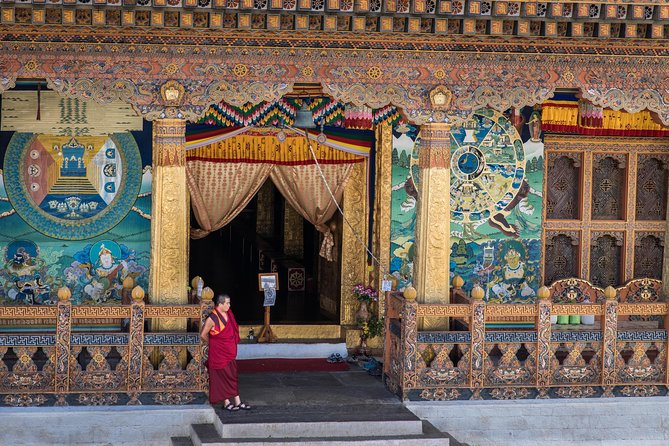
Day 2 shifts from city/ridge stops into the quieter side of Bhutan.
Pangri Zampa Monastery: astrology and the 21 Tara Devi temple
You drive toward the northern end of the Thimphu valley and take a countryside hike on off-beaten tracks. At Pangri Zampa Monastery, you’ll see the Buddhist College of astrology and the temple of the 21 Tara Devi.
Even if you don’t read much about Bhutan astrology, the stop adds depth. It’s not only religious buildings; it’s the idea that spirituality and education overlap here.
Dodedrak Buddhist Monastery: a real hike to a sacred hilltop
The day’s main walking effort is the hike to Dodedrak Buddhist Monastery. Expect a 4-hour ascent experience to the hilltop, with views that come as a reward rather than a promise.
This is also where you start to feel what “moderate fitness” means. You don’t need to be an athlete, but you do need steady legs and willingness to move at hike pace.
Day 3: Morning Prayer at Dodedrak, Dochula Pass Views, and Punakha Dzong
Day 3 is where the spiritual side gets hands-on.
Morning prayer at Dodedrak: join the monks’ rhythm
The tour includes an early start for morning prayer at Dodedrak. You’ll join the monks for the morning bell and prayer gathering, then step into the monastery atmosphere when the site feels most alive.
This is one of the most praised parts of the experience in spirit, even if your actual pace is up to you. It’s a good day for patience and listening.
Dochula Pass: 108 shrines and Himalayan views when skies allow
Then you go to Dochula Pass at 3,100 meters, marked by 108 Buddhist shrines. If the weather cooperates, you’ll get Himalayan peaks to the north east.
Important realism: this is a “when skies are clear” stop. So if you arrive in haze or rain, your best move is to enjoy the shrines and take the day as it comes.
Chimi Lhakhang: a short temple hike near Sopsokha Village
Next is Chimi Lhakhang Temple. You’ll hike about five minutes from Sopsokha Village, and the route includes temple paintings that are meant to catch your eye on the walk.
It’s also a nice contrast to Day 2’s longer climb: less time hiking, still meaningful temple time.
Punakha Dzong: rivers meet, and the winter monastic world begins
Finally comes Punakha Dzong. It’s described as a massive structure built at the junction of two rivers, and it still serves as the winter residence of the central monk body. Punakha was Bhutan’s capital until 1955, so this isn’t only spiritual—it carries political weight too.
If you’re the type who likes “why this matters,” Punakha delivers. If you just want pictures, it delivers those too, because dzongs are made to be seen from multiple angles.
Day 4: Tiger’s Nest (Paro Taktsang) Morning Hike to a Cliffside Monastery
This is the day most people remember.
Paro Taktsang early start and a 3,120-meter monastery perch
You do an early morning drive to Paro, then hike up to Tiger’s Nest (Paro Taktsang). The monastery is perched on a cliff at about 3,120 meters, and the schedule gives you a solid chunk of time for the hike and the visit.
The listing-style timing is about 4 hours, and that matches the way this hike usually feels: slow climbs, resting points, and a steady upward rhythm.
Fitness note: if you can do a multi-hour uphill hike without feeling like you’re in danger, you’ll likely be okay. If you’re prone to knee pain, take it slow early rather than trying to “save your energy” halfway up.
Day 5: Back to Paro Airport for a Clean Finish
Day 5 is simple. You end in Paro, and your team drives you to the airport. The tour ends back at the meeting point area, so you’re not scrambling to find transport after the last temple day.
What You’re Paying For: Value Breakdown of the $1,370 Price
Let’s talk value without fancy math.
The price is $1,370 per person for a roughly 5-day trip in Paro. What makes that feel reasonable is that it’s not just “transport plus a few tickets.” Your inclusion list covers the big Bhutan line items that often surprise people later.
Here’s what’s included:
- Bhutan SDF (USD 100 per person and per night)
- Bhutan visa
- Accommodation
- Private transportation and a guide
- Taxes, fees, and charges
- Meals: 5 breakfasts, 4 lunches, and 4 dinners
That meal count matters. It’s easy to under-budget food on a short trip if you’re hopping between places. Here, you’re not left to guess.
What’s not included:
- Single supplement of USD 300
- Alcohol and other beverages
If you’re traveling solo and want your own room, that single supplement can change the feel of the deal. But if you’re flexible and share rooms, the price reads more like a package that keeps you from paying lots of add-ons.
Guide and Driver Care: Tandin Dorji, Pema, and the Family-Feeling Touch
One of the best things about this tour is the way the guide/driver relationship shows up in the experience.
In past departures, people have traveled with Tandin Dorji as guide and Pema as driver around the Paro area, and they described the team as going well beyond the scheduled flow. That matters because Bhutan travel is full of small timing issues—weather, crowd flow at temples, the way a conversation changes your pace.
There’s also mention of a departure where both guide and driver had the name Tandin Wangchuk. That’s not something you can plan for, but it’s a sign the team approach is real: you’re not just being driven from stop to stop.
Practical Tips for the Hikes and Monastery Mornings
Here’s how to make this trip feel easier.
Start thinking about footwear early
You have multiple hikes:
- Wangdi-tse Monastery walk is about 2 hours
- Dodedrak Monastery hike is about 4 hours
- Chimi Lhakhang has a short walk (about five minutes to the temple area)
- Tiger’s Nest is about 4 hours total
So pack shoes with grip. Trekking sandals won’t cut it on wet stone or uneven paths.
Plan for early mornings
The trip includes morning prayer and an early climb to Tiger’s Nest. If you’re someone who hates mornings, this is still doable, but you’ll enjoy the day more if you treat sleep as part of your itinerary.
Respect monastery timing and tone
Since you’ll be joining morning prayer at Dodedrak Buddhist Monastery, keep your voice down, follow your guide’s cues, and be ready for a more quiet atmosphere than a standard sightseeing stop.
Weather is part of the itinerary
The tour explicitly notes it requires good weather. If clouds roll in, you’ll need to accept plan shifts or adjustments. This is normal for Bhutan cliffside and mountain pass areas.
Should You Book This Best of Bhutan Tour?
Book it if you want a focused Paro-based Bhutan trip that blends short hikes, major spiritual sites, and included meals, all in a private setup. I also think it’s a strong choice if you like your travel with some structure but not so much that you never slow down to notice details like the 12-sided tower at Simtokha Dzong or the prayer-flag walk on the bridge.
Skip it (or at least think carefully) if you want minimal walking or you know you struggle with uphill hikes. This tour asks you to move several hours across multiple days, and the weather dependence means you’ll feel the impact if you’re hoping for perfect views every time.
If you match the hiking level, though, this is a good value way to see Bhutan’s spiritual core without turning your vacation into a training camp.
FAQ
What’s included in the $1,370 per person price?
The package includes Bhutan SDF (USD 100 per person and per night), Bhutan visa, accommodation, private transportation, a guide, and taxes/fees/charges. Meals are included too: 5 breakfasts, 4 lunches, and 4 dinners.
How much hiking is involved, and what fitness level do I need?
You should have moderate physical fitness. The itinerary includes multiple walks such as a 2-hour hike to Wangdi-tse Monastery, a longer 4-hour hike to Dodedrak Buddhist Monastery, and about a 4-hour hike for Tiger’s Nest.
Is this tour private, and is pickup offered?
Yes. It’s a private tour/activity where only your group participates. Pickup is offered, and the meeting point is Paro International Airport.
Where does the tour start and end?
It starts at Paro International Airport (Airport Road, Paro 12001, Bhutan). It ends back at the meeting point area, with a drive to the airport on the final day.
What are the main costs not included?
The main extra listed is a single supplement of USD 300. Also, alcohol and other beverages are not included.
What happens if weather is bad?
The experience requires good weather. If it’s canceled due to poor weather, you’ll be offered a different date or a full refund.