REVIEW · GONDER
4 Days Trekking to Simien Mountain National Park
Book on Viator →Operated by Ethio Target Tours · Bookable on Viator
The Simien Mountains hit hard in the best way. This 4-day trek out of Gondar takes you across one of Ethiopia’s biggest highland ranges, with scout-led trails and real wildlife moments like gelada baboons on the early walk. You’re also moving through terrain tied to major Ethiopian peaks, including Ras Dejen (Ethiopia’s highest point) in the wider region of your route.
I like that the trip feels well organized from the start: permits are arranged at the park headquarters in Debark, and the pace is built around day-by-day views and trail variety. My only caution is that this is a real altitude trek, and the challenge level jumps as you go higher, so you’ll want solid breathing legs and some patience.
In This Review
- Key highlights you’ll feel right away
- Why this Simien trek feels special (even before you walk)
- Gondar to Debark: your first escarpment day gets the job done
- Day 2: Kaba Valley, Gich Abyss, and coffee in a village hut
- Day 3: Giant lobelia and the Imet-Gogo cliffs (up to 4070m)
- Day 4: Buwahit 4430m, Walia ibex chances, and Ras Dejen on the horizon
- Trail toughness and altitude: what “moderate fitness” really means
- Price and value: what $275 buys you in the Simien
- Service quality that matters on mountain days
- Who should book this trek, and who should reconsider
- Should you book Ethio Target Tours for the Simien trek?
- FAQ
- How long is the Simien Mountains trek?
- What is the meeting point and start time?
- Is pickup included?
- What’s the physical fitness level required?
- What age range is allowed?
- How many people are in a group?
- Are park permits or entry tickets included?
- Is the trek dependent on weather?
- What is the cancellation policy?
Key highlights you’ll feel right away
- Small group size (max 8): easier to move together and keep a workable pace on narrow edges.
- Permits handled in Debark: less hassle on your side, plus you get a scout right away.
- Jinbar River’s 500 m plunge: the kind of waterfall moment you remember even after you’re back in Gondar.
- Giant lobelia country + Imet-Gogo cliffs: a rare mix of botany and sharp, steep viewpoints.
- Buwahit climb and Walia ibex chances: one of the most sought-after endemic sightings in the Simien area.
Why this Simien trek feels special (even before you walk)
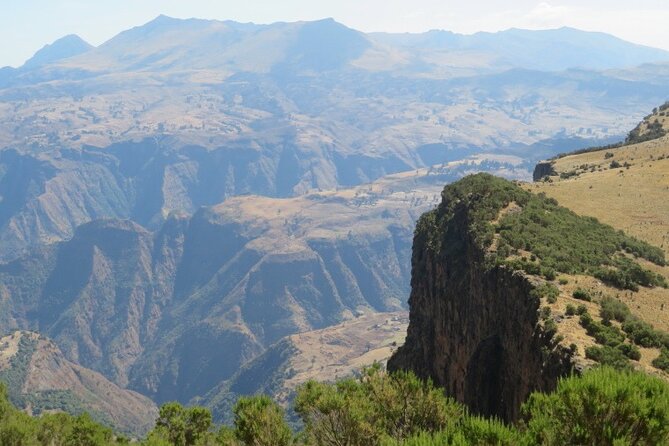
The Simien Mountains are not “pretty hills.” This is a major high-altitude system: a mountain range with at least a dozen peaks over 4,000m, and it includes Ras Dejen, Ethiopia’s highest point. The area became a national park in 1966 and the wider range is a UNESCO world heritage site (1978), which matters because it’s protected mountain country rather than just scenic land someone built a viewpoint on.
What makes this trek genuinely rewarding is the mix. You get escarpment edges with big drop-offs, volcanic-looking shapes around Imet-Gogo, and high-mountain flora like giant lobelia. Add in diverse wildlife and strong bird life, and you’re doing more than walking for photos. You’re walking through an ecosystem that feels built for natural history lovers.
And yes, the route is challenging in a way you feel in your lungs. That’s part of the value: you earn the views, and you notice the small details (like the way the terrain changes) because your body is paying attention.
You can also read our reviews of more tours and experiences in Gonder.
Gondar to Debark: your first escarpment day gets the job done
You meet at Gondar Airport (or you can be picked up from your hotel), with the start time listed as 8:00am. From Gondar to Debark is about 100 km and takes around two hours on a good paved road, which is a nice win on a trek like this. You arrive without wasting your energy on rough transport.
In Debark, the group goes to the park headquarters where permits are arranged and you pick up a scout. That scout piece is important. The trails in the Simien are not the kind where you want to be guessing. You don’t need to think about navigation as much, so you can focus on the scenery and footing.
Then you do an introductory walk along the northern edge of the escarpment. It’s described as an easy day, with view points over northern Ethiopia’s foothills and plains. Practically speaking, this is a smart way to start: your legs get warmed up, you get used to walking on mountain terrain, and you’re not thrown into the steepest climbs immediately.
A highlight on this first day is wildlife close to the route. The itinerary specifically mentions gelada baboons during the hike, and you’ll have an overnight at Sankaber. That’s one of those “you planned for nature and it delivered” moments, not a forced roadside photo stop.
Day 2: Kaba Valley, Gich Abyss, and coffee in a village hut
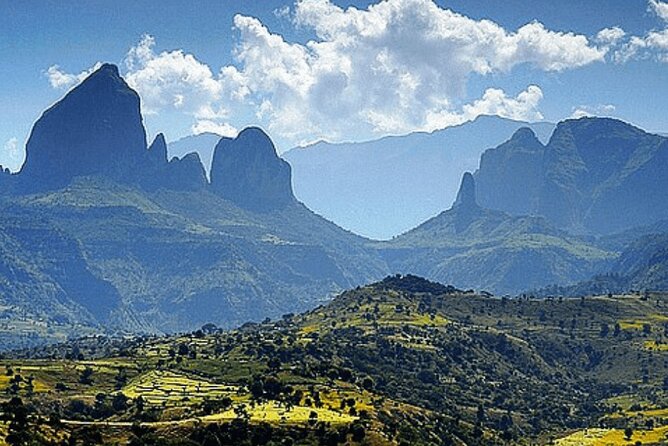
Day 2 follows the northern escarpment eastward, with a pattern that keeps things interesting: you descend slightly into the Kaba Valley, climb back up, then reach Gich Abyss. From there, the trail moves toward a narrow ridge and a cliff view over the abyss toward the Simien foothills.
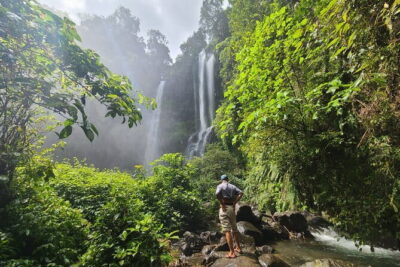
This is the day for scale. The itinerary calls out a large waterfall: the Jinbar River plunges about 500 meters into the abyss. You’ll get views, a lunch stop near the Jinbar River after about two hours of walking, and then a change in scenery as you move away from the dramatic drop and into cultivated land.
After lunch you walk through fields of barley, which is a nice contrast to the cliffs. Then you reach the village of Gich, described as idyllic, where you can enjoy a traditional coffee ceremony in one of the huts and learn more about local farm life.
I like this part because it grounds the trek. You’re not just moving through a protected natural area; you’re passing through working landscapes and meeting communities that live alongside the mountains. That coffee ceremony is a small time investment that adds a lot of meaning, especially after the big vertical views.
From Gich village it’s a short walk onward to Gich camp for the night. The camp setup isn’t described in detail here, so I’d treat this as “trek-camp practical” rather than resort-level comfort. Still, it’s a key transition day: you end in the high-mountain rhythm and set yourself up for the big scenery of Day 3.
Day 3: Giant lobelia and the Imet-Gogo cliffs (up to 4070m)
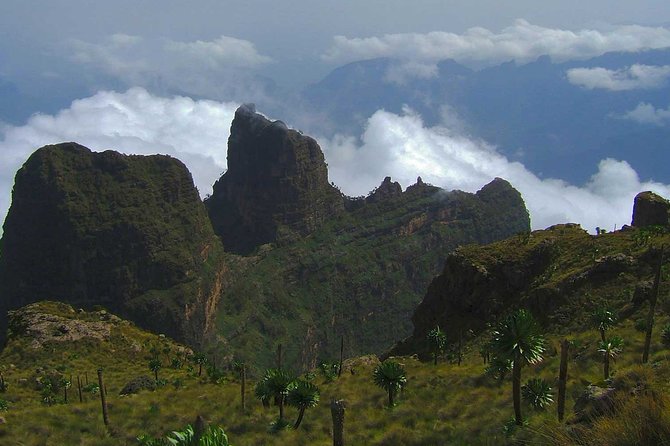
If Day 2 is about abyss views, Day 3 is about high-altitude character. From Gich camp, you stroll through fields of giant lobelia. That plant is strongly associated with high elevations in the region, and walking through that zone makes the mountains feel distinct from the “normal hills” you might expect elsewhere.
Next you reach Imet-Gogo, listed at 3926m, where you spend time taking in superb views over mountain valleys below. The itinerary also mentions strange domes in the distance, and notes that you’ll see these from up close at the end of the trip. That’s a good mental trick for trekkers: on a first view you’re already learning what to watch for later.
Then you descend into the Jinbahir River Valley. The description here is vivid: the volcanic landscape can make Imet-Gogo look like chunks of mountains were blown away. Even if you’re not a geology expert, you’ll likely notice the rough, dramatic shapes once you’re lower and the angle changes.
One of the most striking trail features on Day 3 is the escarpment edge. The itinerary says the trail follows an edge that’s completely vertical for several hundred meters. That doesn’t mean it’s a constant “vertical wall” hike, but it does mean you’re working in terrain with exposure. This is where having a guide/scout matters for both safety and timing.
You climb to a summit of 4070m. This is the point in the itinerary where most people feel the altitude most. Plan to move slowly, keep breathing steady, and accept that your pace will be different than on flat ground.
This day is also about reward. The views aren’t just wide; they’re layered, shaped by valleys, cliffs, and volcanic forms. If you’re the kind of traveler who likes being able to explain what you saw after the hike, Day 3 gives you plenty of material.
Day 4: Buwahit 4430m, Walia ibex chances, and Ras Dejen on the horizon
Day 4 is your summit day in the Simien rhythm. You climb the second highest peak in the Simien mountains, Buwahit (4430m). The listing makes the wildlife focus clear: this climb rewards you with one of Ethiopia’s endemic wild animals in the Simien area, called the Walia Ibex (a goat family).
Even when you don’t see animals immediately, this kind of endemic is worth aiming for because it only lives in this type of habitat. So your time on Day 4 is not just about a high number on a map; it’s about matching altitude and terrain to the chance of seeing something truly local.
You also get scenic viewpoints that include a chance to see Ras Dejen (4543m), Ethiopia’s highest peak. The itinerary frames this as a chance rather than a guarantee, and that’s the honest way to think about it in real mountain weather.
After the climb, you go back down to chenek camp, where the car is waiting to pick you up and drive back to Gondar for about 4 hours. That drive back is part of the trek’s practicality: you’re not spending another day hiking out of the high country. You finish, recover, and can return to a comfortable base in Gondar.
Trail toughness and altitude: what “moderate fitness” really means
The tour states travelers should have moderate physical fitness and gives an age range of 12 to 70. In real terms, “moderate” here likely means you can hike several hours on uneven ground, handle steep sections, and don’t need to sprint for the group.
The itinerary includes days with climbing up to 4070m and a peak day at 4430m. Altitude affects everyone differently. Even if you’re fit, you might still slow down and feel breathy. That’s normal. What matters is staying consistent: slower steps, steady breathing, and respecting your body.
Also keep in mind the route follows escarpment edges and cliffs at points. You don’t need technical climbing gear based on what’s provided, but you do need careful footing and willingness to take directions from your scout/guide.
Finally, this experience requires good weather. In mountain areas, “good weather” isn’t a fancy extra; it changes visibility, trail safety, and comfort. If conditions are poor, the trip can be canceled and rescheduled or refunded.
Price and value: what $275 buys you in the Simien
At $275 per person for an approx. 4-day trek, the value depends on what’s included and what would cost extra on your own. In this case, the tour includes pickup offered from Gondar Airport or your hotel, a mobile ticket, and the day-by-day trek structure.
The itinerary indicates park permits are arranged in Debark and a scout is picked up there. That’s a big operational cost and hassle you don’t want to handle yourself on a tight schedule.
Also, the listing notes admission ticket is free for the days described in the itinerary. While you still pay the tour price, you’re not buying separate park entry fees through the operator in the structure provided here.
Group size also affects value. With a maximum of 8 travelers, you’re not getting the kind of big-group experience where you get lost in the shuffle. Smaller groups typically mean you can move more like a team, especially when trails narrow and exposure increases.
So yes, it’s not a cheap activity. But for a protected mountain trek with permits, a scout, and real peak-day hiking, $275 can feel like a fair deal.
Service quality that matters on mountain days
A big part of whether a trek feels safe and smooth is how the team handles timing and flexibility. The provided reviews highlight the owner Solomon and a guide named Jon as friendly and knowledgeable, with a service style that stays professional and practical.
They’re also described as flexible when itinerary changes are requested. In mountain country, that flexibility can matter more than flashy promises. Add reliability and punctuality mentioned in the reviews, and you get a picture of an operator that tries to manage the trip without constant surprises.
The same reviews praise that everything was organized optimally, and that the guide and driver were supportive throughout. For trekkers, this is less about storytelling and more about the everyday work: keeping the group together, staying on schedule, and helping you focus on the trail.
Who should book this trek, and who should reconsider
This trek is best for you if you:
- want a high-altitude Ethiopia experience with real mountain scenery and wildlife chances
- like natural history and plant life as much as views
- can handle steep or exposed trail edges and accept slower pace due to altitude
- prefer a small group with permits and scouting handled
You might reconsider if you:
- get easily overwhelmed by altitude or have health issues that make high elevations risky (the itinerary climbs to 4070m and 4430m)
- need a trip that is always guaranteed to hit every peak in every weather condition (weather matters here)
- want a fully cushy, resort-style experience, since trek camps are part of the plan
This is an adventure, not a sightseeing drive with short walks.
Should you book Ethio Target Tours for the Simien trek?
I’d say yes if you’re aiming for a real Simien trek with a structured route, a scout, and an operator that seems to take reliability and people seriously. The combination of Buwahit (4430m), the chance for Walia ibex, and the dramatic Gich Abyss/Jinbar River moments gives you multiple “core memories” across the four days.
One final decision helper: look closely at your comfort with altitude. If you treat Day 3 and Day 4 as slow, steady climbs rather than races, this trip can be the kind of Ethiopia story you’ll still be telling months later.
FAQ
How long is the Simien Mountains trek?
The trek is listed as 4 days (approx.).
What is the meeting point and start time?
The meeting point is Gondar Airport, Ethiopia, with a start time of 8:00am. The tour ends back at the meeting point.
Is pickup included?
Pickup is offered from Gondar Airport or your hotel.
What’s the physical fitness level required?
Travelers should have moderate physical fitness level.
What age range is allowed?
The booking notes that the age should be 12 to 70.
How many people are in a group?
The tour has a maximum of 8 travelers.
Are park permits or entry tickets included?
Permits are arranged at the park headquarters in Debark, and admission ticket is listed as free for the itinerary days.
Is the trek dependent on weather?
Yes. The experience requires good weather, and if it’s canceled due to poor weather you’ll be offered a different date or a full refund.
What is the cancellation policy?
Free cancellation is available up to 24 hours in advance for a full refund. If you cancel less than 24 hours before the experience start time, the amount paid is not refunded.