REVIEW · LUANG NAMTHA
Nalan Trail and Khmu Tribe: 2 Days Trek in Nam Ha NPA
Book on Viator →Operated by Phou Iu Travel & Ecotourism · Bookable on Viator
Two days in the jungle can feel personal. This trek through Nam Ha National Protected Area mixes jungle walking with visits to Khmu and Lanten minority villages, plus an overnight in a Khmu homestay. I especially like the way the day is paced around village time, not just hiking miles.
The best part for me is the combination of hands-on activities and local hosting, and you’ll feel it most during the homestay night and the village sessions (like crossbow practice and rice pounding). The one drawback to flag up front is that this is meant for people with at least moderate fitness and comfortable footing, since paths can get slippery if it rains.
In This Review
- Key Things That Make This Trek Worth It
- Jungle Trek Meets Khmu Village Life in Nam Ha NPA
- Price and Value: What $109 Covers (and Why It Matters)
- Day 1: Doiluckkham to the NPA Trails, With a Lao Picnic Lunch
- Day 2: Village Time, Crossbow Practice, Rice Pounding, and the Uphill Option
- Homestay Overnight: What You’re Paying For (Besides a Bed)
- The Guide Factor: Why English Support Feels Like More Than Translation
- What to Pack for Wet Jungle Trails and Village Evenings
- Who This Trek Suits Best
- Booking Timing and Group Size: Small Details, Big Impact
- Should You Book the Nalan Trail and Khmu Tribe Trek?
- FAQ
- How long is the Nalan Trail and Khmu Tribe trek?
- What time does the trek start, and where do I meet?
- How much does it cost, and what’s included?
- What isn’t included in the tour price?
- How fit do I need to be?
- How flexible is cancellation?
Key Things That Make This Trek Worth It
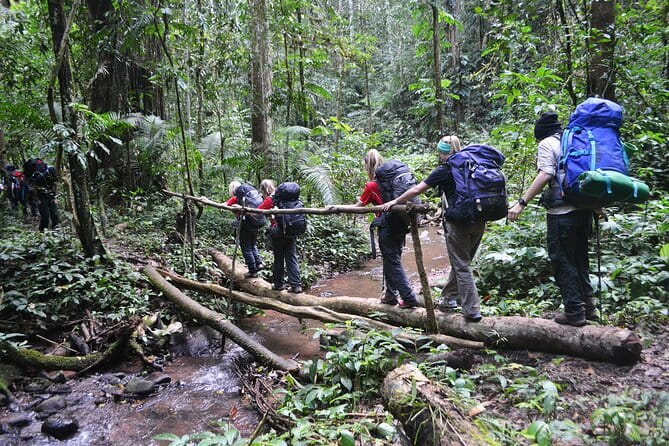
- Small group size (max 8): You get time with your guide and less waiting around.
- Khmu homestay overnight: You sleep in the village setting, not in a vehicle or outside hotel zone.
- Hands-on village activities: Crossbow shooting and rice pounding are part of the day.
- Nam Ha entry fee included: You’re covered for park access while walking the protected-area trails.
- A choice on day two: You can go for the standard hike or the longer uphill option for better views.
- English-speaking/local guide support: You’re not just dropped on a trail; you get explanations and help.
Jungle Trek Meets Khmu Village Life in Nam Ha NPA
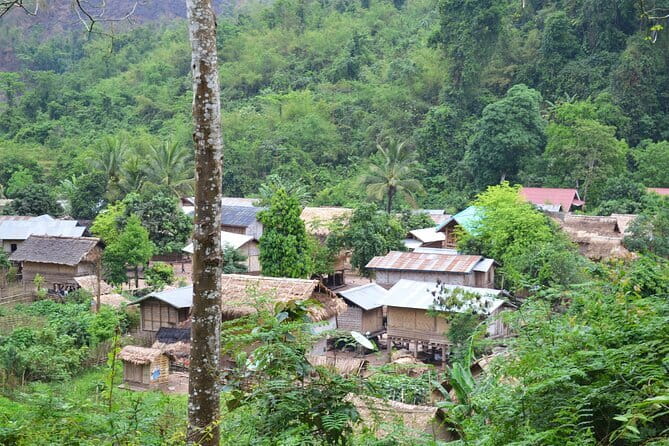
If your idea of Laos travel means seeing daily life up close, this is the kind of trip that does it without feeling staged. The Nalan Trail route takes you into forest that’s described as moving from secondary forest into upland rainforest inside Nam Ha NPA. That shift matters: you’ll notice different plant textures and a more “closed” feeling as you climb and walk deeper.
What I like most is how the schedule gives culture equal billing. You’re not sprinting from one photo stop to the next. Instead, you’re building in time for village interaction—tea or Lao coffee, traditional meals, and practical activities that explain how people work through the day.
Your experience will still be physical. You’re trekking for multiple hours, with an option on day two that adds uphill effort. If you hate slipping footing or you’re not comfortable on uneven ground, plan on taking it slow and packing smart for wet weather.
You can also read our reviews of more tours and experiences in Luang Namtha.
Price and Value: What $109 Covers (and Why It Matters)
At $109 per person for about two days, the value comes from what’s included—not just the trekking itself. You’re getting:
- An English-speaking/local guide
- Transportation to the start area (and back to the meeting point)
- Nam Ha NPA entry fee
- Homestay accommodation for one night
- Dinner and breakfast, plus two lunches
- Water and food during the trek and village time
- All village activities
That’s the key: many “cheap” treks look inexpensive until you add up the guide fee, park fees, and meals. Here, you’re paying once and spending less energy tracking what’s extra.
You’ll also benefit from the small group model. With a maximum of 8 travelers, the guide can shift pacing and route options more easily, which is useful on a trail where rain can change conditions fast.
If you’re booking as part of a pair or small group, there’s also mention of group discounts. If your dates line up with a smaller group, you can sometimes get a better deal without having to compromise the experience.
Day 1: Doiluckkham to the NPA Trails, With a Lao Picnic Lunch
Day one starts with the practical stuff: you depart from Luang Namtha town, then travel about 20 km to Doiluckkham. That short transfer helps you arrive on the trail without losing your whole day just getting there.
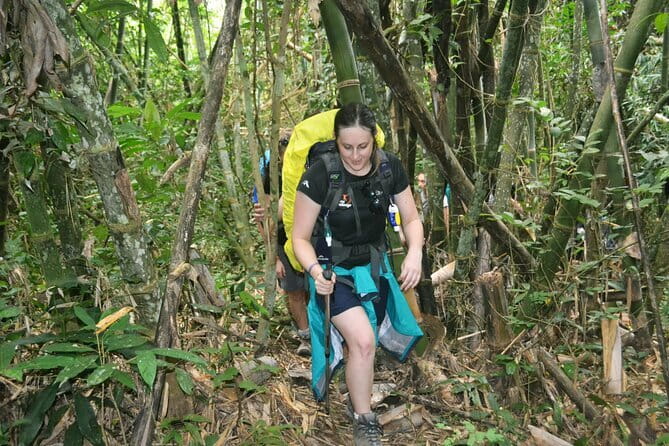
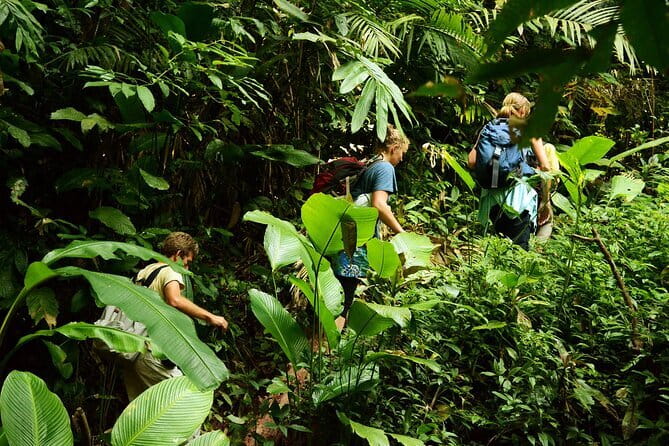
Once you start walking, you move through secondary forest and then into upland rainforest inside Nam Ha NPA. This is where the trek feels like more than a walk in the woods. The air changes as the canopy thickens, and you’re likely to notice more variety in plants and bird sounds as the trail grows more shaded.
You’ll stop for lunch as a Lao-style picnic. This is more than a meal; it’s a reset. Instead of eating in a hurry, you get a break that keeps the day balanced between hiking and slower village-time rhythm.
Tip: Day one tends to set your pace for the whole trip. If you come out fast, you’ll feel it later on day two when the program includes more active work in the village and an uphill option.
Day 2: Village Time, Crossbow Practice, Rice Pounding, and the Uphill Option
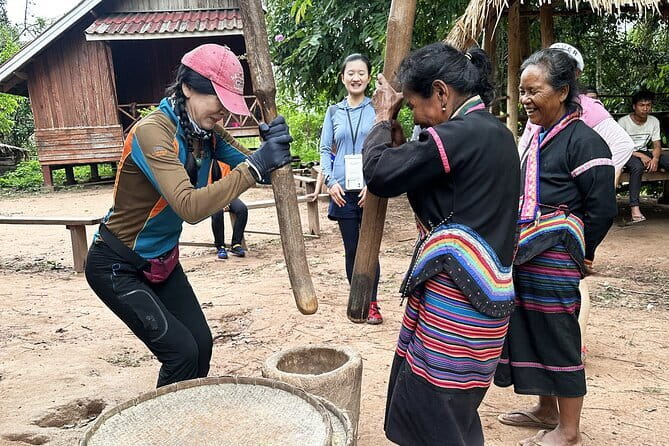
Day two begins with a village visit and traditional breakfast. The morning is built around interaction, not just scenery. You’ll have time for Lao coffee or local tea, then try activities connected to daily life—crossbow shooting and rice pounding.
This is one of the most memorable parts because it gives you something physical to do and understand. Crossbow practice is skill-based and usually feels more rewarding than a passive viewing moment. Rice pounding connects you to the labor behind meals, and it’s a reminder that culture here is work, not performance.
After the village sessions, you’ll have a hiking option: a roughly 3–4 hour hike uphill through the forest with the chance of rewarding views from higher ground. If your legs feel good, this is the time to choose it. If you want something gentler, you can likely stick to the main day route without pushing.
One extra note: rain can turn forest paths slippery. This is where guide support shows. Having an experienced person watching your footing makes a real difference for both comfort and safety.
Homestay Overnight: What You’re Paying For (Besides a Bed)
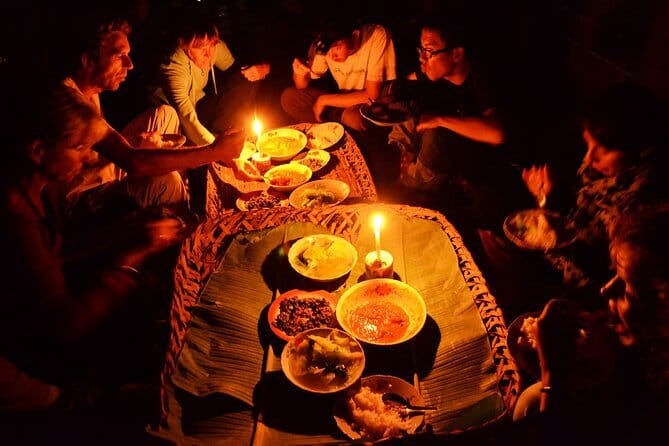
This trek includes one night of accommodation in a Khmu homestay. That matters because it changes the meaning of “overnight.” You’re not just sleeping somewhere close to the trail—you’re spending time inside the village rhythm.
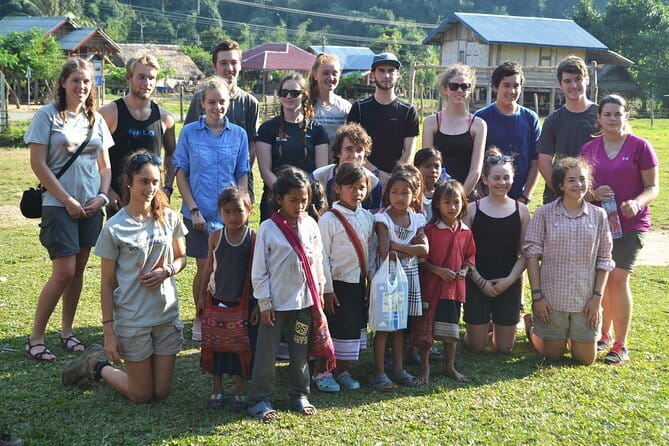
The homestay option also tends to be the part people remember most clearly. In the feedback I’ve seen from similar treks, the comments usually focus on warm hosting and the sense of seeing daily life in a real community setting. The goal isn’t luxury. The goal is connection.
Here’s what you should expect in practical terms:
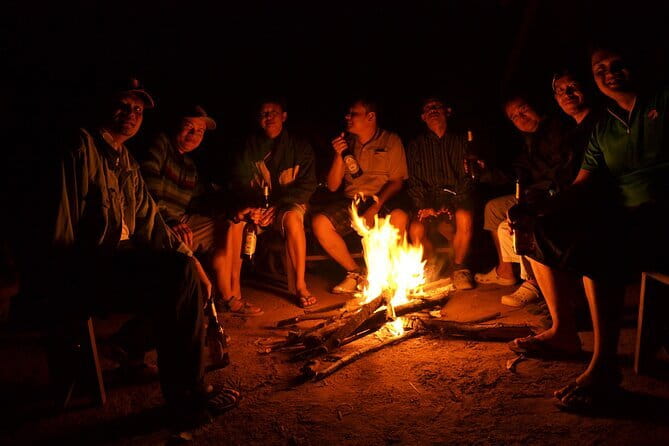
- You’ll spend time in the village beyond a quick stop.
- Your schedule is shaped around village activities and meals.
- You’ll likely be more comfortable if you bring patience and a respectful attitude.
Practical comfort note: This is not a beach resort, so pack with village reality in mind. Bring a light layer for evenings and think ahead about footwear and socks if the trails are wet.

The Guide Factor: Why English Support Feels Like More Than Translation
This trip is led by an English-speaking/local guide, and that shows up in the way the day flows. On a trek that includes both forest walking and hands-on village activities, language matters less for convenience and more for meaning.
You’re not just hearing names of things. You’re getting explanations while you’re walking, plus guidance during activities like rice pounding and crossbow shooting. If conditions are tough—like rain and slippery sections—good guidance also means you’re not guessing what to do or where to step.
If your guide happens to be someone called Nom, you may hear that name mentioned with genuine appreciation. It’s one of the few specific guide names associated with this experience, and it signals the kind of personal care people notice.
What to Pack for Wet Jungle Trails and Village Evenings
The tour data points out what’s not included, and those gaps are exactly where packing smart pays off.
Not included:
- Snacks and fruit
- A personal water bottle
- Personal medicine
- Sandals or flip-flops
Here’s how I’d translate that into a simple packing plan:
- Bring a personal water bottle so you don’t have to rely on refills without control.
- Pack a small stash of snacks if you know you like having an extra between meals.
- Bring sandals or flip-flops for easier movement around the homestay.
- Bring any personal medicine you might need ahead of time (and keep it easy to reach).
For wet weather (a real possibility in jungle trekking), you’ll also feel happier if you come prepared with rain coverage and footwear that can handle slippery ground. Even when the trek is graded as manageable, rain changes everything on forest paths.
Who This Trek Suits Best
This is a strong fit if you want a balanced trip: not only a nature hike and not only a cultural visit. You get both, and the tie-in between them is the schedule.
You’ll likely enjoy it if:
- You’re comfortable with moderate hiking and uneven ground
- You like doing things with your hands (crossbow practice, pounding rice)
- You value community-based hosting and village interaction
- You prefer smaller groups (max 8 travelers)
It may feel less ideal if:
- You want a purely scenic hike with minimal interaction
- You’re expecting hotel-style comfort and fully private accommodations
- You struggle with slippery footing or you don’t feel steady on trails during rain
Also, you’re traveling in a protected area. That usually means you’ll get less of the “turn on a highway and go” convenience and more of the slow, nature-forward rhythm.
Booking Timing and Group Size: Small Details, Big Impact
This trek is typically booked about 8 days in advance on average, which tells me the operator runs it fairly regularly but not like a daily mega-tour. If your travel window is tight, book sooner rather than later—especially if you want a specific pace or you’re traveling around peak season.
The maximum of 8 travelers is another quiet advantage. It helps keep the trek from becoming a moving line. It also makes it easier for your guide to adjust the day, including the possibility of taking the longer uphill hike on day two if your group wants that.
Should You Book the Nalan Trail and Khmu Tribe Trek?
Book it if you want a two-day trek where the culture isn’t an add-on. This one is structured so you spend real time with village life: meals, tea or coffee moments, and activities that connect you to how people spend their day. The Khmu homestay is the heart of it, and the jungle walking feels meaningful because you’re moving through different kinds of forest, not just repeating the same patch of trail.
Skip or reconsider if you’re not ready for muddy, slippery conditions during rain, or if you prefer your comfort level to stay very high. The trip does require a moderate fitness level, and you’ll be outdoors for multiple hours on more than one day.
If you do book, do yourself a favor: bring a personal water bottle, don’t forget sandals/flip-flops, and be ready for wet trail days. That’s what turns this trek from “fine” into genuinely satisfying.
FAQ
How long is the Nalan Trail and Khmu Tribe trek?
It runs for about 2 days.
What time does the trek start, and where do I meet?
It starts at 9:00 am. The meeting point is Phou Iu Travel & Ecotourism in Luang Namtha (Phonexay Village).
How much does it cost, and what’s included?
The price is $109 per person. Included are an English-speaking/local guide, transportation as mentioned, Nam Ha NPA entry fee, homestay accommodation, meals (dinner, breakfast, and two lunches), village activities, and food and water during the experience.
What isn’t included in the tour price?
Snacks and fruit are not included, nor is a personal water bottle. Personal medicine and sandals or flip-flops are also not included.
How fit do I need to be?
The tour is designed for people with a moderate physical fitness level.
How flexible is cancellation?
You can cancel for free up to 24 hours before the experience’s start time for a full refund.
If you want, tell me your travel month and hiking comfort level (easy/medium/strong), and I’ll suggest whether you should aim for the uphill option on day two.