REVIEW · AQABA
Wadi Rum: Camel Trek Adventure
Book on Viator →Operated by Wadi Rum Desert Eyes · Bookable on Viator
Camel silence in Wadi Rum. This private trek keeps things personal as you ride through signature desert stops like Lawrence Spring and Khazali Canyon without wrestling through big tour crowds.
I especially like that the ride is designed for a relaxed rhythm. The camels are described as well cared-for and easy to get along with, and you can adjust the pace so you can pause for photos without feeling rushed.
One thing to plan for: camel riding can be a real saddle workout, so moderate fitness helps, especially if you are sensitive to long periods seated on an animal.
In This Review
- Key things that make this camel trek work so well
- Private camel time in Wadi Rum: what you gain over big groups
- Meeting at Wadi Rum Rest House and setting your timing
- Protected Area riding: Lawrence Spring, dunes, canyons, and stop-and-stare moments
- What you should know about comfort here
- Khazali Canyon and ancient petroglyphs: how the stop changes the ride
- The 3 to 4 hours on camelback: what you can realistically expect
- Price and value: how $91 fits with entrance fees and what is included
- Who leads your camel trek: Desert Eyes and the Bedouin touch
- Comfort tips that help you enjoy every stop (and not count the minutes)
- What kind of traveler should book this camel adventure
- Should you book Wadi Rum: Camel Trek Adventure?
- FAQ
- Where do we meet for the camel trek?
- How long is the camel trek?
- Is this a private tour?
- What’s included in the price?
- Do I need to pay the Wadi Rum entrance fee?
- What fitness level is required?
- Is there time to do other things after the camel ride?
Key things that make this camel trek work so well
- Private group pace: Only your group rides, so you’re not stuck following someone else’s pace or queue.
- Bottled water included: Simple but welcome in a hot, dry place.
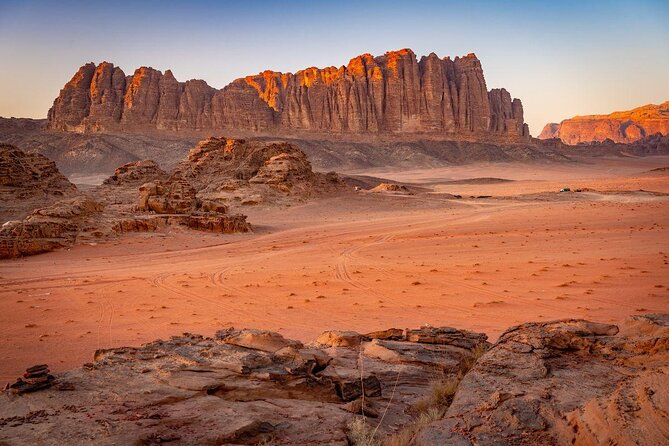
- Major Wadi Rum sites on camelback: You pass iconic terrain like red sand dunes, canyons, and dramatic rock features.
- Khazali Canyon stop: A chance to see ancient petroglyphs and inscriptions from a very different vantage point.
- Morning or afternoon variations: Your exact route and light can shift depending on the time you go, which affects comfort and photo results.
- After 3-4 hours, you’re free: The rest of the day is yours to explore Aqaba or keep wandering nearby.
Private camel time in Wadi Rum: what you gain over big groups
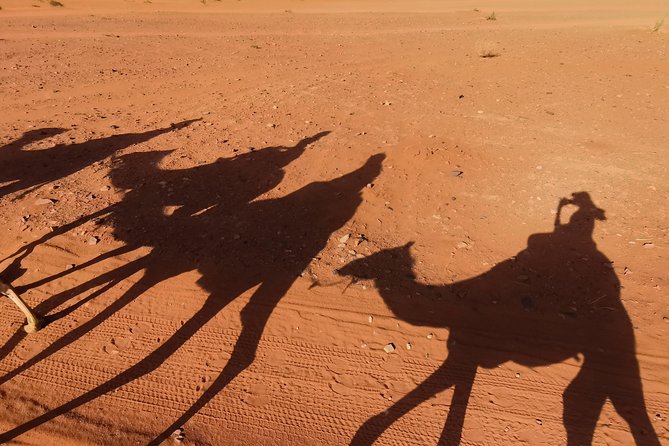
Wadi Rum is one of those places where the desert doesn’t feel staged. You get the sense you’re entering a working landscape—sand, rock, and space—rather than a theme park.
For me, the standout is how the experience stays private. Your guide takes your group along a traditional route, with stopping points built in, but you’re not dealing with a long line of people trying to do the same photo at the same moment. In a place this wide-open, that matters.
You’ll also feel the benefit of having a real conversation with your guide instead of just listening to a loud group briefing. The best guides help you notice what you would otherwise walk past: why a canyon looks the way it does, what to look for in rock formations, and where the route usually feels easiest on the animals and riders.
You can also read our reviews of more tours and experiences in Aqaba.
Meeting at Wadi Rum Rest House and setting your timing
You meet at Wadi Rum Rest House (by Wadi Rum Village), and the tour ends back where you started. That loop is handy. You’re not spending your afternoon on a complicated transfer schedule; you’re out in the desert and then back with time to spare.
One practical upside of this kind of meeting setup is that it keeps the whole experience calmer. You can arrive, confirm you’re with the right group, and get your bearings fast, before you head into the protected desert area.
The other timing detail to know: your ride runs about 3 to 4 hours, and it can be done in the morning or afternoon. That changes the feel more than you might expect. Morning tends to feel cooler and more comfortable for longer pauses; afternoon can be brighter for photos, but you’ll likely want to keep an eye on heat and take breaks when the guide suggests.
Protected Area riding: Lawrence Spring, dunes, canyons, and stop-and-stare moments
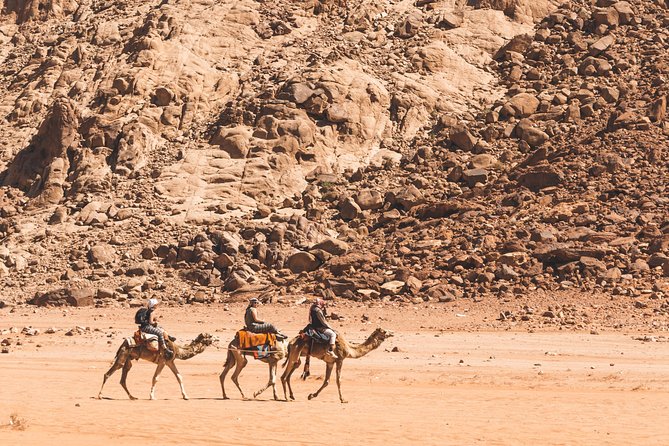
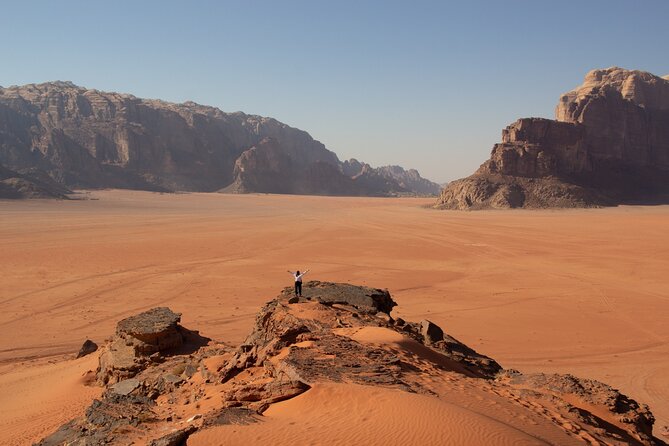
Stop 1 is the Wadi Rum Protected Area, and this is where the ride earns its keep. Instead of doing a quick loop, you’re riding through the kind of terrain that makes Wadi Rum famous: orange sand valleys, dramatic rock formations, and canyons that look almost carved.
A highlight that comes up in the route is riding from Ain Abu Aineh (Lawrence Spring) toward a major feature like the Red Sand Dune. Even if you don’t know the Lawrence of Arabia story deeply, you’ll feel why this spot became part of desert legend. Springs and water points in this region were more than geography—they were survival points.
From there, your guide typically builds in time for the big photo moments. Think of the classic Wadi Rum composition: camel in the foreground, layered sand and rock in the mid-ground, and that flat desert horizon that makes everything feel wider. You can stop for photos as often as you like during the ride, which is great because the best angles aren’t always the first ones you see.
What’s also nice is that the ride isn’t just about scenery. You’re moving at an animal’s pace—slow enough for your eyes to adjust. That turns the trip into something more like a guided walk with a different mode of transport.
What you should know about comfort here
Camel riding isn’t silent and floating. You’ll feel vibration, shifting weight, and the slow jostle that comes with stepping hooves. The guide’s route choices matter, and your comfort improves if you stay loose in your legs and let your body move with the camel instead of fighting it.
Khazali Canyon and ancient petroglyphs: how the stop changes the ride
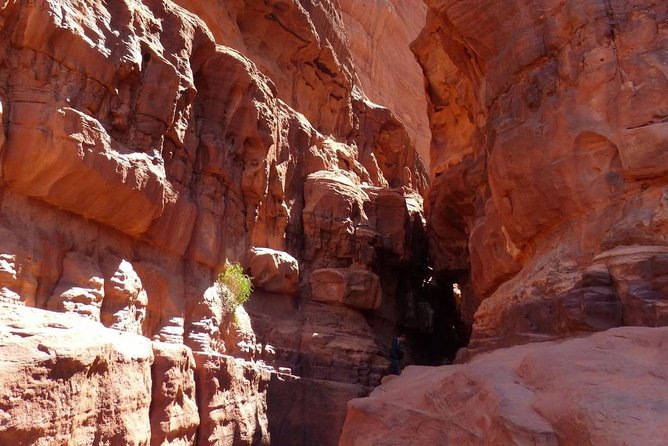
One reason this trek is more interesting than a basic camel loop is the addition of Khazali Canyon. This stop is famous for ancient petroglyphs and inscriptions, which means you’re not just looking at rocks—you’re looking at marks left by people long before tourism existed.
Seeing these carvings is a different kind of travel moment. It makes the desert feel less empty and more layered with meaning. And because you’re arriving by camel, the viewpoint is often less rushed than you might get from someone hopping off a vehicle for a quick photo.
The drawback to consider is simple: inscriptions and older markings can be easier to miss if you’re distracted. If you care about seeing the carvings clearly, bring patience. Slow down, ask your guide where to look, and give your eyes time to adjust to the stone’s texture and shadows.
Also, wear your best practical attention: steady light helps. If you’re going in the afternoon, the angle of the sun can change how visible the markings are. Your guide can usually help you position your body for a better look.
The 3 to 4 hours on camelback: what you can realistically expect
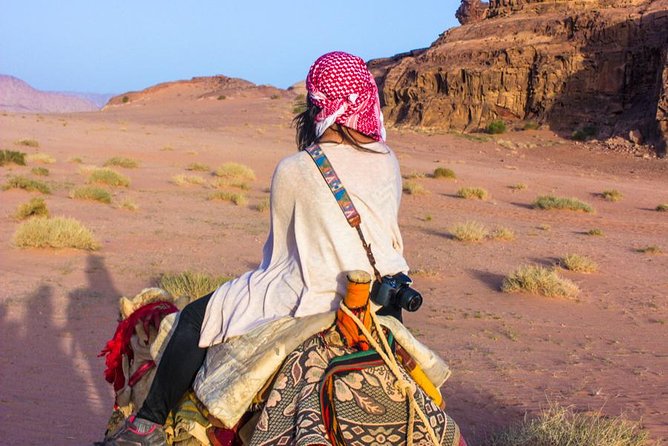
This experience is timed to leave you room for the rest of your day. After about 3 to 4 hours of riding and stops, the tour ends and you’re back at the starting point.
That timing is a value move. You get Wadi Rum’s signature camel experience—dunes, canyons, and stops for photos—without locking up your whole day in the desert. If you’ve got a tight itinerary around Aqaba, that flexibility is gold.
It also means you can plan your next step without stress. You might want to head back and relax, explore Aqaba’s waterfront, or build in a secondary activity that doesn’t depend on desert hours.
One more detail that influences your satisfaction: the tour pace is designed to let you go at your own pace. That doesn’t mean you’ll sit still the whole time. It means the guide should be ready to adjust stops for comfort, photos, and what the group needs at that moment.
Price and value: how $91 fits with entrance fees and what is included
The price is $91 per person for this camel trek, and you’ll also want to budget for the Wadi Rum entrance fee. The entrance fee is 7 JD per adult, paid at the Visitor Centre, unless you have the Jordan Pass (then it can be free).
Here’s the honest value math: part of what you’re paying for is time with a private guide and a ride through the main Wadi Rum sights. Another part is that bottled water is included, so you’re not scrambling for basics once you’re out in the desert.
Does that make it the cheapest way to see Wadi Rum? Not necessarily. But it can be one of the smartest ways to see Wadi Rum without the friction of big group logistics. When you’re riding a living animal and navigating desert terrain, small group control translates into a smoother experience.
Also, the tour includes a mobile ticket, which is convenient if you prefer to keep things digital while traveling.
If you’re comparing options, I’d look at two things: how long you’ll actually spend on camelback, and whether you’re paying separate entrance fees. If the entrance is included for you via Jordan Pass, the effective price becomes much easier to justify.
Who leads your camel trek: Desert Eyes and the Bedouin touch
This experience is provided by Wadi Rum Desert Eyes. The vibe is Bedouin-led and locally rooted, which shows up in the way guides talk about the desert and the camels.
In the feedback, I see a strong pattern: the operation is friendly, organized, and responsive. Khaled is mentioned often as a helpful contact who answers questions and works to match people’s preferences. If your start time or route style matters to you, that kind of communication is a real asset.
There are also references to guides like Muhammed handling pickup and coordination for shorter camel rides from the Rest House. And for longer, multi-day camel treks, guides such as Ibrahim are highlighted for competence and safety. Even if this exact adventure is shorter, the names you hear point to an experienced local team running the show.
For you, the practical benefit is confidence. You’re riding in a protected desert area, so you want a guide who knows how to move the group safely and efficiently between stops.
Comfort tips that help you enjoy every stop (and not count the minutes)
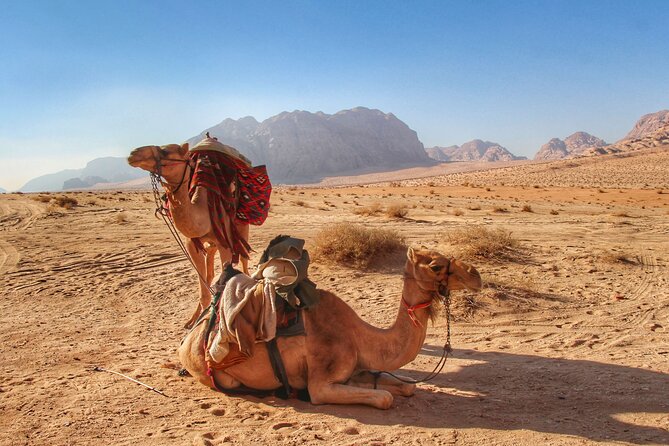
I can’t change the reality of camel riding, but you can make it easier on yourself. You’ll get the best experience if you treat this like a sun-and-sitting workout.
Start with what matters in Wadi Rum: heat and dryness. Bring sun protection, and keep hydration in mind even though bottled water is included.
Next, plan your clothing for movement. You’ll be seated for stretches, so choose footwear that grips well and clothes you can adjust easily as temperatures shift between sand sun and shaded rock.
Then handle your expectations. This is a ride where you’ll want to pause for photos. So choose a time when you’re not rushing to the next reservation.
If you are the type who hates feeling trapped in a rigid schedule, you’ll likely enjoy this more than most. The guide’s flexibility to stop often for photos makes the “time on camel” feel less like time lost and more like part of the experience.
What kind of traveler should book this camel adventure
This camel trek fits best if you want Wadi Rum in a focused dose. You get major stops, real desert views, and the feel of being guided by people who know the area—not just people running a set timetable.
I’d especially recommend it if:
- You want a private group experience and don’t want to ride around in a crowd.
- You want Lawrence Spring and Khazali Canyon included in one camel outing.
- You’re comfortable with a moderate fitness level and understand that riding time can be tiring on the saddle.
- You want something that leaves your afternoon open after the ride.
If you’re expecting a long hike or a full-day trek on foot, this might feel short. But if you’re building a Jordan trip around iconic sights and want Wadi Rum to be memorable without taking over your entire schedule, the length is a plus.
Should you book Wadi Rum: Camel Trek Adventure?
If you want Wadi Rum’s main sights by camel with a private feel, I think this is a strong booking. The price makes sense when you consider the private guide time, the stop structure through the Protected Area, and that bottled water is included.
The only reasons to hesitate are the simple ones: you should be ready for the physical reality of camel riding, and you should budget for the 7 JD entrance fee per adult unless you’re covered by Jordan Pass.
If those check out for you, book it and spend your free day after the ride doing whatever your energy allows. The desert gives you enough to remember for a long time—camelback just makes sure you see it the way most people never do.
FAQ
Where do we meet for the camel trek?
You meet at Wadi Rum Rest House, Wadi Rum Village, Jordan. The tour ends back at the same meeting point.
How long is the camel trek?
The experience runs about 3 to 4 hours.
Is this a private tour?
Yes. This is a private tour/activity, and only your group participates.
What’s included in the price?
Bottled water is included.
Do I need to pay the Wadi Rum entrance fee?
Yes, the Wadi Rum entrance fee is 7 JD per adult, paid at the Visitor Centre. It can be free if you have the Jordan Pass.
What fitness level is required?
You should have a moderate physical fitness level.
Is there time to do other things after the camel ride?
Yes. After about 3 to 4 hours touring, the rest of the day is free.