REVIEW · LANZAROTE
Timanfaya National Park Trekking with a Typical Canarian Snack
Book on Viator →Operated by Curioseety SRLS · Bookable on Viator
A volcanic walk with snacks and a crater view. This 3.5-hour Timanfaya National Park trekking route follows the Route of El Cuervo through some of Lanzarote’s most recognizable volcanic forms. You’ll also visit a volcanic tunnel near Masdache before heading onto the Ortiz, Colorado, and Volcán Negro area, then finish with sunset views over Pico Partido.
I especially love the way the hike mixes geology and real island life. You’re not just looking at rocks; you learn why the land is the way it is, and you’ll get a clear sense of how locals read the terrain and make it useful. The Canarian aperitif with local wine also feels like a thoughtful payoff, not a rushed afterthought.
One thing to consider: it’s a volcanic trail, so you’ll want to come ready for uneven ground. The walk may be adjusted for weather and safety, so bring the right gear and expect some changes to the exact route.
In This Review
- Key highlights that make this hike worth it
- Price and value: what $75.86 buys you
- Meeting at Ermita de Santa María Magdalena: start simple, stay oriented
- Route of El Cuervo: 9 km circular trek through iconic volcanic zones
- Masdache volcanic tunnel stop: the underground side of Lanzarote
- Ortiz Volcano: reading the layers of ejected material
- Colorado Volcano and its strombolian cone colors
- Volcán Negro and malpaís lava fields: how the island uses what it has
- The fallen palm and the Canarian aperitif with local wine
- Entering El Cuervo crater: walking inside the volcanic story
- Sunset finish over Pico Partido: why timing matters
- Guide quality: when Sandra and Eric make the park click
- Who this trek suits (and who might want another option)
- Timing and booking: what 11 days in advance usually means
- What to bring (so you stay comfortable)
- Is it worth it? A quick decision guide
- FAQ
- How long is the Timanfaya trekking experience?
- How far will I walk on this circular route?
- Is the tour suitable for most people?
- What language is the tour offered in?
- What should I bring for the hike?
- Is the group size large?
- Can I cancel for a full refund?
- Should you book this Timanfaya trek?
Key highlights that make this hike worth it
- Route of El Cuervo (9 km circular): a compact loop that hits the big volcanic moments in a half-day.
- Volcanic tunnel near Masdache: a cool, atmospheric stop that explains the island’s underground story.
- Ortiz and Colorado Volcano viewpoints: see the ejected layers and the red-toned strombolian cone character up close.
- Malpaís lava fields and Volcán Negro: understand how people adapt to rugged black lava terrain.
- Crater walk inside El Cuervo: you don’t just watch the crater—you walk into it.
- Sunset over Pico Partido: a glowing finish that turns the park’s colors into something memorable.
Price and value: what $75.86 buys you
At $75.86 per person for about 3 hours 30 minutes, this isn’t the cheapest way to see Timanfaya. What justifies the price is that you get a lot packed into a small timeframe: a guided 9 km volcanic loop, a stop for a volcanic tunnel near Masdache, and time for a snack with local wine.
You’ll also be in a group capped at 10 travelers, which matters here. On a volcanic route, small-group guiding helps you stay together on uneven ground and keeps explanations clear. And since the tour is offered in English, you’re not stuck guessing what you’re looking at.
You can also read our reviews of more tours and experiences in Lanzarote.
Meeting at Ermita de Santa María Magdalena: start simple, stay oriented
Your tour starts at the Ermita de Santa María Magdalena in Tías (Carr. El Centro, 28, 35572). The good part about this meeting setup is that it keeps the whole experience straightforward—this is a guided hike where you start and end at the same place.
Because the route loops back to the meeting point, you don’t spend energy wondering about logistics mid-hike. And with a guide leading you through several volcanic zones, you get your bearings fast: where you are, why it looks that way, and what to watch next.
Route of El Cuervo: 9 km circular trek through iconic volcanic zones
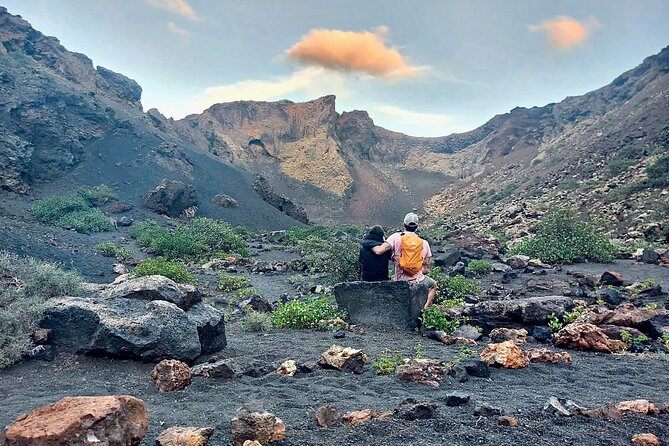
This is built around the Route of El Cuervo, a 9 km circular trail through Lanzarote’s signature volcanic features. In practical terms, that’s long enough to feel like a real outing, but not so long that you’re crushed by time or stamina. You’re also not stuck on one type of terrain—the route gives you variety: tunnels, cones, lava fields, and a crater interior.
What I like most about this kind of looping trail is how it changes your perspective as you go. One minute you’re noticing layers and textures; the next you’re looking at a cone with strong red tones; then you’re walking through harsher black lava ground where the island’s adaptation story becomes obvious.
Comfort-wise, you’ll do best if you treat this as a proper hike: bring supportive shoes and expect uneven surfaces. The tour description notes that the experience may be adapted depending on weather for safety, which is exactly what you want in a volcanic environment.
Masdache volcanic tunnel stop: the underground side of Lanzarote
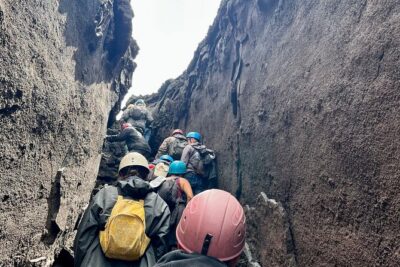
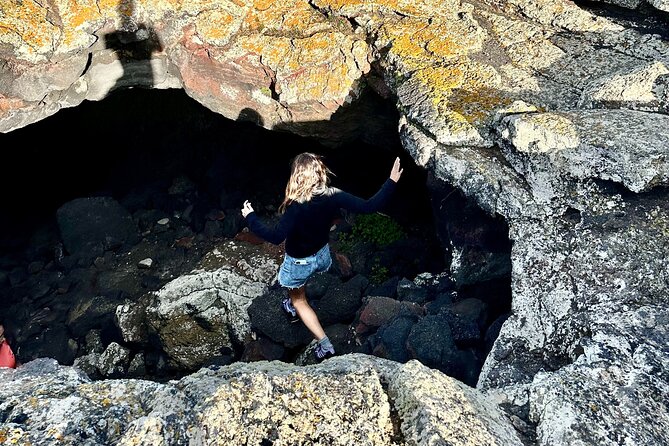
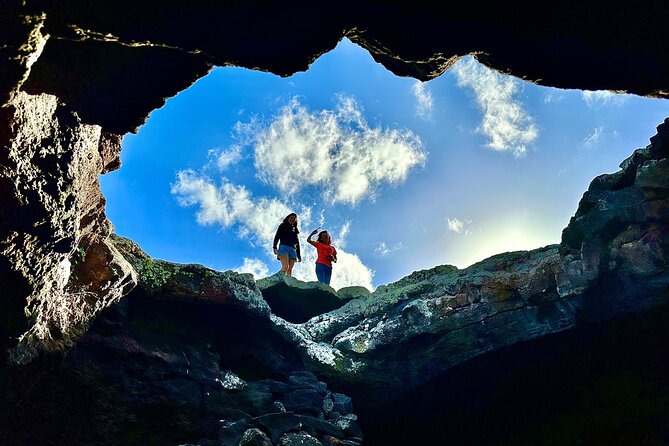
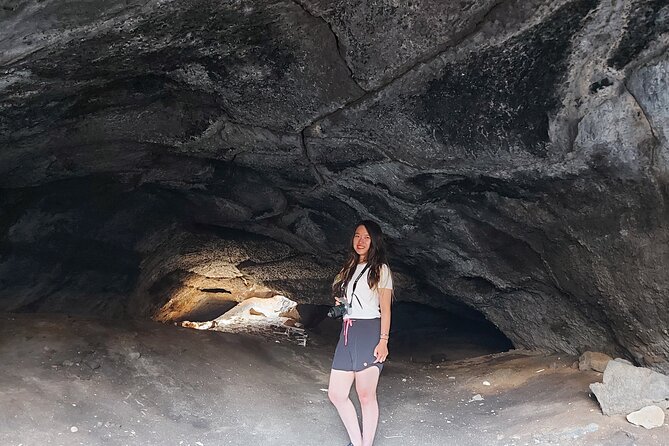
Before the main walking begins, you stop in Masdache to explore a fascinating volcanic tunnel. This is a smart pairing with a surface hike, because it adds a second layer to the story.
On a volcanic trip, it’s easy to think in terms of what’s visible on the outside—craters, lava flows, cones. A tunnel stop forces you to think about what happened beneath the surface: how volcanic activity shaped empty spaces, channels, and passageways. Even if you’re not a geology person, you can still enjoy how the tunnel changes the feel of the experience—cooler, darker, and more like you’ve stepped into the island’s working history.
Ortiz Volcano: reading the layers of ejected material
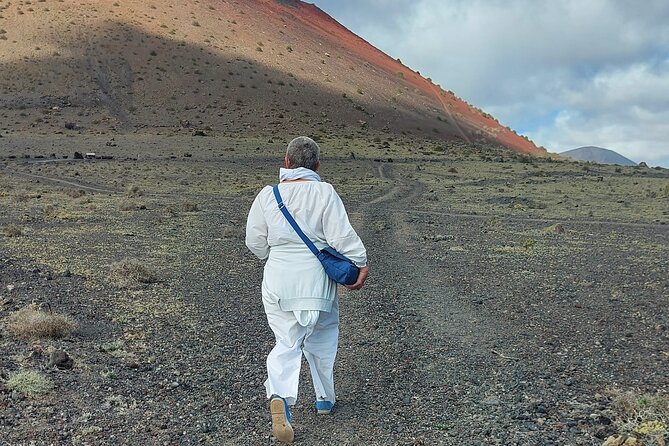
The hike begins near Ortiz Volcano, where you can observe dramatic layers of ejected volcanic material. Layers are one of the best “teacher tools” in the park because they show change over time. You’re basically watching the island’s volcanic episodes stacked like chapters.
This is also where you start building the pattern for the rest of the walk. Once you learn how to look at layers and broken textures near Ortiz, it gets easier to appreciate what comes next at Colorado and El Cuervo.
If you like photos, this is a strong section for both wide views and close-up texture shots. Just keep in mind that volcanic ground can be dusty or irregular, so take your time and watch your footing.

Colorado Volcano and its strombolian cone colors
Next comes Colorado Volcano, described as an impressive strombolian cone with striking red tones. Strombolian cones have a distinct look, and the red tones help your eyes separate structure from chaos. This part of the hike tends to feel like a step up in drama: you’re looking at a clear form, not just an expanse.
I also like that you’re given a reason to pay attention beyond aesthetics. A cone like this is a clue about the type of eruptions and material movement that helped shape Lanzarote. When you know what to look for, the scenery becomes more than a backdrop—it becomes evidence.
Volcán Negro and malpaís lava fields: how the island uses what it has
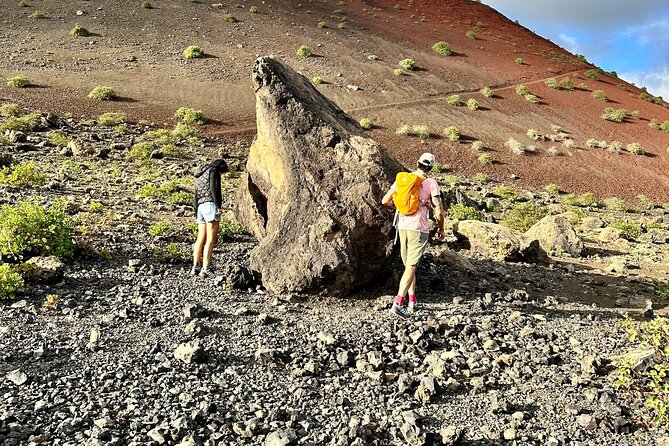
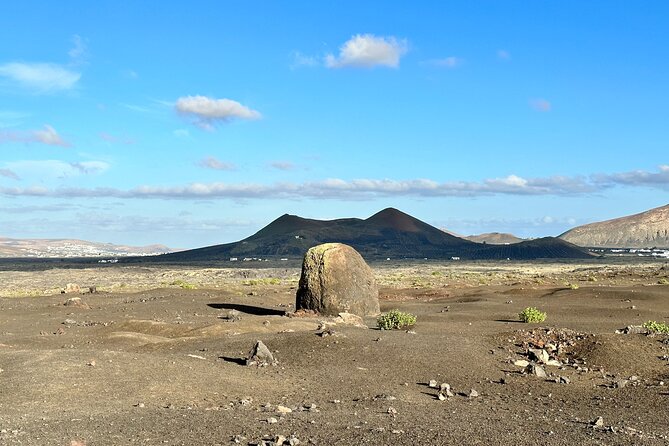
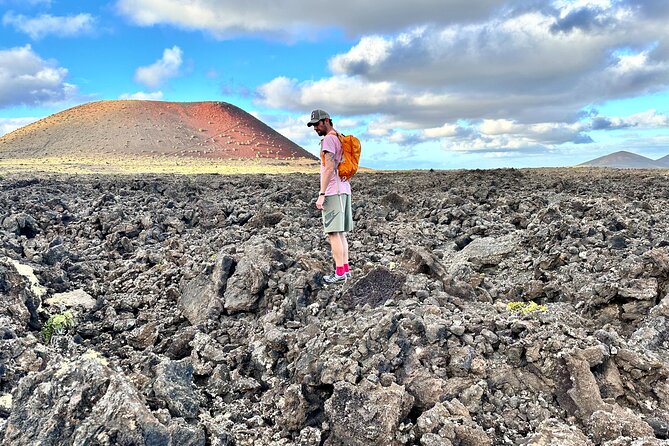
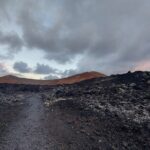
Then you reach Black Volcano (Volcán Negro), surrounded by rugged malpaís lava fields. This is where the tour’s culture angle starts to click. In harsh volcanic terrain, people don’t get to choose “easy” ground. So they adapt.
The tour highlights this adaptation in a practical way: you’ll learn how locals have learned to use and work with these seemingly barren lands. That’s valuable because it keeps the hike grounded. You’re not just admiring an extreme environment; you’re seeing how humans read it, respond to it, and build life around it.
The terrain here can be tough for concentration, so I’d treat this portion like the part of the hike where you slow down. Let the guide do the explaining while you focus on stable steps.
The fallen palm and the Canarian aperitif with local wine
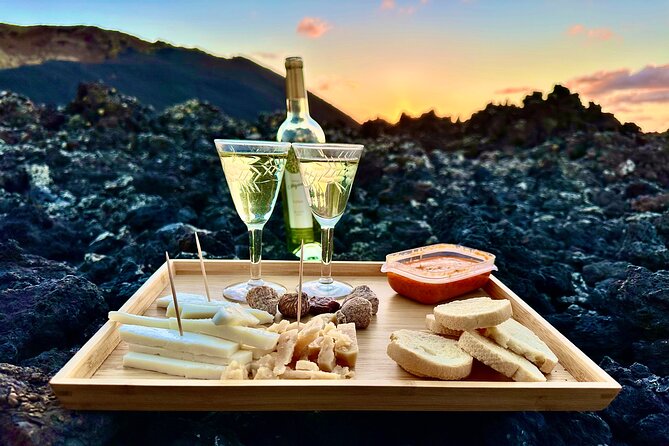
There’s a short break to relax and enjoy a Canarian aperitif paired with local wine, with a key visual moment: you’ll admire a fallen palm tree that’s described as a symbol of resilience in this harsh environment.
This snack stop is more than “food on a hike.” The point is timing. You’ve walked through dramatic volcanic zones, you’ve been asked to look closely, and then you get a calm moment to regroup. Sitting with a drink while you look at a resilient feature in a severe environment turns the whole park from spectacle into meaning.
If you care about value, this is one of the best parts of the tour’s pricing. You’re not just paying for a guide and a route—you’re also paying for a guided pause that feels local and intentional.
Entering El Cuervo crater: walking inside the volcanic story
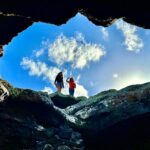
The highlight is entering the majestic crater of El Cuervo Volcano, where you’ll walk inside the heart of Lanzarote’s volcanic past. This is the kind of experience that’s hard to recreate on your own because it’s not only about seeing the crater—it’s about being guided to it and understanding what you’re stepping into.
Walking inside a crater changes your sense of scale. On the outside, a crater is a shape. Inside, it becomes a space with structure, texture, and echoing impact. You’ll likely find yourself paying more attention to edges, layers, and how the ground transitions.
This is also the part of the tour that rewards curiosity. If you ask questions of the guide, you’ll get answers tied to what you’re seeing right then.
Sunset finish over Pico Partido: why timing matters
As the tour concludes, you’ll witness sunset over Pico Partido, with the landscape taking on golden and red hues. Sunset is a cliché word in travel writing, but here it actually makes sense: volcanic tones shift fast with the angle of light.
This ending helps you store the day in your memory. The earlier sections teach you how to look; the sunset finish lets you enjoy the payoff. Even if clouds roll in, the goal stays the same: end with a visual moment that feels worth the effort of the walk.
Guide quality: when Sandra and Eric make the park click
The strongest praise in the reviews centers on the guides. People consistently highlight that the guides are friendly and very informative, and the guidance makes the park feel different afterward—less like random rocks, more like a narrated system.
Two names show up clearly: Sandra and Eric. If Sandra leads your group, expect a lively, approachable style with lots of explanations plus practical recommendations for Lanzarote after the tour. If Eric is guiding, the impression is that he keeps the 3 hours feeling fun while still delivering strong information.
Even when you’re not a “learn-everything” traveler, a good guide is what turns a route into an experience you can talk about later.
Who this trek suits (and who might want another option)
This hike is best for you if you want a guided Timanfaya National Park experience that includes both standout sights and storytelling, without taking your whole day. The small group size (max 10 travelers) makes it feel personal, and the 9 km distance is a solid choice for active visitors who don’t want a short, “barely started” walk.
You’ll also enjoy it if you like a mix of outdoor time and culture—especially the malpaís adaptation theme and the Canarian aperitif moment.
Consider another option if you’re dealing with limited mobility or you know you struggle on uneven volcanic ground. The route may be adapted for safety due to weather, but it still involves real hiking steps.
Timing and booking: what 11 days in advance usually means
On average, this tour is booked about 11 days in advance. That’s a good sign: it means availability can change as your vacation dates approach.
If you’re traveling in peak seasons or on popular departure dates, I’d book sooner rather than later. The group limit of 10 travelers also supports that idea—fewer seats, so don’t wait for last-minute.
What to bring (so you stay comfortable)
The tour calls for the basics: comfortable walking shoes, a hat, sunscreen, and water. On Lanzarote, sun can be aggressive, and volcanic ground can make shade feel scarce.
I also recommend packing with the hike in mind:
- Keep water accessible during the walk.
- Wear a hat you can trust on windy open sections.
- Use sunscreen early, not at the first stop.
Is it worth it? A quick decision guide
Book this tour if you want:
- a guided 9 km circular volcanic walk inside Timanfaya National Park,
- a stop at a volcanic tunnel near Masdache,
- a chance to walk inside the El Cuervo crater,
- and a built-in Canarian snack with local wine.
Skip it (or consider a different style of tour) if you only want a view from a bus, or if you prefer shorter walking distances on smooth surfaces.
FAQ
How long is the Timanfaya trekking experience?
The experience runs about 3 hours 30 minutes (approx.).
How far will I walk on this circular route?
The route is described as a 9 km circular trail.
Is the tour suitable for most people?
Most travelers can participate, but you’ll still want comfortable walking shoes because it’s a hiking route on volcanic terrain.
What language is the tour offered in?
The tour is offered in English.
What should I bring for the hike?
Bring comfortable walking shoes, a hat, sunscreen, and water.
Is the group size large?
No. The tour has a maximum of 10 travelers.
Can I cancel for a full refund?
Yes. You can cancel up to 24 hours in advance for a full refund. If you cancel less than 24 hours before the start time, the amount paid won’t be refunded.
Should you book this Timanfaya trek?
I think you should book it if you want the best mix of route quality, small-group guiding, and a memorable volcanic payoff—tunnel stop, multiple volcano zones, crater walking, and a sunset finish over Pico Partido. This is the kind of tour that makes Timanfaya feel understandable, not just dramatic.
If you’re the type who enjoys learning while walking and you don’t mind uneven ground, it’s a strong value at $75.86 because you’re paying for an organized route plus thoughtful food and drink, not just a basic walk.