REVIEW · LANZAROTE
Sea Trek and Diving for handicaped people
Book on Viator →Operated by Native Diving Lanzarote · Bookable on Viator
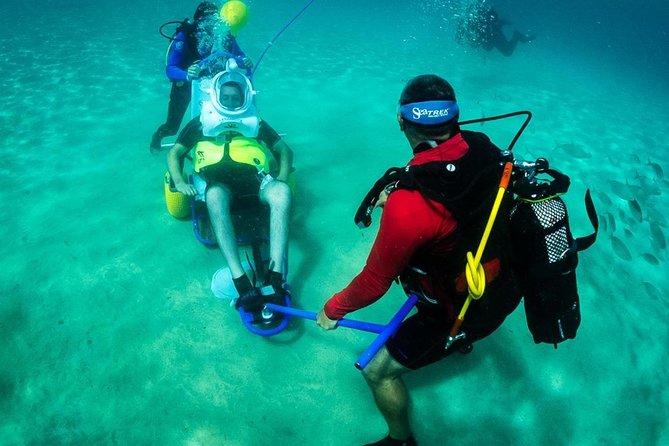
A wheelchair that goes underwater: yes, really. This is Sea Trek for people with disabilities in Costa Teguise, built around a water-adapted wheelchair so you can experience the seabed with support from a team of experienced instructors. It’s a private, 3-hour activity based at Avenida del Jablillo and designed for both first-timers and people who might feel shut out of water sports.
What I love most is the “you’re not an observer” feeling. The equipment is made so you can actually move and take part, not just sit at the edge. I also like how safety and calm instruction are baked into the whole setup, with clear guidance and a focus on protecting sea life, mentioned again and again in feedback about how the team handles first-time experiences. One thing to consider: pictures and videos aren’t included, so if you want keepsakes beyond your own photos, plan accordingly.
In This Review
- Key things that make this Sea Trek experience work
- Where Sea Trek starts in Costa Teguise
- The real “itinerary”: a 3-hour rhythm you can trust
- The underwater wheelchair: why this is more than equipment
- Gear-up: helmet, wetsuit, and what’s included
- Sea Trek time: moving at seabed level with a safety-first team
- The below-water option: adding more without taking away comfort
- Staff support that shows up in the details
- Price and value: what $208.23 buys you (and what it doesn’t)
- Who should book this Sea Trek and below-water option
- Book it or skip it: my quick decision guide
- FAQ
- How long is the Sea Trek experience?
- Where is the meeting point?
- What time does the activity run?
- What’s included in the price?
- Are pictures or videos included?
- Is this a group tour with strangers?
- What if the weather is bad?
Key things that make this Sea Trek experience work
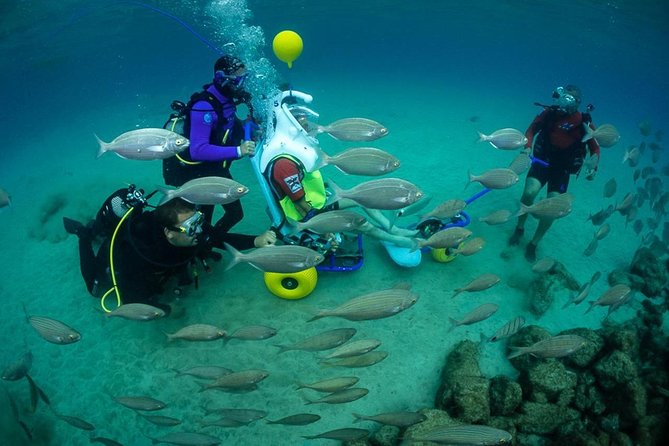
- A water-adapted underwater wheelchair is the centerpiece, turning accessibility from a side detail into the main event
- Helmet and wetsuit are included, so you don’t have to bring gear or guess at sizing
- Three experienced instructors supervise, which matters when the group needs patience and extra hands
- Safety-first guidance is a repeated theme, especially for first-time below-water visitors
- Sea Trek plus a below-water option is offered, so you can match the experience to your comfort level
- Good weather matters, and the activity follows a set daytime window
Where Sea Trek starts in Costa Teguise
Your morning or midday begins at Avenida del Jablillo (Av. del Jablillo, 35508 Costa Teguise, Las Palmas, Spain). This matters more than people think, because accessible activities need a smooth start: easy arrival, enough space to gear up, and a location that doesn’t add stress before you even get wet.
The location is near public transportation, which is helpful if you’re not driving. Also, it’s a private tour/activity, meaning only your group participates. That’s a big deal for accessibility. You don’t have to share attention, pacing, or equipment time with strangers who may not need the same support.
Time-wise, the activity runs during 10:00 AM to 2:00 PM (Monday–Saturday), within the stated date range. Practically, I’d treat this as a daytime plan, not an evening “maybe we’ll see if weather holds.” If you’re scheduling other Lanzarote sights, build in buffer time so you don’t show up rushed.
You can also read our reviews of more tours and experiences in Lanzarote.
The real “itinerary”: a 3-hour rhythm you can trust
Even when an activity is short, a good plan feels longer because you’re not waiting around. Here’s the rhythm you should expect during the approx. 3-hour experience:
First, you meet at Avenida del Jablillo. Then you move into gear-up and instruction mode. This is where the team’s setup matters: the helmet, wetsuit, and underwater wheelchair all get organized so you can spend your energy on the fun part.
Next comes a safety briefing and the practical “how it works” part. For a Sea Trek session, this is not the quick, one-minute speech you might get elsewhere. In the feedback about this program, people repeatedly highlight clear safety instructions and a team that takes its time. If you’re a nervous first-timer—or if you’re supporting someone who’s anxious—this pacing is usually what makes the whole day feel manageable.
Then you get your time on Sea Trek with the water-adapted wheelchair. After that, there’s the possibility of doing their second below-water option (the program specifically offers Sea Trek and a Diving activity). For some people, the main win is the Sea Trek portion alone. For others, going a bit further with the instructors is the goal. Either way, you’ll be supervised while you’re in the water.
Finally, the experience ends back at the meeting point. That “back where you started” approach is underrated for accessibility. It reduces decision fatigue at the end—no long, confusing transfer when you’re tired.
The underwater wheelchair: why this is more than equipment
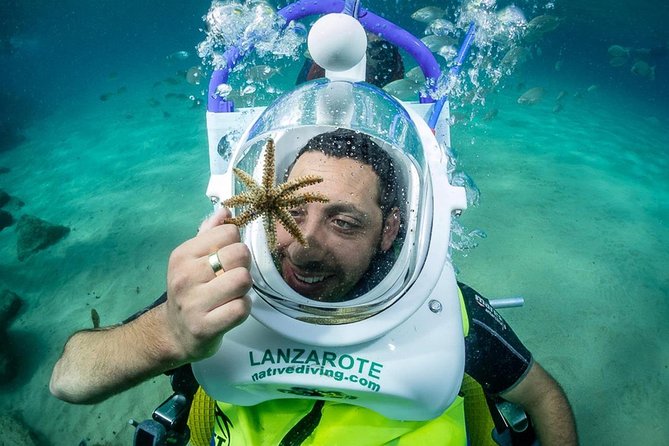
The key idea here is simple: they created a water-adapted wheelchair so people with disabilities can take part in the underwater experience. In regular “snorkel tours,” many people can feel stuck between two bad choices: either you can’t access the water easily, or you can but you’re not set up to move confidently once you’re there.
This program tries to solve both.
For you, that usually means:
- you can participate in the same core experience (seeing and experiencing the seabed) rather than watching from above
- the team can plan the flow around the wheelchair setup, instead of forcing you to adapt on the fly
- you get a structured experience with instructors supervising throughout
In feedback, the standout detail is how the wheelchair lets a disabled spouse or partner have the same type of underwater moment as everyone else—rather than a scaled-down “special access” version. That difference changes the emotional tone. It’s not just nice. It’s the whole point.
There’s also a practical angle: using the right water-adapted setup can reduce how much you’re fighting for balance or energy. That’s especially important if you need to conserve strength for the day’s limited time in the water.
Gear-up: helmet, wetsuit, and what’s included
You don’t show up and start borrowing mismatched equipment. This experience includes:
- Helmet
- Wetsuit
- Underwater wheelchair
That “included” list is a real value lever. In many water activities, the gear situation turns into a guessing game. Here, at least the core safety and comfort items are handled for you.
A couple of practical tips for your own comfort, even though the program provides the gear:
- Wear whatever base clothing you’re comfortable in underneath a wetsuit. You’ll want something that doesn’t irritate when wet.
- If you know you’re sensitive to cold water, plan your day around that. The experience is short, but you’ll still feel water temperature.
- If you wear any necessary medical accessories, ask the team how they prefer you manage them. The activity is supervised by three instructors, so it’s worth bringing your questions early.
Also, a quick note from the included list: the underwater wheelchair is part of what makes this accessible. Don’t assume you’ll be “fine” without it. This program is built around that setup.
Sea Trek time: moving at seabed level with a safety-first team
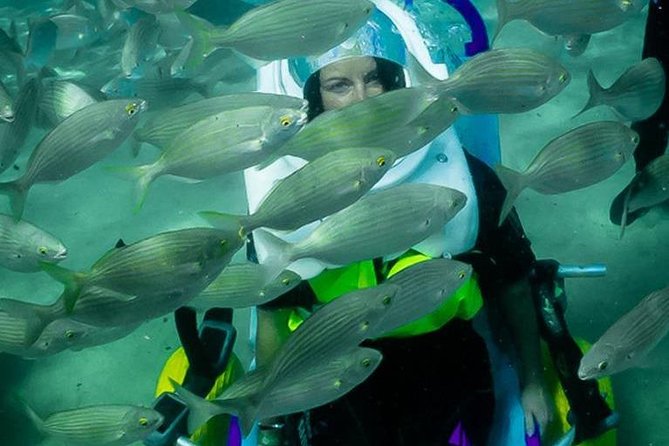
Sea Trek, at its core, is about reaching the seabed experience in a way that feels controlled. And for a first-timer, that controlled feeling is everything.
In the feedback, people repeatedly praised:
- patience and understanding
- clear, easy safety instructions
- the way instructors explain how they help protect sea life
That last point matters. If you’re new to being underwater, you might not automatically know what “good behavior” looks like in the marine environment. A calm instructor-led approach helps you enjoy the moment without stressing about whether you’re doing something wrong.
What I’d watch for during your Sea Trek session:
- how the team positions you and gets you comfortable before you start moving
- whether you’re offered time to ask questions
- whether your support needs are handled without rushing
The tone in the feedback is consistent: people felt in safe hands. Not “we’ll do our best.” More like, we’ve done this before and we’re ready for you.
If you’re booking this because someone in your group is disabled or nervous about being in the water, this is where the experience usually wins emotionally: the team’s pacing gives you breathing room.
The below-water option: adding more without taking away comfort
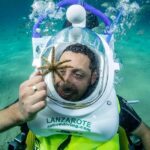
The program offers more than Sea Trek. It also lists an underwater activity option for people with disabilities. From the name and the way the experience is described, it’s meant for adding another level of participation beyond the wheelchair-based Sea Trek.
Here’s the practical way to think about it: you’re not forced into the hardest version. Your comfort matters because you’re supervised by instructors, and the program is clearly structured for accessibility needs.
You’ll get better results if you treat it like a conversation:
- If you want the most controlled option, focus on the Sea Trek portion first.
- If you want to try more, ask how the below-water add-on would work for your body and your support needs.
Feedback also points to equipment that can help with movement. One review mentions that a paraplegic participant was able to move forward without fatigue thanks to equipment described as a sea scooter. You might find the team using extra mobility assistance depending on the individual and the day’s setup.
The overall takeaway: the second option isn’t just a checkbox. It’s an invitation to go a step further—when it fits.
Staff support that shows up in the details
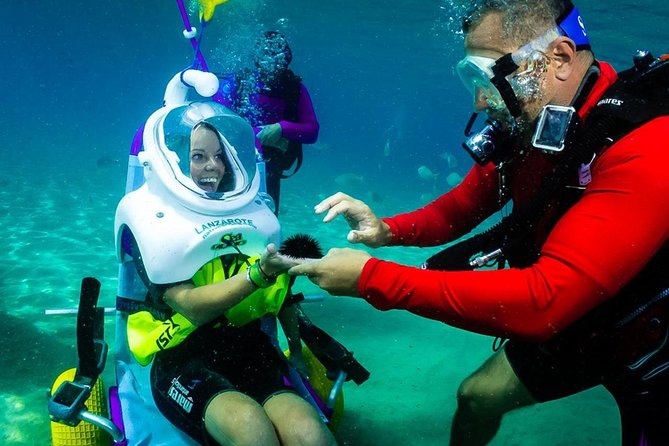
This is supervised by three experienced instructors. That number sounds small until you’re watching how it affects the experience. When you have more support staff relative to the activity, you tend to get:
- slower, clearer instructions
- more time to adjust the setup
- better handling of accessibility needs without turning the session into a stress test
The feedback also names people who stood out. Jose appears in one note of thanks, and José Luis is singled out for providing serenity even for someone who hadn’t been underwater in years. Another review mentions the center’s setup for making it possible for paraplegic participants to move without getting wiped out.
Could you meet the same individuals? Maybe. What you can count on is the style: patient, safety-focused, and tuned for people who need extra time to feel comfortable.
Price and value: what $208.23 buys you (and what it doesn’t)
At $208.23 per person for an experience of about 3 hours, the price sits in the “special activity” category. So you should evaluate value based on what’s actually included and what gets handled for you.
Included:
- helmet
- wetsuit
- underwater wheelchair
Not included:
- pictures and videos
The included gear alone can save you the common hassles of rentals and sizing. But the bigger value isn’t just gear. It’s the specialized wheelchair setup and the instructor attention that makes the experience accessible.
What can lower perceived value is simple: if you assume you’ll get photo or video souvenirs automatically, you’ll be disappointed. You can still take your own photos if you’re able, but the experience doesn’t include filmed or photographed memories.
My advice: if photos matter to you, ask in advance what’s possible for purchase or sharing, since the provided info only says pictures and videos aren’t included.
Who should book this Sea Trek and below-water option
This is a strong match if:
- you or someone in your group uses a wheelchair or has mobility needs and wants a real underwater participation experience
- you’re a first-timer who wants calm, patient instruction rather than a speed-run
- you want a private setting so the team can focus on your group’s needs
It’s also a good fit if you’re booking for someone who is disabled but wants to feel included in the same way as able-bodied participants—because the equipment and supervision are built for that goal.
Who might find it less ideal:
- anyone who hates weather dependence should plan carefully. The activity requires good weather.
- anyone who expects professional photos should know that’s not part of the package.
Book it or skip it: my quick decision guide
I’d book this if your top priority is an accessible underwater experience with real support, not a compromise activity. The water-adapted wheelchair, the included wetsuit and helmet, and the three-instructor supervision are the core reasons this is worth considering.
I’d think twice if you’re mainly chasing a photo album and don’t want to manage picture-taking yourself. Also, if your schedule is tight and you can’t shift for weather, build in flexibility.
If you’re planning Lanzarote and you want one experience that’s built for inclusion from the first minute, this Sea Trek program is the kind of day you’ll remember for the right reasons.
FAQ
How long is the Sea Trek experience?
It lasts about 3 hours (approx.).
Where is the meeting point?
You meet at Avenida del Jablillo, Av. del Jablillo, 35508 Costa Teguise, Las Palmas, Spain. The activity ends back at the meeting point.
What time does the activity run?
The opening hours listed are Monday to Saturday, 10:00 AM to 2:00 PM.
What’s included in the price?
You get a helmet, wetsuit, and an underwater wheelchair.
Are pictures or videos included?
No. Pictures and videos are not included.
Is this a group tour with strangers?
No. It’s a private tour/activity, so only your group participates.
What if the weather is bad?
The experience requires good weather. If it’s canceled due to poor weather, you’ll be offered a different date or a full refund.