REVIEW · LANZAROTE
Lanzarote: Timanfaya Natural Park Trekking Tour
Book on GetYourGuide →Operated by Lava Trekking · Bookable on GetYourGuide
You come for the volcanoes, then you keep walking to understand them. This Timanfaya trek is a circular route through lava rivers, craters, and volcanic views that feel closer than any viewpoint from the road.
What I especially liked is the way your guide turns the terrain into a story, and the mid-tour Canarian wine and local bites make the hike feel like more than exercise.
You’ll be out for about 3 hours (often 3 to 3.5), with a pace that stays friendly for most people who can handle 8 km. One consideration: the ground is volcanic and uneven, and this tour is not suitable for people with mobility issues or significant pre-existing medical conditions.
In This Review
- Key things to know before you go
- Why Timanfaya on Foot Feels Different
- Meeting at the Church of Masdache (and finding your group fast)
- The route: 8 km circular trekking through volcano terrain
- Walking close to craters and lava “rivers”
- The mid-tour break: Canarian appetizer + white wine
- The minute of silence: a surprising emotional tool
- Sunset timing: why June and December start times matter
- What to wear and bring (so you don’t suffer for bad shoes)
- Pace, group size, and why it stays enjoyable
- Price and value: what $55 covers (and why it feels fair)
- Who should book this trek (and who should skip it)
- Final verdict: Should you book the Timanfaya trek with wine?
- FAQ
- How long is the Lanzarote Timanfaya trekking tour?
- What does the tour include besides the hike?
- Where do I meet the guide?
- Is hotel pickup and drop-off included?
- What languages are available for the live guide?
- Is the tour suitable for everyone?
Key things to know before you go
- Small group (up to 9): more time to ask questions and get personalized pacing.
- 8 km circular route: walk on volcanic terrain, including a crater area, without backtracking.
- White wine stop + Canarian appetizer: included, timed as a break mid-hike.
- Guides in English, Italian, Spanish: many guides bring strong local storytelling (you may meet Sandra, Claudia, Andy, Erik, and others).
- Sunset-based timing: your start time changes by season, so plan around the light.
- Rules matter here: no drones, and you’ll be on authorized paths only.
Why Timanfaya on Foot Feels Different
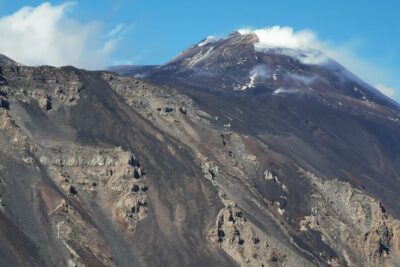
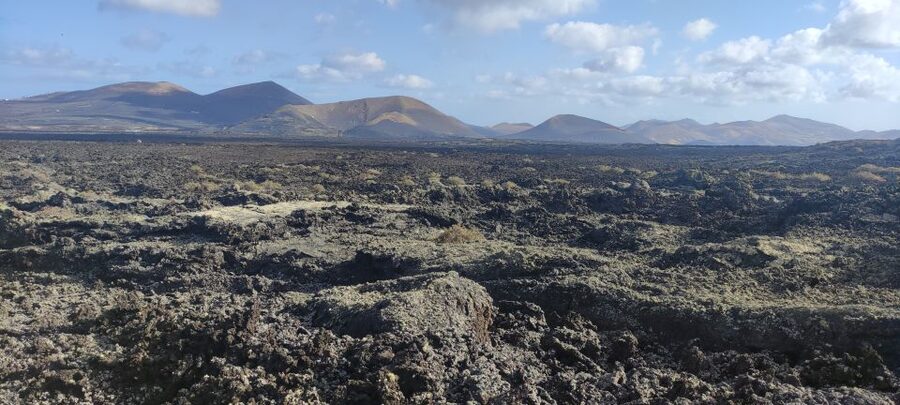
Timanfaya Natural Park is famous for a reason: the whole area looks like the earth is still mid-sentence. On this guided trekking tour, you’re not just looking at volcanic forms—you’re walking across them and learning what you’re seeing, step by step.
I love that the guide’s explanations aren’t abstract. You’ll get context on how Lanzarote formed, what types of lava flows look like on the ground, and what survives (plants, small wildlife, minerals) in a place that seems too harsh for life.
And yes, the included food changes the tone of the outing. The tour includes an aperitif with white Canarian wine, so you get a real taste of the islands instead of just passing through.
You can also read our reviews of more tours and experiences in Lanzarote.
Meeting at the Church of Masdache (and finding your group fast)
Your meeting point is the Church of Masdache. The guide arrives on a white van, which makes it easier to spot once you know what to look for.
This matters more than you’d think. With a small group, the tour is run like a smooth operation: you meet, you check in, you get your water and timing down, and you’re off. Reviews and shared experiences also highlight how well organized the start feels, especially when guides are multilingual and can switch languages easily within the group.
If you’re staying outside the main areas, know that hotel pickup/drop-off is not listed as included. Still, some participants report smooth pickup or help with return in practice—so if you need help getting there, ask early and confirm what’s possible for your location.
The route: 8 km circular trekking through volcano terrain
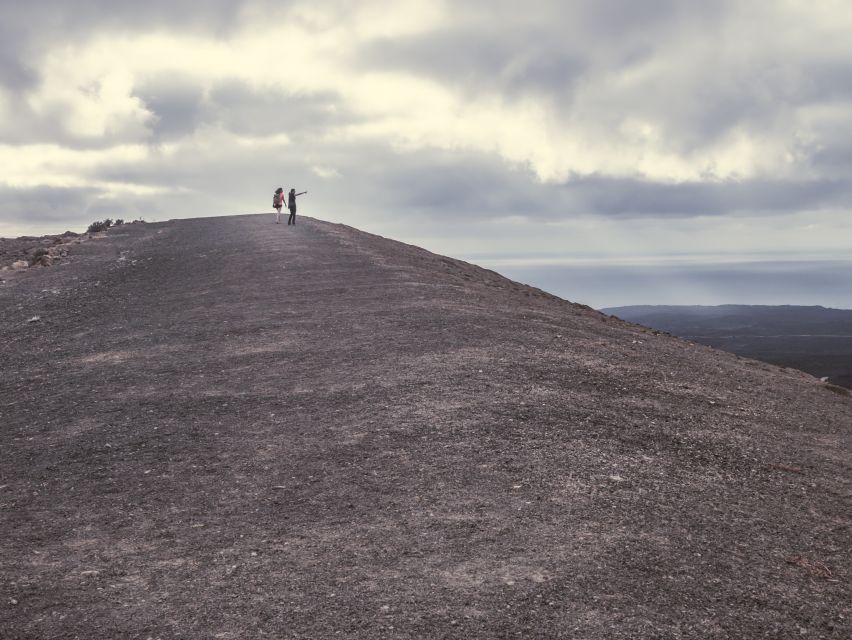
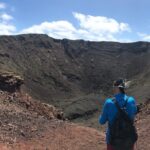
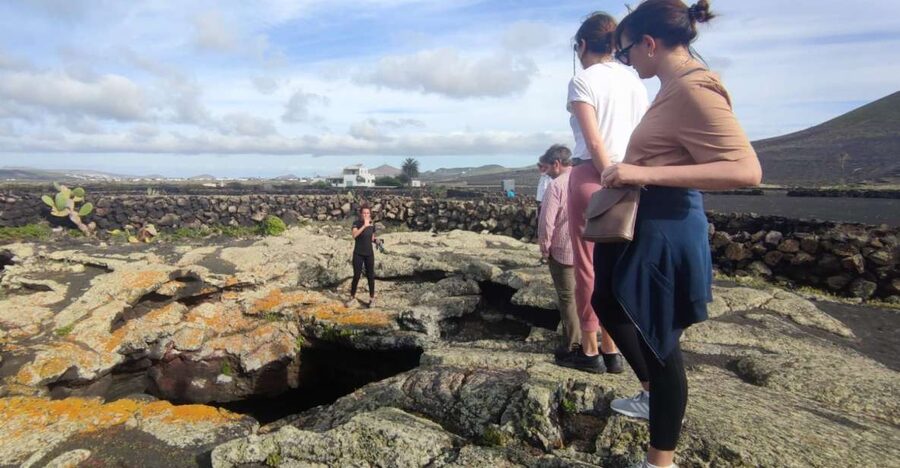
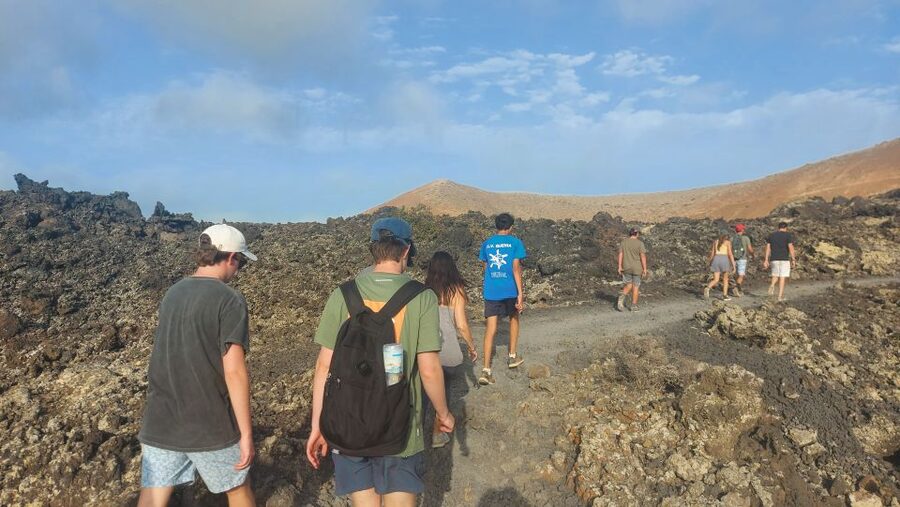
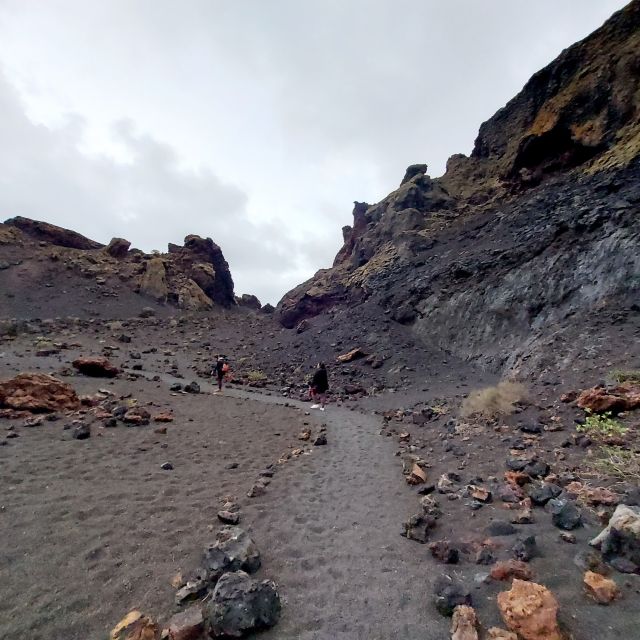
The core experience is a circular trek of about 8 km, lasting around 3 to 3.5 hours. You’ll visit different volcanic spots during the walk, including areas with craters, and you’ll also be walking through lava fields that can look like rivers frozen in motion.
What makes the route feel special is the mix of geology and pacing. It’s not an all-day endurance hike. Many people describe it as manageable, with gentle sections and only a couple of mild uphill moments, while the main challenge comes from footing—volcanic ground can be dusty and uneven.
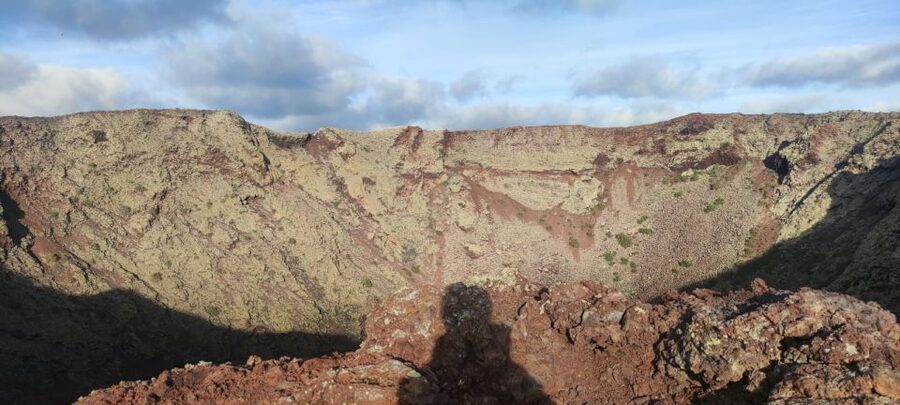
Your guide keeps stopping for explanation and viewpoints. Those pauses are part of the value: you’re not just collecting photos. You’re learning to read the landscape—how the rock layers, the shapes of craters, and the paths across lava show different stages of volcanic activity.
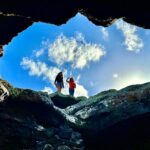
Walking close to craters and lava “rivers”
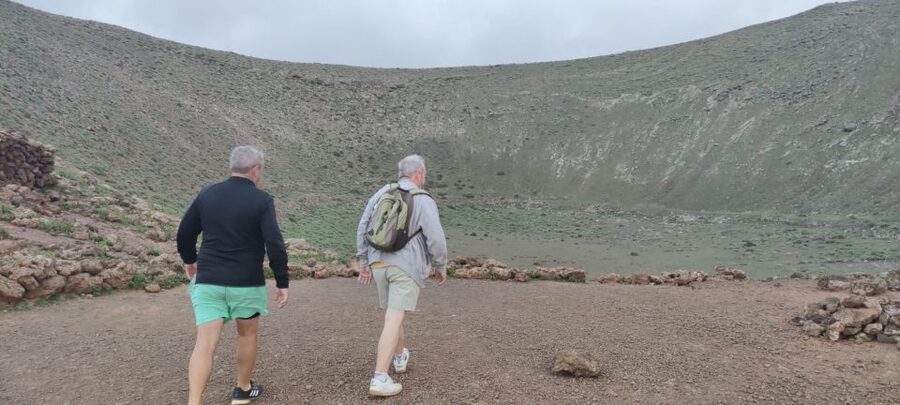
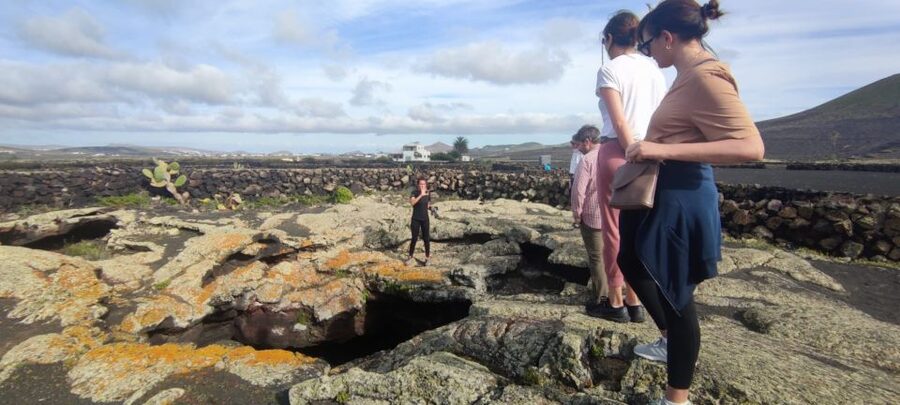
One of the top reasons to do this on foot is access. Timanfaya has areas that you can’t walk everywhere on your own. With a local guide, you reach authorized parts of the park and get that close-up feeling that turns the geology from a map into something real.
As you move through the route, you’ll likely spend time near crater areas and lookout points where the scale hits you. Some guides also guide your attention to details like lava types and how erosion and time change what you see. If you like nature learning that isn’t boring, this is the kind of tour where questions keep getting answered.
A practical note: even when the walk feels gentle, you’re still on volcanic terrain. You’ll want shoes with real traction, and you should expect dust.
The mid-tour break: Canarian appetizer + white wine
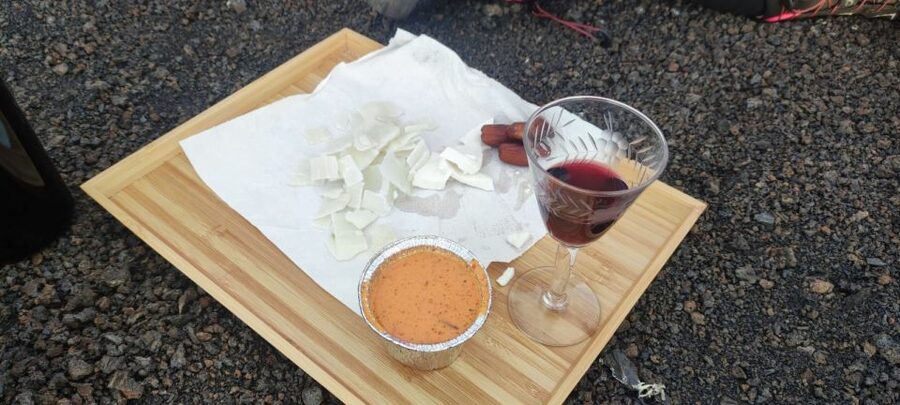
About halfway through, you stop for an included break: a Canarian appetizer and wine. The wine is always white wine from the Canary Islands.
This is one of the best value elements of the tour. Food breaks on hikes are often small and forgettable. Here, the tasting is built into the experience, so you get something that feels like part of Lanzarote rather than a last-minute snack.
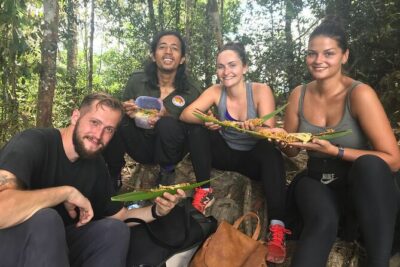
People talk about the quality of the tasting and the homemade touch in some cases. You might see things like cheese, crackers, and local sauces (often described with mojo-style flavors), plus the wine served at the right moment—when you’ve earned the break but before the energy drops too far.
If you’re the type who usually skips “tour snacks,” don’t. This one is scheduled to keep the hike enjoyable and social, and it gives you a quick taste of the island’s food identity.
The minute of silence: a surprising emotional tool
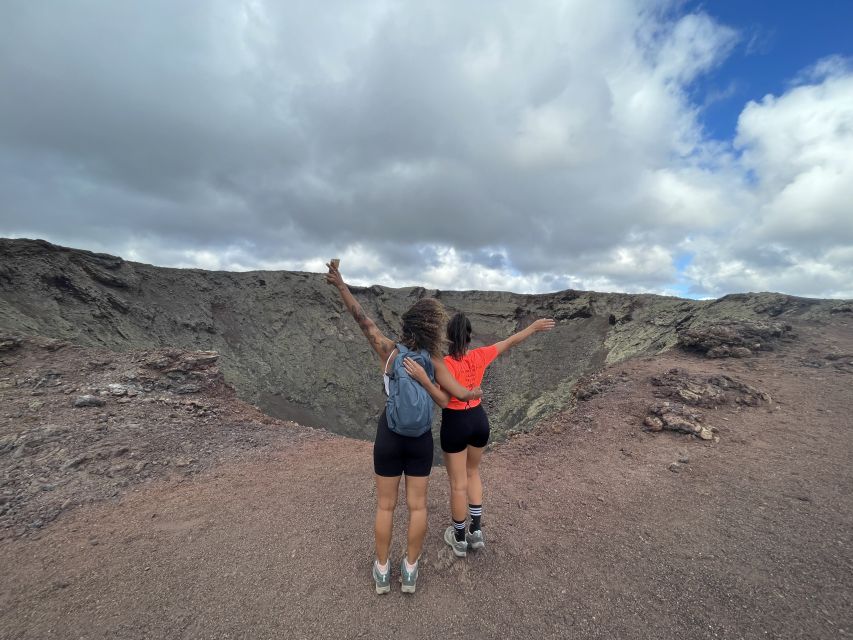
About during the tour, there’s a minute of silence to meditate in front of a crater or along the volcanic route. That one small ritual does a lot.
It changes how you experience the park. Instead of rushing from viewpoint to viewpoint, you slow down just enough to notice the details: the wind, the colors in the rocks, and how quiet lava fields can be. Even if meditation isn’t your thing, the timing makes sense because the tour is already full of science and storytelling, and this gives you a mental pause.
It’s also a good moment for photos, but don’t treat it like a photo sprint. Let the silence do its job first—then you’ll take better pictures.
Sunset timing: why June and December start times matter
This tour is timed around sunset, and that’s why the schedule changes by season. The info you’re given can shift, with examples like:
- In June, it may be around 5:00 p.m.
- In December, it may be around 2:30 p.m.
What this means for you: plan your day so you’re not racing from one activity to another. If you show up late or hungry or underpacked, the changing light and wind near sunset can throw you off.
Also, dress like weather changes fast. Even in Lanzarote, conditions can turn breezy. Bringing a light waterproof and a warm layer helps you enjoy the later part of the trek without being miserable.
What to wear and bring (so you don’t suffer for bad shoes)
The tour instructions are straightforward:
- Bring passport or ID
- Bring water
- Wear sports shoes (not just whatever sneakers you grabbed)
- Bring what you need for heat and sun
Even though water is included and sunscreen is listed as included, your comfort still depends on footwear. Many participants emphasize real trekking shoes over basic sneakers because lava ground and dust are not forgiving.
My practical packing list:
- Traction shoes you don’t mind getting dusty
- A light jacket for wind
- A small snack or extra water only if you know you run low on energy (even though water is provided)
- Your ID/passport
- And if you’ll want it later: use the restroom before you go, because you’re out hiking for hours with limited chances to stop
Drones are not allowed, and littering is obviously a no.
Pace, group size, and why it stays enjoyable
The group is kept small—limited to 9 participants. That’s a big deal in a place where the terrain can be tricky. Small group size means fewer people crowding the guide, and more time for explanations in the language you need.
You may get guides like Sandra, Claudia, Andy, Erik, David, Jessica, Simon, and others depending on the date. What they have in common, based on shared experiences, is enthusiasm and the ability to answer questions about the volcanic history, rocks, minerals, plant life, and how the park is preserved.
Also, the pace often feels controlled. People describe it as easy to follow, with frequent stops that break the walk into understandable chunks. The stops aren’t wasted time; they’re when the guide helps you connect what you’re seeing to why it matters.
Price and value: what $55 covers (and why it feels fair)
At about $55 per person for roughly 3 hours in Timanfaya with a guide, it’s not just a hike. You’re paying for access to authorized areas, interpretation, and included sustenance.
What’s included:
- Local guide
- Rescue insurance, accident and civil liability
- Canary appetizer and wine
- Water
- Sunscreen
That mix makes the price feel sensible. If you tried to recreate this on your own, you’d still need transport, a guide-like plan for where to walk, and you’d end up buying your own food and drink anyway. Here, the timing of the tasting and the crater-focused storytelling are built into the route.
Would I call it a bargain deal? Not exactly. But for what you get—small group, guided geology, crater walking, and the included wine tasting—it’s solid value.
Who should book this trek (and who should skip it)
This is a great fit if you want:
- A guided walk where you actually understand the volcanic setting
- A short-to-moderate hike of about 8 km
- A food break that feels like a real Canarian aperitif
- Small-group interaction, not a cattle-call tour
You should skip it if you:
- Have mobility impairments
- Have pre-existing medical conditions that could be affected by trekking
- Are over 70, since it’s not listed as suitable for that age group
- Need an option with fully accessible terrain (this one is not framed that way)
Final verdict: Should you book the Timanfaya trek with wine?
I think you should book this tour if you want Timanfaya to feel personal and understandable. The combination of volcano walking on an authorized route, strong guide explanations in English/Italian/Spanish, and the included white wine aperitif near the middle makes it more satisfying than a quick viewing stop.
I’d only hesitate if you’re worried about uneven volcanic ground, wind near sunset, or if you fall into the tour’s listed non-suitable categories. Otherwise, it’s an excellent way to see the wild side of Lanzarote.
If you can, plan your day so you’re rested when the light shifts—then you’ll get the most out of both the science and the silence minute.
FAQ
How long is the Lanzarote Timanfaya trekking tour?
The duration is about 3 hours, and in some cases it can be around 3 hours 30 minutes.
What does the tour include besides the hike?
It includes a local guide, rescue insurance (accident and civil liability), water, sunscreen, and a Canarian appetizer with white wine.
Where do I meet the guide?
Meet your guide at the Church of Masdache. The guide arrives on a white van.
Is hotel pickup and drop-off included?
Hotel pickup and drop-off is not included. Transfers may be available for an additional fee if you don’t have a car.
What languages are available for the live guide?
The live tour guide is available in English, Italian, and Spanish.
Is the tour suitable for everyone?
No. It is not suitable for people with mobility impairments, people with pre-existing medical conditions, and people over 70.