REVIEW · NAYA PUL
Pokhara: 7-Day Annapurna Base Camp Guided Trek
Book on GetYourGuide →Operated by Himalayan Nomad Treks Pvt. Ltd. · Bookable on GetYourGuide
Himalaya trekking comes with real payoff. This 7-day guided climb to Annapurna Base Camp ends with the muscle-soothing Jhinu Dada hot springs, plus hotel pickup and included meals on the trek.
I like the steady, human pace with an English-speaking guide (I’ve seen how guides like Ghanshyam Silwal and Prakash adapt daily effort to the group). I also like that this is set up as a value-focused package: permits, paperwork, trek accommodation, and a medical kit are included.
One consideration: you’re going from about 800m in Pokhara up to 4130m on Day 4, and there are full hiking days (including a long return day to Sinuwa). If you’re sensitive to altitude or hate early starts, you’ll want to plan for that reality.
In This Review
- Key highlights you’ll feel on this trek
- Annapurna Base Camp: the day it clicks
- Day 1 in Nepal: from Lakeside Pokhara up to Chhomrong
- The main tradeoff on Day 1
- Chhomrong to Dovan: suspension bridges and Modi River scenery
- Day 3 to Deurali: rhododendron, bamboo, and waterfalls
- Why Deurali is more than just a stop
- Day 4: climbing to Annapurna Base Camp at 4130m
- What helps you enjoy this day
- Day 5 back to Sinuwa: the long descent that refreshes
- Day 6: Jhinu Dada hot springs at 1600m
- A small practical point
- Day 7: back to Lakeside Pokhara
- Guides, pace, and what “safe” actually means here
- Price and logistics: what $234 buys you (and where to budget more)
- Included in the package
- Not included (plan ahead)
- My value take
- What to pack: the stuff that keeps you comfortable
- Who this trek suits best
- Should you book this 7-day ABC trek?
- FAQ
- What is the highest altitude reached on this trek?
- Where does the trek start and where do you return to?
- How long are the hiking days?
- Does the trek include Jhinu Dada hot springs?
- Are meals included?
- Is the guide English-speaking?
- Are permits and paperwork included?
- What’s included in the price besides the guide?
- What should I bring for the trek?
- Is cancellation free?
Key highlights you’ll feel on this trek
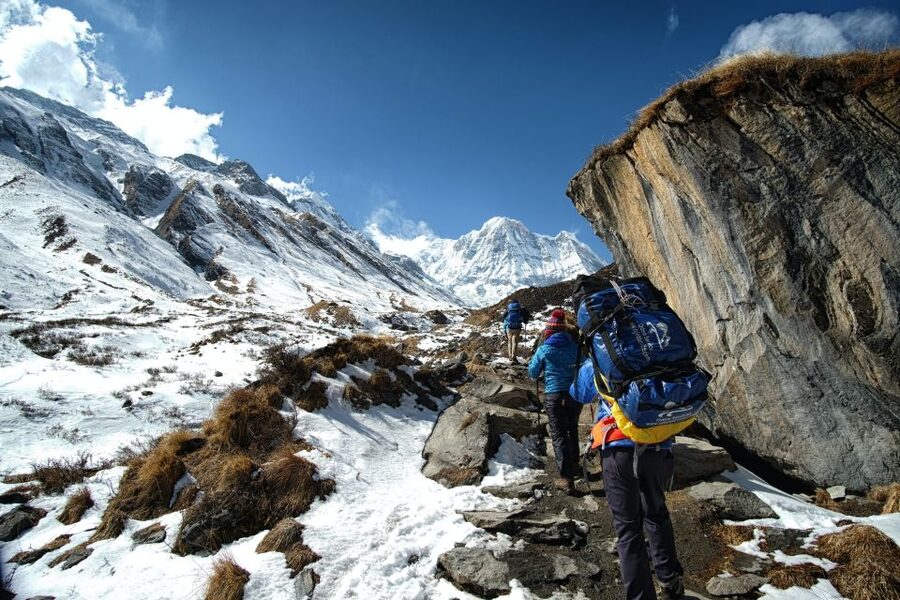
- Annapurna Base Camp at 4130m with dramatic glaciers and a mountain amphitheater feeling
- Forest-to-village walking through rhododendron, bamboo, and classic mountain settlements like Chhomrong and Sinuwa
- Suspension bridges and big river scenery as you cross and follow the Modi River area
- Jhinu Dada hot springs at 1600m to recover after high-altitude trekking
- Guides who adjust the pace and keep you motivated without rushing
- A package that covers permits, meals (full package), lodging, and trek logistics
Annapurna Base Camp: the day it clicks
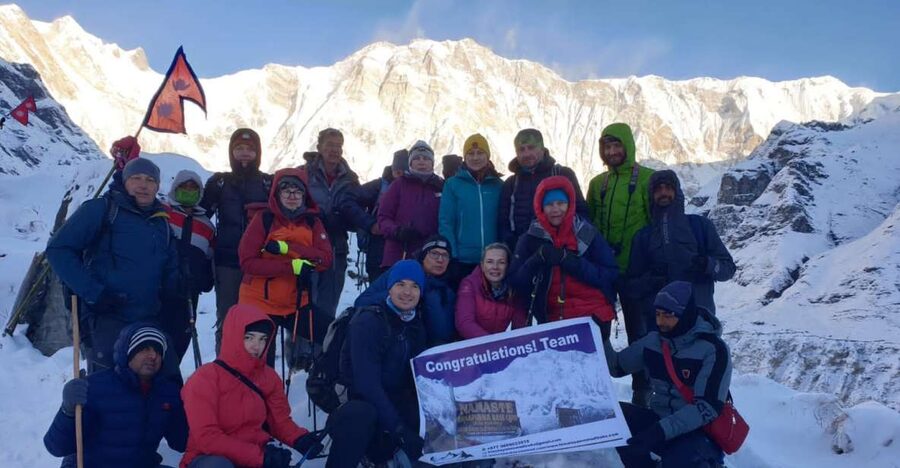
The best part of an Annapurna Base Camp trek is that you don’t just “see” mountains. You reach a spot where the whole world tightens into peaks, ice, and steep lines. On this trek, that moment lands on Day 4, when you go from Deurali (3200m) up to Annapurna Base Camp (4130m) in about 6 hours.
What you’re aiming for is described as an amphitheater of mountains. In practical terms, that means once you’re there, you’ll likely stop more than you hike. Your job is to take it in, enjoy the snow-capped peaks, and soak up the glacier views while the day still feels manageable.
If you’re the type who likes a clear goal, this trek gives it to you. If you’re more cautious or slower, you still have a plan built around reaching Base Camp. And if you love your photo moments, you’ll have a full day with a clear “this is the one” destination.
You can also read our reviews of more tours and experiences in Naya Pul.
Day 1 in Nepal: from Lakeside Pokhara up to Chhomrong
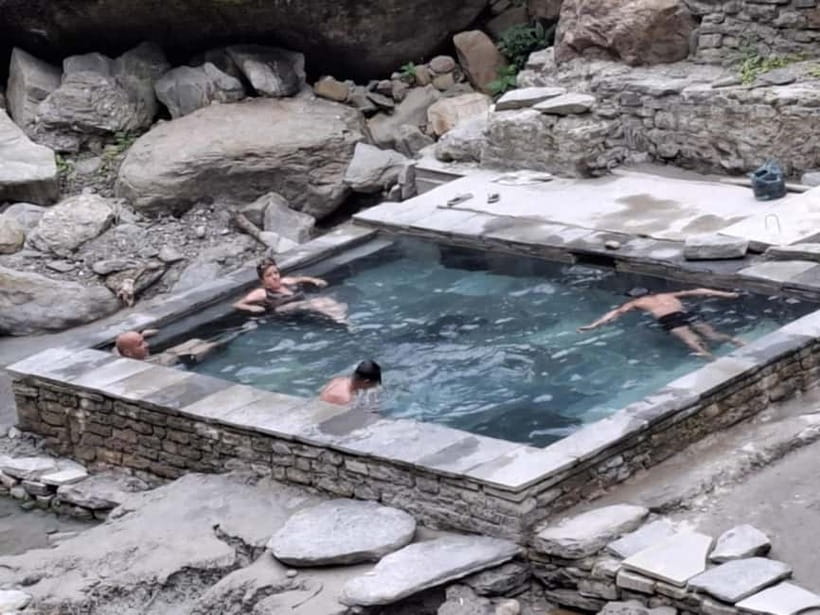
Your trek begins in Lakeside Pokhara (800m). You start early after breakfast, then the day mixes road travel and hiking: about 4 hours by jeep plus 3 hours on foot to reach Chhomrong (2200m).
The drive matters more than people think. You’ll travel through a scenic highway corridor with views of the Seti River, mountains, and green paddy fields. It’s a good warm-up. You’re already getting mountain cues before your legs start doing the talking.
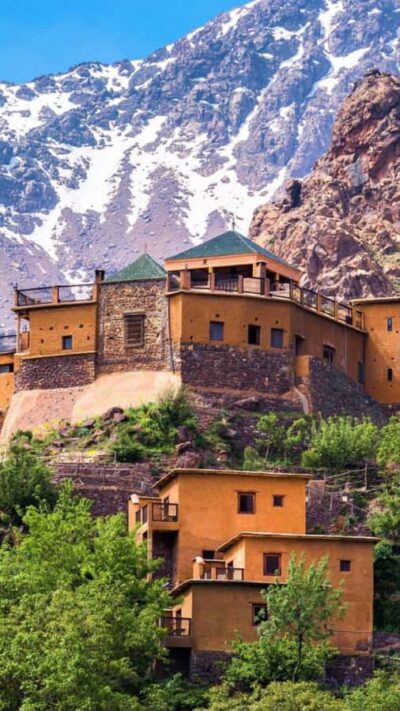
Then you’re walking into Chhomrong, a village stop known in this area for culture and hospitality. It’s also a smart first hiking day: you gain altitude, you meet trail life, and you don’t throw yourself into a high-elevation marathon right away.
The main tradeoff on Day 1
You’re not fully “on your own time.” The jeep segments and the early start mean you’ll feel like you have a schedule. If you love to linger and wander, you’ll want to mentally switch into guided-trek mode.
Chhomrong to Dovan: suspension bridges and Modi River scenery
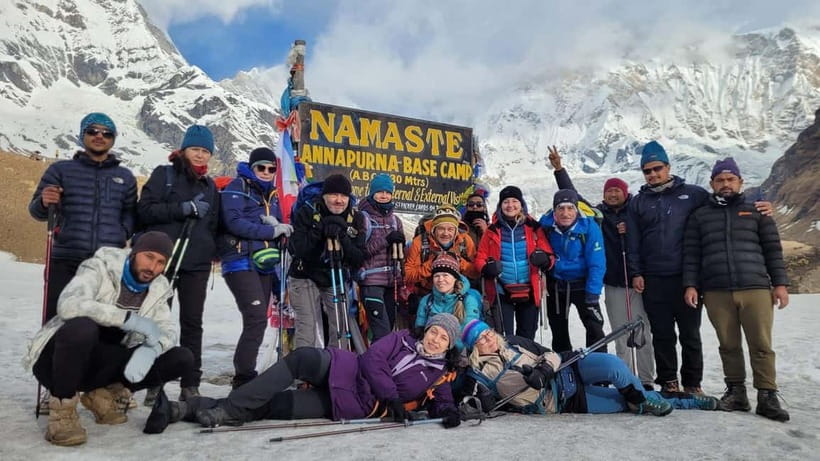
Day 2 runs from Chhomrong (2200m) to Dovan (2400m) and takes about 5 to 6 hours. This is the classic shift-day: less “arrival excitement,” more steady walking through mountain terrain that starts to feel wilder.
You’ll pass through lush forests and cross suspension bridges—the kind of crossing that slows you down for a second, even if you’re not a thrill-seeker. You’ll also see the Modi River along the way, plus vistas of Annapurna and Machhapuchhre in the distance.
This day is a good one for learning your body rhythm. It’s not the highest day, and it’s not the longest, so you can focus on steady breathing, not endurance heroics. That helps later, when Day 3 and Day 4 start stacking altitude and effort.
Day 3 to Deurali: rhododendron, bamboo, and waterfalls
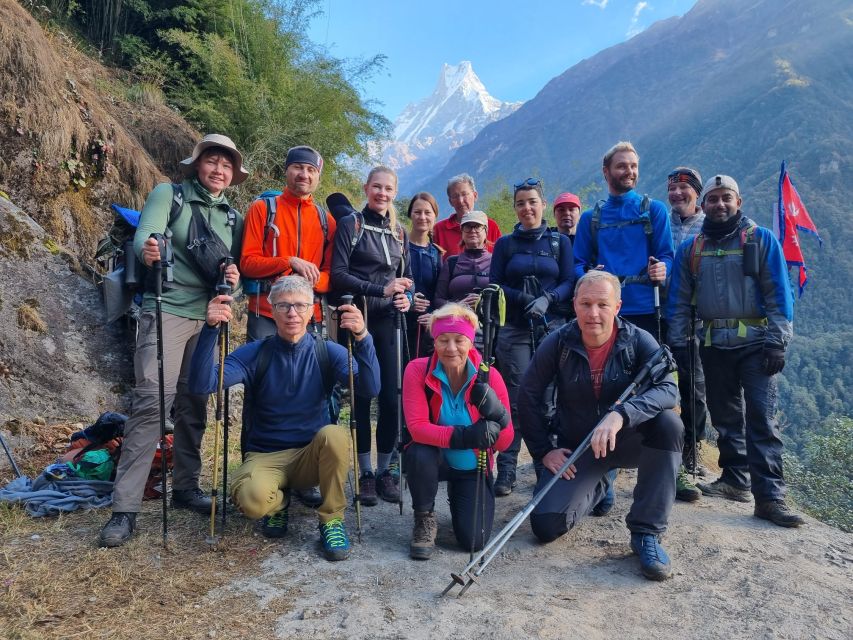
Day 3 takes you from Dovan (2400m) to Deurali (3200m) in about 6 hours. That’s a big jump in elevation compared to Day 2, and the trail reflects it.
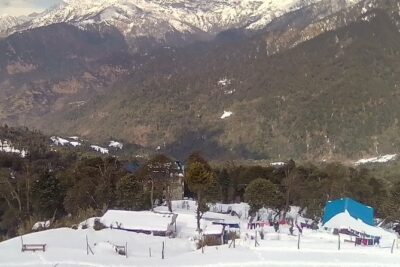
You’ll be walking through rhododendron and bamboo forests as you gain height. As you climb, you can run into breathtaking waterfalls and views that feel more “Himalaya proper” than “valley trek.”
Why Deurali is more than just a stop
Reaching Deurali sets you up for the Base Camp day. It’s also the point where the air and views usually start to feel sharper. You’ll want to rest well here because tomorrow is the main event.
If you’re the kind of traveler who gets anxious about a big day ahead, this leg is your buffer. It’s hard, but it’s also the day that gives you a sense of progress toward 4130m.
Day 4: climbing to Annapurna Base Camp at 4130m
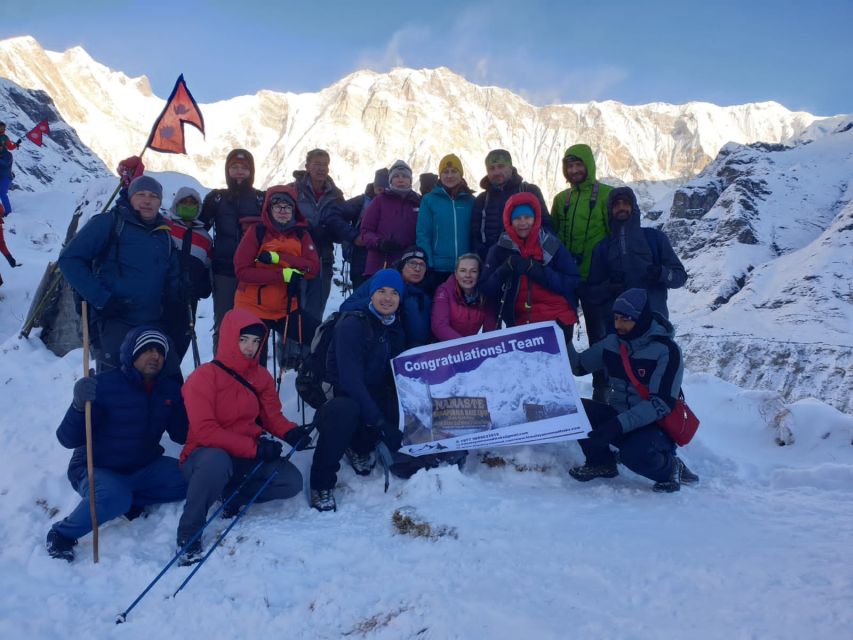
Day 4 is the heart of the trip: Deurali (3200m) to Annapurna Base Camp (4130m), about 6 hours.
The trekking description focuses on reaching that famous amphitheater-like setting, surrounded by snow-capped peaks and dramatic glaciers. That’s exactly what makes Base Camp different from other mountain waypoints: you’re not just “passing through.” You’re arriving at an end-of-the-line view.
What helps you enjoy this day
This is where the guide’s role really matters. In guides I’ve learned about for this trek—like Ghanshyam Silwal and Prakash—the common theme is adapting the pace to the group. That doesn’t mean going slow for safety alone. It means making sure you’re still present for the destination.
Also, plan for the emotional shape of the day. When you’ve been climbing and concentrating on foot placement for hours, the last stretch can feel like it takes forever—then suddenly you’re there. Expect a mix of effort and payoff.
Day 5 back to Sinuwa: the long descent that refreshes
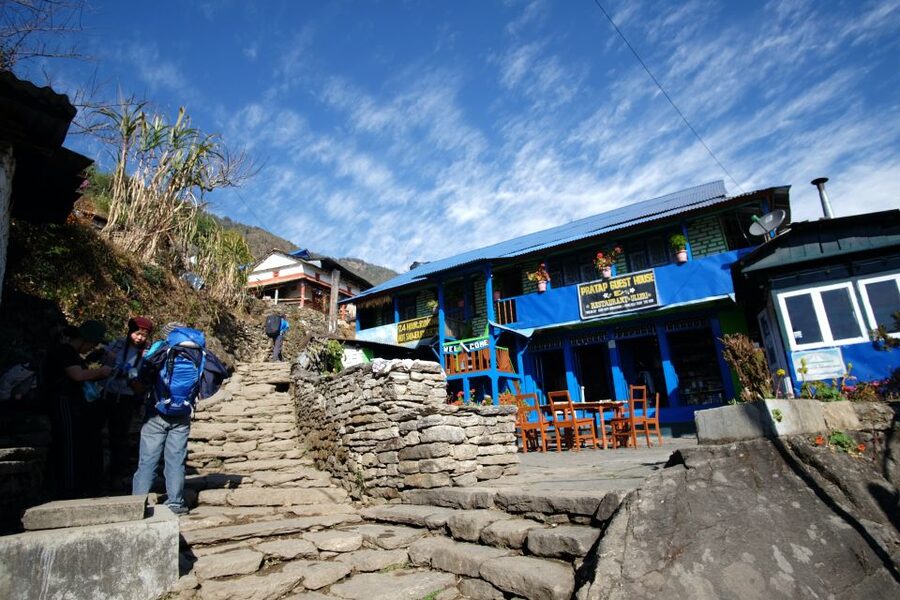
After you take in Annapurna Base Camp, Day 5 takes you back toward lower elevations: Annapurna Base Camp to Sinuwa (2200m) in about 7 hours.
This day is long, but it’s different work than the ascent. You’re descending, which can feel easier mentally, but your knees will still make their opinions known. It’s also a day where the mountain views keep coming, because you’re changing angles and perspective rather than staying fixed at one height.
One nice thing here: you’re not being rushed through the experience. The trek includes an overnight stay in Sinuwa, giving you time to recover without immediately chaining into another big jump.
Day 6: Jhinu Dada hot springs at 1600m
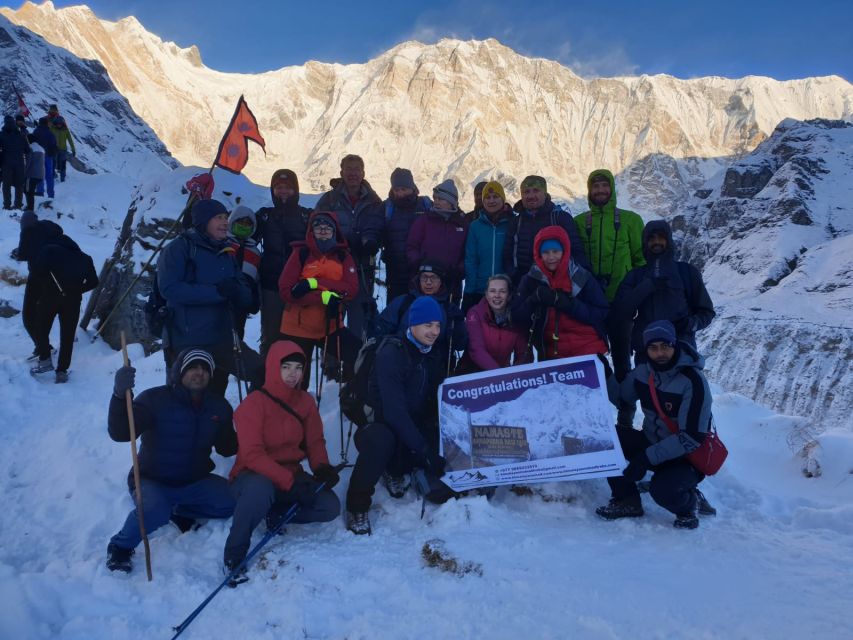
Day 6 moves you from Sinuwa (2200m) to Jhinu Dada hot spring (1600m) in about 5 hours. Then the reward is the hot springs—natural warm water where tired muscles get a chance to unwind.
This is the moment many people remember long after the photos. After days of climbing and descending, a soak helps you reset your body for the final travel day.
A small practical point
Your comfort will depend a lot on how cold you feel in the early part of the day. Bring your towel and plan to treat the springs as part of recovery, not just a casual stop.
Day 7: back to Lakeside Pokhara
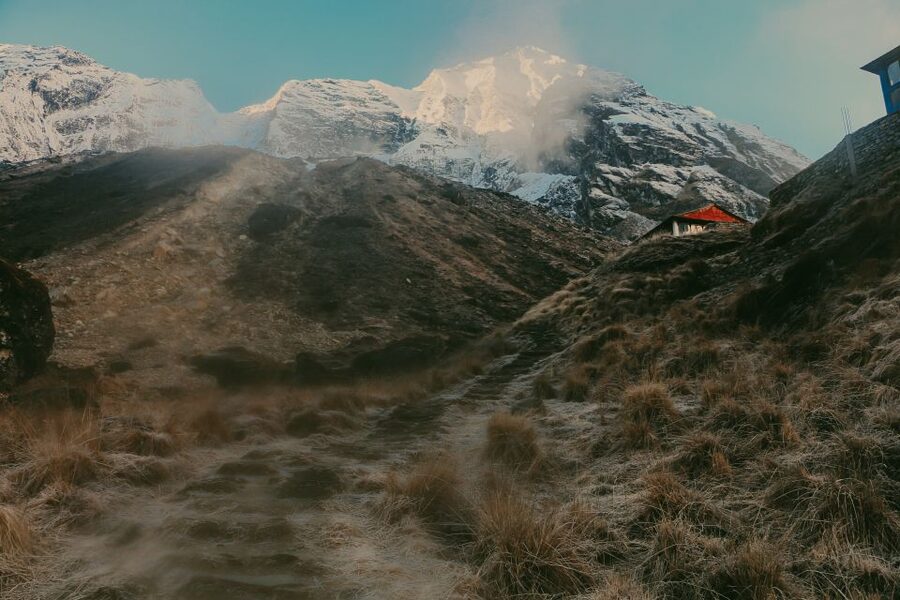
On the final day, you go from Jhinu Dada back to Lakeside Pokhara. Trek time is about 2 hours, then you switch to jeep to return to Pokhara.
Along the way, you get one last look at the region with fresh legs—or at least, legs that feel less grumpy. It’s also the day you can mentally process what you earned: the climb, the Base Camp achievement, and the hot-spring recovery.
When you arrive back at Lakeside Pokhara, you’ll likely feel the classic trek contrast: from tight trail focus to open city time again.
Guides, pace, and what “safe” actually means here
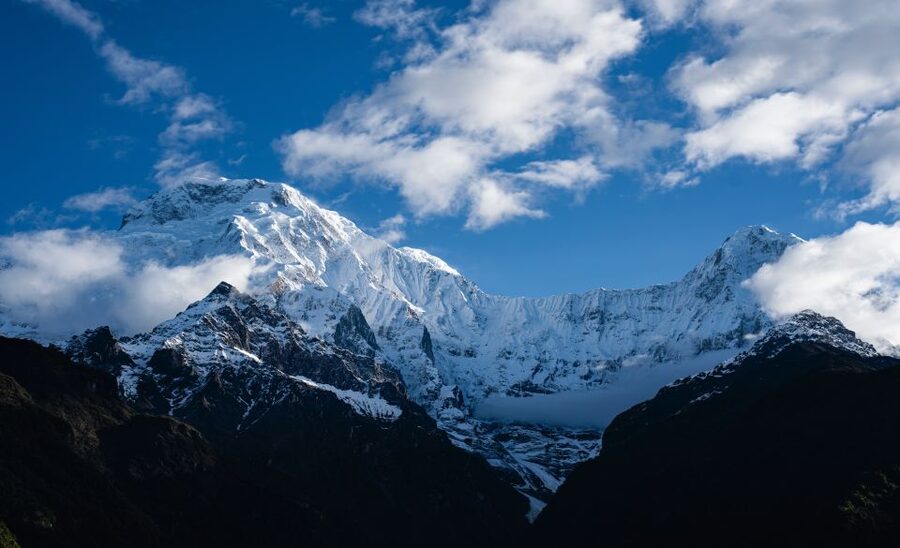
This trek is guided, with an authorized English-speaking guide (plus guide languages including English, Hindi, and Nepali). You also get a medical kit.
In real-world terms, this reduces the common headaches: figuring out routes, coordinating with lodge stops, and managing the day-by-day effort. It also matters when someone in the group isn’t feeling well. In one account shared for this trek, a guide worked to help solve a problem rather than treating it as a lost cause. That kind of calm, problem-solving attitude makes a difference.
I also like how the better guides keep the atmosphere human. One guide experience described evenings with shared games and even dancing on the trek, which isn’t about being silly for its own sake—it helps the group keep spirits up when days are demanding. It’s also a reminder that safety isn’t only about rules. It’s about keeping people relaxed enough to walk well.
Price and logistics: what $234 buys you (and where to budget more)
The price listed is $234 per person for this 7-day guided trek, and you can check availability for starting times. The real question is value: what you get versus what you still need to pay.
Included in the package
You get:
- Hotel pickup and drop-off
- Trekking permits and necessary paperwork, plus the TIMS fee
- Accommodation during the trek
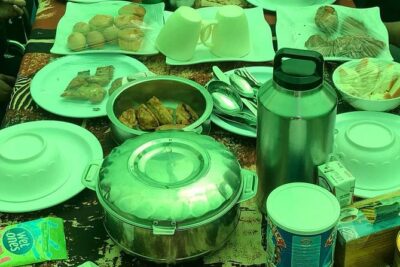
- All meals (breakfast, lunch, dinner) during the trek for the Full Package
- Deluxe transportation as per the itinerary for the full package (and shared transportation by bus if not full package)
- Guide including his insurance, plus all guide expenses
- All applicable government tax
- A medical kit
That’s a lot of moving parts covered. For trekkers, that usually means fewer decisions and fewer surprises once you’re in the mountain rhythm.
Not included (plan ahead)
You’ll pay extra for:
- Soft and hard drinks
- Travel and rescue insurance
- Entrance fees during sightseeing
- International flights; Nepalese visa fee
- Porter (available for purchase)
- Lunch and evening meals in Pokhara
- Personal expenses like phone calls, laundry, bar bills, battery recharge, extra porter, water, and shower costs
My value take
If you’re booking the full package, this price looks fair because it covers the core trekking costs: permits, guide, trek meals, and lodging, plus transportation from Pokhara. If you’re not taking the full package, your overall costs can creep up because shared transport and meals may be different.
The big budgeting tip: treat Pokhara meals and drinks as separate from the trek costs, because those are specifically listed as not included.
What to pack: the stuff that keeps you comfortable
You’ll want a mix of trekking essentials and weather protection. Here’s what this trek explicitly calls for:
- Passport or ID card
- Camera
- Sunscreen, sunglasses
- Jacket, long pants, shorts, T-shirt
- Hiking shoes
- Trekking gear
- Sleeping bag
- Towel
- Cash
Also expect cold mornings higher up, plus long days where you’ll be happy you packed layers. Bring what you can actually use on foot, not just what looks good for photos.
Who this trek suits best
This is a great fit if:
- You want a guided climb with support and English-language help
- You like having clear daily goals (Base Camp day is the anchor)
- You want a recovery payoff with Jhinu Dada hot springs
- You want manageable day blocks that still feel like an accomplishment
Think twice if:
- Altitude worries you, since you rise to 4130m
- You get worn down by long hiking days, especially Day 5 (about 7 hours)
If you’re traveling with a private group, it can feel more tailored, especially when the guide adapts pace to your group’s needs.
Should you book this 7-day ABC trek?
Yes, if you want a guided Annapurna Base Camp experience that doesn’t just chase a summit. The Base Camp day is the headline, but the trek is built to make that day enjoyable: forests and villages before it, Deurali as a staging point, and hot springs after.
I’d book it if:
- You value a guide who can adapt pace and keep things calm.
- You want permits, trek accommodation, and trek meals handled for you in the full package.
- You’re excited by the combination of mountain achievement plus a real relaxation reward.
I’d reconsider if:
- You’re very uncomfortable with altitude or you strongly prefer fully flexible, no-schedule travel.
If you do book, pack layers, plan for the long walking days, and lean into the guide’s pacing. That’s where the experience turns from just “a trek” into a story you’ll keep telling.
FAQ
What is the highest altitude reached on this trek?
You reach Annapurna Base Camp at 4130m on Day 4.
Where does the trek start and where do you return to?
It starts in Lakeside Pokhara (800m) and returns to Lakeside Pokhara on the final day.
How long are the hiking days?
The trek includes a mix of hiking times, including about 3 hours on Day 1, 5 to 6 hours on Day 2, 6 hours on Day 3, around 6 hours on Day 4, about 7 hours on Day 5, about 5 hours on Day 6, and about 2 hours on Day 7 before the jeep ride.
Does the trek include Jhinu Dada hot springs?
Yes. On Day 6 you trek to Jhinu Dada hot spring (1600m) and soak in the natural hot water.
Are meals included?
Meals are included during the trek for the Full Package only (breakfast, lunch, and dinner during the trek). Lunch and evening meals in Pokhara are not included.
Is the guide English-speaking?
Yes. The trek includes an authorized English-speaking guide. Guide languages also include English, Hindi, and Nepali.
Are permits and paperwork included?
Yes. The price includes trekking permits, necessary paperwork, and the TIMS fee(s).
What’s included in the price besides the guide?
Included items include hotel pickup and drop-off, a medical kit, accommodation during the trek, taxes, and trek transportation as applicable (deluxe transportation for the full package, shared bus for non-full package).
What should I bring for the trek?
Bring: passport or ID card, camera, sunscreen, sleeping bag, T-shirt, cash, shorts, hiking shoes, long pants, jacket, towel, trekking gear, and sunglasses.
Is cancellation free?
Free cancellation is available up to 24 hours in advance for a full refund.