REVIEW · SAPA
Muong Hoa Valley View & Village Trek in Sapa 1 Day
Book on Viator →Operated by Sapa Nomad · Bookable on Viator
One-day treks in Sapa can feel like a sprint. This one balances big views with real village life, looping through H’Mong communities and ending with rice terraces and cloud scenes. What makes it especially interesting is the way it mixes classic viewpoints with quieter villages that most visitors never see.
I love how the trail treats you to panoramic Muong Hoa Valley moments without making the day feel random. I also like that you get an experienced English-speaking guide and the chance to try local tastes, with vegetarian food available on request.
There is one consideration: this is listed as moderate, and parts of the route involve walking on uneven ground and a cliff-side road segment, so you should come with solid shoes and a realistic pace for 6 to 7.5 hours. Weather in Sapa can also change fast, so you may miss a few distant views if fog rolls in.
In This Review
- Key Highlights You’ll Notice Fast
- A 6–7.5 Hour Trek That Actually Makes Sense in Sapa
- Ham Rong Mountain: Dragon-Jaw Views and Easy Morning Orientation
- Sapa Market Stop: Brocade Colors, Local Goods, and Snack-Ready Timing
- Hang Da Village at 1,800+ Meters: Cloud-Hunting on a Gentle Path
- Muong Hoa Valley Village Walk: Cliff-Side Roads and Quiet Scenic Stops
- Hau Thao Rice Terraces and a Sea of White Clouds
- Food on the Trail: Lunch Included, Vegetarian on Request
- English-Speaking Guidance That Keeps the Day Comfortable
- Price and Value: Why $53 Can Work for a One-Day Trek
- How Hard Is It, Really? Planning for Comfort and Weather
- Who This One-Day Muong Hoa Trek Fits Best
- Should You Book This Muong Hoa Valley View & Village Trek?
- FAQ
- How long is the Muong Hoa Valley View & Village Trek in Sapa?
- What time does the trek start?
- Where does the tour start and end?
- What’s included in the price?
- Is vegetarian food available?
- Does the tour offer pickup?
- Is this tour private?
- Is there free cancellation?
Key Highlights You’ll Notice Fast
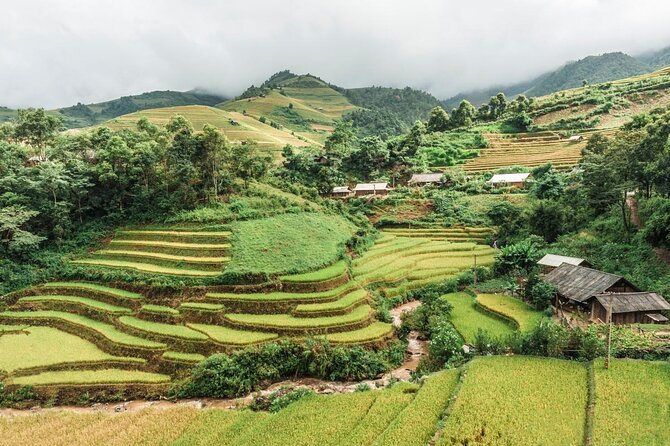
- Muong Hoa Valley viewpoints plus multiple “pause-and-look” stops, not just a single photo moment
- Ham Rong Mountain for early orientation over Sapa town and the Hoang Lien Son range
- Hang Da Village at over 1,800 meters—a common spot for cloud-hunting photos
- Village routes that feel removed from town, with winding roads and fewer crowds
- Lunch included, plus vegetarian options if you request it ahead of time
A 6–7.5 Hour Trek That Actually Makes Sense in Sapa
This is a one-day route designed to take you out of the center and into the Muong Hoa Valley area, without trying to cram in too many stops. Expect 6 hours to about 7 hours 30 minutes of time on your feet, with breaks built around the viewpoint and village visits.
If you care about logistics more than collecting checkmarks, you’ll likely appreciate how structured it is. Pickup is offered, the group stays together, and bottled water is included. The tour is also listed as private in the sense that only your group participates, so it’s less of a chaotic “everyone at once” experience.
The route is described as moderate, and that’s accurate in the practical sense: you’re walking enough to feel you did something, but it’s not pitched as an all-day hardcore mountain expedition.
Ham Rong Mountain: Dragon-Jaw Views and Easy Morning Orientation
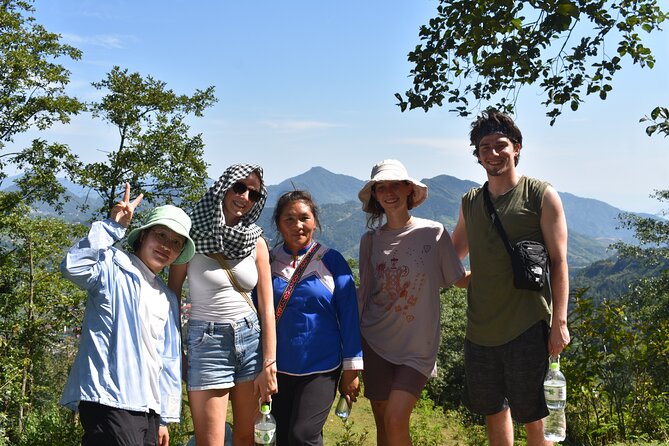
You’ll start by trekking past the top of Ham Rong Mountain, where the big reward is perspective. From up there you can take in the full view of Sapa town and the Hoang Lien Son range—a great way to understand where you are before spending the rest of the day tracing roads into the valleys.
Ham Rong also has cultural meaning for local ethnic communities. The name “Ham Rong” translates to Jaw of the Dragon, tied to a folklore idea that the mountain’s shape resembles a dragon’s jaw. Even if you don’t catch every myth detail, it helps you see the mountain as more than a viewpoint platform.
Practical note: admission is listed as free for this stop. That makes it a low-cost way to get an early “wow” view without feeling like the day is nickel-and-diming you before you even start walking.
Sapa Market Stop: Brocade Colors, Local Goods, and Snack-Ready Timing
Between the mountain view and the villages, you’ll have a stop at the Sapa market, about 1.0 km from Stone Church. It runs every day, which means it’s a reliable break point if you want to reset your energy before continuing into the valley.
What I’d focus on here is textiles. The most striking item set is brocade in vivid color and subtle patterns connected to groups like H’Mong, Dao Do, and Giay. If you’ve been trying to learn the difference between ethnic textiles by name, this is one of the easier places in Sapa to see the patterns in context.
You’ll also find the practical stuff: fruits, vegetables, and spices. That matters because many treks leave you hungry at weird times; here, you can top up with quick bites if the schedule works out that way.
One caution: markets are lively and can encourage spending. If you’re on a strict budget, decide early what you want to buy—or just enjoy the colors and move on.
Hang Da Village at 1,800+ Meters: Cloud-Hunting on a Gentle Path
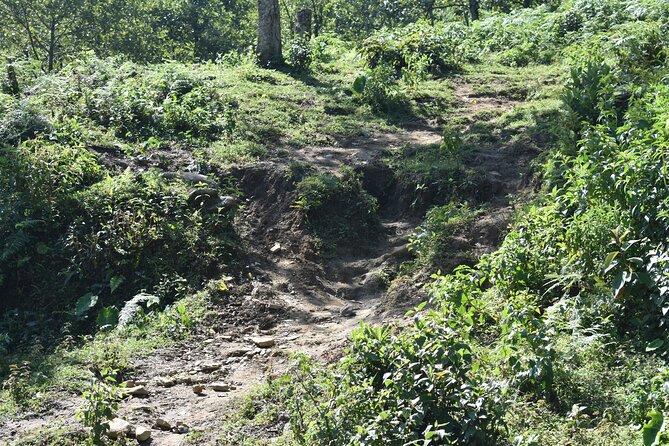
Next comes Hang Da village, set at more than 1,800 meters. The setting is described as hugging the mountainside, with green forests up close and higher mountains in the distance, plus terraced fields sweeping across slopes.
The big theme here is clouds. The village is described as a paradise for hunting clouds for nature-loving photographers. In Sapa, cloud timing can feel like a weather lottery, but that’s exactly why places like this are worth visiting: when the view opens up, it’s dramatic, and when it doesn’t, you still get a quiet, high-altitude walk through the mountains’ mood.
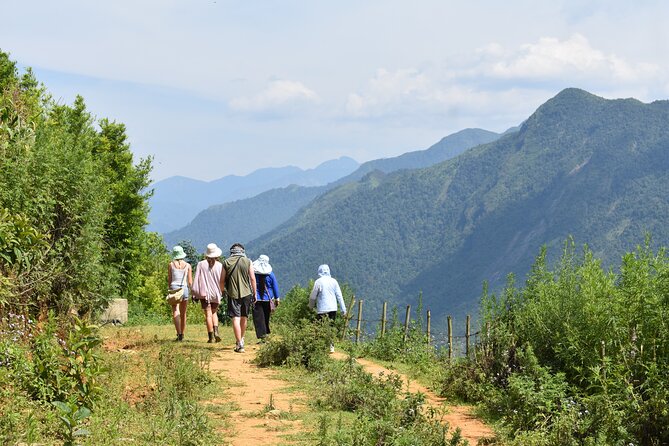
After Hang Da, the route continues toward Tao Sha (Sapa Sha) village of the Black H’mong. The path is described as fairly gentle at the top, with a view down over Muong Hoa valley below. That’s the kind of pacing detail that helps you survive the trek while still enjoying it.
Muong Hoa Valley Village Walk: Cliff-Side Roads and Quiet Scenic Stops
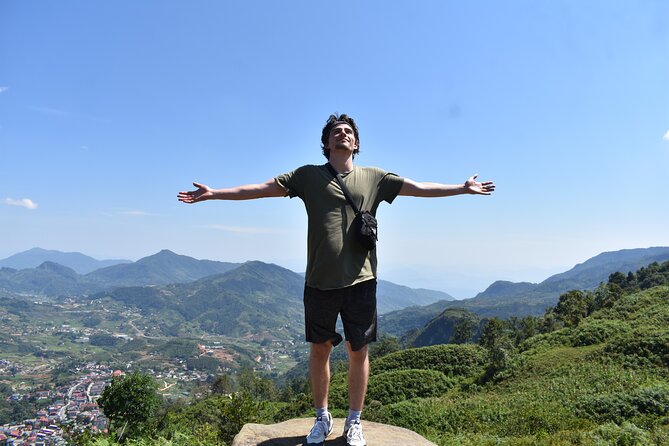
Then you head deeper into the Muong Hoa Valley area with a village stop described as having a road on one side of the cliff and Muong Hoa valley on the other. Even if you’re not afraid of heights, this is the part of the day where your attention should be on footing and balance.
The village setting is described with forest trees and, in some seasons, wildflowers. That’s the practical value of coming here: you’re not only looking at terraces from afar. You’re walking through the edges of everyday mountain life, where vegetation and seasons shape what you see.
This stop also supports the main promise of the experience: you’re moving through communities that feel separate from Sapa’s central area. The route is described as village life “running away” from the town’s bustle, and you’ll feel that shift in the way the roads wind and the way the horizon changes from city scale to valley scale.
Hau Thao Rice Terraces and a Sea of White Clouds
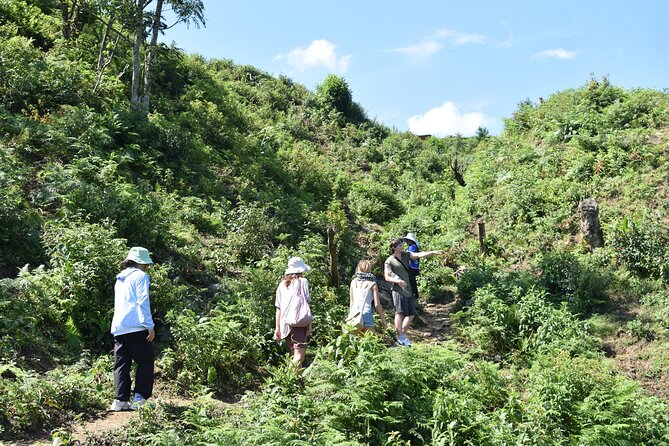
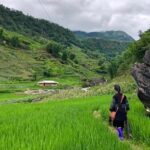
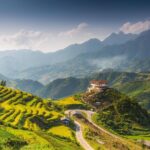
Your final village stop in this route is Hau Thao, where the scenery centers on rice terraces spreading along the mountainside. You’ll also see bamboo forest areas close to the trails, and rolling clouds that can form a “sea” effect depending on the day.
The descriptions focus on a classic Sapa combo: rice terraces, mountains, and clouds at high altitude. If you’ve imagined Sapa as postcards, this is the moment most likely to match that mental image—without needing a long multi-day trek.
Also, the stop is timed for about 2 hours, which matters. You don’t just stop for 15 minutes at a photo spot. You get enough time to walk around, find an angle, and watch how the valley changes as clouds drift.
If you want photos with depth, this is where you’ll benefit from taking your time. If you want to conserve energy, it’s also a good place to slow down and let the guide handle the next move.
Food on the Trail: Lunch Included, Vegetarian on Request
The tour includes lunch, and bottled water is provided. That’s not just convenience—it helps you avoid the common Sapa trek problem where you burn energy for hours, then spend too much time and money hunting food afterward.
You can also request vegetarian food. That’s a real quality-of-life detail. In remote village settings, food availability can get complicated when you have dietary restrictions, so this is worth asking about when you book rather than assuming.
What I’d do in your shoes: go in expecting simple, filling trekking food rather than a fancy restaurant meal. The value here is fuel for the hike, not a gourmet experience.
English-Speaking Guidance That Keeps the Day Comfortable
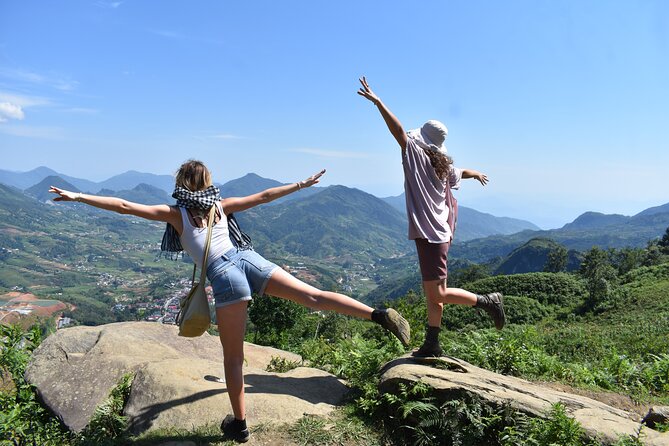
A standout feature is the emphasis on a guide who speaks English and is experienced and enthusiastic. In a day like this, that matters more than people expect.
First, a good guide helps you understand what you’re seeing—why certain terraces are shaped a certain way, what villages do day-to-day, and how the ethnic communities connect to the valley geography. Second, they help you stay confident on the route, especially on segments where roads curve and the terrain asks for careful steps.
From booking feedback tied to the operator, I also like that communication seems to be handled fast. People describe getting texts to confirm timing and support through messaging (WhatsApp is specifically mentioned in the booking experiences). That kind of follow-through can turn a hectic travel day into a calmer one.
Price and Value: Why $53 Can Work for a One-Day Trek
At $53 per person, this is not a “cheap and rough” deal. You’re paying for the combination of guide work, organized route planning, and private transportation, plus all fees and taxes.
What that means for you: the main costs you’d otherwise manage yourself—getting to the trailhead area, sorting out entry fees, and keeping the day on schedule—are handled. That frees your focus for the actual trekking and village time.
Also, the tour is about half-a-day of walking plus scheduled pauses, so you’re not paying for something that drags into an endless afternoon. With lunch and bottled water included, you’re less likely to end the day short on spending surprises.
Is it a bargain compared to a simple walking route with no vehicle and no guide? Yes, it’s higher than DIY. But the value comes from doing the “right kind” of guided day in Sapa—especially if you don’t want to figure out how to move between the viewpoints and villages on your own.
How Hard Is It, Really? Planning for Comfort and Weather
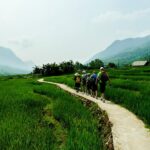
This trek is labeled moderate, and the day’s structure supports that level. You’ll pass village trails that include winding roads, and there’s at least one cliff-side road segment described in the valley area. That means you should plan for balance and uneven surfaces.
Here’s what I’d take seriously before you book:
- Wear proper hiking shoes with grip. Road soles won’t be enough when terrain is uneven.
- Bring a light rain layer. Sapa can go from clear to foggy or damp during the day.
- Keep water in mind even with bottled water included. You may still want extra if you run hot or sweat easily.
Weather affects the views. The route relies on panoramic moments at Ham Rong and again in the cloud-and-valley areas. If fog rolls in, the experience can shift from wide-open photos to a moodier, gentler mountain walk. Either way, you’ll still get village context—just adjust expectations for distance visibility.
Who This One-Day Muong Hoa Trek Fits Best
This is a strong match if you:
- Want one day that includes real village time, not only viewpoints
- Like the idea of H’Mong cultural context alongside mountain scenery
- Prefer a moderate trek with a guide who can explain what you’re seeing in English
- Value included basics like lunch, fees, and bottled water
It might be less ideal if you:
- Have limited tolerance for walking for 6 to 7.5 hours
- Hate cliff-side roads or steep uneven footing
- Need a fully low-impact schedule with no longer walking segments
Also, the tour lists service animals allowed, and it notes you should have moderate physical fitness. If you’re right on the edge, it’s worth assessing your comfort with uphill steps and long steady walking.
Should You Book This Muong Hoa Valley View & Village Trek?
I’d book this if your goal is to see more than the usual Sapa center. The route is built around a logical arc: start with Ham Rong for orientation, then switch to the market for culture and shopping context, and finally spend your walking time in the Muong Hoa Valley and rice terrace villages.
The biggest reasons to choose it are the mix of panoramic valley views and the fact that the day spends real time away from the town’s main tourist strip. Add in English guidance, lunch, and private transportation, and it’s a practical way to get a memorable Sapa day without extra stress.
If you book it, do two things to set yourself up: request vegetarian lunch if you need it, and pack for changing mountain weather. Then show up ready to walk and look—this trek rewards both.
FAQ
How long is the Muong Hoa Valley View & Village Trek in Sapa?
It runs about 6 hours to 7 hours 30 minutes.
What time does the trek start?
The start time is 9:00 am.
Where does the tour start and end?
It starts at 536 Đường Điện Biên Phủ, TT. Sa Pa, Sa Pa, Lào Cai 31000, Vietnam, and it ends back at the meeting point.
What’s included in the price?
Lunch, all fees and taxes, private transportation, and bottled water are included.
Is vegetarian food available?
Yes. Vegetarian food is available on request.
Does the tour offer pickup?
Pickup is offered.
Is this tour private?
Yes. Only your group will participate.
Is there free cancellation?
Yes. Free cancellation is available up to 24 hours in advance for a full refund.