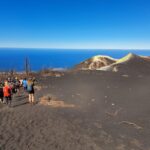
REVIEW · LA PALMA
La Palma: Guided Trekking Tour to El Roque de los Muchachos
Book on GetYourGuide →Operated by La Palma Transfer & Tours · Bookable on GetYourGuide
High-altitude walking on La Palma is the real deal. This guided trekking tour takes you to El Roque de los Muchachos (2,426 m), where the views feel bigger than the island, and you’ll follow old paths with a guide who connects what you’re seeing to local traditions and history. I especially like the way you get panoramic lookouts plus time on the trails, not just a quick viewpoint stop.
Second, I like that the trek is paired with air-conditioned coach transport, which matters on winding roads to the top. You’re not just dropped off and guessed your way back down. One consideration: this is a proper hike that requires a good level of fitness, and you have to stay on the marked paths.
In This Review
- Key Things I’d Focus On
- Getting Up There: The Ride to Mirador de los Muchachos
- Starting the Trek: A Trail From the Highest Point Mindset
- Walking the Old Route: Tijarafe to Santa Cruz and Beyond
- Telescopes, Town Names, and the View Checklist
- The Walk’s Key Moments: Roberto’s Wall to Pico de La Cruz
- What to Bring for 2,426 Meters (So You Actually Enjoy It)
- Fitness and Trail Reality: Who This Works For
- Price and Value: About $38 for a Guided High-Point Trek
- Languages and Guide Style: What Your Day Feels Like
- Should You Book This Tour to El Roque de los Muchachos?
- FAQ
- How long is the guided trekking tour to El Roque de los Muchachos?
- What’s included in the price?
- Is food or drinks included?
- What languages are available for the live guide?
- What level of fitness do I need?
- Are children allowed?
- Do I need to stay on marked paths?
- What should I bring?
Key Things I’d Focus On
- El Roque de los Muchachos altitude and big-sky viewpoints for clear, photo-ready panoramas
- An old commercial path that once connected Tijarafe and Santa Cruz de La Palma
- Observatory-area scenery near the telescopes at the top
- Border views of the Caldera de Taburiente National Park from the walking route
- Roberto’s Wall and Pico de La Cruz as key moments if the weather is clear
Getting Up There: The Ride to Mirador de los Muchachos
This tour is built around getting you to the top without the stress of figuring out timing and routes on your own. You start with pickup from your accommodation, then ride in an air-conditioned coach as the road climbs toward Mirador de los Muchachos.
Expect the drive to feel dramatic in a very practical way. The road is winding, and that means you’ll likely feel plenty of curves on the way up and back down. I’d treat this as a heads-up for anyone who gets motion-sick easily: go in with water, a calm mindset, and maybe sit where you feel best.
What makes this part worth your time is that it sets you up for the rest of the day. You arrive at the right elevation already warmed up and oriented, instead of wasting the first hour trying to navigate directions you can’t see well once clouds roll in.
You can also read our reviews of more tours and experiences in La Palma.
Starting the Trek: A Trail From the Highest Point Mindset
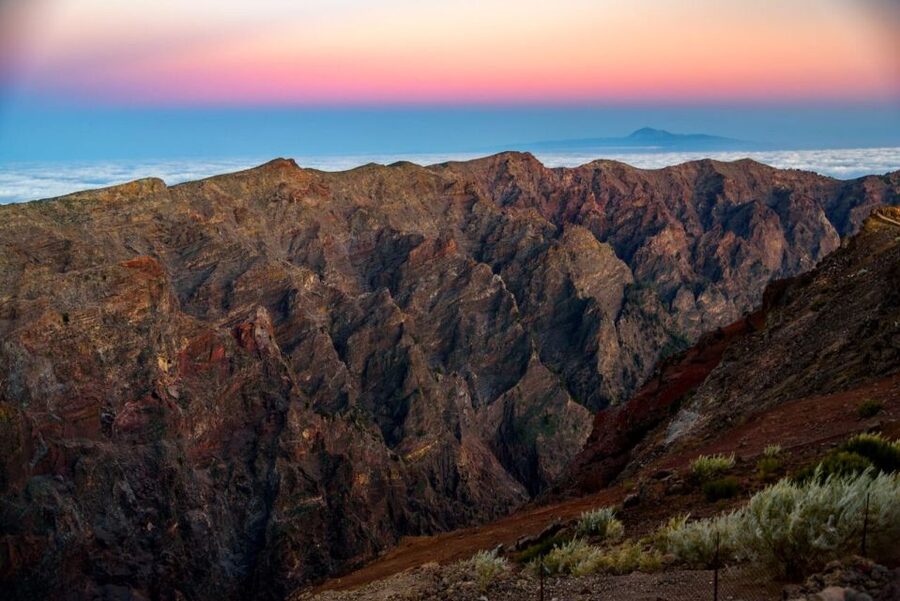
Once you reach Mirador de los Muchachos, the experience shifts from vehicle time to “walk-and-look” time. You’re at the high point of the island, and the elevation changes everything: visibility can be sharp, the light is intense, and the terrain feels exposed.
A big appeal of this area is how it lets you look down into layers of cloud. On clearer days, you get that classic effect of the island stretching below you—then, when clouds move, the view changes minute by minute. I like that the guide frames it as more than a pretty moment. You’re moving through a zone where the sky and the island trade places depending on conditions.
This is also where you’ll start noticing why the telescope area and the observatory community are here. Even if you don’t focus on astronomy, the place has a “designed for clear nights” feel—open air, big horizons, and a sense that weather matters.
Walking the Old Route: Tijarafe to Santa Cruz and Beyond
Now for the part you came for: the hike itself. You’ll trek along a path that was once used as a commercial route connecting Tijarafe to Santa Cruz de La Palma. That detail isn’t just trivia. It changes how you experience the walk because you’re not only hiking for photos—you’re traveling along a route people once depended on.
As you move along the trail, you head toward the border of the Caldera de Taburiente National Park. You’ll feel the area shift from “viewpoint access road” to something more rugged and weathered. The path brings you across different kinds of ground and viewpoints, which is part of the charm of walking instead of just driving.
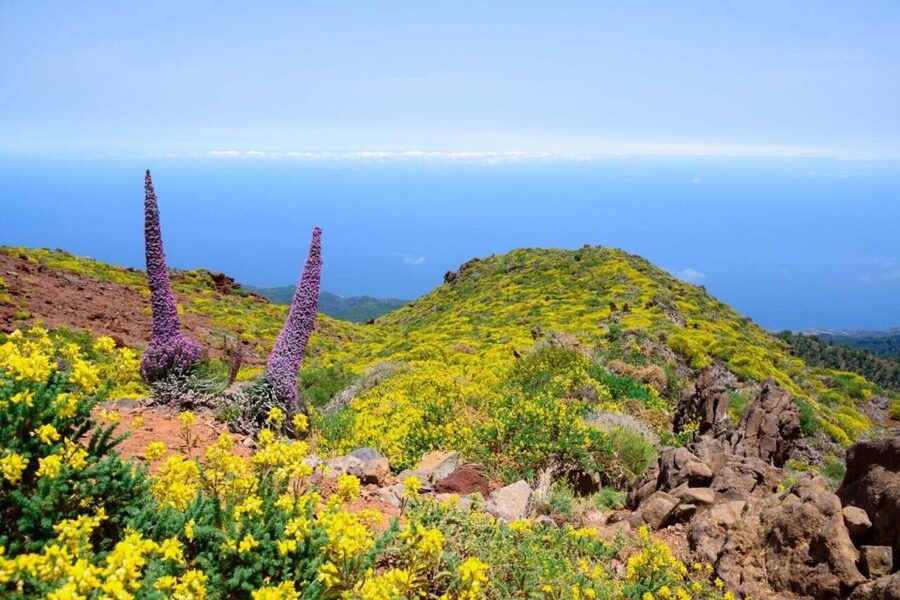
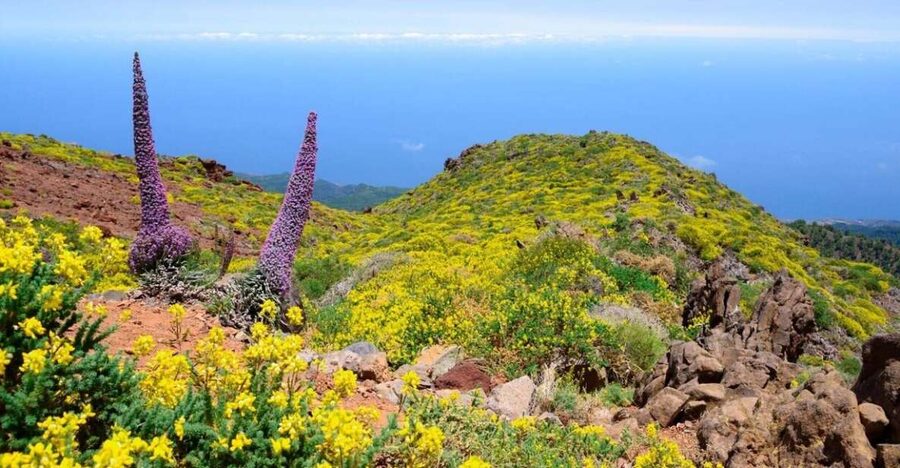
Along the way, you’ll also pass through areas where local vegetation shows up in patches. The tour description specifically calls out cedars and summit pansies, and you may spot other plants as conditions allow. I like that this gives you something to pay attention to besides the skyline—especially on days when the clouds thin out slowly.
Important practical note: you cannot deviate from the marked paths. That’s for your safety and also because you’re operating in an environment where staying on the route keeps you protected from steep drop-offs and fragile ground.
Telescopes, Town Names, and the View Checklist
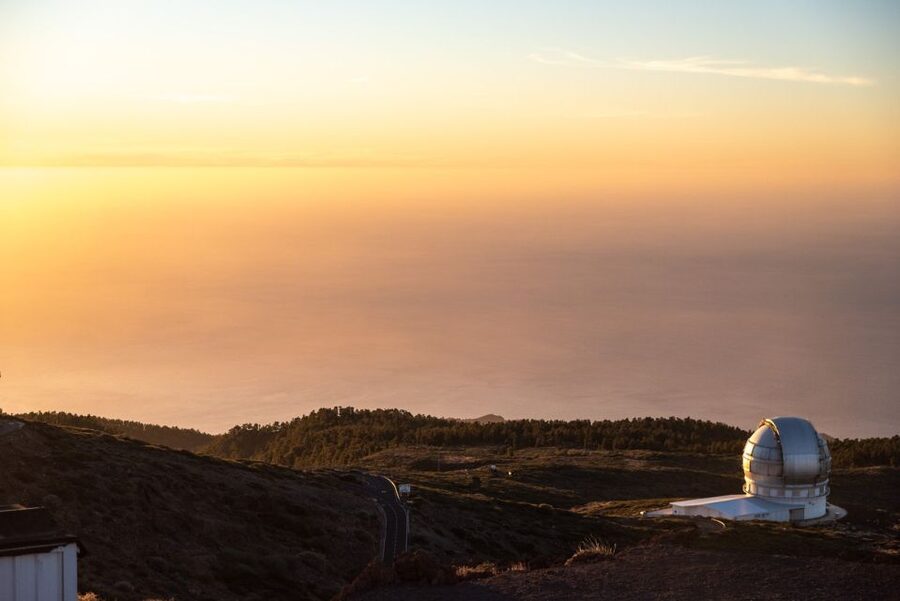
One of the best ways to make a high-altitude hike feel worth it is to have a mental checklist. This tour gives you one.
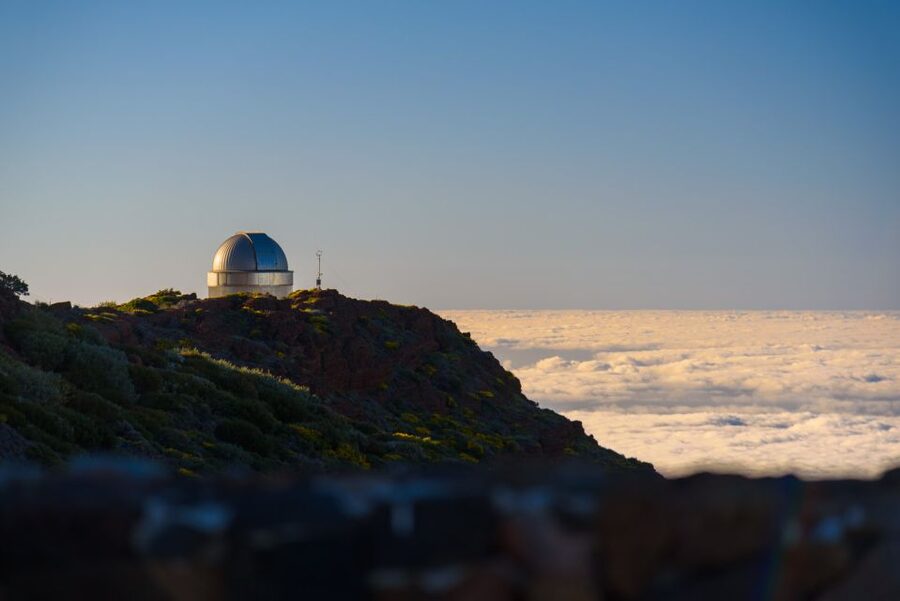
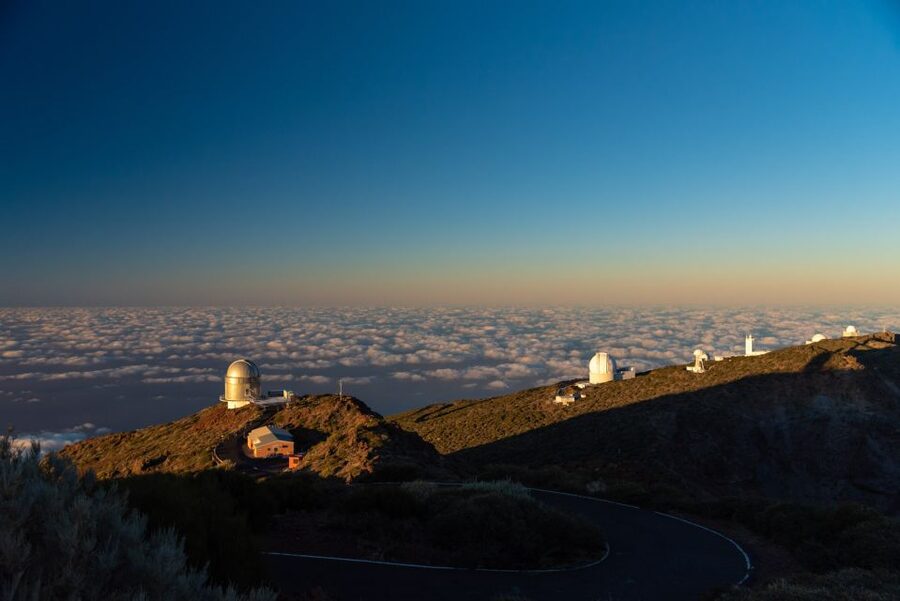
The route brings you to the area of the Roque de los Muchachos Observatory, where you can admire the telescopes. Even if you’re not a science person, it’s a satisfying contrast: dramatic natural terrain plus human-built instruments aimed at the sky.
Then the guide helps you connect the view to names and geography. You’ll experience sweeping visibility toward Cumbre Vieja and Cumbre Nueva, and you’ll be able to see municipalities including Los Llanos de Aridane, Tazacorte, and Tijarafe.
This is where a good guide makes a hike feel less random. Instead of looking at “a lot of mountains,” you start seeing how the island’s pieces fit together. And for photographers, it’s great because it helps you know what direction you’re looking and why it matters.
I also like that the itinerary builds in moments where clouds and terrain can do the entertaining. From this elevation, you can get a panorama that’s more than one static postcard frame. It’s a changing scene.
The Walk’s Key Moments: Roberto’s Wall to Pico de La Cruz
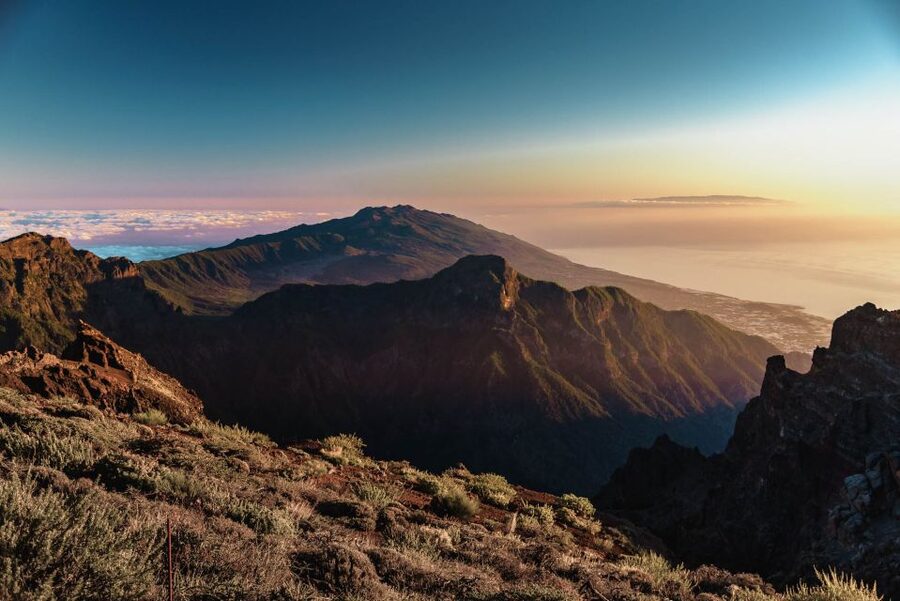
A highlight on the way is Roberto’s Wall. It’s the kind of landmark that gives structure to a trek—something physical you can orient around when the terrain stretches out and the distances start to feel hard to judge.
After that, you continue to Pico de La Cruz, and here the day’s weather becomes the main character. If it’s clear, you can see as far as Tenerife. That’s not a guarantee, but it’s exactly the sort of “if the sky cooperates” payoff that makes the climb exciting rather than just work.
From there you continue to Pico de La Nieve, and once you’ve finished the hike, you head back to the tour bus. The design here makes sense: you’re not wandering for hours without a plan. You follow a route with identifiable turning points, so even if visibility shifts, you’ll still experience a coherent trek.
What to Bring for 2,426 Meters (So You Actually Enjoy It)
At this altitude, comfort is the difference between a great hike and a miserable one. The tour list is clear about what matters, and I’d treat it as a checklist, not a suggestion.
Bring:
- Hiking shoes
- Water (and plan for more than you think you need)
- Food and drinks (the tour does not include them)
- Sun hat, sunglasses, and sunscreen
- Jacket and rain gear (weather can turn)
- Camera and a charged smartphone
The weather advice from real-world experience is simple: it can be cold up top, especially in winter months. Even if La Palma is warm at sea level, you can feel the temperature drop as you climb. I’d rather you come slightly overdressed than try to tough it out.
Also, you need to carry a mobile phone with sufficient battery. That’s not about vibes—it’s about staying connected if anything needs coordination while you’re on the trail.
Fitness and Trail Reality: Who This Works For
This tour asks for a good level of fitness, and that’s accurate. You’re walking up to major viewpoints and continuing along a route with enough elevation change that you’ll feel it in your legs.
It’s not suitable for:
- People with back problems
- People with mobility impairments
- Wheelchair users
- Children under 3
And remember: you’re staying on marked paths only. That means you can’t improvise your own shorter route if you’re tired, and you shouldn’t plan on stopping off-trail for extra photos.
If you enjoy hiking at a steady pace, want big views, and prefer a guided structure to keep things smooth, you’ll likely love this. If you’re looking for a relaxed stroll with minimal exertion, you may find it too active.
Price and Value: About $38 for a Guided High-Point Trek
At around $38 per person for roughly 4 hours, this price can be good value if you factor in what’s included: a professional guide, the hiking tour, and bus transfer to and from the pickup points.
The biggest value is not only the guidance; it’s the access. Getting to El Roque de los Muchachos efficiently requires transport and route planning, and the tour handles that for you. The guide also turns the view into something you understand, instead of just something you look at.
Your main extra cost is simple: food and drinks. Build that into your planning. Bring a snack you’ll actually enjoy when you’re at altitude and expect to feel hunger after time outdoors.
Compared to booking a standalone transport plus searching for a hiking plan, the guided setup is usually the smarter use of your limited vacation time.
Languages and Guide Style: What Your Day Feels Like
The tour runs with live guidance in Spanish, English, and German. That matters because it changes whether you catch the meaning behind what you’re seeing.
Some departures are led by guides who bring a strong teaching style. For example, I’ve seen references to guides such as Arnold and Henry/Henri, and the consistent theme is that the guide shares a lot of context as you walk. You’re not just herded along; you’re learning what you’re looking at and why it matters locally.
It also helps when the weather and visibility shift. A good guide keeps the experience coherent even if you don’t get perfect views to Tenerife.
Should You Book This Tour to El Roque de los Muchachos?
Book it if you want:
- A guided hike with a clear route and major viewpoints
- Panoramic views from La Palma’s highest point
- An experience that includes both observatory-area scenery and sweeping island geography
- The convenience of hotel pickup and an air-conditioned coach
Skip it if:
- You’re not comfortable with elevation and steady walking
- You need accessible routes or can’t handle uneven outdoor terrain
- You prefer a low-effort activity and don’t want to dress for changing weather
If you’re a “walk for the views” type of traveler, this one hits the sweet spot.
FAQ
How long is the guided trekking tour to El Roque de los Muchachos?
The tour duration is 4 hours.
What’s included in the price?
It includes the hiking tour, a guide, and bus transfer.
Is food or drinks included?
No. Food and drinks are not included, so you should bring them.
What languages are available for the live guide?
The live tour guide is available in Spanish, English, and German.
What level of fitness do I need?
This tour requires a good level of fitness.
Are children allowed?
It is not suitable for children under 3 years old.
Do I need to stay on marked paths?
Yes. Participants cannot deviate from the marked paths.
What should I bring?
Bring sunglasses, a sun hat, a camera, food and drinks, hiking shoes, sunscreen, water, a jacket, rain gear, and a charged smartphone.