REVIEW · CHIVAY
From Arequipa Trek : 2-Days of Hiking in the Colca Canyon
Book on GetYourGuide →Operated by AREQUIPA EXPLORER Y ACTIVIDADES TURISTICAS · Bookable on GetYourGuide
Condors over the canyon, then you hike it. What makes this trek special is the combo of Cruz del Cóndor wildlife time and a real walk down into the Colca Canyon. I love how the route mixes canyon scale with human details, like Andean terraces built by the Collaguas, and then lets you reset overnight at Sangalle.
The best part for me is the end-of-day payoff: you reach Sangalle Oasis and get to swim in the pools instead of just suffering your way onward. The main caution is that this is steep and uneven, with early mornings and some risky footing for anyone not used to hills.
This trek is built for people who want a gritty, honest canyon experience, not a stroll with scenic stops. You’ll have a small group (up to 18), bilingual guides (English and Spanish), and guided viewpoint time—plus the hard work of going down one day and climbing back up the next.
Just be ready: this route can feel tougher than you expect, especially in the heat, and you may want to bring extra basics like a head light and toilet paper based on what hikers have said.
In This Review
- Key things you’ll like on this Colca Canyon 2-day hike
- Colca Canyon, in two days: the value of going down and back
- Day 1 from Arequipa area to Sangalle Oasis: condors, a canyon descent, and lunch with locals
- Cruz del Cóndor viewpoint: condors first, then the hike begins
- San Miguel down into the canyon: steep, uneven, and all about timing
- Lunch at San Juan de Chuccho: this is the human moment
- Sangalle Oasis: pools, downtime, and what to expect from the night
- The pool swim is not just a perk
- Dinner and sleep: keep it practical
- Day 2: sunrise climb, Cabanaconde breakfast, terraces at Antahuilque, and Chivay hot springs
- The sunrise climb: slow steps win here
- Breakfast in Cabanaconde, then viewpoints and terraces
- Lunch in Chivay and the final return to Arequipa
- Price and logistics: what $21 really means (and what cash covers)
- How hard is this trek, really? Altitude, heat, and packing list that works
- Expect uneven footing and careful steps
- Heat + timing means you need a simple survival kit
- Altitude acclimatization is not optional
- Guides and group size: small group support, and what communication should look like
- Who should book this trek (and who should skip it)
- Should you book Arequipa Trek 2-Days of Hiking in the Colca Canyon?
- FAQ
- FAQ
- What is the duration of the Colca Canyon 2-day hiking experience?
- Where does the trek start and end?
- What time is pickup in Arequipa?
- How large are the hiking groups?
- What languages do the guides speak?
- Do I need to pay extra in cash during the tour?
- Is the hot springs entrance included?
- What should I bring for the hike?
- Is this trek suitable for people with mobility or balance issues?
Key things you’ll like on this Colca Canyon 2-day hike
- Condors at Cruz del Cóndor: guided time at the 3,600 m viewpoint for spotting and photos
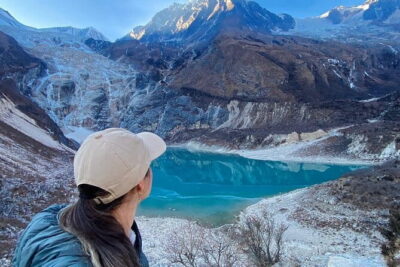
- Bottom-of-the-canyon trekking: real descent plus views of Collaguas terraces and canyon flora
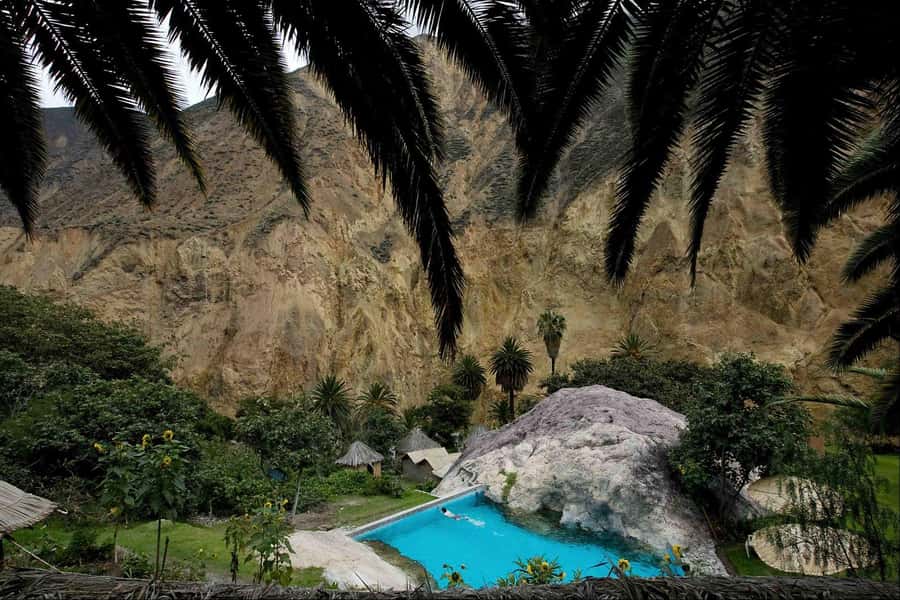
- Sangalle Oasis at 1,900 m: pools for a refreshing swim and a canyon-night reset
- Sunrise during the climb: early start so you can watch light spread across the canyon
- Hot springs stop in Chivay: relax after trekking, with optional entrance ticket
Colca Canyon, in two days: the value of going down and back
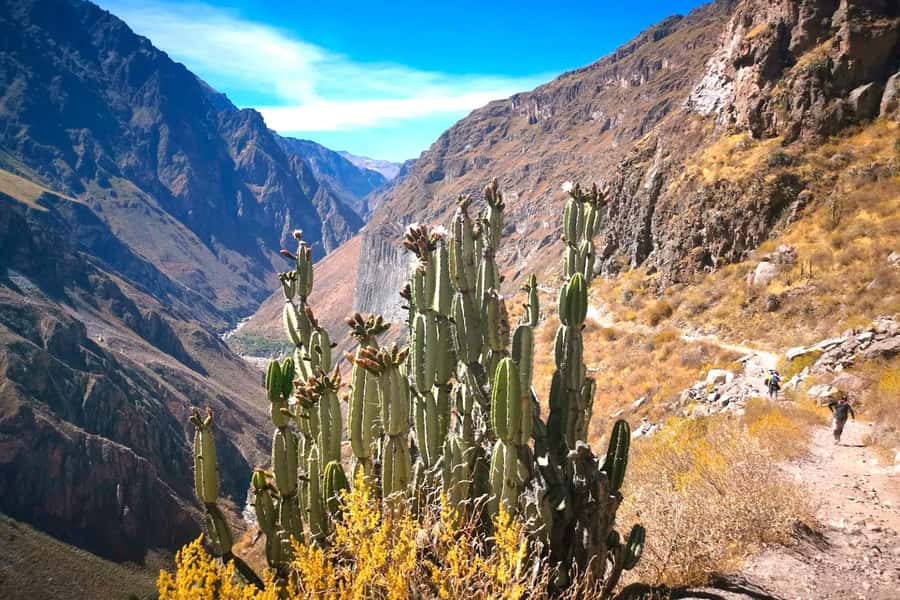
This 2-day Colca Canyon trek is a straightforward idea: go from the canyon rim down into the bottom, sleep in the middle of it, then earn your way back up with sunrise on day two. You’re not rushing from one photo spot to the next. You’re earning the views with altitude, legs, and a lot of steps.
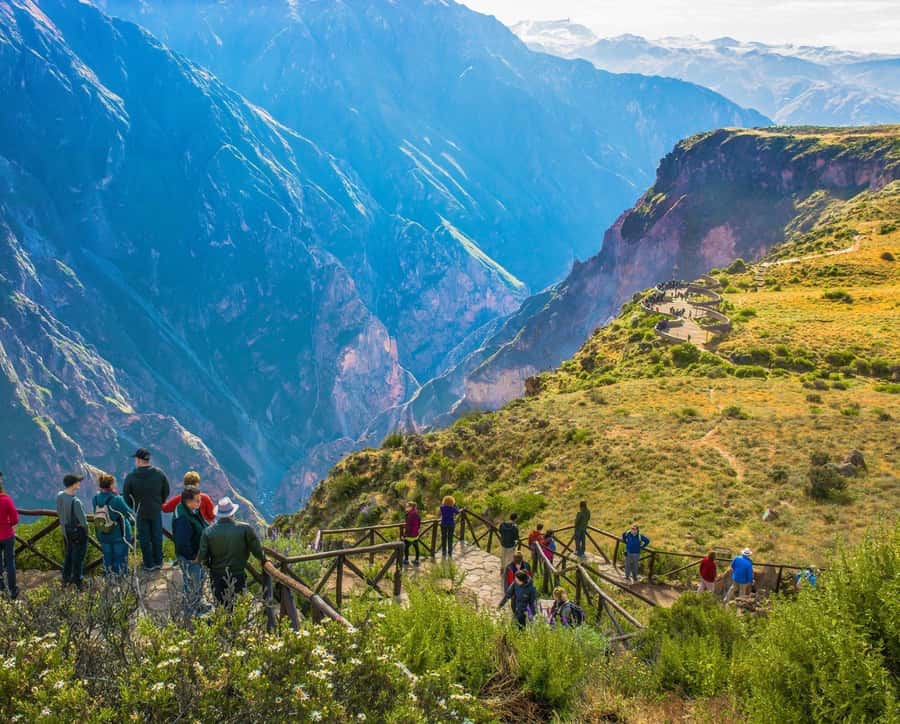
I like that you get the wildlife moment first at Cruz del Cóndor. Seeing condors soar here is one of those experiences that feels bigger than a normal lookout, because the canyon depth is right in your face. Then the trek adds context: terraces, local communities, and the way people have shaped this rugged place for generations.
One important note: while the listed price looks low, your real budget starts with the cash payment for food, lodging, and entrance ticket. If you plan for that up front, the value is solid.
You can also read our reviews of more tours and experiences in Chivay.
Day 1 from Arequipa area to Sangalle Oasis: condors, a canyon descent, and lunch with locals
You start early—pickup from your Arequipa hotel around 03:00—and then you’ll travel by van for about 3.5 hours toward Chivay. Breakfast happens there, and it’s your first chance to fuel up before the viewpoint stop and the long walking day.
Cruz del Cóndor viewpoint: condors first, then the hike begins
After breakfast, you’ll head to Mirador Cruz del Cóndor at about 3,600 m. You’ll spend roughly 50 minutes here with guided explanation, time to look for condors, and a chance for photos. Even if you don’t get one of those perfect close passes, the canyon setting at this altitude is the draw.
Then the vehicle continues you toward San Miguel (around 3,200 m). You’ll get a few minutes to prep your backpack, and then you’re ready for the descent.
San Miguel down into the canyon: steep, uneven, and all about timing
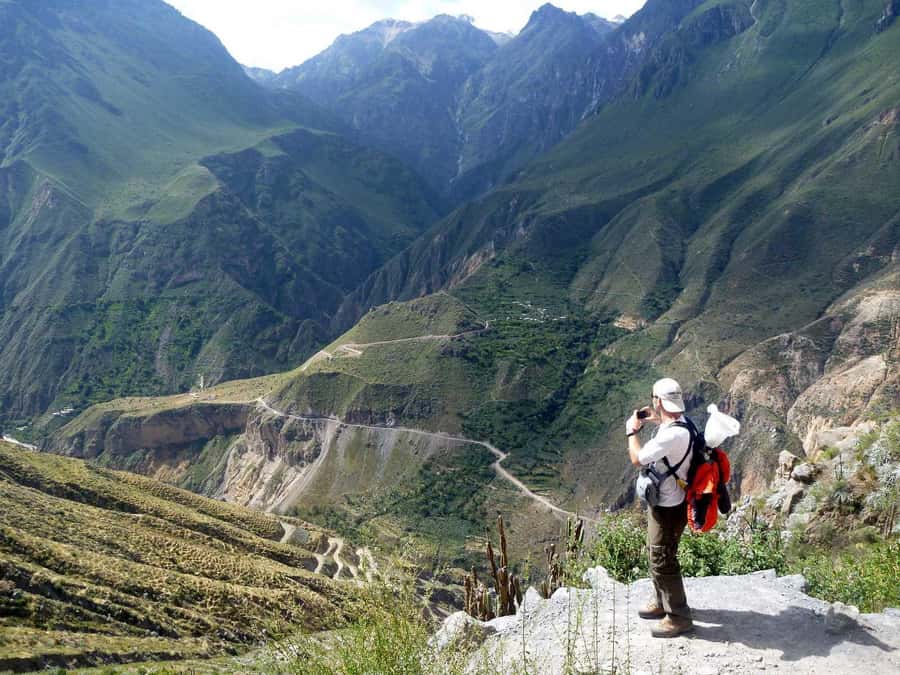
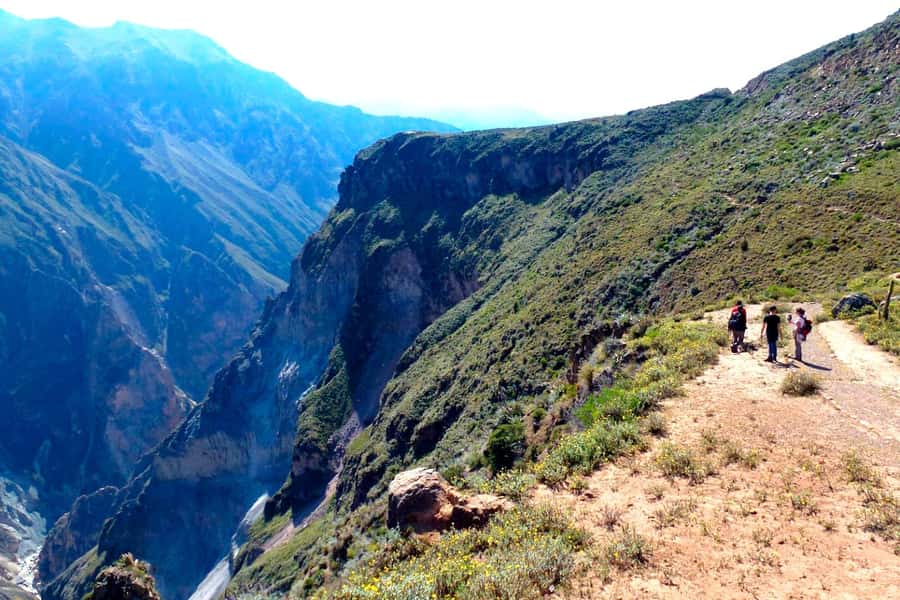
The first real trek phase starts with that downhill feeling you get when you’re finally committed. You’ll hike for about 3 hours of descent, with canyon depth views and the local mix of plants and animal life you’ll notice as you go lower.
This is where many people realize the trek is not just long—it’s also steep and uneven. If your shoes aren’t grippy, or you’re not comfortable stepping carefully, it slows you down fast. Some hikers also wished the route guidance was clearer about steep sections and areas near dangerous drop-offs.
Eventually you reach the bridge and continue toward San Juan de Chuccho at about 2,230 m. That’s your lunch stop, and the highlight here is that lunch is eaten at the home of a local family. You’re not just buying a meal—you’re stepping into how people live along the canyon path.
Lunch at San Juan de Chuccho: this is the human moment
After lunch, you get a rest break, then you continue walking for about 3 more hours. This middle-to-late stretch is when the canyon starts to feel like a closed world: fewer vehicles, more sounds of wind and steps, and a stronger sense of being “inside” the Colca.
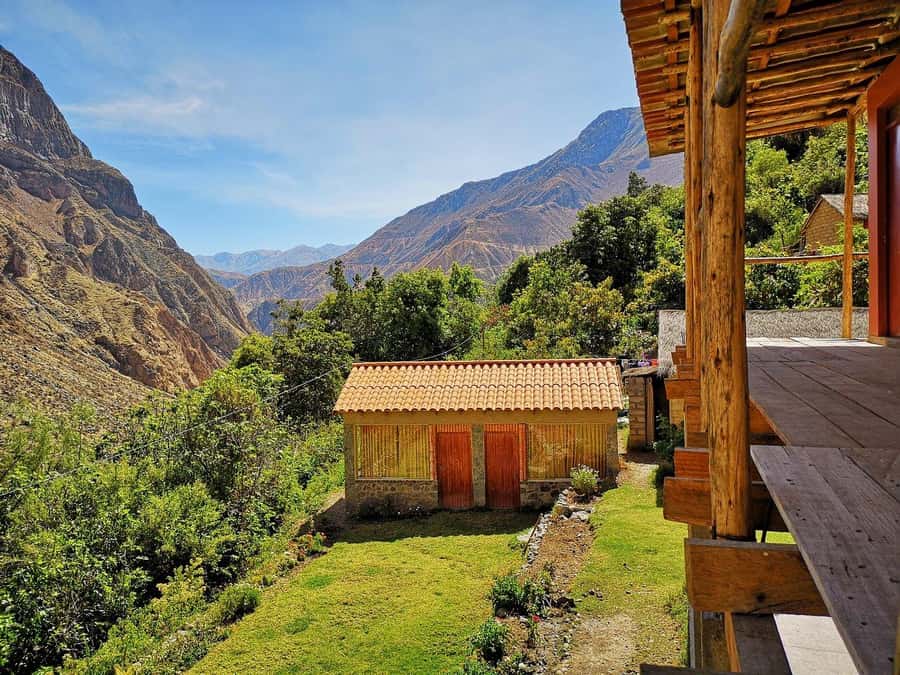
By evening you reach Sangalle Oasis at around 1,900 m. This is where the trek shifts from punishment to reward. You get downtime, nature time, and the pools that make the overnight feel worthwhile.
Sangalle Oasis: pools, downtime, and what to expect from the night
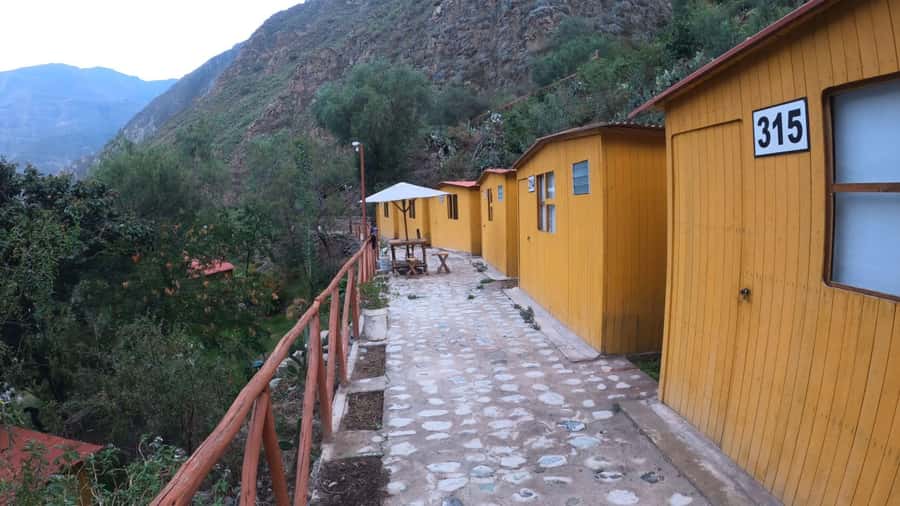
Sangalle Oasis is your overnight stop, and it’s timed so you can recover before day two’s climb. You’ll have a couple of scheduled blocks here—time to visit, swim, relax, and then dinner.
The pool swim is not just a perk
The trek description calls out a refreshing swim, and that matters because your legs will be screaming by evening. A pool at the canyon bottom won’t magically fix soreness, but it does help you cool down and loosen up so you can sleep.
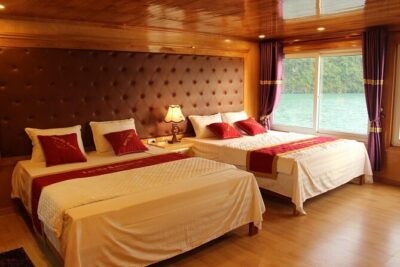
Based on feedback from others, the vibe can feel like a canyon outpost rather than a hotel. People were disappointed by the lodging basics for the money, including reports like limited or missing bathroom facilities and few comforts such as outlets. So if you’re expecting a comfortable bed setup, I’d recalibrate.
Dinner and sleep: keep it practical
Dinner time is scheduled, and then you’ll have the overnight (about 10 hours). You’ll likely be tired in a good way—day one is long (about 15 km and roughly 7 hours walking time).
If you’re the type who gets chilled easily, pack for it. The canyon air can feel different after sunset than it does during midday, and you’ll be higher than Arequipa’s comfort zone.
Day 2: sunrise climb, Cabanaconde breakfast, terraces at Antahuilque, and Chivay hot springs
Day two starts early again. You’ll wake up to begin a hike that brings you up to the highest part of the canyon. The goal is sunrise if you time it right, and the schedule is set so you can see light spread across the canyon as you climb.
The sunrise climb: slow steps win here
This ascent takes about 3 to 4 hours. You’ll climb first, rest when you reach the highest point, then continue a little more toward Cabanaconde at about 3,300 m.
This is the day where you really feel altitude and heat. One key tip: don’t assume you’ll be snacking until after breakfast. Some hikers noted breakfast happens after you’ve already finished the big climb, so bring extras like energy snacks for the upward grind.
Also, if you’ve ever been the person who underestimates you-need-more-water-and-slow-down moments, this is that day. People have specifically advised bringing plenty of water because it can run hot.
Breakfast in Cabanaconde, then viewpoints and terraces
After the climb, there’s a break in Cabanaconde for breakfast. Then transport starts again, and you’ll pass by Antahuilque viewpoints where you can see cultivated terraces. Those terraces are part of the story of how communities shaped this canyon edge to make agriculture possible.
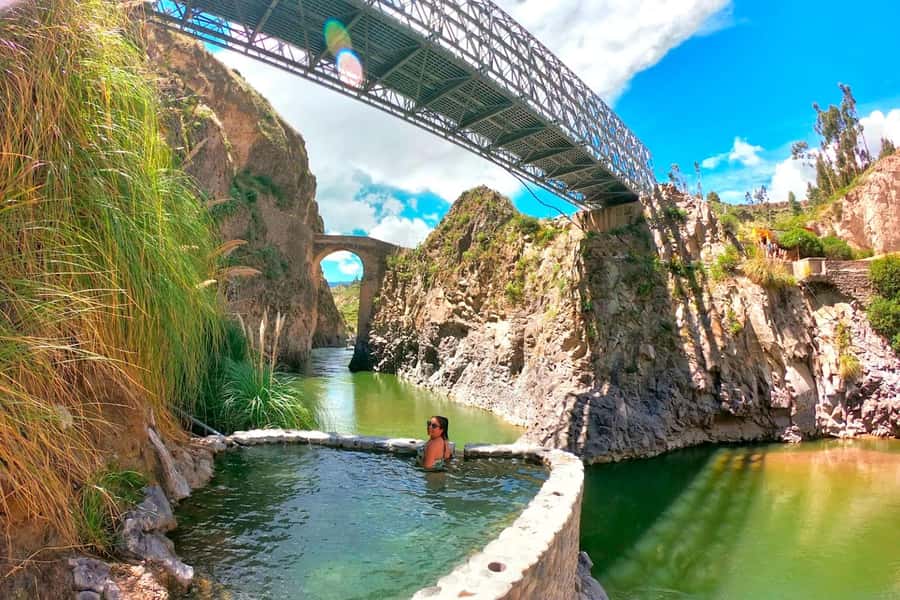
Next comes the relaxing part of the day: a visit to thermal baths. The tour includes time to relax here, but the entrance ticket for hot springs is listed as optional extra (around $5 or 15 soles). If you want guaranteed soak time, budget for it.
Lunch in Chivay and the final return to Arequipa
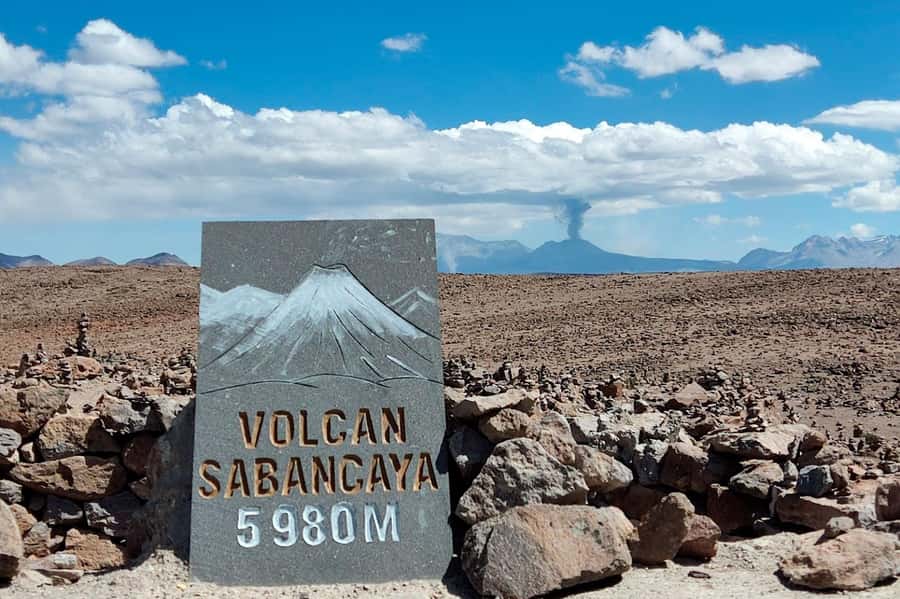
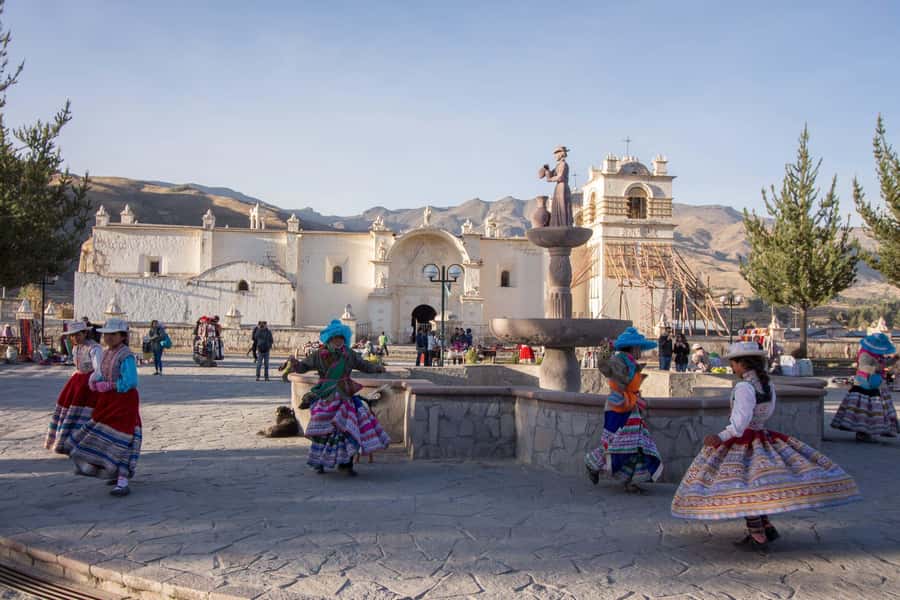
From the terraces and thermal stop, you’ll continue to Chivay for lunch (about 1 hour). After that, the return begins with a couple of stops: a volcano viewpoint photo stop around 4,190 m, then a traditional village break with guided time.
You finish back in Arequipa around 17:30, at Av La Marina 04001.
The whole day is shorter on the clock than day one, but it’s not easier. You’re going uphill, and uphill is the kind of work your knees remember.
Price and logistics: what $21 really means (and what cash covers)
The headline price listed for the tour is $21 per person, and that’s the part that makes people curious fast. But the realistic budgeting here includes an additional payment at the start of the tour: $90 (or 320 soles) in cash, covering food, lodging, and an entrance ticket.
So the value question becomes: are you getting a guided two-day canyon trek with pickup, transport, viewpoints, an overnight at Sangalle, meals and lodging supported by that cash budget, plus hot-springs time? If you go in expecting total costs closer to that combined amount, the trek feels like a reasonable way to see the Colca Canyon at walking level.
Also, you don’t just get to walk. You get guides in English and Spanish, and the program includes guided time at major stops like Cruz del Cóndor and the canyon viewpoints. For a region where logistics matter, that matters more than people think.
How hard is this trek, really? Altitude, heat, and packing list that works
This is a serious hike for most fitness levels. The tour notes that paths are steep and uneven, with parts that can be physically demanding. If you have back problems, mobility impairments, vertigo, or low fitness, this isn’t a good match.
Expect uneven footing and careful steps
Some hikers have asked for clearer descriptions of steep sections and mentioned that parts of the route feel like they’re near drop-off terrain. Even if you’re an experienced hiker, you should plan on slow, careful pacing. Bring shoes with strong traction and ankle support.
If you’re someone who relies on fear-free footing to keep your rhythm, this is not the trek to treat casually. One slow stumble can snowball into knee soreness for the rest of day one.
Heat + timing means you need a simple survival kit
A repeated theme in feedback is heat on day two. That’s why the official packing list matters:
- Comfortable shoes
- Hat
- Camera
- Snacks
- Sunscreen
- Water
Based on what people have added from experience, I’d also consider two small extras:
- A head light: useful for early starts before you fully see what’s around you.
- Toilet paper: practical in areas without easy supplies.
If you’re carrying snacks, choose ones you can eat fast while walking. Day two’s breakfast is after the big climb, so your energy gap can surprise you.
Altitude acclimatization is not optional
The tour recommends acclimatization to altitude. You’re moving through elevations around 1,900 m up to 4,190 m at stops, plus sleeping at 1,900 m. Plan for a slower start in your first hours, drink water regularly, and avoid treating this like a flatland cardio workout.
Guides and group size: small group support, and what communication should look like
Group size is limited to 18 participants, which is a good balance. Large enough to keep energy lively, small enough that a guide can check in without disappearing into the crowd.
Most of the experience depends on how the guide runs the pace and how clearly they explain what’s next. In feedback, guides received praise for being helpful, and one guide was described as stepping ahead when someone in the group needed assistance. That kind of quick response matters on uneven routes.
But feedback also includes mixed notes—like one person naming a guide called Fernando and saying introductions and safety messaging felt delayed, plus issues about stopping for the toilet during the van ride and cautions for the heat. I can’t predict your exact guide experience, but I’d use that as a reminder: ask early about pace expectations, safety, and bathroom rhythm so you’re comfortable when the hike starts.
Who should book this trek (and who should skip it)
This trek fits best if you:
- Enjoy walking as the main event, not just as a way to reach viewpoints
- Want a real taste of canyon life via terraces, communities, and Sangalle Oasis
- Can handle early starts and long downhill/uphill days
- Are comfortable planning for heat, altitude, and uneven footing
It’s not a good idea if you:
- Have vertigo or issues with heights
- Have mobility limits that make steep uneven terrain risky
- Have back problems that flare with sustained walking or uneven steps
- Feel you’re not ready for a multi-hour climb and descent
And if you’re expecting hotel-like comfort at night, keep your expectations grounded. Sangalle is part of the trek experience, and the lodging may not feel like a typical travel upgrade.
Should you book Arequipa Trek 2-Days of Hiking in the Colca Canyon?
If you want the Colca Canyon in a way that feels earned—condors, terraces, a canyon-bottom night, and hot-springs recovery—then yes, this is a strong choice. The route structure is logical: condors first, descent day one, sunrise and climb day two, plus recovery time in Chivay.
Book it if you’re honest about your fitness and if you pack smart for heat and early starts. The tour works best when you treat it like a real hike with preparation, not a casual nature walk.
FAQ
FAQ
What is the duration of the Colca Canyon 2-day hiking experience?
It runs for 2 days.
Where does the trek start and end?
Pickup is in Arequipa, and the finish is at Av La Marina, Arequipa 04001, Perú.
What time is pickup in Arequipa?
Day 1 starts at 03:00 at your hotel in Arequipa.
How large are the hiking groups?
The tour is limited to small groups with up to 18 participants.
What languages do the guides speak?
Guides speak English and Spanish.
Do I need to pay extra in cash during the tour?
Yes. You must pay $90 or 320 soles in cash at the start of the tour for food, lodging, and an entrance ticket.
Is the hot springs entrance included?
The tour includes time at the hot springs/thermal baths area, but the entrance ticket is optional at $5 or 15 soles.
What should I bring for the hike?
Bring comfortable shoes, a hat, a camera, snacks, sunscreen, and water.
Is this trek suitable for people with mobility or balance issues?
No. It’s not suitable for back problems, mobility impairments, vertigo, or low fitness because the trek has steep and uneven paths.