REVIEW · DARJEELING
5-Days Singalila Ridge Trek in Darjeeling
Book on Viator →Operated by Off Road Adventure · Bookable on Viator
One steep ridge, big mountain payoffs. This customized 5-day Singalila Ridge trek is a smart way to experience Sandakphu and Phalut’s standout panoramas without the full longer schedule, and I love that you’re served with clear logistics plus a genuinely upbeat guide. The biggest plus for me is the focus on sunrise mountain views (with early wake-ups each day), and the second is that you hike inside a protected national park area with a chance of spotting wildlife like red pandas. The only real caution: this is not a stroll. Day lengths can feel long, especially on the longest walk day.
You’ll start with a drive up from Darjeeling and then move into high-walk rhythm: dwarf rhododendron forests, ridgeline trails, and frequent stops for photos when the skies cooperate. I also like that the route is designed around multiple viewpoints—Sandakphu, Kala Pokhari (Black Lake), and then Phalut—so the trek doesn’t rely on just one “wow” moment. The potential drawback is weather. Visibility matters a lot here, and the experience depends on good conditions for those Himalayan views.
For practical value, this package stands out because it bundles transportation, national park entry fees, and even trekking gear like poles and a head torch, plus a GoPro-style camera for filming. I’d especially call out that the group is private, so you’re not stuck waiting for strangers who walk at a different pace. Still, check your fitness: the trek is listed for moderate fitness, and the pace is purposeful across 5 days.
In This Review
- Key things I’d plan around on this trek
- Why the Singalila Ridge is a winner for Himalayan views
- Your 5-day route in plain terms (what you’re really signing up for)
- Day 1: Dhotre start and the India–Nepal border at Maneybhanjyang
- Day 2: Sandakphu sunrise, dwarf rhododendron, and Kala Pokhari
- Day 3: Phalut’s 21 km day and why it’s the toughest payoff
- Day 4: Gorkhey descent with dense forest and steady views
- Day 5: Sammanden, Rammam villages, Sirikhola lunch, then back to Darjeeling
- What’s included—and what it means for your comfort
- Price and value: is $460 a fair deal for 5 days?
- Who should book this trek (and who should think twice)
- Off Road Adventure and the human touch that matters
- Should you book this 5-day Singalila Ridge trek?
- FAQ
- How long is the trek, and what’s the daily timing like?
- Where does the trek begin, and do you offer pickup?
- What’s included in the price?
- Do you provide trekking gear or equipment?
- Can I hire a porter, and what does it cost?
- What happens if the weather is poor or I cancel?
Key things I’d plan around on this trek
- A shortened 5-day version of a longer hike: you still get the signature ridge sections, but you’ll feel the effort in fewer days.
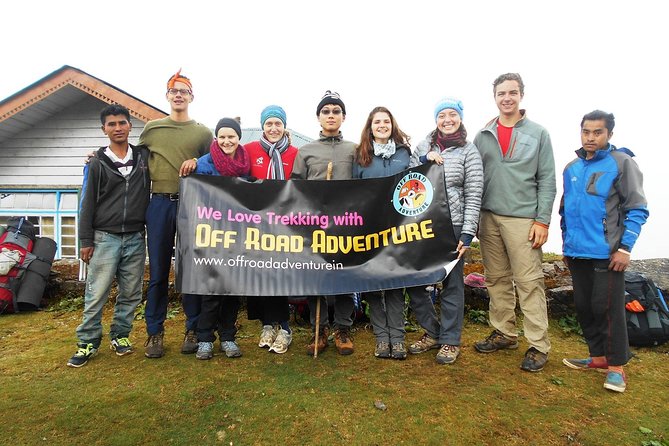
- Sunrise-focused scheduling: early wake-ups keep the best views on the menu.
- National park route with wildlife odds: you’re hiking in a protected area, and red panda spotting is possible if you’re lucky.
- A long, tough day to Phalut: Day 3 is the biggest mileage push.
- Meals and comfort are included: breakfasts, lunches, and dinners are covered, plus 4-night accommodation.
- Gear + camera support: walking poles, a head torch, and a GoPro 7 Black help you manage trail life and capture moments.
Why the Singalila Ridge is a winner for Himalayan views
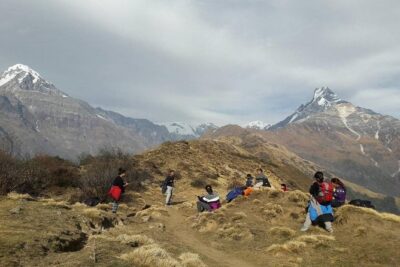
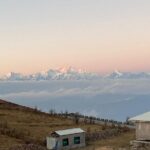
The Singalila Ridge is famous for a reason: you’re not just walking between towns. You’re on a line that keeps putting Nepal and Sikkim Himalayan peaks into view when the weather behaves. From the Sandakphu and Phalut area, the trekking route is set up to offer clear sightlines toward some major giants, including Everest, Makalu, Lhotse, and Kanchenjunga—when clouds lift and visibility is good.
What makes this trek feel “worth it” is how the itinerary is built around viewpoint moments rather than only covering distance. You’re waking early for sunrise and then hiking through forests that change character as you go—dwarf rhododendron zones, ridge stretches, and downhill sections where your legs finally get a chance to reset.
If you like photography, you’ll appreciate the rhythm. You’re not trekking in a hurry all day with no breaks. Instead, you’re repeatedly given a reason to stop, look, and breathe in the altitude air.
You can also read our reviews of more tours and experiences in Darjeeling.
Your 5-day route in plain terms (what you’re really signing up for)
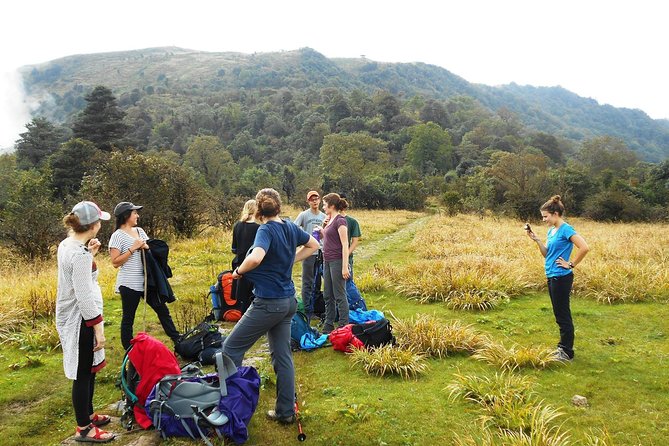
This is a 5-day trek version of what’s normally a 6-day route, customized to give you the highlights. You’ll combine road transfers with 4 nights of accommodation, then wrap with a drive back to Darjeeling after a final village walk and lunch.
Here’s the overall flow:
- Day 1: Drive from Darjeeling to Dhotre and settle into the trekking start area.
- Day 2: Push toward Sandakphu for sunrise, then continue through forest trails toward Kala Pokhari.
- Day 3: The longest trekking day (about 21 km) to Phalut with big panoramic focus.
- Day 4: Trek down to Gorkhey through scenic forest sections.
- Day 5: Walk through Sammanden and Rammam villages to Sirikhola, then drive back to Darjeeling.
You’ll notice the trade-off: shortening the trek means fewer “rest days.” The schedule tries to keep you energized with sunrise breaks and guided pacing, but you should still expect real uphill effort.
Day 1: Dhotre start and the India–Nepal border at Maneybhanjyang
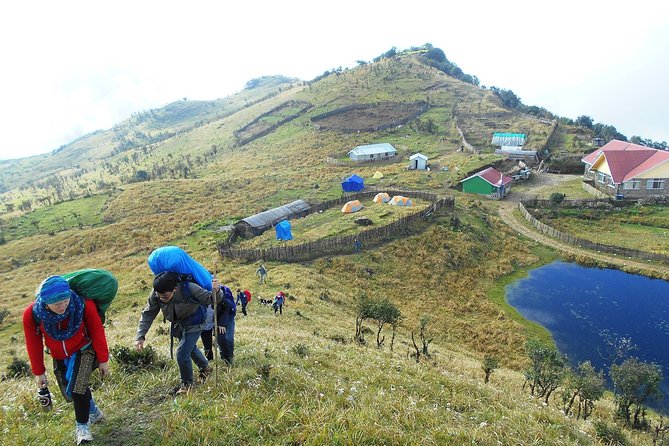
Day 1 is your big “transition day.” You’ll get an early hotel pickup from Darjeeling, then ride about 40 km toward Dhotre. After that drive, you reach Maneybhanjyang, which functions as the India–Nepal border area.
This day isn’t about maximum hiking. It’s about getting your body ready, getting your bearings, and checking your gear before you’re fully in the trekking groove. A lot of people underestimate Day 1 on ridge treks, but it’s actually the day that sets you up for success—because once the steep sections start, you want your head torch, poles, and layers sorted.
Practical tip: since you start early, plan to carry a small, easy-to-reach snack and water bottle. You’ll be more comfortable when the first walking stretches begin.
Day 2: Sandakphu sunrise, dwarf rhododendron, and Kala Pokhari
Day 2 is where the trek shifts from “planning” to “wow.” You wake early for sunrise, and the itinerary specifically includes the Gairibans area, known for bird watching and red panda spotting opportunities. After breakfast, the trail climbs through dwarf rhododendron forest.
You’ll continue toward Kala Pokhari, meaning Black Lake. Even if the lake itself is quiet or partially obscured by weather, the value is in the trail character: these forest sections are what make the ridge feel alive rather than just a straight line from point A to point B.
One thoughtful detail here: the trek is designed around early visibility. Sunrise doesn’t just mean nicer light. It often means fewer clouds and clearer sightlines before the afternoon haze sets in.
Possible drawback: forests can be damp and cool. Bring layers you can add/remove quickly, and make sure your footwear can handle wet leaves.
Day 3: Phalut’s 21 km day and why it’s the toughest payoff
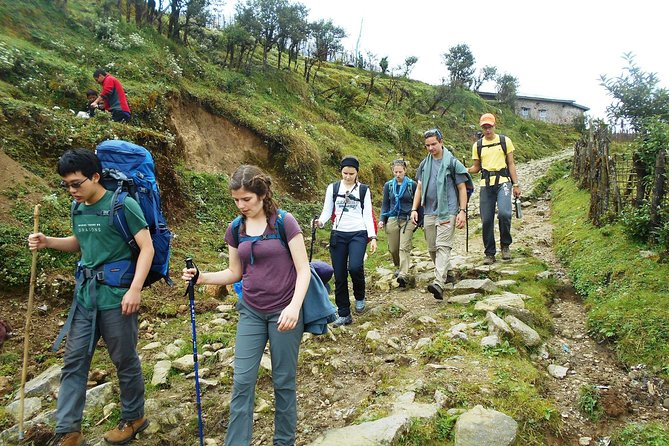
Day 3 is the longest trekking day at around 21 km, so you start early. This is the day you’ll likely feel in your thighs later—but it’s also the day that helps the trek feel like more than a “half-week stroll.”
The schedule still includes a sunrise focus, and the point of arriving at Phalut is to maximize your panoramic mountain moments. Phalut is essentially about big views and ridgeline atmosphere. This is also where you’re more likely to connect the dots between different peaks and ridges in a way that feels unusually clear when the sky allows it.
What I like about making this the long day: it gives you a strong sense of achievement early in the overall itinerary, instead of spreading the hardest effort across multiple days. By the time you reach Day 4, you’re moving into a downhill-style leg that can feel like recovery even if it’s still walking.
What to watch: 21 km in mountain conditions isn’t the same as 21 km on flat ground. Pace matters. If you go out too fast, you’ll pay later. Follow your guide’s rhythm and keep breaks short and frequent.
Day 4: Gorkhey descent with dense forest and steady views
On Day 4, you head from Phalut down toward Gorkhey. The trek route from Phalut to Gorkhey is about 15 km, and it runs through dense forest with the ongoing rhododendron backdrop.
This is a day many hikers like because the work feels different. Instead of only thinking about climbing, you can focus on controlled movement downhill—watching footing, managing energy, and enjoying the quieter forest moods.
The other advantage: you’re less “high spotlight” and more “trail immersion,” which often helps people who get view-fatigued. At this stage, the mountains are still in the mix, but the trek’s story shifts to the human scale of the route.
One caution: downhill trekking can be tougher than it looks because your knees take the stress. Trekking poles help here, and they’re included in your package.
Also, I loved the human side of this day in the feedback I saw: guides keep the group upbeat and moving with energy that makes early mornings feel less painful.
Day 5: Sammanden, Rammam villages, Sirikhola lunch, then back to Darjeeling
Day 5 is your wrap-up day. You start early from Gorkhey and walk through Sammanden and Rammam villages. You’ll reach Sirikhola by around noon.
After about an hour for lunch, you switch back to road travel. Then you drive back to Darjeeling in a private vehicle for roughly 4 hours.
This day is valuable because it gives you closure. You end the trekking effort with a village walk (not just a random trail cutoff), then you’re rewarded with a real rest period on the ride back. It also helps you avoid the common “last day scramble,” where the final hours feel like a race to the finish.
Practical tip: pack a small layer for the car ride. Morning air on the ridge can differ a lot from late-day temperatures near Darjeeling.
What’s included—and what it means for your comfort
This trek packages the big practical stuff so you don’t have to chase it last minute. Included items are:
- Private transportation
- National park entry fees
- Walking poles and a head torch
- 4-night accommodation
- Meals: 5 breakfasts, 5 lunches, and 4 dinners
- GoPro 7 Black for photos and videos during the trek
That matters more than you might think. On multi-day treks, the difference between “prepared” and “underprepared” shows up in sore knees, dark path navigation, and the constant hassle of meal planning. With meals handled and essential gear provided, you can spend your mental energy on the trail.
There’s also something genuinely helpful about having a camera support tool. If you’re trying to capture sunrise moments and ridge views, you’ll want stable footage. Having the GoPro option reduces the need to improvise with your phone on windy mornings.
Not included:
- alcoholic drinks
- personal expenses
- optional porter services (listed at 1000 per day)
- travel insurance
One key point: if you like hiring a porter, budget for it separately. Otherwise, you’ll carry your own essentials.
Price and value: is $460 a fair deal for 5 days?
At $460 for about 5 days, the value comes from what’s bundled, not just the price tag. You’re getting:
- private transport up front and back at the end
- national park entry fees
- 4 nights of accommodation
- full meal plan coverage across the hike
- basic trekking gear (poles + head torch)
- a camera package (GoPro 7 Black)
- sunrise-driven guided itinerary structure
For this kind of route, a big chunk of cost on independent travel usually comes from logistics: getting to trailheads, lining up guides, paying park fees, and arranging meals and lodging each night. This package takes those tasks off your plate.
Where the “value equation” might not fit you is if you already have everything you need, and you prefer to self-plan each day. But if you want a guided experience with practical support and a clear schedule, this price can feel reasonable.
As always, weather is the wildcard. The experience notes that good weather is required for the trek. If skies don’t cooperate, you should expect date changes or a refund offer.
Who should book this trek (and who should think twice)
This is a solid choice if you:
- want big Himalayan views and a sunrise-centered plan
- like hiking with guidance and a lively group atmosphere
- prefer having food, lodging, and entry fees handled
- can handle moderate physical effort over multiple days
It’s a weaker fit if you:
- don’t like long walking days (Day 3 is about 21 km)
- struggle with downhill trekking stress (Day 4 goes down toward Gorkhey)
- get discouraged when weather blocks visibility
On fitness: the trek is listed for moderate physical fitness, which usually means you’ll be fine if you can walk briskly for hours and climb steadily. It doesn’t mean it’s easy. Mountain treks feel harder than gym workouts.
Also, this is a private tour/activity, meaning only your group participates. If you prefer the comfort of not sharing logistics with strangers, that’s a genuine plus.
Off Road Adventure and the human touch that matters
The guide support is a recurring highlight in the way this experience is described. Names that show up include Rakesh and Sekhar, both described as active and communicative. There’s also Sangay associated with communication and coordination before the trek.
That human piece matters on a ridge trek because you’re dealing with early wake-ups, weather changes, and daily rhythm. When the guide keeps you upbeat and organized, you spend less time worrying and more time enjoying the trail.
And yes, sunrise mornings can be rough. But a well-run day helps you avoid the slow, grumpy drag.
Should you book this 5-day Singalila Ridge trek?
If you want the classic Singalila highlights—Sandakphu, Phalut, Kala Pokhari, and multiple mountain-view moments—while keeping your total trip to 5 days, I think this is a strong option. The included gear, meals, lodging, and private transportation mean you can focus on the hiking rather than logistics.
Before you commit, check one thing: are you comfortable with a long Day 3 (around 21 km) and a morning-heavy schedule? If your answer is yes, you’ll likely love how much view time you’re given. If your answer is no, you may prefer a longer trip with more spread-out walking.
Also, keep an eye on weather. This trek’s best rewards come when visibility is good, and the plan is weather-dependent.
In short: book it if you want guided effort with big ridge views and you’re ready for early starts.
FAQ
How long is the trek, and what’s the daily timing like?
The trek runs for about 5 days. The schedule starts early, with the listed start time at 7:00 am, and the itinerary includes sunrise wake-ups on multiple days.
Where does the trek begin, and do you offer pickup?
You’ll have early pickup from your hotel in Darjeeling on Day 1. The route includes a drive of about 40 km to Dhotre.
What’s included in the price?
The package includes private transportation, national park entry fees, walking poles, and a head torch. It also includes 4-night accommodation and meals: 5 breakfasts, 5 lunches, and 4 dinners.
Do you provide trekking gear or equipment?
Yes. Walking poles and a head torch are included, and a GoPro 7 Black camera is provided for photos and videos during the trek.
Can I hire a porter, and what does it cost?
Porters are not included. If you want to hire one, the listed cost is 1000 per day.
What happens if the weather is poor or I cancel?
The experience requires good weather. If it’s canceled due to poor weather, you’ll be offered a different date or a full refund. Cancellation is free if you cancel at least 24 hours in advance; changes within 24 hours aren’t accepted.