REVIEW · PRAIA
Santiago: Longueira, Pico de Antónia & Monte Tchota Trek
Book on GetYourGuide →Operated by Bu Country Tours · Bookable on GetYourGuide
Santiago rewards steady hikers with real local flavor. I like the way Longueira village puts you close to everyday Cape Verde life, and I love the Pico de Antónia viewpoints over São Jorge Valley. This guided day also includes a stop at a Grogue rum distillery and a finish inside Monte Tchota’s protected nature.
The upside comes with effort: the hike is Very Difficult in its longer version, and the trail is narrow and tilty. If you don’t already hike on steep, slanted paths, plan carefully and bring the right shoes.
In This Review
- Key highlights to know before you go
- Longueira and Praia pickup: how this trek starts like a day with locals
- Grogue rum, school visits, and Lemba Lemba Bar: the human side of Santiago
- Pico de Antónia: the climb that earns the view (and tests your footing)
- The Monte Tchota/Txota natural park finale: endemic plants and endangered birds
- Route options, steepness, and footing: plan your day like a hiker
- What’s included for $106: value isn’t only the view
- Packing list that actually matches the terrain
- Who this trek is for (and who should choose a different day)
- Should you book Santiago: Longueira, Pico de Antónia & Monte Tchota?
- FAQ
- How long is the trek?
- Is it an uphill hike the whole time?
- What trail distance should I expect?
- How difficult is it?
- What’s included in the price?
- What should I bring for the hike?
- What languages are available?
- What if there aren’t enough people for the shared trek?
Key highlights to know before you go
- Longueira first, not last: meet locals in the village, see the primary school, and stop at Lemba Lemba Bar
- Grogue rum distillery visit: a quick, very Cape Verde cultural detour
- Pico de Antónia is the big prize: panoramic views from the ~1,394 m walking point, with possible sights of Maio and Fogo
- Nature-park finale at Monte Tchota/Txota: learn about endemic plants and animals, plus endangered bird species
- Two route lengths: you choose between a harder 9 km day or a shorter 6 km option (both one-way)
Longueira and Praia pickup: how this trek starts like a day with locals
Most guided treks start by throwing you straight onto a trail. This one starts by picking you up in Praia and steering you toward the countryside at a human pace. The value here is simple: you’re not just paying for walking time. You’re paying for context—how the island lives when you’re not staring at a brochure.
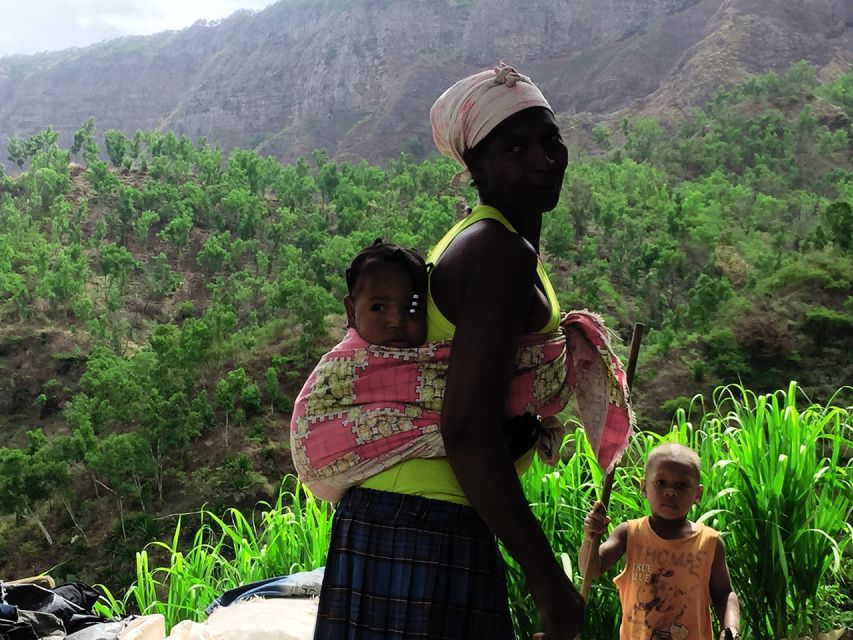
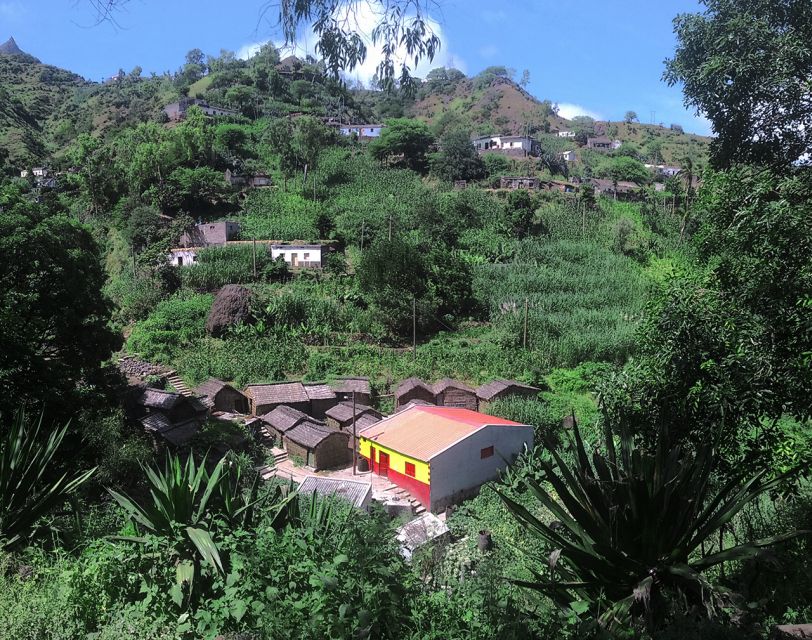
When you reach Longueira, the day shifts gears. You’re not in a museum; you’re in a real village. You’ll get time to interact with locals, visit the primary school, and hear what local life looks like beyond the usual tourist shortcuts. It’s also where the tour becomes more than exercise: it’s a small lesson in how community traditions and livelihoods are woven into the land.
Then there’s the first cultural stop that feels very Cape Verde: the Grogue distillery. Rum-making isn’t just a photo op here. It’s a living craft, and it helps explain why this island is known for distinct tastes and local know-how.
One practical note: you’ll want to stay alert early, because you’re going to head out walking soon after the village portion. If you’re the type who needs coffee before anything else, plan to eat and drink normally before pickup—no extra time is built in beyond what the tour day requires.
You can also read our reviews of more tours and experiences in Praia.

Grogue rum, school visits, and Lemba Lemba Bar: the human side of Santiago
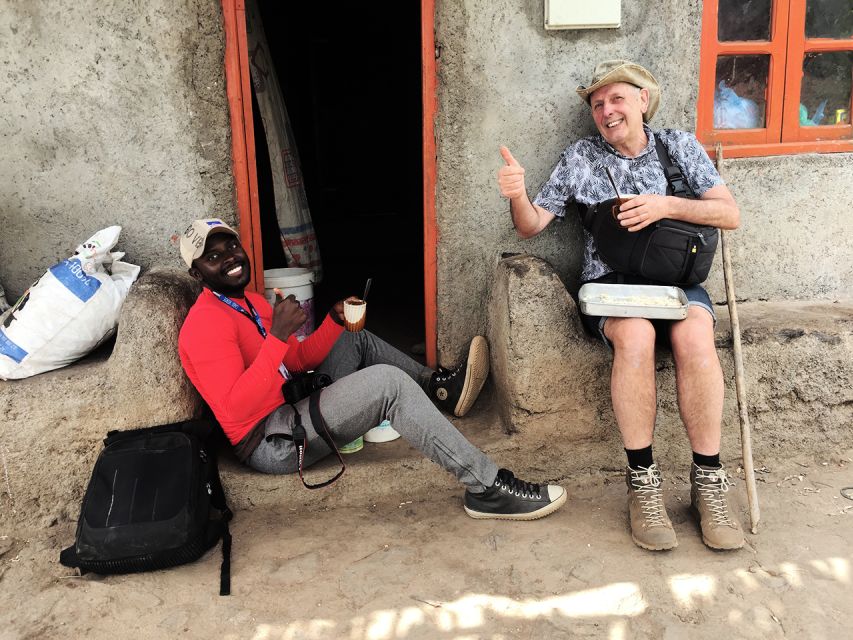
The Longueira portion is the heart of the cultural experience. I like it because it’s not staged into a single stop-and-go handshake line. You see multiple parts of village life: the primary school, time with residents, and a bar stop (Lemba Lemba Bar) that gives the day a more relaxed rhythm.
The Grogue distillery visit is the one that tends to stick in your memory. People often expect the Caribbean-style rum story; Cape Verde delivers something more grounded—rum as local production, local routine, and local identity. It’s the kind of stop where a good guide makes you notice details, not just facts.
And your guide matters. Some departures are led by people like Ricardo or Djibril—both described as friendly, professional, and attentive. Others have guides such as Admilson Garcia, who know the region well and can point out what you’d otherwise miss. Even if you don’t remember every detail, you’ll likely remember how easy it felt to ask questions and get straight answers.
If you’re thinking, Will I feel like I’m intruding? You usually won’t, as long as you’re respectful. This tour’s structure gives you time to connect rather than just pass through. Just keep your phone put away during the most personal moments, and treat the village like a community, not a backdrop.
Pico de Antónia: the climb that earns the view (and tests your footing)
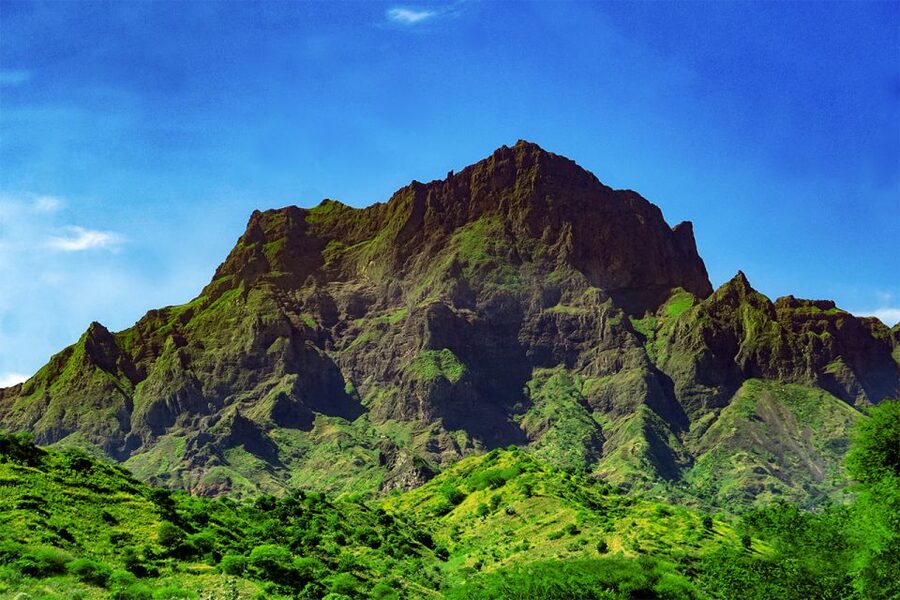
Pico de Antónia is the island’s highest point, and the trek builds toward it in a way that makes sense. After Longueira, you start climbing toward the big viewpoint moment. This is where the day turns athletic.
You’ll reach about the 1,394 m walking point in the longer version, and from there you get panoramic views over the São Jorge Valley. On clear days, the view can stretch far enough that you may see Maio Island and the volcano on Fogo. That’s one of the highlights for a reason: it’s not just “a nice view,” it’s a wide-angle sense of scale—how Cape Verde fits together across water and hills.
The trek involves serious elevation gain. The harder option includes about 1050 m of gain and roughly 9 km of walking, with around 5 hours uphill and a total walking time near 6 hours. There’s also a shorter option—about 6 km, roughly 585 m of gain, and a total walking time around 4 hours. Both versions include steep effort, but the shorter route is the better choice if you’re strong but not yet conditioned for a big vertical day.
Most importantly: the last meters can feel steep. Guides help, and that support matters because the path is narrow and slanted. One group noted that the ascent felt very difficult, especially near the top, but that the guide and their trainee stayed helpful and present.
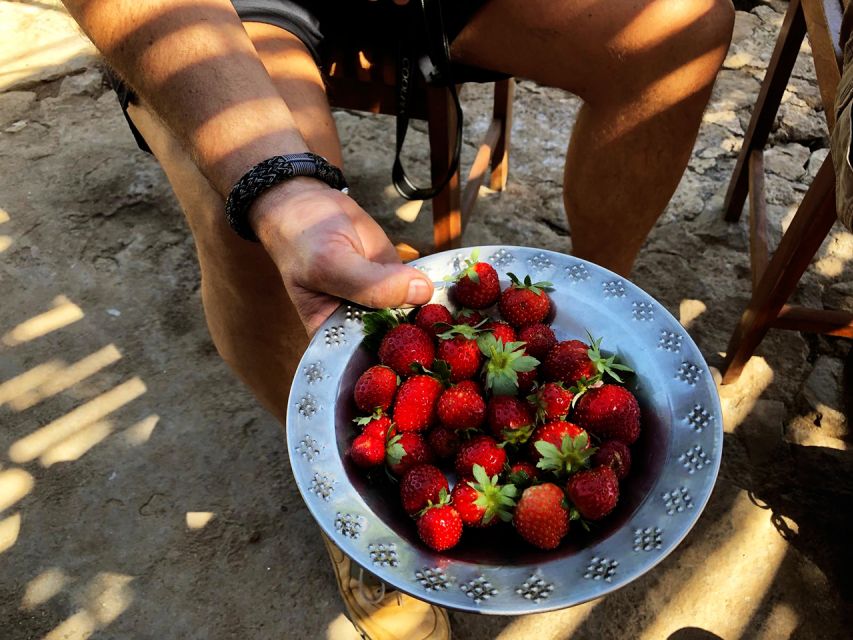
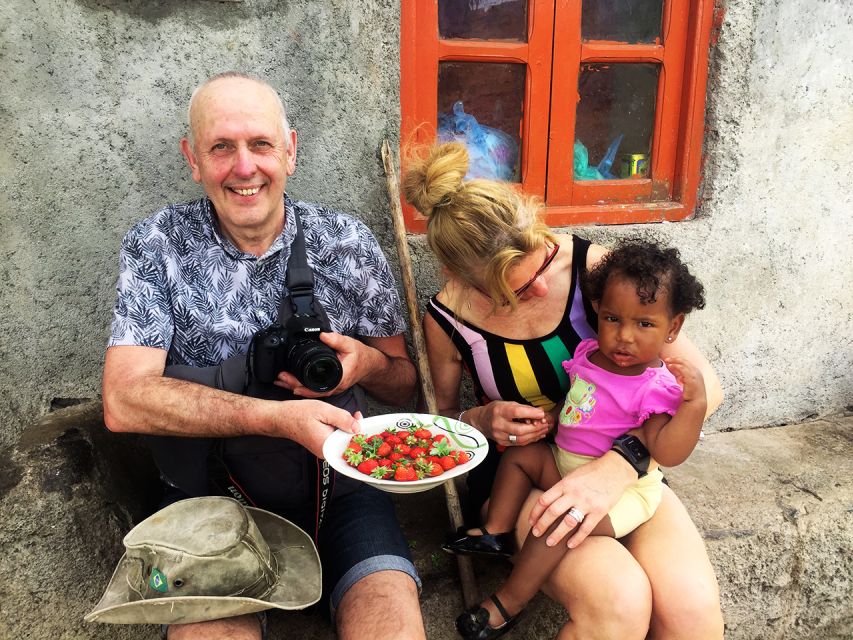
You’ll also have a stop for a small picnic and views. In the season window from December to May, you may walk among strawberry fields, and the picnic can connect to that scenery. Even if you don’t hit strawberry season, the picnic stop is part of why the climb feels like a journey instead of a grind.
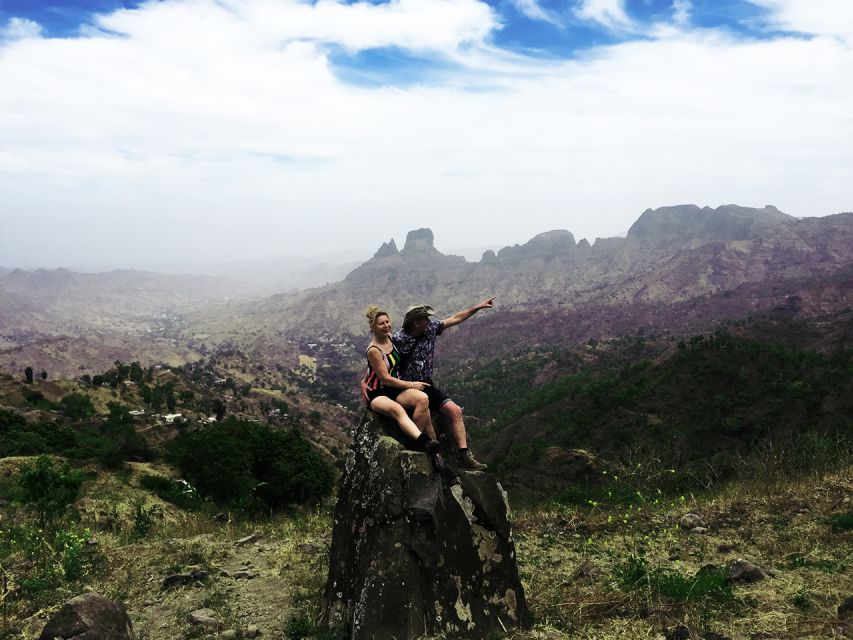
For photos, the guides often help you pick spots at different angles while you’re still moving. One group highlighted that their guide showed them great picture locations along the way, not just at the summit. That’s a smart approach, because waiting until the very top can mean you miss the best light or the best vantage.
The Monte Tchota/Txota natural park finale: endemic plants and endangered birds
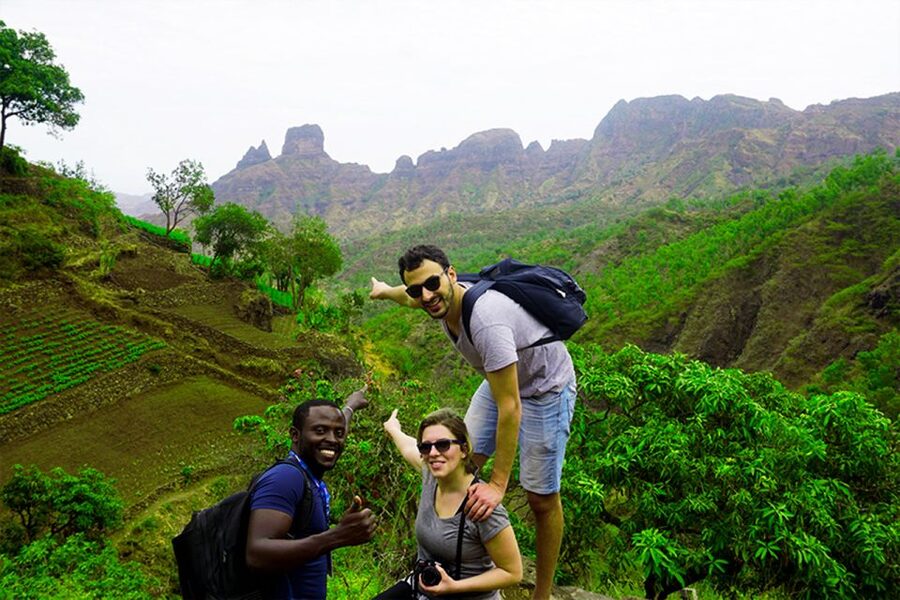
After Pico, the day shifts from “mountain achievement” to “slow observation.” Monte Tchota/Txota is where you finish the trek in a natural park setting. This portion is less about proving strength and more about noticing detail.
You’ll spend time in an area described as intact and rich in fauna and flora, and you’ll also learn about endemic plants and animals—species that are native to Cape Verde and not found everywhere else. If you’ve never seen an environment like this up close, it can be eye-opening. You start looking at small patterns: the way plants grow in dry terrain, the signals of life you only notice when someone points them out.
Birds are part of the story too. The tour specifically mentions some bird species in danger of extinction. That matters because it turns “hiking” into “responsible awareness.” You’re not just walking through nature; you’re learning what needs protecting and why.
This is also a good place to catch your breath—mentally as much as physically. The earlier part of the day demands attention on foot; the park part encourages you to watch, listen, and take it in. If you’re the type who likes birding or botany (even casually), you’ll likely enjoy how the guide translates the park into something you can actually recognize.
One practical reality: the way back can feel slippery. A group described return taking longer than the climb because it was very slippery, and they credited walking-sticks support for help with balance. Even if you’re not worried on the way up, treat the descent seriously.
Route options, steepness, and footing: plan your day like a hiker

This trek is not a casual walk. It has steep vertical effort, a narrow path, and a one-way trail format. If you know your limits, that’s great. If you don’t, you’ll find out quickly.
Here are the two route profiles the tour offers:
- Longer, more difficult option: ~9 km, about ~6 hours total walking, ~1050 m elevation gain and ~600 m elevation loss, max elevation around ~1390 m, min around ~485 m
- Shorter, difficult option: ~6 km, about ~4 hours total walking, ~585 m elevation gain and ~186 m elevation loss, max elevation around ~1160 m, min around ~485 m
Path quality is described as tilty and narrow. “Tilting” is the key word. It’s not just steep—it’s uneven and slanted. That’s the kind of terrain where good shoes change everything. And hiking sticks can make a noticeable difference, especially when the surface turns slick on descent.
In terms of difficulty level, the longer route is marked Very Difficult. Even the shorter option is rated Difficult. So yes, you can do this without being a mountaineer, but you do need real hiking fitness and good balance habits.
Group hikes also depend on numbers. The shared-group option requires a minimum of 2 participants. If that minimum isn’t met, the operator may offer an alternative date, run it privately for an extra fee, or cancel with a full refund. That’s worth considering if your schedule is tight.
If you’re deciding between the two options and you’re unsure: go conservative. The view rewards effort, but the terrain punishes overconfidence.
What’s included for $106: value isn’t only the view
The price is $106 per person, and the value comes from what’s bundled into that number.
Included:
- hotel pickup and drop-off in Praia
- transportation to the trail start area
- a tour guide
- picnic (soft juice, sandwich, and fruit)
- liability insurance
For many hikes, you pay extra for guiding and transport. Here, you’re getting a full guided day with food basics built in. That matters because you don’t have to budget separately for a guide, and you don’t need to figure out local logistics on your own.
Is it “cheap”? Not really, but it’s not overpriced for what you’re doing: steep elevation, a guided cultural portion in Longueira, and a natural-park finish at Monte Tchota/Txota. The guide’s role is also practical—helping you stay safe on narrow, slanted terrain, and showing you where the best viewpoints and photo angles are.
Also, multi-language support is included: guides operate in Spanish, English, French, and Portuguese. That’s a quality-of-life detail. You’ll get better answers and feel more at ease if you can understand the guide fully.
One thing to keep in mind: the tour does include a picnic, but it doesn’t list extra snacks beyond that. If you’re the type who gets hungry fast during a steep climb, you might want to bring an extra bite of your own.
Packing list that actually matches the terrain
Bring the basics, because the trail demands them. The tour recommends:
- hat
- hiking shoes
- sunscreen
- water
I’d add one more practical recommendation: wear hiking pants if you can. The guidance specifically calls out wearing them especially from August to November. The terrain and sun can both be unforgiving.
Walking sticks are strongly recommended, and one group noted that their sticks were provided, which was a huge help on slippery ground. So even if you bring your own and don’t need them, you’ll still feel ready.
For a day like this, I also suggest you pack for weather even if the forecast looks calm. High elevations can feel cooler, and mountain trails can change quickly with cloud cover. The tour’s view potential (Maio and Fogo) depends on visibility, so it’s worth dressing in layers you can adjust.
Finally, keep your hands free. You’ll likely want both hands for balance on narrow, tilted sections.
Who this trek is for (and who should choose a different day)

This is for experienced hikers in training, not for casual walkers. The longer version is very demanding: big elevation gain, narrow trail sections, and a tough ascent near the top. Even the shorter version is still difficult.
You’ll probably love it if you:
- enjoy steep hikes and can manage a gradual burn
- like guided cultural stops (Longueira and the Grogue distillery) as part of your outdoor day
- care about nature education, especially endemic species and endangered birds
You might want to skip it (or choose the shorter route) if:
- you have knee or ankle issues and haven’t hiked steep, uneven trails before
- you don’t own supportive hiking shoes
- you hate descending on slippery surfaces
The key is matching your fitness to the trail. The best part of this trek is the combination: local life first, summit views second, and a nature-park finish third. But that combo only works if you’re physically up to the hike portion.
Should you book Santiago: Longueira, Pico de Antónia & Monte Tchota?
Book it if you want a Cape Verde day that blends people and serious hiking. I think it’s a strong choice because you get more than scenery: you get a village experience in Longueira, a rum craft stop with Grogue, a summit on Pico de Antónia, and an ending in Monte Tchota/Txota with education about endemic plants and endangered birds.
Don’t book it if you’re looking for an easy nature walk. The trail is narrow and tilty, and the longer route is genuinely tough. If you’re unsure, choose the shorter route and bring hiking poles and solid shoes. That’s how you turn a hard day into a win.
FAQ
How long is the trek?
The longer option is about 6 hours of total walking time, and the shorter option is about 4 hours.
Is it an uphill hike the whole time?
It includes steep uphill time, with the longer option described as around 5 hours uphill. It also includes downhill segments afterward.
What trail distance should I expect?
The longer route is about 9 km, while the shorter route is about 6 km.
How difficult is it?
The longer route is rated Very Difficult. The shorter option is rated Difficult.
What’s included in the price?
Pickup and drop-off in Praia, transportation, a tour guide, a picnic (soft juice, sandwich, fruit), and liability insurance are included.
What should I bring for the hike?
You should bring a hat, hiking shoes, sunscreen, and water.
What languages are available?
The tour is available in Spanish, English, French, and Portuguese.
What if there aren’t enough people for the shared trek?
The shared group option requires a minimum of 2 participants. If the minimum isn’t met, you may be offered an alternative date, a private tour for an extra fee, or a cancellation with a full refund.