REVIEW · AMMAN
Dana to Petra Trek + Wadi Rum & the Dead Sea – 9 Days
Book on Viator →Operated by Experience Jordan Adventures · Bookable on Viator
A trek across Jordan can feel big on paper, but this one clicks because you’re always moving through real places. You hike from Dana Nature Reserve to Petra on Bedouin paths, then add Wadi Rum by 4×4 and end with a Dead Sea soak.
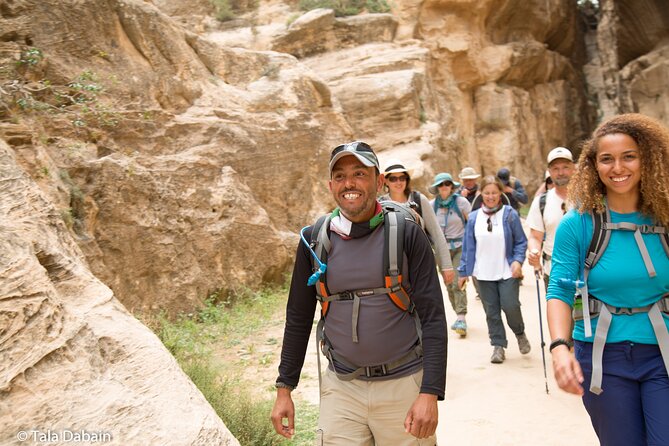
What I like most is the mix of effort and payoff: long days in the Dana canyons, then a Petra entrance that helps you avoid the worst crowd crush. I also appreciate the hands-on support for a small group (max 14), including a licensed English guide and local help on the tougher hiking days.
One consideration: this is not a light stroll. The days are long and the schedule expects a strong physical level, so you’ll want to train a bit before you go and pack for hot or windy desert weather.
In This Review
- Key things I’d circle on your planning map
- Landing in Amman with enough time to get oriented
- Dana Nature Reserve: canyons, ecozones, and nights under canvas
- Day 2: Mansoura campsite and the first big descent
- Day 3: Sharah views to Furon
- Day 4: Bedouin shepherd paths and Ghbour Whedat
- Little Petra and the Nabataean trailwork you’ll actually notice
- Entering Petra through the Back Door and seeing the Monastery unfold
- Wadi Rum: 4×4 safari time plus tea, starlight, and rock inscriptions
- Dead Sea recovery: floating, mud, and spa options when legs hurt
- Price and value: what you’re paying for beyond the headline number
- Who this Dana to Petra plus Wadi Rum trek is for
- The guide factor: names that show up for this route
- Should you book Dana to Petra Trek + Wadi Rum & the Dead Sea?
- FAQ
- How long is the Dana to Petra Trek + Wadi Rum & the Dead Sea tour?
- What’s the maximum group size?
- What kind of guiding do you get?
- How much hiking should I expect?
- What’s included in the price?
- Is the Jordan Pass included?
- Where do you sleep each night?
- Is hiking gear provided?
- What’s the cancellation policy if plans change?
- What if the weather is bad?
Key things I’d circle on your planning map
- Back-door Petra entry route: You reach major sights via a less crowded approach, including a way that keeps you above the big chasm views.
- Little Petra (Siq al-Barid) first: You get a quieter, canyon-walled archaeological stop before the main event at Petra.
- Dana Biosphere Reserve camping: Real wilderness nights after hiking through multiple ecozones.
- Local hiking support (donkey aid): Days 2–4 include a local hiking guide and donkey safety measures.
- Wadi Rum with Bedouin hosting: 4×4 safari time with stargazing, tea, and the chance to hike and scramble at your pace.
Landing in Amman with enough time to get oriented
Your tour starts in Amman, and Day 1 is built for arrival stress-free. You check into your hotel, eat your first proper Jordanian meals, and if your flight lands early enough, you can walk a bit on your own.
Amman is one of those cities that feels old without being frozen in time. It has been inhabited since the Bronze Age, yet it still runs like a modern capital. That mix matters here, because after Amman you’re going to spend days in remote terrain where you’ll want your head clear and your legs ready.
Practical tip: keep your first evening simple. You’ll be up early the next morning for the drive into Dana, and you’ll feel it if you overdo it on Day 1.
Dana Nature Reserve: canyons, ecozones, and nights under canvas
The trek properly begins once the group is picked up from Amman around 7:30 am after breakfast. The drive to the trailhead takes about 2.5 hours, and it’s time you can use to meet people in your group, review how the days work, and settle your expectations.
Dana Nature Reserve is known for four distinct ecozones. That’s not just trivia—you’ll feel it as the trail shifts from mountain overlooks down into valley terrain. The variety keeps the hike from feeling monotonous, even when the distances are solid.
Day 2: Mansoura campsite and the first big descent
Hike time is listed as 5–7 hours, about 15 km total, with roughly 260m ascent and about 690m descent. You start on trails overlooking Dana Valley, then drop into al Khashasha Valley. Then you camp on the outskirts of the valley in Mansoura.
This day is a good reminder that the toughest part can be the descents. Even if you feel strong on the flat parts, knees and calves can get the hint once the ground starts pulling downhill. If you’re the type who tends to go too fast at the start, this is where you’ll want to slow down and keep your footing relaxed.
Day 3: Sharah views to Furon
Day 3 is another 16 km day (again listed as 5–7 hiking hours). You climb through the mountains for about an hour, then the view opens up: Sharah Mountains in one direction, and the Wadi Araba desert spread beyond.
You camp in Furon, where the plan includes tea and time to enjoy the view before dinner. That small “stop and breathe” moment is more important than it sounds. After a day of ascent, you’re basically earning a calm end to the day.
Day 4: Bedouin shepherd paths and Ghbour Whedat
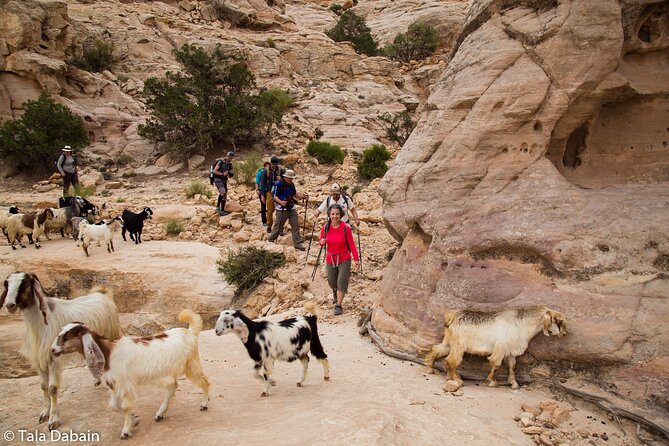
This is your longest-feeling terrain day on paper: about 17.1 km, with roughly 750m ascent and 920m descent. The route contours through wild corners of the Sharah Mountains, using smaller connections along Bedouin shepherd paths.
A nice touch here is how the scenery is described: black, rugged peaks with steep canyon drops, then rock formations that soften as you go. You finish in Ghbour Whedat, again in wilderness camping.
Why this portion is worth the money: Dana isn’t just a hike in the background. The tour structure keeps you moving with support (licensed guide and a local hiking guide with donkey safety measures on days 2–4), while also giving you those quiet camp moments where Jordan slows down.
Little Petra and the Nabataean trailwork you’ll actually notice
On Day 5 you transition from remote Dana trekking into a more archaeological route. You’ll be heading toward Little Petra (also known as Siq al-Barid, the Cold Canyon).
Before you reach the ruins, the day includes a gradual shift in human presence. You pass Bedouin camps, sheep pens, and small agricultural plots. That’s not just scenery—it gives you context for how land use works around these heritage areas.
You also pass early Nabataean remains, including wine and olive presses, aqueducts, and other ancient water infrastructure. This is one of those days where the guide can matter a lot, because water systems in desert environments are how you understand why people built where they did.
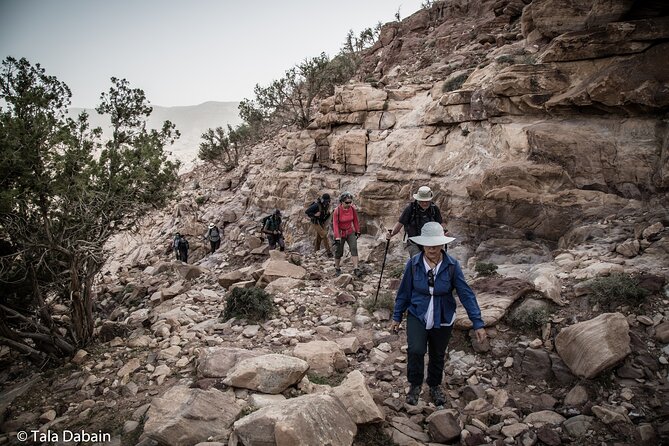
The route finally moves through a canyon of soft sandstone, then down narrow, steep stairs into Little Petra. Expect a more intimate archaeological experience than what you’ll see later at Petra proper.
Possible drawback to consider: Little Petra is quieter, but it also means you’ll need to be comfortable sharing narrow steps with your group, and you’ll want steady shoes. If you hate scrambling or steep canyon stairs, this day will test you a bit.
Entering Petra through the Back Door and seeing the Monastery unfold
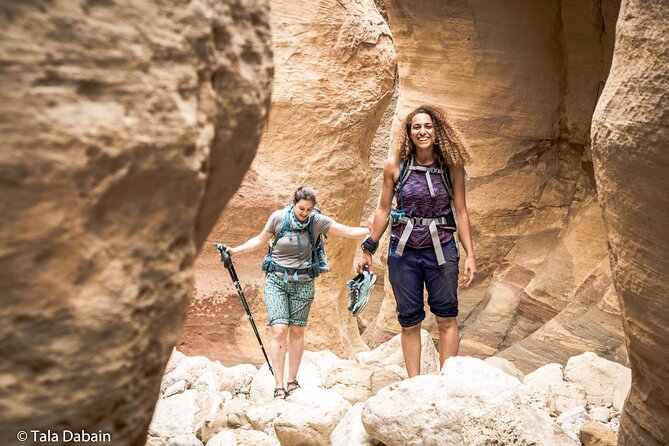
Day 6 is the big “Petra day,” but the tour avoids turning it into a queue simulator. You enter Petra via a route described as the Back Door, which helps you skip most of the main tourist flow.
You hike down Wadi Ghurab along sandstone mountains that guard the approaches. Then you follow a Nabataean route out of the valley, skirting around the final mountain on a natural rock terrace that has been improved for safety. The description notes that the walk narrows before you reach a hidden plateau high above the impressive chasm of Wadi Siyyagh.
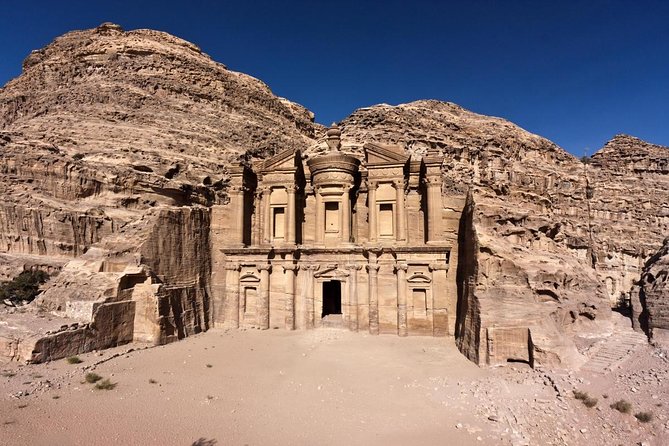
Then comes one of the most memorable visual reveals: the Monastery appears carved into the cliff face. There’s also a Bedouin café for refreshments near there if you want to pause.
After that, the route includes steps that continue through the Petra approach area. Even without adding every single detour detail, the point is clear: you get Petra in a way that feels earned, not rushed.
Why I think this route is a win: Petra can feel overwhelming if you only experience it as a crowded walking corridor. A less crowded entry means your eyes adjust naturally to the scale of the place.
Wadi Rum: 4×4 safari time plus tea, starlight, and rock inscriptions
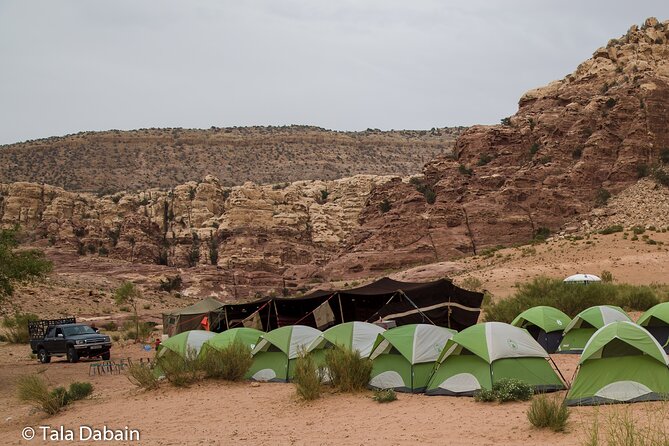
After breakfast on Day 7, you leave Petra’s mountains behind and move toward Wadi Rum. You meet your Bedouin hosts, then set out on a 4×4 jeep safari exploring valleys and narrow gorges.
This isn’t just “ride and look.” The plan includes stops where you can hike, scramble, and explore at your own pace. The safari also includes ancient rock inscriptions, plus time for sand dunes and rock bridges.
Then the tour pivots to the kind of timing deserts do well: sunset. After that, you return to a Bedouin camp for dinner, Bedouin hospitality, and a night under the starlit sky with countless cups of tea.
Packing tip that matters here: bring something warm even if the day was hot. Desert nights can flip fast, especially when you’re outside and sleeping under open sky conditions.
Dead Sea recovery: floating, mud, and spa options when legs hurt
Day 8 is where the trip pays you back for all the walking. You go to the Dead Sea, described as the lowest point on Earth, and you get time to float in the salty water.
You can also try Dead Sea mud, relax by the pool, and even use spa treatments if your legs are still sore from trekking days. In a tour like this, the Dead Sea isn’t just a fun add-on. It’s your reset button—so you’re not just tired, you’re properly done with the trail.
In late afternoon you head back up toward Amman by bus for the final night at the hotel.
Price and value: what you’re paying for beyond the headline number
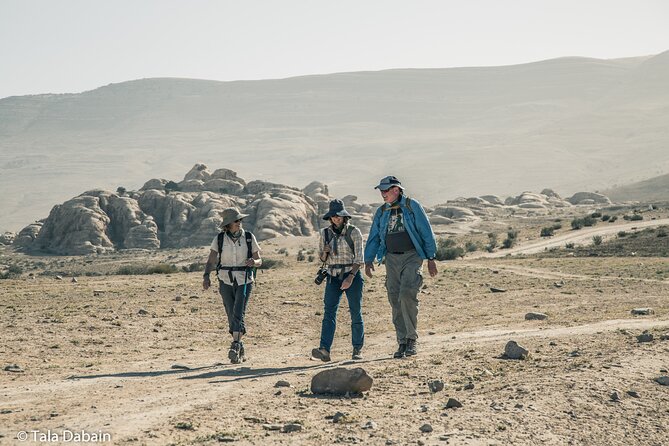
This tour is priced at $1,595 per person for 9 days (approx.). That’s not cheap, but the value comes from how much is bundled and how much support you get.
Here’s what your money is covering, based on what’s listed as included:
- 8 nights of accommodation, including hotel nights in Amman and wilderness or tented nights on the trail and in desert camp settings
- English-speaking licensed guide on days 2–8
- Local hiking guide with donkey for safety measures on days 2–4
- Transportation between key points
- Luggage transfers by pickup truck
- Meals: breakfast (8), lunch (7), dinner (6)
- Some site admissions marked included, though the Jordan Pass still isn’t included
The extra value I’d highlight is the small group size (max 14) plus the guide coverage. On a trek like Dana-to-Petra, that’s not luxury. It affects your pace, your confidence on steeper segments, and how smoothly transitions happen.
What’s not included is also important:
- Jordan Pass for visa and entrance fees
- Hiking gear
- Tips for drivers, guides, and camp/hotel staff
- Travel insurance and airfare
If you’re trying to travel ultra-light and you don’t already own sturdy hiking shoes, this part can add cost. It’s worth planning your gear before you arrive.
Who this Dana to Petra plus Wadi Rum trek is for
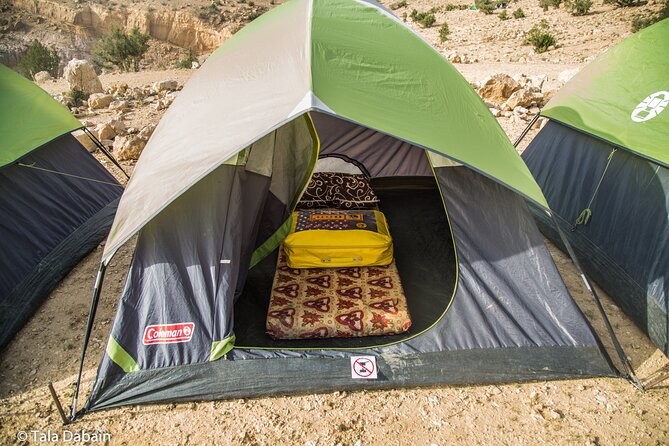
This trip fits best if you want a real multi-day hiking experience and you like mixing big-name heritage with quieter stops.
You’ll probably love it if:
- you enjoy long walking days and want guided routes that take you off the most crowded paths
- you’re okay sleeping in wilderness or tented settings
- you want Petra, Wadi Rum, and the Dead Sea without needing to piece it together yourself
You might want to reconsider if:
- you don’t handle steep canyon stairways or long descent days well
- you expect a relaxed walking pace with lots of downtime
- you’re hoping for a super-structured hotel-holiday style itinerary
Also, the tour specifically calls for a strong physical fitness level, so be honest about your conditioning.
The guide factor: names that show up for this route
Support on this trek can make or break the experience. In the provided feedback, guides such as Motaz Zghoul and Mutaz Jarrar are singled out for being attentive and creating a friendly group atmosphere. There’s also mention of responsive planning support from the operations side, including a staff member named Shushan, which is useful if you have pre-trip questions.
Even if your guide is different, the key idea is the same: you’re hiking with people who understand the terrain and the rhythm of the trail.
Should you book Dana to Petra Trek + Wadi Rum & the Dead Sea?
Book it if you want the classic Jordan combo, but with a trekking backbone and route choices that help you feel the places instead of just passing through them. The Dana hiking days plus the Petra back-door approach plus Wadi Rum with Bedouin hosting make a strong package, especially in a group capped at 14.
Skip it if you want an easy walking vacation or you’re not ready for long hikes and canyon steps. This one rewards effort with views, but it doesn’t pretend the trekking part is mild.
If you’re physically prepared, bring sturdy shoes, and treat the Dead Sea as your planned recovery day, this is the kind of itinerary that sticks in your memory for the right reasons.
FAQ
How long is the Dana to Petra Trek + Wadi Rum & the Dead Sea tour?
It runs for 9 days approximately, starting and ending back in Amman.
What’s the maximum group size?
The tour has a maximum of 14 travelers.
What kind of guiding do you get?
An English-speaking licensed guide leads days 2–8. On days 2–4, there is also a local hiking guide with a donkey for safety measures.
How much hiking should I expect?
Daily hiking ranges are listed as about 5–7 hours for Days 2–4. Distances shown include 15 km (Day 2), 16 km (Day 3), and 17.1 km (Day 4), with substantial ascent and descent.
What’s included in the price?
Accommodation for 8 nights, meals (breakfast 8, lunch 7, dinner 6), the guides, transportation as per the itinerary, and luggage transfers by pickup truck are included.
Is the Jordan Pass included?
No. The Jordan Pass is not included, and it covers visa and entrance fees.
Where do you sleep each night?
You’ll have a hotel in Amman (Day 1 and Day 8), wilderness camping in Dana (Days 2–4), and a Bedouin camp in Wadi Rum (Day 7). The tour also states that pre-arranged tented accommodation is included.
Is hiking gear provided?
No. Hiking gear is not included.
What’s the cancellation policy if plans change?
You can cancel up to 6 days in advance for a full refund. Cancel 2–6 days before for a 50% refund. If you cancel less than 2 days before, the amount you paid is not refunded.
What if the weather is bad?
This experience requires good weather. If it’s canceled due to poor weather, you’ll be offered a different date or a full refund.