REVIEW · PHNOM PENH
Aural Mountain Trek: Cambodia Tallest Peak Challenge
Book on Viator →Operated by Vana Adventure Travel · Bookable on Viator
Jungle nights and Cambodia’s highest climb sound simple. They are not, and that’s why this trek works: you go from Phnom Penh into the Cardamom Mountains for a fully-serviced Aural Mountain challenge. Expect village stops, bamboo-forest camping near a waterfall, and summit day views over evergreen ridges.
I like that the trip is built around real support. You get hotel pickup and drop-off, professional guidance, local guides, and all the basics handled on your behalf—2 nights in a tent or hammock setup, meals, drinking water, and the transport back out to Phnom Penh.
One thing to weigh: this is tough going in hot, humid conditions, and you’ll be sleeping outdoors with critters around. If you’re not comfortable with a serious trek pace (and tent living), this one may feel like more than a nature walk.
In This Review
- Key things I’d circle before booking
- Phnom Penh to the Cardamom Mountains: why this trek feels different
- Price and what you get for $385: good value if you want “handled” trekking
- Day 1 from 7:30 am: village life, then bamboo forest camping near a waterfall
- Day 2: base camps, hot humidity, critters, and the plane crash site
- Summit day and night: Aural Mountain peak, then one more sleep under the stars
- Accommodation and food: tent or hammock, cooked meals, and the humidity reality
- Guides, small-group size, and the feel of a real team trek
- Dress code and packing rules you should not ignore
- Who should book Aural Mountain, and who should think twice
- Should you book this trek from Phnom Penh?
- FAQ
- Where does the trek start from?
- What is the tour price?
- How long is the trek?
- What time does the tour start?
- Is it a small-group tour?
- What accommodation is provided?
- Are meals included?
- Is drinking water included?
- Is alcohol included?
- What luggage limits apply?
- Is free cancellation available?
Key things I’d circle before booking
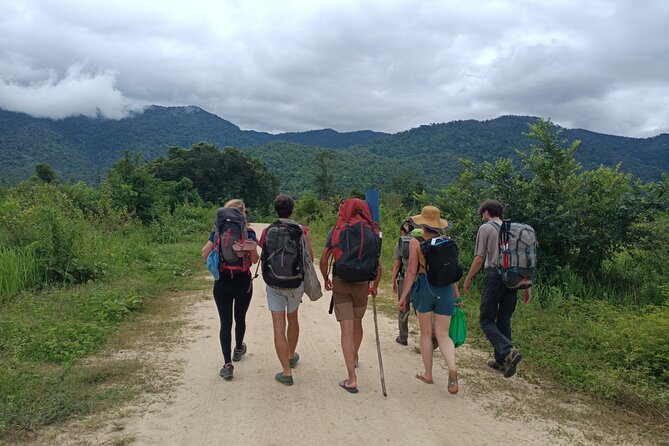
- Aural Mountain (1813m) is the goal, plus views across the trail’s other 9 hills
- Guaranteed small-group feel (listed up to 10, with the broader tour size stated as 2–12)
- Camping is real: 2 nights in tent or hammock, set up for you by the trek team
- Full service trekking includes cooking local meals, so you’re focused on moving and seeing
- A war relic stop in the forest: a plane crash site from the civil war era (shot down in 1974)
- Village time gives you a rural Cambodia perspective beyond just the trail
Phnom Penh to the Cardamom Mountains: why this trek feels different
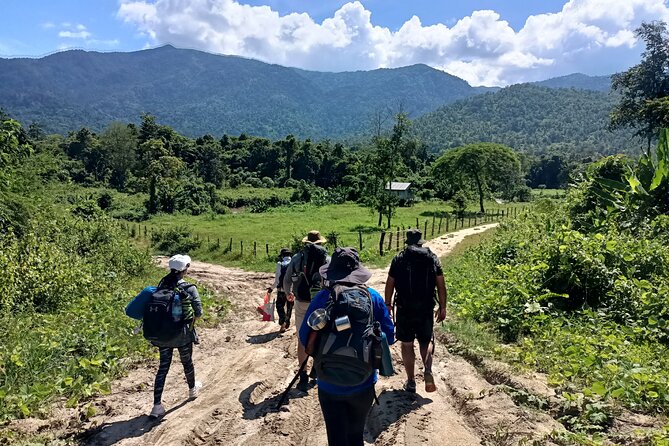
Most Cambodia mountain trips feel like a side trip. This one feels like you’re leaving the map behind for a few days. You’re heading into the eastern side of the Cardamom mountain range, where the air, the plants, and the trail conditions change quickly from what you’re used to in the city.
The big draw is the peak itself. Aural Mountain is Cambodia’s tallest at 1813 meters, and the route is described as moving through multiple ridges and hill viewpoints—so even if you have a rough day, the scenery has layers. You’re not just hiking toward one moment.
You also get something uncommon: a stop at a plane crash site in the forest. It’s tied to Cambodia’s civil war history, with wreckage described as one of Lon Nol’s air force planes shot down in 1974. It’s not a museum stop; it’s encountered on foot in the woods, which makes it more grounded—and a little eerie.
Price and what you get for $385: good value if you want “handled” trekking
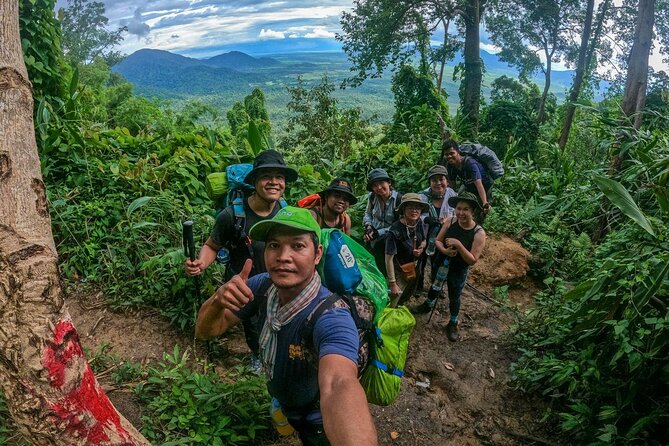
At $385 per person for about 3 days, the value depends on what you want. If you’re picturing a guided day hike with a few photos, this is priced like a real expedition.
Here’s what’s included that usually costs extra when you DIY:
- Hotel pickup and drop-off in Phnom Penh
- Professional guide and local guides
- Round-trip private transfer
- 2 nights of tent or hammock accommodation
- Meals according to the itinerary (breakfast, lunch, dinner)
- Drinking water
- Local transport if required
What’s not included:
- Alcohol
- Travel insurance and personal expenses
For me, the main value is that you’re paying for the parts that make jungle trekking complicated: setting up camp, cooking, and coordinating transport. The trek team is there to carry the workload so you can focus on the hike and the experience—especially on summit day when energy is everything.
Day 1 from 7:30 am: village life, then bamboo forest camping near a waterfall
Your day starts early, with a 7:30 am start time and hotel pickup. From there, the goal is to transition into the kind of Cambodia most people only see in photos: rural villages, then forest paths that lead away from roads.
The itinerary is built around a “settle in” rhythm. You’ll visit local villages and learn about rural life—this is the part that helps you understand why people live where they do, and how daily routine connects to terrain and climate. Then you move into the mountains and toward the first real overnight.
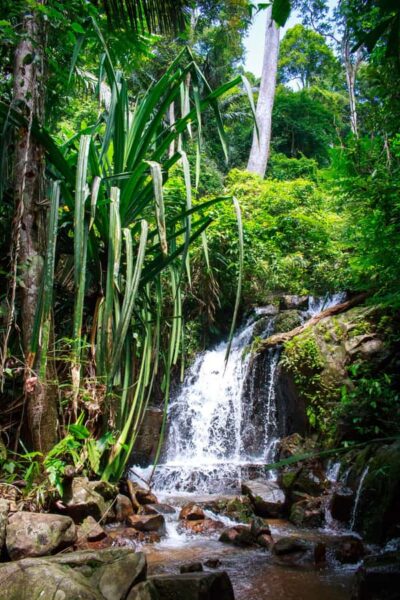
Night one is in a bamboo forest close to a natural waterfall. That detail matters. Water nearby usually means more humidity in the air, but it also means constant sound at camp—so sleeping outdoors doesn’t feel silent or exposed in the same way it can on a dry ridge.
You should expect your trekking team to handle the camp basics. The tour is set up as full service: tents or hammocks are arranged, and meals are cooked so you’re not juggling cooking gear and logistics.
Day 2: base camps, hot humidity, critters, and the plane crash site
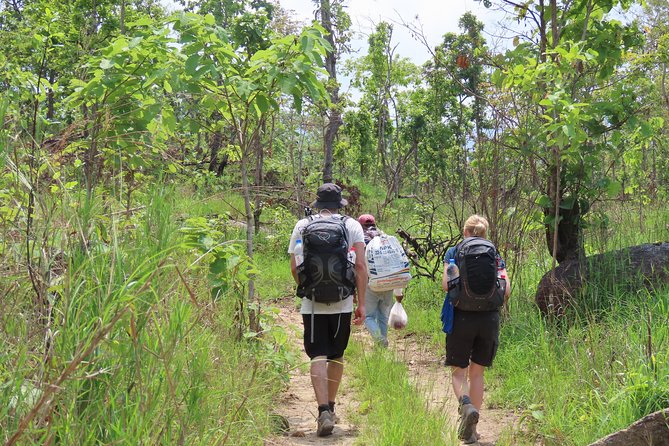
Day two is where the trek shows its teeth. The climb is described as challenging, with trekking up to base camp 1 and base camp 2, and conditions that can be hot and humid. This is also the day when you’ll notice how quickly “normal walking” turns into hiking work—pace, foot placement, and hydration all matter more than you expect.
A highlight on this day is the view work. You’re not only moving upward; you’re also getting out to spots described as great for mountain sightlines, including views over evergreen settings and multiple hill segments along the route.
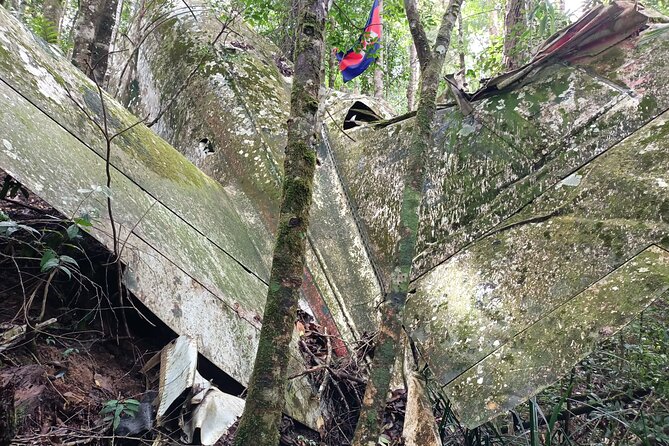
Then there’s the stop that adds history into the forest. You’ll visit a plane crashed site in the woods. This wreckage is identified as one of Lon Nol’s air force planes, shot down in 1974. It’s a heavy detour, and it’s also a reminder that this area isn’t just scenic—it has layers of real human history.
And yes, this is also where you’ll run into the reality check of jungle living. Expect critters. That lines up with the feedback you’ll see emphasized: people love the experience, but they also call out the toughness and the fact that you’re sleeping in tents. If you’re prone to getting annoyed by discomfort, plan to be patient with the small stuff.
Summit day and night: Aural Mountain peak, then one more sleep under the stars
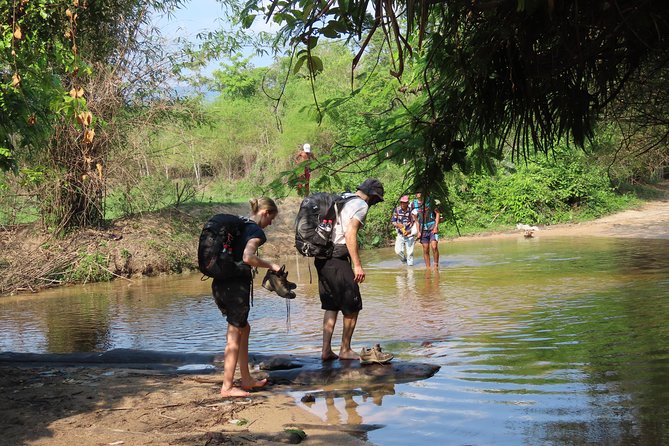
Reaching Aural Mountain is the centerpiece. The description is clear that the trek is designed to get you to the top, then move you to a final camp area for an additional night before heading back to Phnom Penh.
What I like about the pacing here is that it doesn’t rush you from summit high straight into travel stress. After the peak, you still get time in the mountain setting. That final night is described as sleeping under the trees and the stars at the second camp, so you’re not just collecting a summit stamp—you’re living the place for a moment.
This is also where the “fully serviced” setup pays off. You’re not carrying everything alone. Your team sets up your sleeping arrangement—tent or hammock—and you’re guided through the last phase of the trek.
Expect night air to feel cooler than daytime in many hill areas, but don’t assume it will be comfortable like a hotel bed. Outdoor sleeping is outdoor sleeping: bring patience, and treat the experience like part of the adventure, not a downgrade.
Accommodation and food: tent or hammock, cooked meals, and the humidity reality
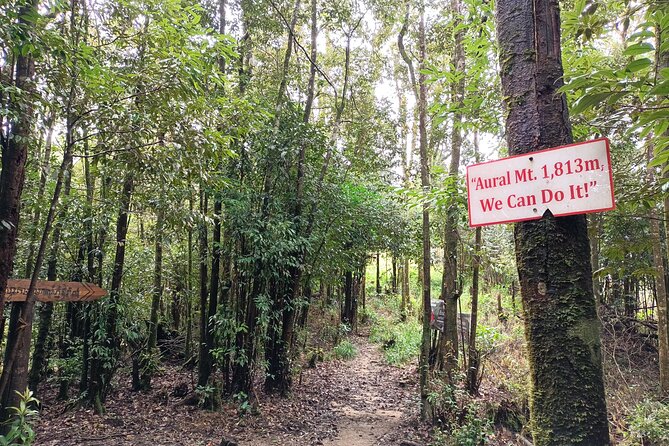
The tour includes 2 nights accommodation by tent or hammock, packed by the operator’s team. That’s a big deal. The bedding setup is part of the service, so you’re not stuck improvising gear on the first day.
Food is also handled. You’ll get meals as per the itinerary—breakfast, lunch, dinner—and you’ll have drinking water. In a humid trek, having meals and water managed keeps you moving instead of constantly trying to solve hunger and hydration.
Here’s the tradeoff: the experience includes outdoor sleeping in a bamboo forest, and you should expect it to be less predictable than a lodge. Humidity can make everything feel slightly damp. Bugs and critters are part of the equation. The upside is that you’re genuinely inside the mountain environment, not camping behind a fence with a generator humming somewhere nearby.
Guides, small-group size, and the feel of a real team trek
This is designed as a small-group tour, with a stated group size between two and 12 travelers, and a maximum of 10. Either way, it’s not a huge caravan. That usually helps the trek rhythm: fewer people to manage, easier pacing adjustments, and more direct contact with your guides.
You’ll travel with a professional guide and local guides. The local support team is specifically mentioned as setting up camp and cooking, which also means you’re not just following a map—you’re benefiting from people who understand the terrain and conditions.
From a comfort standpoint, smaller groups also mean less time spent waiting around for a slow-moving cluster. On a tough hike, that can make a surprising difference to how you feel at the end of the day.
Dress code and packing rules you should not ignore
One of the more unusual details here is the formal dress code. That doesn’t usually fit a jungle trek picture, so treat it as a heads-up: pack something you can wear in a more formal way for the parts of the trip that call for it. If you show up in full hiking gear only, you may feel underdressed for certain moments.
Packing limits are also strict. Each traveler is allowed a maximum of 1 suitcase and 1 carry-on bag. Oversized or excessive luggage (like surfboards, golf clubs, or bikes) may have restrictions—so if your bag is larger than normal, ask the operator before you travel.
Also note: alcohol isn’t included. If that matters to you for camp vibes, plan to bring it.
For dietary needs, you should advise the operator at booking. The trip confirms that dietary requirements can be shared ahead of time, which is the right approach for a trekking itinerary where meals are already planned.
Who should book Aural Mountain, and who should think twice
This is best for people who want a serious outdoors challenge with real support. The trekking is described as tough, with hot and humid conditions and camping in tents. If you have moderate fitness and you can handle a demanding day of climbing, you’ll likely find it exciting rather than punishing.
It also suits you if you enjoy cultural context, not just scenery. Village stops are included, and the plane crash site adds a historical layer you can feel in your day.
Who should think twice:
- If you dislike tent sleeping or get stressed by critters and outdoor discomfort
- If hot, humid hiking would make you miserable
- If you’re looking for a light, casual nature walk
On the flip side, if you like the idea of being guided by a team that sets up camp and cooks for you while you tackle Cambodia’s tallest peak, this trek hits a sweet spot.
Should you book this trek from Phnom Penh?
I’d book it if you want the full package: small-group guidance, camp that’s set up for you, cooked meals, and a summit goal that feels earned. The price makes sense when you add up the included transport, guiding, and overnight service. Plus, the plane crash site and village time give the trip depth beyond a standard hike.
I’d hesitate if you’re sensitive to discomfort. Outdoor sleeping in a bamboo forest, hot humidity, and critters are all part of the deal. Also, the formal dress code is an extra constraint—solve it before you go, not after you arrive.
If you’re mentally prepared for a real trekking challenge and you like authenticity over comfort, Aural Mountain is a standout way to spend three days in Cambodia.
FAQ
Where does the trek start from?
The trek is based in Phnom Penh, Cambodia, with hotel pickup and drop-off included.
What is the tour price?
The price is $385.00 per person.
How long is the trek?
It runs for 3 days (approximately).
What time does the tour start?
The start time is 7:30 am.
Is it a small-group tour?
Yes. It’s described as a guaranteed small-group tour, with a maximum of 10 travelers listed for the experience, and a broader stated range of 2–12.
What accommodation is provided?
You’ll have 2 nights accommodation using tent or hammock.
Are meals included?
Yes. Meals are included as per the itinerary, listed as breakfast, lunch, and dinner.
Is drinking water included?
Yes. Drinking water is included.
Is alcohol included?
No. Alcoholic drinks are not included, and you may need to bring your own if you want them.
What luggage limits apply?
You’re allowed 1 suitcase and 1 carry-on bag. Oversized or excessive luggage may have restrictions, so it’s best to ask the operator in advance if you’re bringing something larger than normal.
Is free cancellation available?
Yes. The experience offers free cancellation, with a full refund if you cancel at least 24 hours before the start time.