REVIEW · SAN JUAN
Underwater Sea Trek in San Juan: Explore Beneath the Waves
Book on Viator →Operated by Aqua Adventure · Bookable on Viator
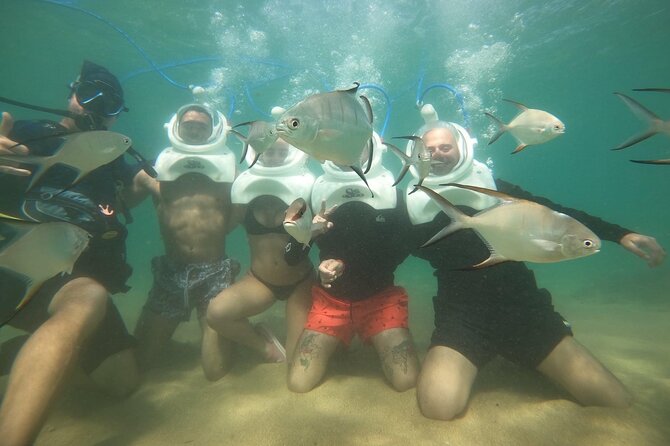
Walk on the ocean floor, minus the panic. In San Juan, Sea Trek takes you underwater in a sealed helmet so you can explore marine life without swimming, SCUBA, or snorkeling gear.
I love how it keeps your head dry, which is a big deal if you wear glasses or contacts. I also love the guided pace: you can spot squid, octopus, starfish, sea urchins, and even seahorses depending on conditions.
The main thing to plan around is safety and eligibility. You need good weather and you’ll complete a health questionnaire, so some medical conditions may limit participation.
In This Review
- Key things that make Sea Trek work
- Sea Trek in San Juan: walking underwater without swimming
- Caribe Hilton start: what happens before you step in
- The helmet walk: how the cove turns into an underwater tour
- Guides matter: hand signals, comfort checks, and calm coaching
- What you’re paying for: value of $114.84 plus the Hilton perks
- Who should book Sea Trek (and who may feel out of place)
- Weather, health checks, and the day the sea decides the rules
- Should you book Sea Trek in San Juan?
- FAQ
- Is swimming required for Sea Trek in San Juan?
- What should I bring, and do I get water shoes?
- Can kids participate, and is there a weight requirement?
- What marine life can you see?
- How do you communicate underwater?
- What if I have a medical condition?
- Where does the tour start and end?
Key things that make Sea Trek work
- Helmet + dry head means clearer views and no saltwater in your eyes
- Small group size (max 4) keeps the instruction personal
- Protected cove helps most first-timers feel steady
- Guides run the whole show with hand signals and constant check-ins
- Photo add-ons are available if you want proof of what you saw
Sea Trek in San Juan: walking underwater without swimming
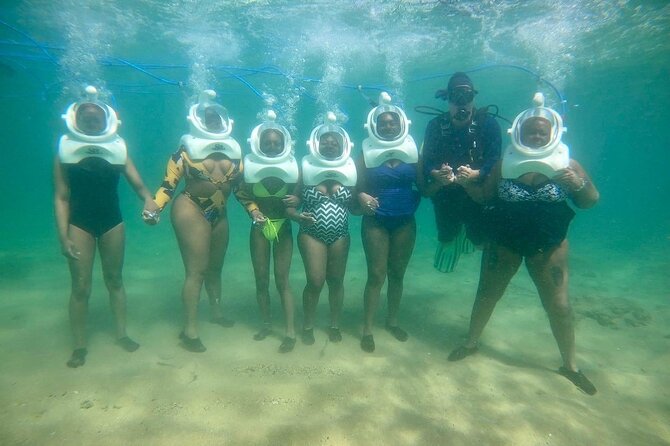
This is one of those rare travel activities that feels like a science-fiction trick and still stays simple. You wade into calm water wearing a specialized helmet, then walk along the ocean floor. Your head stays dry, so you’re not fighting goggles, saltwater stinging, or the usual “I can’t see” problem.
What makes it especially good in San Juan is the setting. You start at the Caribe Hilton’s private beach and enter a protected cove, which generally means gentler conditions than open water. That matters because the whole experience is about control and comfort, not endurance.
At a glance, it sounds like a “look, but don’t touch” attraction. In practice, it’s more hands-on than you might expect. You’re close to marine life as you walk. On good days, you can see creatures like squid, octopus, starfish, sea urchins, and seahorses. And because you’re not swimming, you’re free to just watch and move at your own pace.
Finally, the timing is friendly. You’re on the water for about an hour and a half total, with time built in for a safety briefing and orientation. It’s long enough to feel like an adventure, not so long that you’re exhausted before the last photos.
Caribe Hilton start: what happens before you step in
Your day begins at Caribe Hilton (1 C. San Gerónimo, San Juan) on the hotel’s private beach. Plan to arrive a bit early so you’re not rushing through the calm part of your brain. You’ll meet your sea trek guides there and get a full safety briefing.
The briefing isn’t just “listen and hope.” It includes how you’ll communicate underwater using hand signals, plus a clear description of what you’ll do once you’re in the water. You’ll also learn how to stay relaxed in the helmet. That’s important, because once the gear is on, your breathing and body feel a bit different at first—even if you’re physically comfortable in water.
You should also know who this is for. Participation is ages 8 and older, and children must meet a minimum weight of 80 lb (36 kg). Every child must be accompanied by an adult. The tour also asks for a health questionnaire, and certain medical conditions (the listing calls out asthma and heart conditions) may prevent you from participating—so check with your doctor if you’re unsure.
One more underrated perk: you get day access to the Caribe Hilton’s general amenities, plus water shoes, towels, and bottled water. After you’re done, bathrooms, changing rooms, and shower rooms are available.
The helmet walk: how the cove turns into an underwater tour
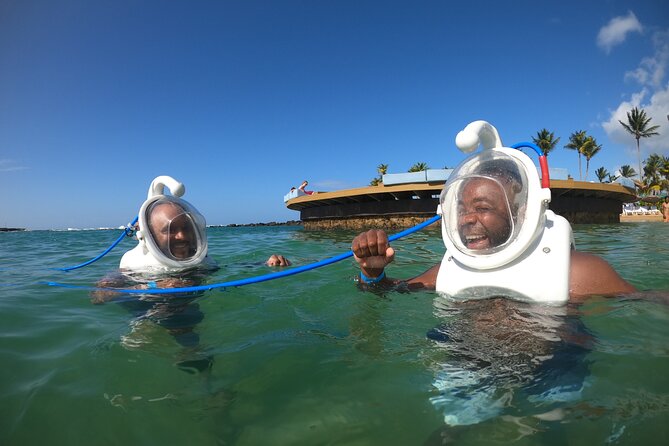
Once you’re ready, you wade slowly into the shallow end of the calm, protected cove. Your instructor stays close, and you move according to comfort level. The key is that you’re not trying to out-swim the sea. You’re learning the rhythm of walking in water while wearing a helmet.
Then you progress gradually, heading toward the deeper end of the cove when conditions allow. This is where the animal sightings can get better. Depending on what’s happening below, you may see squid and octopus, plus starfish and sea urchins clinging to the seabed. Seahorses are possible too, but the real lesson is this: marine life sightings can vary with water conditions.
A smart thing to remember: the first minutes often feel a little weird. You might notice the helmet weight, and your brain has to recalibrate. That adjustment period is normal. After that, the experience can feel strangely tranquil. One of the best repeated themes in people’s feedback is how quickly it turns from nervous curiosity into relaxed observation.
Also, you’re close to the bottom. You’re literally walking along the ocean floor, so you’re not stuck staring at fish that stay far away. The ocean floor becomes your “path,” and you’ll often get to see marine life up close as it comes into view during your route.
And yes, you’ll get underwater photo options. Guides often handle the camera work so you can focus on staying comfortable and watching what’s in front of you.
Guides matter: hand signals, comfort checks, and calm coaching
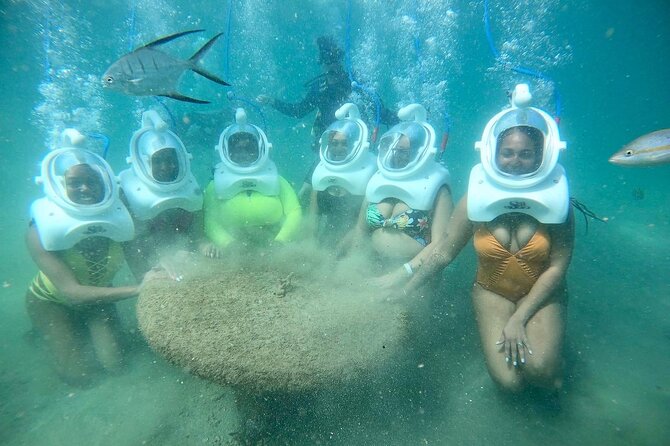
This experience lives or dies by the guide. The good news is that the guides here are clearly trained to make first-timers feel safe, not rushed. You’re given instructions before you enter the water, and once you’re in, you’ll get step-by-step guidance.
A big part of that is communication underwater. Since your head is enclosed in the helmet, you rely on the hand signals you practiced during the briefing. That reduces confusion and keeps everyone synchronized.
You also get frequent check-ins. People mention that guides watch for comfort level, including whether someone is hesitant about being in open water. In other words, if you’re the person who’s nervous about breathing or about feeling buoyant, you’re not just left to figure it out alone.
Names you may see leading the group include Carlos, Jorge, Matthew, Luis, Zach, and Matt. While guides vary by date, the pattern is consistent: clear instructions, friendly personalities, and constant reassurance. If you’re thinking about doing this with kids, this coaching style is a major reason why it works. The helmet and the walk mean it’s not a test of swimming skills.
One extra practical bonus: if you wear glasses or contacts, the helmet helps. Your head stays dry, so you don’t have to deal with salt spray or blurry vision from water in your eyes. That alone can make the whole experience feel smoother and more enjoyable.
What you’re paying for: value of $114.84 plus the Hilton perks
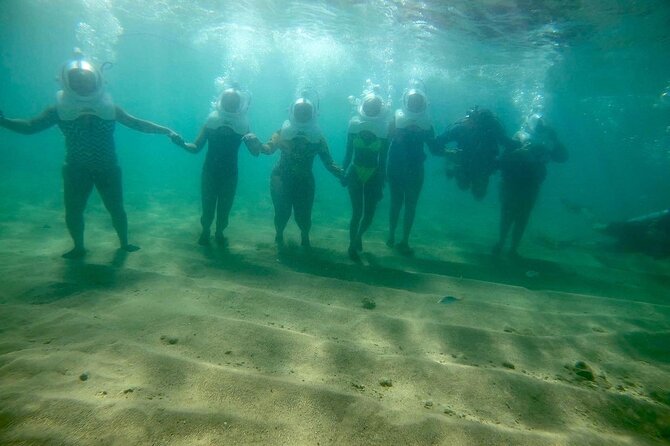
At $114.84 per person, Sea Trek isn’t “cheap,” but it is structured value. You’re paying for:
- A trained guide and safety briefing
- Specialized Sea Trek helmet
- Water shoes
- Entry into a controlled, calm area near the hotel
- Hilton amenities access for the day (a genuine quality-of-day upgrade)
- Towels and bottled water
Compare that to typical alternatives. If you’re looking at snorkeling or other swim-based options, you’re paying for gear and logistics and hoping you’re comfortable in the water. Here, the helmet removes a lot of those friction points. And you don’t need swimming skills. That can be the difference between “I’ll skip this” and actually doing something memorable.
The one cost to expect extra is photography. You may have the option to purchase souvenir underwater photos taken during the tour. Some people strongly recommend getting the photos because the guide captures the shots for you, and you don’t have to worry about controlling a camera while walking underwater.
If you like planning, budget for the experience ticket plus optional photo purchases. Think of it as an “immersive memory” add-on. When the marine life is right there under your feet, you’ll likely want proof.
Who should book Sea Trek (and who may feel out of place)
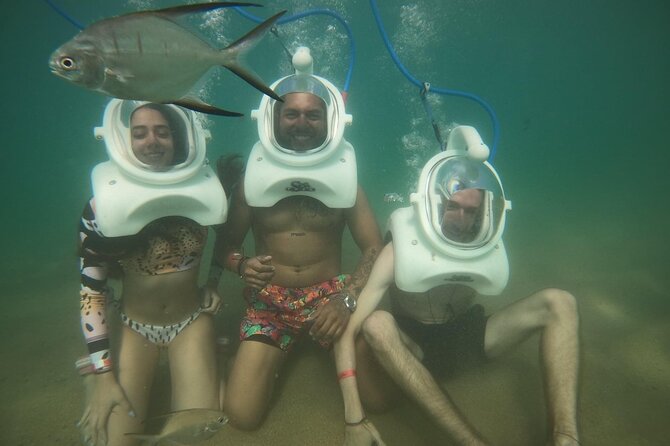
This is ideal if you want a true underwater experience without a swimming learning curve. It’s also a great choice if you’re traveling with at least one person who gets anxious in open water, because the environment is calm and instruction is hands-on.
You’ll have the most fun if you’re comfortable with moderate physical activity. Walking in shallow water with a helmet is usually manageable, but your body still needs to coordinate balance and movement in water.
It may not be the right fit if you:
- Have medical conditions that could affect safe participation after the health questionnaire
- Have trouble meeting the minimum weight requirement for kids (80 lb / 36 kg)
- Want a longer underwater time as the main goal (the experience is fairly timed, and most of the action is in a focused window)
That said, people consistently talk about feeling calm afterward, like the walk is surprisingly peaceful. It’s also a crowd-pleaser. Birthdays and family trips show up often in how people describe their Sea Trek day—partly because the experience feels special even if you don’t consider yourself an “underwater person.”
Weather, health checks, and the day the sea decides the rules
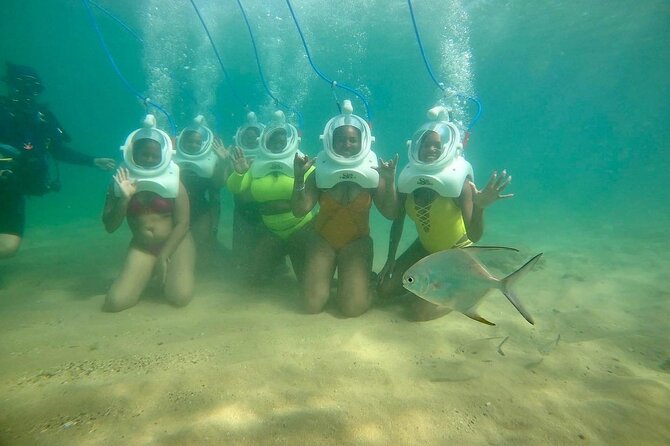
Sea Trek requires good weather. If ocean conditions are unsafe, your tour can be canceled at short notice for safety reasons. The protective cove helps, but it doesn’t guarantee perfect conditions every day. If your schedule is flexible, you have an easier time rolling with it.
The other safety gate is the health questionnaire. Some conditions may restrict participation, and the listing specifically suggests checking with your doctor for anything like asthma or heart conditions. Don’t treat this as paperwork. Treat it as part of the safety system.
One more practical point: this is not an activity where you “push through discomfort.” If you feel uneasy, you can let your guide know right away. The whole process is built around coaching and reassurance, and guides will adjust to how you’re doing.
Should you book Sea Trek in San Juan?
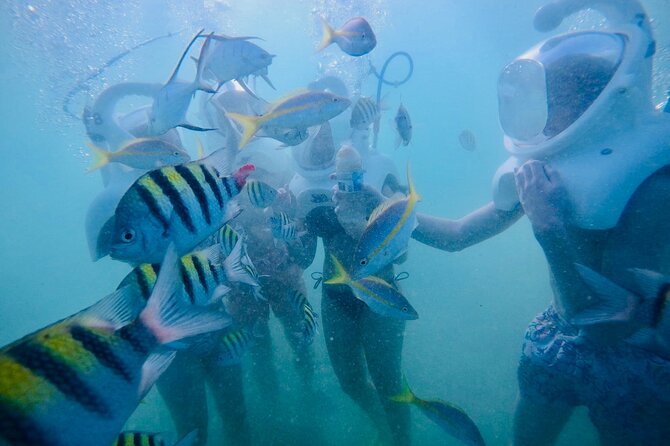
I’d book it if you want an underwater experience that’s beginner-friendly in real life. You get the thrill of seeing marine life up close, you keep your head dry (great for glasses/contacts), and you’re guided the whole time with hand signals and close support.
I’d think twice if your main goal is long time submerged, or if your travel window is tight and you’re worried about weather-related cancellations. In that case, you might still book, but consider having a Plan B for your Hilton beach day.
FAQ
Is swimming required for Sea Trek in San Juan?
No swimming is required. You wade into the water wearing a specialized helmet and walk along the ocean floor with your guide. You’ll move at your own pace with step-by-step support.
What should I bring, and do I get water shoes?
The tour provides key gear including the Sea Trek helmet and water shoes, plus bottled water and towels. You’ll also have access to changing and shower rooms after the experience.
Can kids participate, and is there a weight requirement?
Yes. Children ages 8 and older can participate if they meet the minimum weight of 80 lb (36 kg), and they must be accompanied by an adult.
What marine life can you see?
You may see seahorses, squid, octopuses, starfish, and sea urchins, depending on underwater conditions. Your route in the cove and what’s present will affect sightings.
How do you communicate underwater?
You’ll receive a safety briefing and orientation that includes hand signals for communicating while underwater. This is part of what makes the activity work for first-timers.
What if I have a medical condition?
You must complete a health questionnaire. The listing notes that some pre-existing conditions (for example asthma or heart conditions) may prevent you from participating, so check with your doctor if you’re unsure.
Where does the tour start and end?
The tour starts and ends back at the meeting point at Caribe Hilton on the private beach in San Juan, Puerto Rico. It’s listed as starting at 1 C. San Gerónimo, San Juan, 00901.