REVIEW · COZUMEL
Sea Trek Adventure at Chankanaab National Park
Book on Viator →Operated by Sea Trek Cozumel · Bookable on Viator
A helmet lets you breathe and walk underwater without swimming. I also love the small group setup, which usually means you get real attention while you’re down there.
Sea Trek at Chankanaab in Cozumel is a fun way to see corals and fish close up, even if your only ocean skill is not dropping your phone.
One thing to plan for: the locker situation can be tight. Bring only what you truly need, because some people report limited functional lockers.
In This Review
- Sea Trek at Chankanaab: quick, practical takeaways
- What makes Sea Trek in Cozumel feel so doable
- Your first steps: meeting at Chankanaab and getting geared up
- Safety briefing, then the ladder: how the experience actually starts
- Underwater walking at the reef: what you’ll see (and how long you’ll be down there)
- After Sea Trek: free snorkel gear and how to use it well
- Price and value: is $79 really enough for what you get?
- Group size, timing, and why you shouldn’t stack plans
- What could go wrong: realistic concerns to consider
- Who should book Sea Trek at Chankanaab (and who might prefer something else)
- Should you book Sea Trek Cozumel at Chankanaab?
- FAQ
- Do I need to be a swimmer to do Sea Trek at Chankanaab?
- How long does the experience take?
- What’s included in the $79 price?
- How much is the park entrance fee at Chankanaab?
- How big are the groups?
- Are there age and weight limits?
- What if the weather is bad?
Sea Trek at Chankanaab: quick, practical takeaways
- No swim skills needed. You’ll walk on a sandy bottom while wearing the Sea Trek helmet.
- Safety briefing comes first. You’ll get instruction before you enter the water.
- You’re not down for ages. Underwater time is typically about 25 to 35 minutes.
- Free snorkel gear after. You can keep exploring with the included snorkeling equipment.
- Extra cost for the park entrance. Chankanaab park fee is $19 USD cash per person at the gate.
- Small groups (max 4). Fewer people usually means more guidance when you descend and balance.
What makes Sea Trek in Cozumel feel so doable
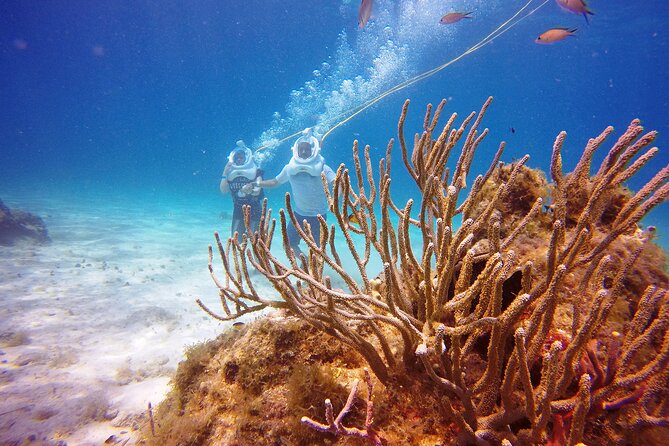
Sea Trek is built for people who want the reef experience without the stress of traditional underwater gear. You’re not learning complex skills. Instead, you follow your guide, put on the helmet, and focus on breathing and balance while you walk on the bottom.
Chankanaab is a strong match for this format. You’ll be in a seaside setting where the water is clear enough to enjoy corals and schools of fish during your underwater walk. The experience is designed so you can look around and have the guide point out what’s worth seeing, rather than worrying about controlling buoyancy or time like you would with full scuba.
And the small group size matters more than you might think. With up to four people per session, the guide can give you hands-on attention when you’re getting set up and when you’re moving on the sandy bottom.
Your first steps: meeting at Chankanaab and getting geared up
You’ll meet inside Chankanaab Adventure Beach Park, inside Cozumel’s National Reef Marine Park (Carr. Costera Sur Km. 9, Zona Hotelera Nte., 77688 Cozumel). It’s close to public transportation, so you’re not locked into a taxi-only plan.
Once you arrive, plan on a smooth but structured flow: check in, use the locker/shower area, then get your equipment ready. Your Sea Trek helmet comes as part of the experience, so you’re not hunting for rentals or trying to figure out fit on your own.
A few practical notes that help the whole day go better:
- Bring as little as possible to make locker time less annoying.
- If you have any ear pressure sensitivity, remember that equalizing is part of descending in any underwater helmet setup (you’ll be instructed on how to do it).
- Keep your expectations realistic about time—this is not a long hangout in the water. The day moves with the session schedule.
Safety briefing, then the ladder: how the experience actually starts
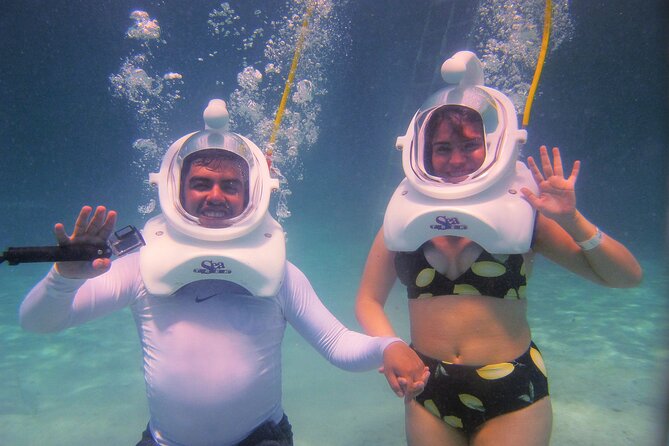
Before you enter the water, your Sea Trek guide shows you how easy it is and how to do it safely. That briefing is not a formality. It’s where you learn how your helmet behaves and what to do with your body while you’re walking under the surface.
Next comes the key moment: the guide places the helmet over your head as you descend a seaside ladder to the ocean floor. At that point, your job is simple—breathe, walk slowly, and look where your guide points.
This is also where fit issues can show up for some body types. One person reported trouble getting a hand through the front of the helmet due to head and chin size, and found equalizing more difficult. Another noted that the heavy helmet can create extra buoyancy, which can make it harder to stay flat and balanced while walking. If you’re worried about helmet fit, tell the staff during check-in so they can help you get the most comfortable setup.
Underwater walking at the reef: what you’ll see (and how long you’ll be down there)
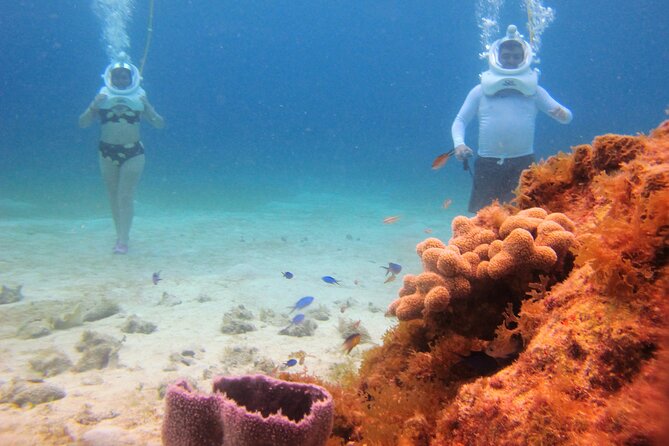
Once you’re on the ocean floor, you’ll be surrounded by fish and corals while walking on a white sandy bottom. Your guide points out marine life and other items of interest, which makes the time feel more like a guided nature walk than just floating around.
Here’s the timing reality. Underwater “bottom time” is usually kept between 25 to 35 minutes—similar to what people experience with basic scuba-style compressed air sessions. You can also come up early if something feels off.
What to look for:
- Coral and reef life close to the sandy walking path
- Fish swimming through your viewing range
- Reef details your guide calls out, which can make even a short session feel worthwhile
What not to expect:
- You’re not doing a long, free-form snorkel roam underwater.
- You’re not relying on rope navigation or complicated trails. Instead, you follow your guide’s instructions and stay in the guided area.
One more “real life” detail: the ocean floor near the entry can be uneven. Even though the walk is described as on a sandy bottom, a rougher entry area was mentioned as a problem by one person. Go slow at first, use the guide’s cues, and don’t rush your footing when you’re transitioning on and off the ladder.
After Sea Trek: free snorkel gear and how to use it well
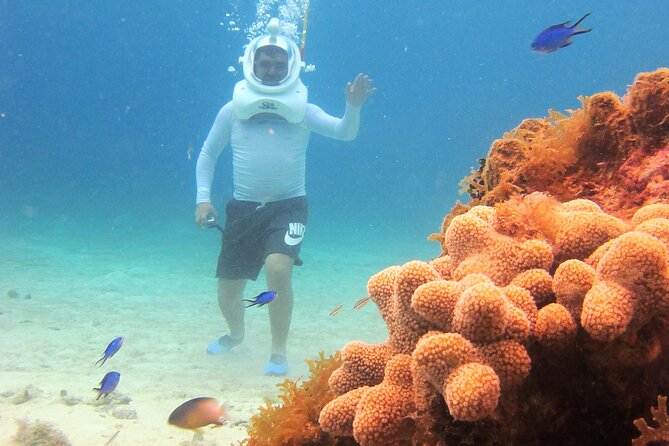
After your underwater walk, you don’t have to call it a day. The plan includes free snorkeling gear you can use while you stay at the park.
This is a smart pairing. Sea Trek shows you reef life from helmet height and guided walking. Then snorkeling (when you want more freedom of movement) lets you explore a bit longer with lighter gear, as long as you follow park and safety rules.
To make this section of your day painless:
- Don’t plan any tight, time-sensitive activities right after. Sessions can run a little slowly, especially with larger groups or peak season.
- Use the showers and lockers before you snorkel, if you need that clean-up time.
- If you’re not a strong swimmer, keep it conservative. Snorkeling is optional, and your comfort level should drive how far you go.
Price and value: is $79 really enough for what you get?
The cost is $79.00 per person for about 1 hour 20 minutes total. That total time typically includes the gear handoff, the safety talk, helmet setup, the underwater walk, and time to get back out and reset.
The main value play here is that you get:
- Sea Trek helmet use
- lockers and showers access
- snorkeling equipment for after your Sea Trek session
But you should budget for one extra line item that catches people off guard: the Chankanaab park entrance fee is $19 USD cash per person, paid at the gate. So your likely day cost comes out closer to $98 per person before any extras like snacks, taxis, or souvenir spending.
Is it worth it? For me, it’s worth it when:
- You want underwater reef viewing but don’t want swim training or full scuba complexity.
- You like guided attention and small-group instruction.
- You’ll actually use the free snorkel gear after the helmet time.
It’s less of a bargain when:
- You’re expecting a long underwater trail experience or a huge amount of reef variety like a full-day snorkel tour.
- You’re very sensitive to helmet fit or buoyancy sensations.
Group size, timing, and why you shouldn’t stack plans
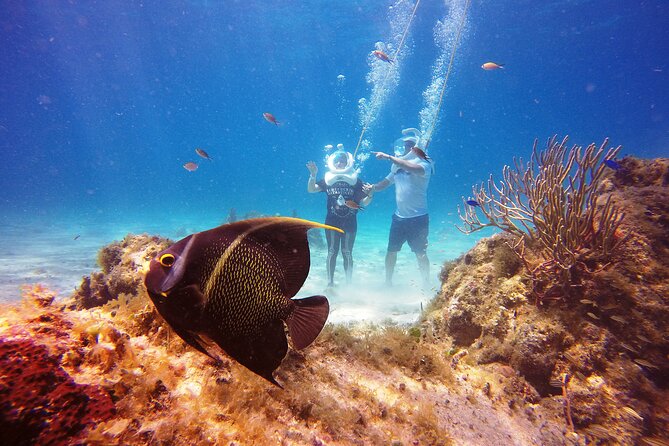
Sea Trek is capped at four travelers per group, which is a big part of why the experience can feel relaxed. If your group is larger than four, you’ll need to purchase an additional time slot on a different schedule. There’s also a downtown location that can accommodate up to eight people per group, but your Chankanaab sessions are limited to four.
This matters for two reasons:
- More people means fewer guide eyes on each person.
- More people can add minutes to the session flow—especially during busy periods.
Also, don’t schedule time-sensitive activities immediately after your Sea Trek. The park environment and session pacing can slow down when groups are bigger or when it’s a high-demand time.
What could go wrong: realistic concerns to consider
Most sessions run smoothly, but there are a few clear considerations based on real feedback patterns:
Helmet fit and ear equalizing. If you’re larger-headed, have a thick neck, or just struggle with underwater pressure, the helmet fit and equalizing instruction can feel uncomfortable. You should communicate concerns early, because your comfort depends a lot on getting the helmet positioned correctly.
Balance with flotation. The helmet is heavy, and some people report it can make staying flat and balanced tricky while walking on the ocean floor. If you’re worried about that sensation, know that going slow and following your guide’s movement cues is key.
Locker limitations. Some people found the lockers frustrating due to limited functional space. Bring a small bag, keep essentials easy to grab, and don’t plan on storing bulky items.
Underwater time expectations. Underwater bottom time is usually 25 to 35 minutes. If your group feels rushed or disappointed, it can come down to timing that day. You also have the option to come up early if something feels wrong.
Who should book Sea Trek at Chankanaab (and who might prefer something else)
Sea Trek works best if you:
- aren’t comfortable swimming or don’t want to snorkel without guidance
- want a guided reef look with a straightforward setup
- like small groups and hands-on instruction
- want helmet time plus free snorkeling afterward
It might not be the best fit if you:
- strongly prefer long, self-guided snorkeling with minimal structure
- know you struggle with equalizing ear pressure
- have a body type that makes helmet fit difficult and you’re worried you won’t be able to get comfortable
One nice detail: there’s a minimum age of 8 and a minimum weight of 80 pounds (36.3 kg). So it’s not for very small kids, and it’s not a weightless “anyone can do it” experience.
Should you book Sea Trek Cozumel at Chankanaab?
I’d book this if you want a reef outing that’s beginner-friendly, guided, and time-efficient—especially if you’re traveling with a non-swimmer or someone who gets nervous about more technical underwater activities. The small group size and the clear “no prior underwater skill needed” approach are exactly what make it a smart value.
Hold off if you’re expecting a full-day reef adventure with tons of open-water roaming, or if you know helmet fit issues will likely bother you. In that case, you may want a different water activity that matches how you feel in the water.
If you do book, go in with a simple game plan: show up ready to follow instructions, keep your stuff minimal for lockers, and treat the snorkel time after Sea Trek as your chance to move a bit more freely.
FAQ
Do I need to be a swimmer to do Sea Trek at Chankanaab?
No swimming experience is required. The activity is set up so you can walk underwater while wearing the Sea Trek helmet and follow your guide.
How long does the experience take?
Plan for about 1 hour 20 minutes total.
What’s included in the $79 price?
Your Sea Trek helmet is included, as well as access to lockers and showers. Snorkeling gear for after your Sea Trek is also included.
How much is the park entrance fee at Chankanaab?
The Chankanaab park entrance fee is $19 USD cash per person and is paid at the gate, separate from the Sea Trek price.
How big are the groups?
Sessions are limited to a maximum of four travelers per group. If you have more than four people, you must purchase an additional time slot with a different time.
Are there age and weight limits?
Yes. The minimum age is 8, and the minimum weight is 80 pounds (36.3 kg).
What if the weather is bad?
This activity requires good weather. If it’s canceled due to poor weather, you’ll be offered a different date or a full refund.