REVIEW · ANNAPURNA MASSIF
Pokhara: 2 & 3 Days Ghorepani Poon Hill Private Guided Trek
Book on GetYourGuide →Operated by Welcome Nepal Treks P.Ltd · Bookable on GetYourGuide
Poon Hill is the shortest path to big mountain views. What I like most is the focus on sunrise timing and the way this trek stays compact while still giving you village life along the trail, with guides such as Tanka and Dhanapati known for thoughtful pacing and local context. The trade-off: it’s often described as easy, but the route includes lots of stairs and altitude can still make it feel like real work.
The logistics are refreshingly straightforward. You get private jeep transport from Pokhara to the trailheads, plus an English-speaking guide who handles the permits and daily coordination, so you spend more time walking and watching the mountains instead of figuring out logistics.
If weather turns cloudy, the big-moment sunrise views can get muted. Still, with good guidance and an early start, you’re set up for your best shot at seeing the range from Poon Hill at about 3,210m.
In This Review
- Key things I’d circle before you book
- Why this Poon Hill trek is built for limited time
- Pokhara to trail: the private jeep ride and the first shift in altitude
- Ulleri to Ghorepani: rhododendron hills, village steps, and cottage time
- Ghorepani to Poon Hill: the pre-dawn hike that makes the whole trip work
- What you’ll actually see at sunrise (and what can go wrong)
- The descent back down: why the last day feels longer than it should
- Food and lodging: what’s included, what’s not, and how it affects your budget
- Guide quality is the difference between a good trip and a calm one
- How hard is it really? Steps, stairs, and altitude math
- Price and value: is $118 worth it for a private sunrise trek?
- Who should book this trek (and who should choose a different route)
- Should you book this 2–3 day private Ghorepani and Poon Hill trek?
- FAQ
- How long is the Poon Hill trek?
- What is the highest point on the trek?
- Do I get private transportation from Pokhara?
- Is there a professional guide?
- Are permits included?
- What meals are included?
- Where do I stay overnight?
- What should I bring?
- Is the trek suitable for everyone?
- Can I cancel or pay later?
- Is travel insurance included?
Key things I’d circle before you book
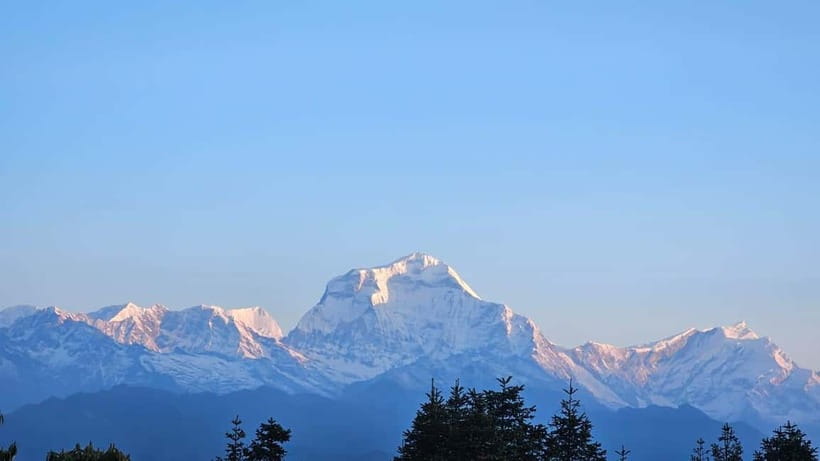
- Sunrise hike to Poon Hill (3,210m): early start, short climb, huge payoff on clear days
- Two or three day pacing: pick the version that fits your schedule and energy
- Ghorepani (2,860m) overnight stay: mountain air, cottage or lodge sleep, and meals in-route
- Bhara Shikhar peak visibility: on clear days you can see the 12 Bhara Shikhar peaks
- Private Pokhara jeep transfers: less hassle, more time on the trail
- Guide attention beyond directions: photo help, weather checks, and pacing adjustments when needed
Why this Poon Hill trek is built for limited time
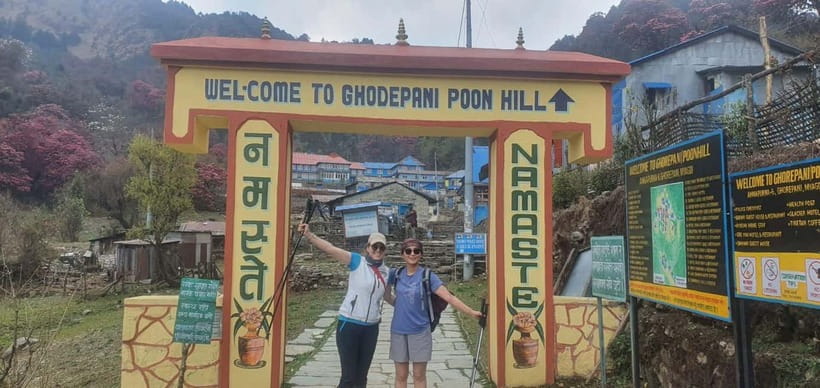
This is one of the most time-efficient ways to experience the Annapurna region. You’re not committing to a long trek, yet you still climb high enough for views over the Annapurna and Dhaulagiri ranges, plus landmarks like Machhapuchhre when skies cooperate.
The short duration also changes how you feel each day. Instead of being tired all the time, you can focus on the main moments: reaching Ghorepani, getting up early for Poon Hill, and then enjoying a longer descent back down.
Pokhara to trail: the private jeep ride and the first shift in altitude
Most days start with breakfast in Pokhara, then a drive toward the trail area. Depending on the route version and conditions, expect about an hour to reach Nayapul in the three-day option, and roughly 2–4 hours of off-road driving to reach Upper Ulleri for the shorter version.
Why this matters: the jeep part saves your legs early. Instead of spending your first day mostly in transit, you begin the trek portion with momentum. The trade-off is comfort. One clear theme from real experiences is that the ride can be bumpy, so it helps to sit steady and be ready for road vibration.
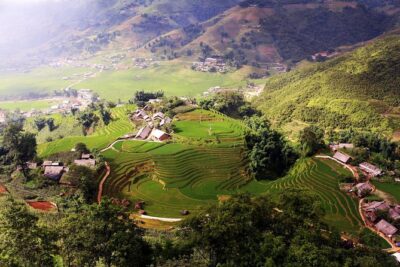
Upper Ulleri is a Gurung village around 2,070–2,090m, which is a nice first cultural stop before you get into the classic ridge-and-forest walking. You’ll feel that shift from city air to mountain air fast.
Ulleri to Ghorepani: rhododendron hills, village steps, and cottage time
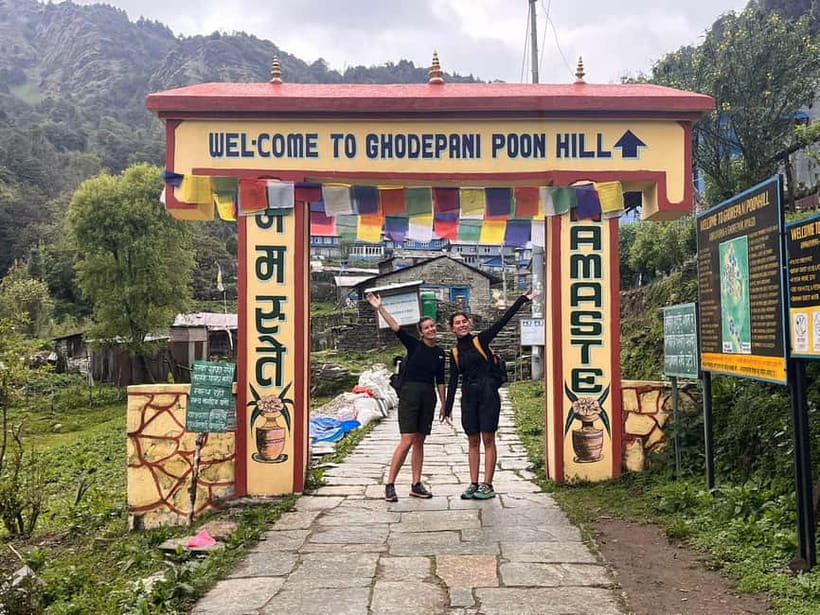
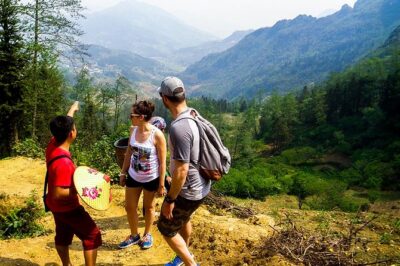
On the two-day version, the walking portion begins after you reach Upper Ulleri by jeep. From there you cross villages including Banthanti, Nangithanti, and Lower Ghorepani. Lunch is typically taken in Banthanti or Nangithanti, which is useful because it breaks up the climb without turning the day into one long push.
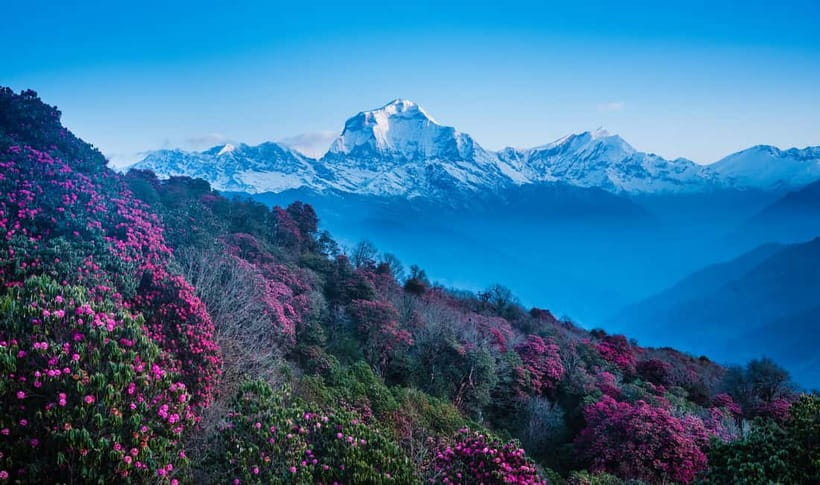
On the three-day version, Day 2 brings the longer forest ascent. You’ll move through rhododendron forests and oak-covered hills for about five to six hours, with views gradually opening as you gain elevation. That “opening up” effect is one of the reasons people love Ghorepani as a base: it’s not just a place to sleep. It’s the feeling of the mountains getting closer.
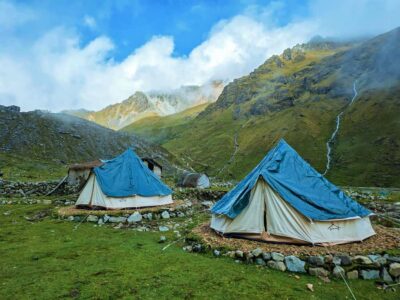
You arrive at Ghorepani at about 2,860m, then settle into a mountain lodge or cottage for dinner and the night. This is where you’ll be grateful the trek is short. You’re not chasing multiple high-altitude days in a row; you’re positioning yourself for sunrise while staying comfortable enough to recover.
Ghorepani to Poon Hill: the pre-dawn hike that makes the whole trip work
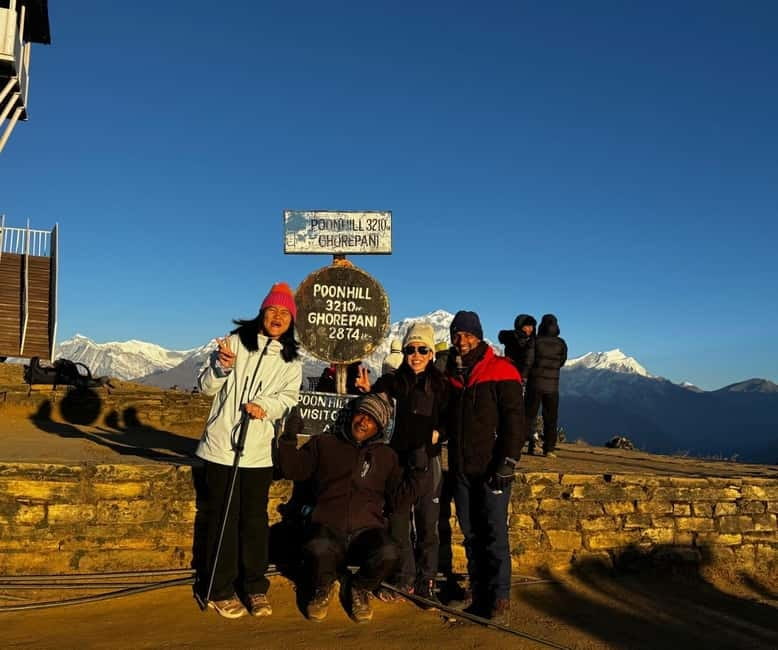
The Poon Hill sunrise part is the center of gravity. You start before sunrise, with the hike taking around 45–60 minutes on the two-day option, and about two to three hours on the three-day option (when you’re building the trek across more days).
Here’s what you’re walking toward: from Poon Hill (about 3,210m), on clear days you can see up to 32 peaks, including the 12 peaks of Bhara Shikhar. If skies are good, it’s a wide-angle view over the Himalaya ranges, with named highlights that often include Annapurna, Dhaulagiri, and Machhapuchhre.
Practical reality check: “easy” doesn’t mean “effortless.” Even when the climb is shorter, the altitude makes your breathing notice it. One helpful trick from real experiences is using walking poles if you have them. If your knees get cranky on steps, poles can save you on both the climb and the descent.
What you’ll actually see at sunrise (and what can go wrong)
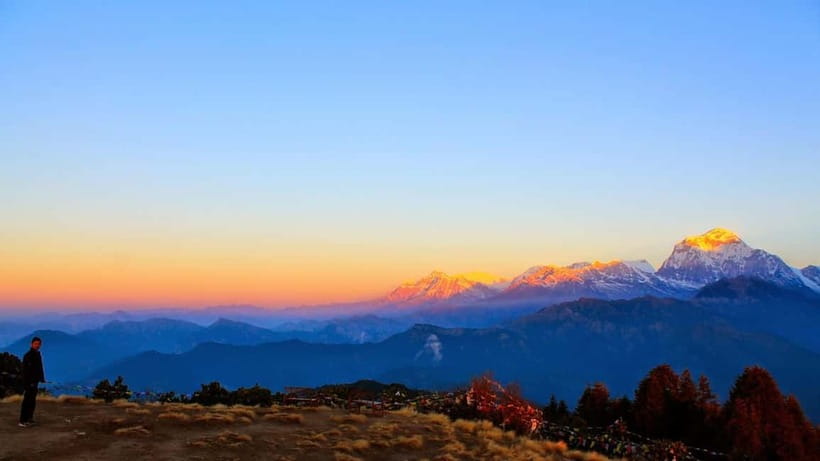
On clear mornings, sunrise at Poon Hill brings mountain colors that feel dramatic because the peaks are so close in view. You can get that layered panorama effect across multiple ranges, not just a single peak.
On less clear mornings, you might still get good light and partial views, but the “full peak count” depends on weather. This is why a careful guide who tracks conditions matters. In past trips, guides have even checked weather around 2 a.m. and adjusted plans accordingly, which shows you why timing and communication are not small details here.
If you’re the type who cares about maximizing your odds, go for the earliest sunrise start you’re offered and dress for cold. You’re likely to be outside for a short window at higher elevation when temperatures drop.
The descent back down: why the last day feels longer than it should
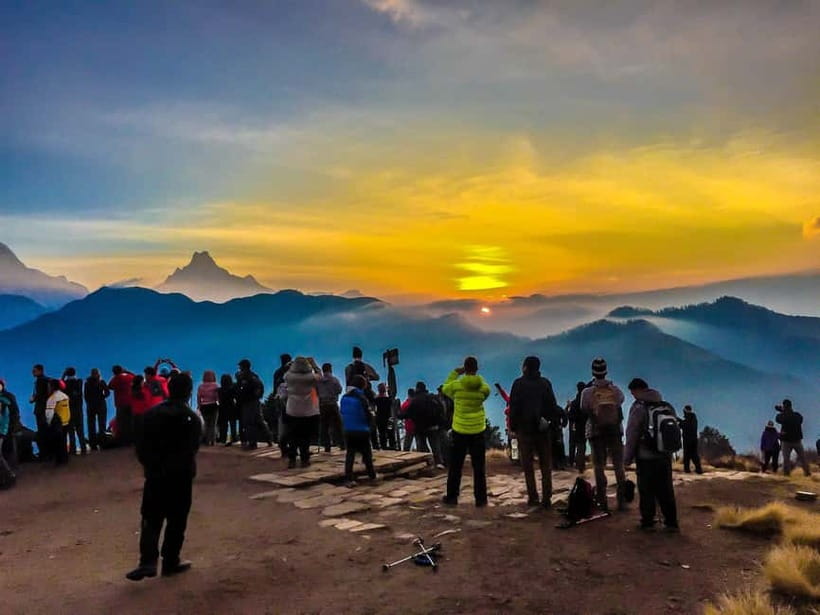
After sunrise, you return to Ghorepani for hot breakfast. Then comes the descent.
On the two-day version, you go back down the same trail and return to the 4×4 for drop-off in Pokhara. On the three-day version, Day 3 includes a longer downhill day from Ghorepani to Nayapul, taking roughly five to six hours, followed by a drive back to Pokhara.
This is where you’ll feel stairs and uneven footing most. If your legs feel good after sunrise, that descent can still catch you later. The good part is that it’s predictable: the route follows what you already walked up. In practice, it becomes a steady “get down safely” day rather than a big navigation task.
The payoff is reaching lower elevation and returning to the comfort of Pokhara. After a night in the mountains, that transition feels earned.
Food and lodging: what’s included, what’s not, and how it affects your budget
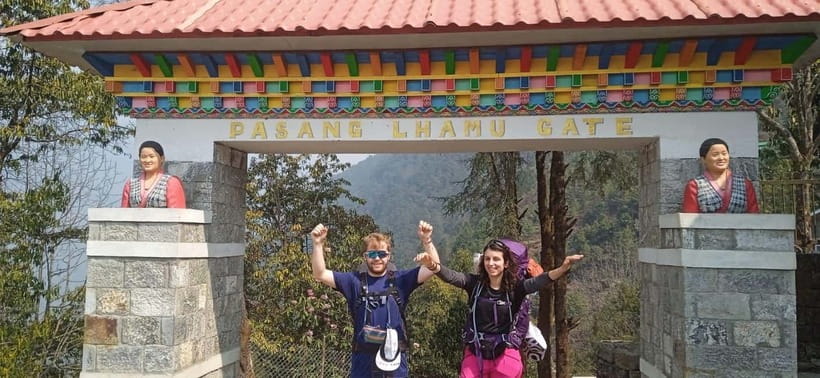
This trek includes meals during the trek: breakfast, lunch, and dinner are part of the package (with the note that meal inclusion can depend on which option you choose). You also get one night of accommodation, either in a mountain cottage or a lodge depending on the route version.
You can expect simple, warm mountain food. Tea breaks are part of the rhythm too, and you’ll likely find hot meals and a steady flow of stops to refuel.
A few cost notes that help you plan:
- Hot, cold, and alcoholic drinks are not included, so bring cash if you want extra beverages.
- Travel insurance is not included.
- Porter support is only included in the all-inclusive option; in a budget option, you’ll manage without that added help.
One extra detail worth knowing: some lodges have rooms with attached bathrooms, but that can vary. Don’t count on luxury, but do expect clean, functional stays designed for trekkers.
Guide quality is the difference between a good trip and a calm one
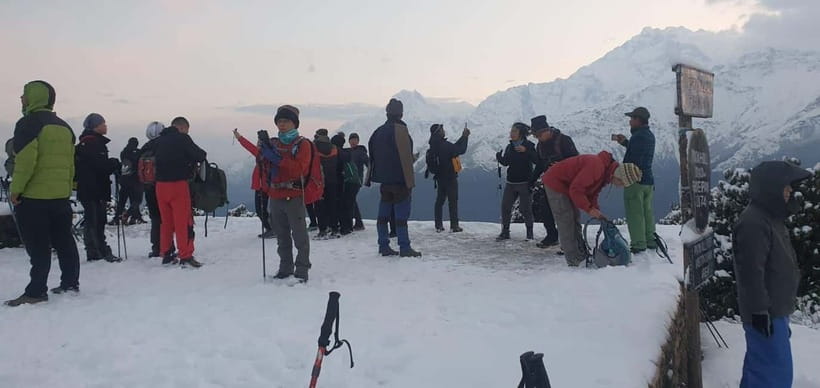
A short trek can still go sideways if you get pushed too hard or if weather shifts. This is where the private guided setup pays off. You’re not just getting someone who points the way. You’re getting someone who manages pacing and small decisions each day.
English-speaking guides are part of the package, and several guides have been praised for different strengths. Tanka is noted for planning and encouragement, including checking conditions early and helping with photos. Dhanapati is recognized for sharing geography and culture, and for connecting with locals in a way that turns an evening into something memorable. Shiva and Mohor have also been described as attentive, with the key theme being that the hike feels doable because the pace matches you.
If you have health considerations, say so early. One experience included a guide adjusting speed for a partner’s heart condition, which is exactly what you want from a private guided setup.
How hard is it really? Steps, stairs, and altitude math
The trek is often positioned as easy and short. But in real terms, “easy” means manageable distance, not zero effort. You’re dealing with:
- lots of steps (including famous stone stair climbs in the longer route)
- altitude changes up to about 3,210m
- early starts, often before sunrise
One practical sign to bring: plan for your legs to feel it the next day. If you’re not used to stairs, walking poles can help a lot. Start slower than you think you need to, especially on the way up.
Also note who should skip it: the activity is not suitable for pregnant women or people with mobility impairments. If you’re traveling with mobility concerns, this is the wrong trek to “try anyway.”
Price and value: is $118 worth it for a private sunrise trek?
At $118 per person for a 2–3 day trek, you’re not paying mainly for walking. You’re paying for the machine behind the scenes:
- hotel pickup and drop-off
- private jeep transfers
- guide services (English)
- permits paperwork (including conservation entry permits and TIMS)
- meals during the trek
- one night accommodation
- first-aid kit and water purification tab
- government taxes and service charges
That package can be good value if you would otherwise have to price out guide + transport + permits + meals. If you plan to travel light and don’t want the stress of organizing a sunrise trek from scratch, paying for it can actually reduce total cost and time.
Where value can change: if you choose a budget option, meals and porter support may not be fully included. So before you confirm, check exactly which option you’re getting and whether porter support is part of your deal.
Who should book this trek (and who should choose a different route)
This trek is a great match if you want:
- a short Annapurna hike with sunrise as the main event
- village walking without committing to a long multi-day trek
- private guidance so the pace can adjust to your comfort
It’s also ideal if you’re traveling with limited days from Pokhara and you want the classic Poon Hill viewpoint without turning the trip into a project.
Skip it if you need step-free routes or if mobility limitations make stair-heavy trails a challenge. Also consider skipping if you’re sensitive to altitude. You’re not going extremely high compared with high-altitude Everest-style routes, but you do climb to around 3,210m for sunrise.
Should you book this 2–3 day private Ghorepani and Poon Hill trek?
If you want maximum Himalayan payoff in minimal time, I’d book it. The combination of private jeep transfers, a guided sunrise plan, and included meals and permits turns this into a low-stress way to get to one of the most famous viewpoints in Nepal.
Book it with realistic expectations: it’s short, but it’s not zero-effort. If you come with good shoes, a daypack, water, and the willingness to move at a steady pace, you’ll likely find the sunrise hike worth every early minute.
If you have flexibility, choose the version that matches your energy. The two-day option is tighter and faster. The three-day option spreads the walking across more days and can feel less intense even though the route still includes a longer descent.
FAQ
How long is the Poon Hill trek?
You can choose a 2-day or 3-day version. The experience is described as lasting 2–3 days in total.
What is the highest point on the trek?
Poon Hill is at about 3,210 meters, and the trek also reaches Ghorepani at about 2,860 meters.
Do I get private transportation from Pokhara?
Yes. Roundtrip transportation is included by private jeep between Pokhara and the trail area, and back to your hotel.
Is there a professional guide?
Yes. You’ll have a professional trekking guide, and the tour is offered in English.
Are permits included?
Yes. The package includes paper work for conservation entry permits and the TIMS permit.
What meals are included?
Meals during the trek are included, and breakfast, lunch, and dinner are listed. The exact meal coverage can depend on the option you select.
Where do I stay overnight?
You’ll have 1 night of accommodation in a mountain cottage or lodge, depending on which trek version you choose.
What should I bring?
Bring a passport or ID card, comfortable shoes, hiking shoes, snacks, water, and a daypack.
Is the trek suitable for everyone?
No. It is not suitable for pregnant women or people with mobility impairments.
Can I cancel or pay later?
Free cancellation is offered up to 24 hours in advance for a full refund. There is also a reserve now & pay later option, where you can book and pay nothing today.
Is travel insurance included?
No. Travel insurance is not included in the package.