REVIEW · PETRA
Petra to Wadi Rum Trek – 6 Days
Book on Viator →Operated by Experience Jordan Adventures · Bookable on Viator
Petra to Wadi Rum gets real fast. This off-the-beaten-path Jordan Trail trek links UNESCO Petra and the Wadi Rum Protected Area with days of desert mountains, dry valleys, and sandy stretches that feel like you’ve stepped away from the crowds. I like that it’s run for small groups (up to 14) with a local English-speaking guide, and I really value that your trip includes 5 nights of accommodation plus all meals. The trade-off is that it’s rugged and demanding, including a difficult first day and at least one stretch that is not waymarked, so you need strong fitness and comfort hiking on uneven ground.
What makes this route interesting is the way it moves south through changing terrain—leaving Petra behind on day 1, continuing through rural desert areas on day 2, dropping toward the Jordan Valley by day 3, then working through canyons, rock formations, and dunes before finishing in Wadi Rum. Expect a mix of long downhill effort, steady climbs, and days where the walking is more about endurance than speed. Also, you start early (7:30 am) and the tour includes practical transfers so you spend your energy on the trail.
In This Review
- Quick Highlights
- Why This Petra-to-Wadi Rum Trek Feels Different From the Usual Route
- Day 1: A Tough Descent From Petra’s Edge to a Remote Campsite
- Day 2: Rural Desert Valleys, Oleander, and a Moderate Trail
- Day 3: Desert Mountain Walking Toward the Jordan Valley
- Day 4: Colorful Canyons, Rock Formations, and Camp by Sand Dunes
- Day 5: The Long Ascent Out of the Jordan Valley and Into Wadi Rum
- Day 6 Morning in the Wadi Rum Protected Area (and How to Extend)
- Guides, Safety, and the Kind of Attention You Want on a Remote Route
- Price and What You’re Really Paying For ($995 per Person)
- Who Should Book Petra to Wadi Rum (and Who Should Skip It)
- Should You Book This 6-Day Petra to Wadi Rum Trek?
- FAQ
- How long is the Petra to Wadi Rum trek?
- Where do you start, and when is the start time?
- Is hotel pickup included?
- What meals and accommodation are included?
- How hard is the hike?
- Is the Wadi Rum entry fee included?
- What if the trek is affected by poor weather?
- Can I extend the trip after Wadi Rum?
Quick Highlights
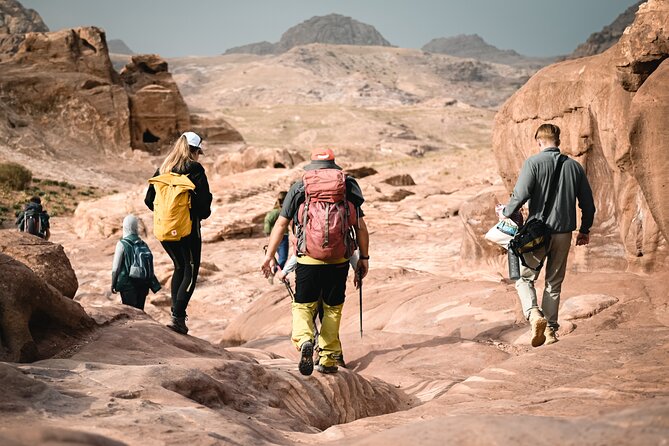
- UNESCO-to-UNESCO hiking: connect Petra with the Wadi Rum Protected Area on foot
- Small-group feel (max 14): easier pacing, more guide attention
- Camping-style nights: remote campsites after full hiking days
- Real desert navigation: at least one segment has no waymarks, so your guide matters
- Wadi Rum jeep transfer: after the hike, you’ll move into the protected area by vehicle
Why This Petra-to-Wadi Rum Trek Feels Different From the Usual Route
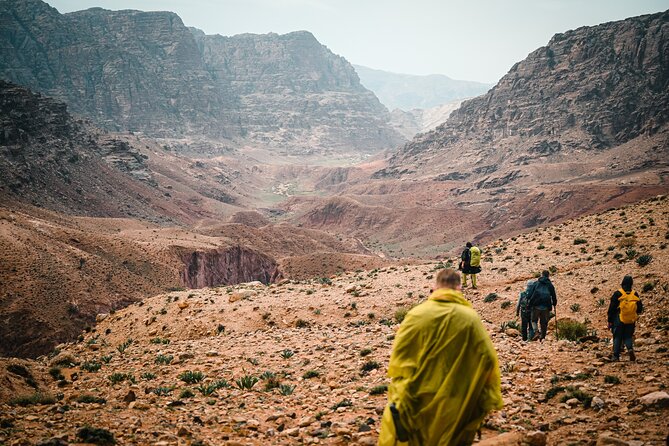
This trek is built for people who want the Jordan Trail experience, not just photo stops. You start on the edge of Petra’s bigger scene, then turn off from the main flow and gradually move into rougher, quieter terrain. The payoff is the contrast: Nabatean stone and amphitheatre vibes in the morning, then desert ridges, dry wadis, and red-sand scenery as the days stack up.
It’s also a smart way to see two UNESCO sites without turning the whole trip into “bus to attraction, quick photo, repeat.” You’re hiking through the geography that connects these places—Wadi Araba and the higher desert area around Wadi Rum—so the scenery changes are part of the journey.
One more practical point: the tour is designed for guided walking. With remote sections and at least one day marked as not waymarked, you’ll appreciate having an experienced local guide helping you keep your bearings.
Day 1: A Tough Descent From Petra’s Edge to a Remote Campsite
You begin near Petra Museum in Wadi Musa with a 7:30 am start time. From there, you leave the main trail while still being within Petra’s larger Nabatean settlement area, so you get the sense of place without the busiest tourist path. You’ll pass the Sabra Amphitheatre and then spend most of the day descending toward a remote campsite.
The numbers tell you what to expect: about 24 km over roughly 6–8 hours, and it’s labeled difficult. You’re looking at a descent (740 m) that’s larger than the ascent (380 m), which usually means your quads and knees do a lot of work—even if the walking feels mostly downhill.
This day also includes a transfer from your hotel in Wadi Musa to the hike start point, which helps you avoid a stressful morning scramble. My practical advice: take the descent slowly and start early with plenty of water, because long downhills can sneak up on you once you’re tired.
Day 2: Rural Desert Valleys, Oleander, and a Moderate Trail
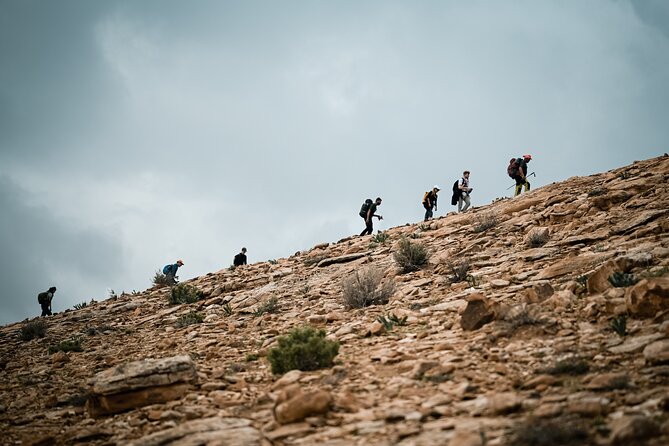
Day 2 continues south through rural desert mountains and rocky valleys. You’ll also notice oleander plants along the way, which is a nice reminder that these deserts aren’t completely barren. The vibe is still remote, but the day is designed as easier physically.
Expect around 15 km for roughly 4–5 hours. It’s rated easy for physical challenge, but the trail challenge is moderate, and the ascent/descent (290 m up, 320 m down) suggests steady effort rather than a casual stroll. Importantly, this day is marked as not waymarked, which means you should rely on the guide for route-finding and pacing.
For this kind of walk, the big thing is confidence. You’ll feel better if you keep your rhythm—short, steady breaks—rather than trying to power-walk the whole time. With an unmarked segment, rushing usually turns into mistakes (or wasted energy).
Day 3: Desert Mountain Walking Toward the Jordan Valley
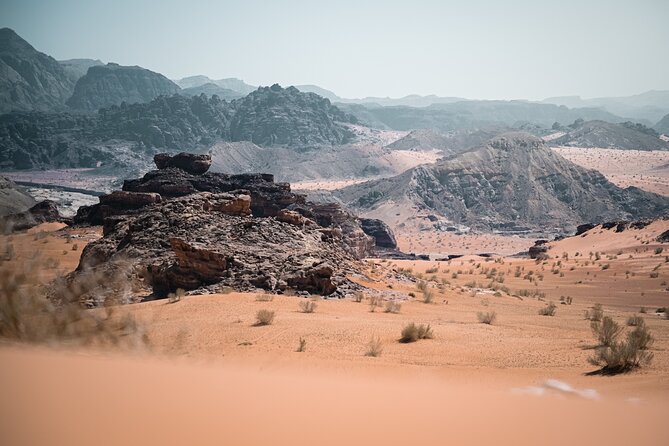
By day 3, the trek leans more into raw desert scenery: wild desert mountains, desert valleys, and a route that keeps pointing south. The description is lighter on exact distance for this day, but it’s clear that you’re moving through more rugged terrain before reaching camp near the Jordan Valley.
This is a “keep your legs happy” day. If day 1 feels like the big physical test, day 3 feels like the endurance phase—longer stretches of steady walking while the terrain does its own slow storytelling. The route includes passing a cluster of mountains and then heading down to camp, so expect a gradual shift in effort as you move toward the valley area.
What’s valuable here is that this day is part of the trek’s purpose: it’s not just mileage. The route keeps you in the desert’s real rhythm—hills, dry cuts in the rock, and big sky—while still setting up the next day’s canyons and dunes.
Day 4: Colorful Canyons, Rock Formations, and Camp by Sand Dunes
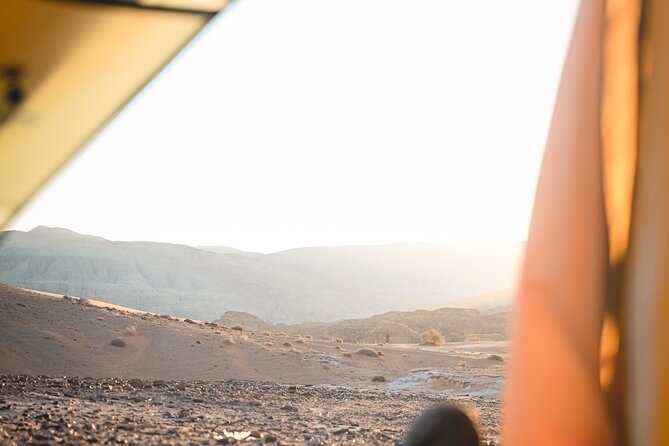
Day 4 is where the scenery gets more dramatic. You’ll walk through colorful canyons, along rock formations, and through viewpoints that make you stop even if you didn’t plan to. Sand dunes show up too, so this day tends to feel like a mix of hiking styles: firmer ground in some areas and softer, slower walking when sand takes over.
You’ll get a day with a mixture of up and downhills, and the itinerary ends at a campsite in a beautiful area. Since your energy is limited and the terrain changes, this is a good day to be flexible. If the dune sections slow you down, that’s normal—plan for time rather than speed.
The practical takeaway: your “camp-ready” finish matters. After the constant movement, reaching the campsite on day 4 sets you up for day 5’s climb out of the Jordan Valley and into Wadi Rum.
Day 5: The Long Ascent Out of the Jordan Valley and Into Wadi Rum
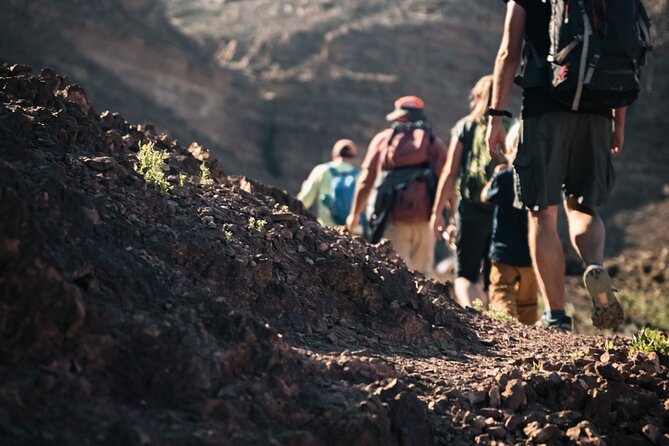
Day 5 is the last day of the trek, and it’s the one that turns the corner from hiking into arriving. You’ll face a long, gradual ascent as you climb out of the Jordan Valley, and later you reach the desert plateau in the Wadi Rum area.
After that, the plan shifts from on-foot to by-vehicle. You’ll reach the Bedouin village of Abassiya, then take a jeep transfer into the Wadi Rum Protected Area. The tour also lists a transfer from Hummeima to Wadi Rum on this day, which aligns with that vehicle movement once you’re in the Wadi Rum region.
One money note: entry to Wadi Rum is tied to the Jordan Pass, and the Jordan Pass is not included. So even if the tour includes movement and your camp stays, you still need to handle the entry piece yourself.
Physically, this is where pacing pays off. A long ascent rewards steady effort, not sprinting at the start. Mentally, it helps to know that your walking day ends and your desert base in Wadi Rum begins.
Day 6 Morning in the Wadi Rum Protected Area (and How to Extend)
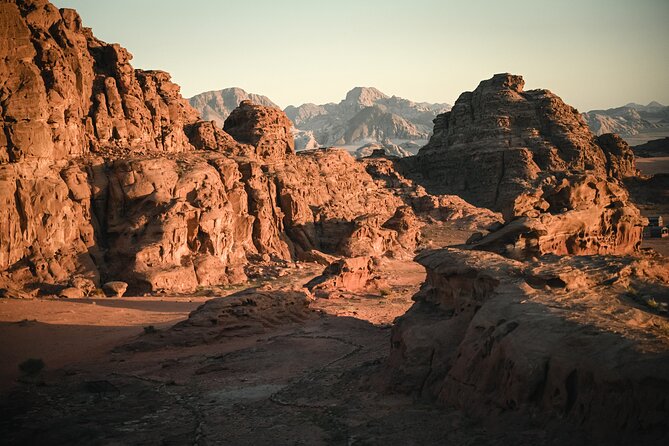
You finish with a morning in Wadi Rum, waking up in a serene, iconic desert setting. Expect red sand dunes, sandstone mountains, and rock formations right where you’re staying. The tour ends the morning after the hike at the Wadi Rum campsite, so you’re not rushing into another full day of transport and walking.
The itinerary also makes it easy to think beyond Wadi Rum. Some people like to continue onward to Aqaba and the Red Sea, some go to the Dead Sea first, and others head back to Amman. The operator says they can arrange a private extension for you or help you plan what to do next.
If you want a clean finale, this day works well. You’ve already done the hard part—walking across terrain that feels connected to both UNESCO sites—so day 6 is more about decompressing in Wadi Rum and setting up your next move.
Guides, Safety, and the Kind of Attention You Want on a Remote Route
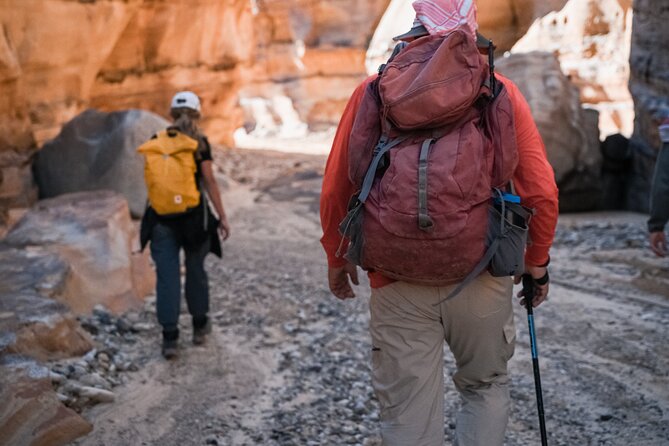
This is not a “follow the crowd” trek. It’s remote, rugged, and in places not waymarked, so your guide is more than a translator. The tour provides a local English-speaking hiking guide, and the group limit (max 14 travelers) helps keep the pace manageable and the experience more personal.
From prior trip feedback, guides tied to this kind of route have included names like Furat Mai, Mahmood Attal, Raja, Motaz, Mutaz, and Habu el bedul, with a consistent emphasis on explaining what you’re passing—mountain ridges, riverbeds, plants, and features along the way. There’s also mention of strong support crews at camp (including Hussain and Eid in some group experiences) and solid drivers (like Abed), which matters when you’re tired and you just want logistics to behave.
So here’s the practical take: this trek is worth it when you want guided walking, not when you just want a route download. A good guide makes the difference between feeling lost and feeling oriented in desert terrain.
Price and What You’re Really Paying For ($995 per Person)
At $995 per person, this isn’t a budget stroll, but it includes a lot of what typically costs extra on independent treks. You get 5 nights of accommodation, a local English-speaking guide, the transfer from your hotel in Wadi Musa to the start point, and a transfer into Wadi Rum from the Hummeima/Abassiya side on day 5. You also get meals: 5 breakfasts, 5 lunches, and 5 dinners.
If you break it down across the trip length (about 6 days), you’re paying for a guided, logistics-heavy walking experience where food and camp bases are taken care of. The biggest extras you’ll likely budget for are not included: the Jordan Pass for Wadi Rum entry, tips, travel insurance, and airfare/airport transfers.
My advice is to compare what you’re not paying for. If you tried to copy this independently, you’d spend time and money on guides, transport between trail start and Wadi Rum, and arranging camp logistics.
Who Should Book Petra to Wadi Rum (and Who Should Skip It)
Book this trek if you’re fit enough for sustained walking and you want a true desert route that connects Petra to Wadi Rum without turning the trip into a check-the-box sprint. It’s a strong pick for hikers who like remote scenery and can enjoy long days as part of the experience.
You should think twice if you prefer easier walking or clearly marked paths every day. Day 1 is difficult (24 km, 6–8 hours, major descent), and day 2 is not waymarked. The tour guidance also notes that travelers should have strong physical fitness, so this is aimed at people who can handle physical effort without needing constant comfort stops.
Also consider what you want most at Petra. Since the trek starts near Petra Museum and day 1 pulls you out of the main tourist route, you’ll get Petra’s setting, but you’re not doing a slow, museum-style visit.
Should You Book This 6-Day Petra to Wadi Rum Trek?
I’d book this trek if your dream trip includes desert hiking days that feel remote, with a guide who helps you understand what you’re seeing. The included meals, multi-day accommodation, and transfers reduce the friction that usually makes long treks stressful.
Skip it if you’re not comfortable with a difficult day 1, a not-waymarked day 2, or the idea of camping-style nights in a remote setting. And do the basic budgeting homework for Wadi Rum entry, since the Jordan Pass is not included.
If your fitness is strong and you’re ready for a real walking adventure, this is a well-structured way to connect two of Jordan’s biggest icons on foot.
FAQ
How long is the Petra to Wadi Rum trek?
The trek is approximately 6 days, ending the morning after the hike at the Wadi Rum campsite.
Where do you start, and when is the start time?
The meeting point is Petra Museum (in Wadi Musa), and the start time is 7:30 am.
Is hotel pickup included?
Yes. There is a transfer from your hotel in Wadi Musa to the start point of the hike on day one.
What meals and accommodation are included?
You get 5 nights of accommodation and meals every day of the trek: 5 breakfasts, 5 lunches, and 5 dinners.
How hard is the hike?
You should have strong physical fitness. Day 1 is labeled difficult (about 24 km, 6–8 hours). Day 2 is physically easy but has a moderate trail challenge, and at least one day is marked as not waymarked.
Is the Wadi Rum entry fee included?
No. The Jordan Pass is not included, and it covers your entry fee to Wadi Rum.
What if the trek is affected by poor weather?
The experience requires good weather. If it’s canceled due to poor weather, you’ll be offered a different date or a full refund.
Can I extend the trip after Wadi Rum?
Yes. The operator can arrange a private extension for you, including options such as Aqaba/Red Sea, the Dead Sea, or heading back to Amman.