REVIEW · IWATE PREFECTURE
Matt Canyon River Trekking Nishiwaga Town, Iwate Prefecture
Book on Viator →Operated by ネビラキ · Bookable on Viator
Summer turns Nishiwaga into a walkable river. I love how the knee-deep route cools you fast, and I love the chance to spot summer-only life like a white kaijika frog. The main drawback is simple: this trip involves water and can be a bad fit if you get anxiety about your legs or if bugs make you miserable.
You’ll head into the exposed canyon by following the Madoto River area around Nishiwaga Town in Iwate Prefecture, guided by ネビラキの瀬川然. It’s private, so your group sets the pace, and the walk stays pretty gentle with few big climbs or rock scrambling.
In This Review
- Key things I’d mark on your checklist
- Nishiwaga’s Nishikishu Lake: Why the Canyon Shows Up in Dry Season
- Following the Madoto River and Marot Canyon Bottom (Without the Big Climb)
- Knee-Deep Trekking, Plus One Waist-Deep Soak Section
- Old Bridges, Emerging Valleys, and Seeing Summer Life Up Close
- Meeting at 41 Chiwari-72 Kawashiri: Private Tour Flow and What Happens First
- Price and Timing: $49.70 for 3 Hours of River Bottom Access
- Bugs, Wildlife Nerves, and the Safety Limits You Should Respect
- Best Season to Book: July Through October in Iwate
- If You Want a Sweet Finish: Nebiraki Cafe for Cake and Coffee
- Should You Book This Nishiwaga River Trek?
- FAQ
- How long is the Matt Canyon River Trekking experience?
- Where do we meet for the trek?
- When is the water level low enough for knee-deep trekking?
- How deep does the water get during the tour?
- What if the weather is poor?
- Is it a private tour, and who can participate?
Key things I’d mark on your checklist
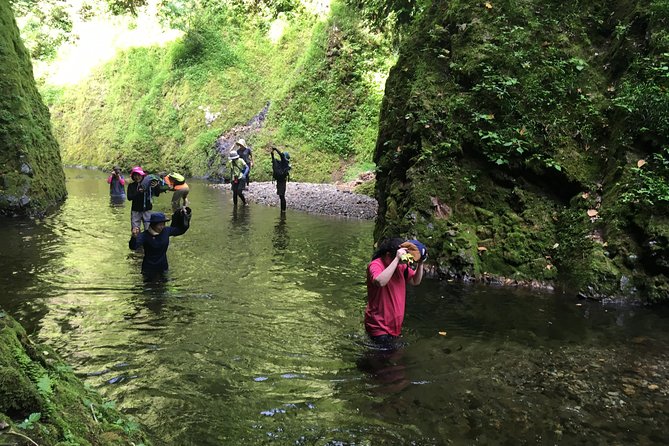
- Knee-to-waist water trekking as the dam-fed water drops in summer
- Marot Canyon bottom access you only get when Nishikishu’s level falls
- Old bridges and seasonal valleys that appear, then disappear again
- Summer flora and fauna spotting with a guide who watches for what’s present
- Low-stress walking style with minimal ups and downs
- A private tour with ネビラキの瀬川然, plus a mobile ticket
Nishiwaga’s Nishikishu Lake: Why the Canyon Shows Up in Dry Season
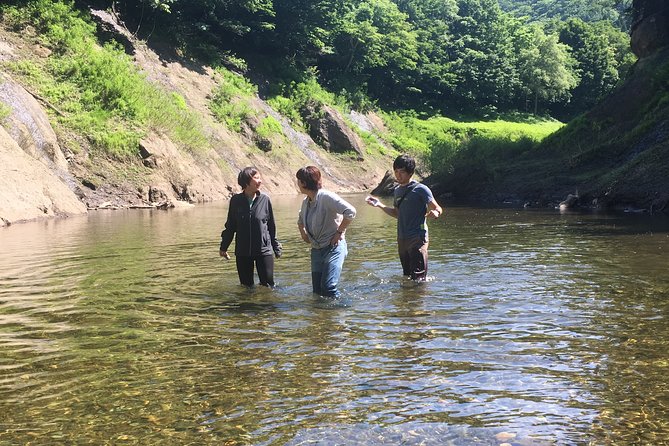
This experience exists because Nishiwaga’s artificial lake, Nishikishu, changes with the seasons. In spring, when snowmelt feeds the area, the Mato Canyon can run deep—around 20 meters. Then summer arrives, and the water pulls back fast.
During the drier stretch from about July through September, the water is generally below your knees. That drop reveals a valley-and-canyon world that would be underwater at other times of year. You’re not just hiking near a river—you’re walking through a space that only exists as a walking route when the lake level falls.
Why I think this matters: the value here is timing. You’re visiting during the window when the environment shifts enough to create this “walkable river bottom” experience. If you’re the type who plans around weather and seasons, you’ll get more satisfaction from this kind of trip than from a route that looks the same year-round.
Following the Madoto River and Marot Canyon Bottom (Without the Big Climb)
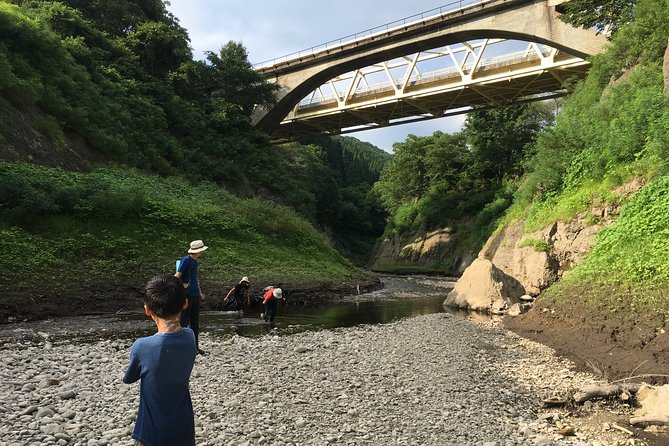
The trek follows the Madoto River as it flows into the Nishiwaga Nishikishu area, and when the water level drops (roughly 10 meters in the dry season from July to October), the river turns into something closer to a canyon floor. That’s where you walk.
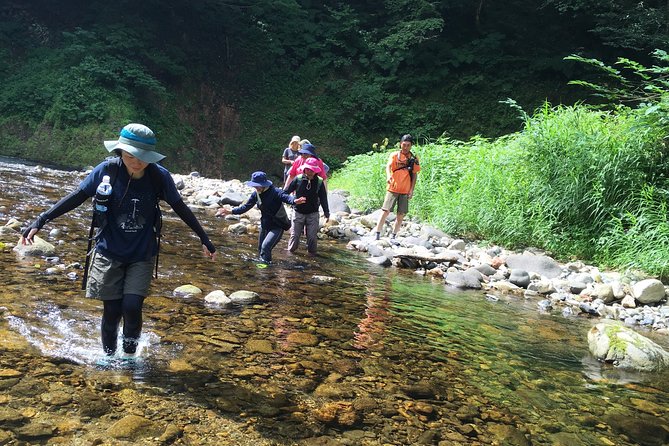
The walking route stays in the active riverbed area—along the bottom of Marot Canyon—so you’re constantly aware of the water around your legs. The good news is that the route is designed to be manageable: there aren’t many steep ups and downs, and you rarely need to climb or scramble over rocks.
You’ll also feel the difference between “dry-season walking” and “spring depth.” In summer low water, the canyon floor is exposed enough to move through comfortably. In spring, the same place would likely be too deep and fast to treat like a footpath.
Tip for planning your expectations: you’re not coming for dramatic summit views. You’re coming for a rare perspective—seeing a canyon from the bottom, at the waterline, where the ecology is doing its seasonal work.
Knee-Deep Trekking, Plus One Waist-Deep Soak Section
For much of the walk, you’ll be in water below your knees, which is a special kind of balance. You get the sensory payoff—cool water, wet footing, the sound of moving water—without the full commitment of wading in chest-deep conditions.
There is also a segment where you can soak up to your waist. That’s the part you’ll want to mentally prepare for. It’s still within the “private tour, doable for most” framing, but it’s clearly the deeper moment of the trek.
What this means for comfort:
- Keep your footing sense switched on. Even if the walk is not steep, river bottoms can be slick.
- Dress for getting wet. This is not a try-to-stay-dry style outing.
- Expect the water feel to change as you move through narrower stretches and calmer pools.
If you’re wondering whether this is “easy,” the best way to think of it is: the route avoids big elevation challenges, but it’s still a river walk. Your legs and balance are the main considerations.
Old Bridges, Emerging Valleys, and Seeing Summer Life Up Close
One of the strongest reasons to book this trip is the seasonal ecology. When the water drops, you pass old bridges and areas where valleys emerge from the bottom of the water before the dam pulls everything back again.
This is why the guides emphasize the summer-only vibe. You’re watching plants and animals that are easier to notice in the low-water months, when the canyon bottom and river edges are accessible on foot. You’re also in the right audio zone for summer nature—birds and insect sounds tend to be part of the atmosphere.
In particular, I’ve seen accounts of spotting a white kaijika frog during this season. You shouldn’t assume you’ll see it, but it tells you the level of attention the guide brings to small, specific wildlife moments.
The big idea: don’t treat this as a generic nature walk. The canyon’s temporary exposure changes what you can observe. You’re there for the “in-between” season window where the river floor is visible, living, and moving.
Meeting at 41 Chiwari-72 Kawashiri: Private Tour Flow and What Happens First
Your meeting point is listed clearly: 41 Chiwari-72 Kawashiri, Nishiwaga, Waga District, Iwate 029-5512, Japan. The tour ends back at the same location.
It’s also described as near public transportation, which helps if you’re not renting a car. And because it’s private, you’re not squeezed into a big herd. It’s just your group with your guide.
At the start, you should expect a short setup phase. In one account, the group moved to a deck terrace for explanations, then handled paperwork and insurance procedures and payment before heading out. Even if your exact setup timing differs, the lesson is consistent: arrive a little early, listen carefully, and get your questions answered right away—especially if you’re unsure about the water depth moments.
The guide name you’ll often see connected with these trips is 瀬川然(ネビラキ). A nice touch here is that the guide doesn’t fake certainty. Wildlife and what you’ll see can depend on the day, so the experience is partly about noticing what’s actually present.
Price and Timing: $49.70 for 3 Hours of River Bottom Access
At $49.70 per person for about 3 hours, the pricing feels aimed at giving you a focused nature experience without turning it into a half-day project. If you add up time, the trip is short enough to fit into a packed Iwate itinerary.
Also look at the scheduling pattern: on average, bookings are made about 69 days in advance. That doesn’t guarantee sellouts, but it does suggest it’s not an afterthought option for summer planning.
Value check: you’re paying for more than a walk. You’re paying for seasonal timing (low-water access), local guidance for where to go, and the chance to spot specific summer life in a place that isn’t usually walkable in other months.
Trade-off to be realistic about: this is a weather-dependent outing. If conditions aren’t right, you may switch dates or receive a refund. So treat it like an outdoor activity, not a guaranteed sightseeing slot.
Bugs, Wildlife Nerves, and the Safety Limits You Should Respect
Outdoor river trekking in summer comes with bugs. One account called out an intense amount of horseflies and stressed paying attention at this time of year. That’s enough of a hint to pack insect protection seriously.
Some people also feel uneasy at first about wildlife. In one story, there were worries about bears, horseflies, and snakes. But the same account notes that once the group got moving, the experience turned fun and mentally shifted into enjoying the water flow and the unusual setting.
Still, the safety notes aren’t theoretical:
- Not recommended for people with anaphylactic shock (allergy risk needs a higher level of safety planning).
- Not recommended for those with anxiety about their legs, since you’re walking in water and there’s a waist-deep section.
My practical advice: if you’re on the fence, be honest with yourself about what triggers your anxiety. This isn’t a dry trail you can pretend is easy. It’s a water-based experience.
Best Season to Book: July Through October in Iwate
The trip’s whole trick is seasonal water level change. The data points to a low-water walking window starting in July, continuing through the dry months July to September, and into October as the water drops around 10 meters during the dry season.
If you come outside that window, the canyon may not be walkable the same way. In spring, it’s described as deep with snowmelt—around 20 meters—so the “below-knees trekking” premise likely won’t work.
So if you’re traveling to Iwate in summer/fall, this is one of the more logical choices: it’s designed for exactly the time of year when Nishikishu reveals the canyon bottom.
If You Want a Sweet Finish: Nebiraki Cafe for Cake and Coffee
One easy way to turn this into a fuller day is to add the Nebiraki cafe stop after the trekking. A report mentioned cake and coffee there afterward, which sounds like a comfortable decompression after wet feet and sun-warmed air.
I wouldn’t treat the cafe as a must-include. But if it’s convenient after your trek, it’s an enjoyable way to top off the experience with something simple and local.
Should You Book This Nishiwaga River Trek?
Book it if you want:
- A short, guided outdoor experience that doesn’t require big climbs
- A real seasonal nature change—walking a canyon bottom that only exists as a route in dry months
- Knee-deep water time (with one deeper soak section) and the chance to notice summer life up close
Skip it if:
- Your legs-in-water situation causes anxiety for you
- You have serious allergy risk and can’t meet the safety expectations for this kind of outdoor activity
- You’re expecting a dry hiking trail or zero mud/wet moments
One last decision tip: look at your travel timing. If your schedule lines up with July through October, this trek makes a lot of sense. If you’re there in a different season, you’d likely be paying for a concept that doesn’t match the actual water conditions.
FAQ
How long is the Matt Canyon River Trekking experience?
It runs for about 3 hours.
Where do we meet for the trek?
The meeting point is 41 Chiwari-72 Kawashiri, Nishiwaga, Waga District, Iwate 029-5512, Japan. The activity ends back at the same meeting point.
When is the water level low enough for knee-deep trekking?
The route is described as being below the knees during the dry season, especially from July through September. Water drops by about 10 meters during July to October, revealing the canyon valley for trekking.
How deep does the water get during the tour?
Most of the trek is in water below your knees, with a section where you can soak up to your waist.
What if the weather is poor?
This experience requires good weather. If it’s canceled due to poor weather, you’ll be offered a different date or a full refund.
Is it a private tour, and who can participate?
It’s a private activity with only your group participating. Most people can participate, but it is not recommended for people with anaphylactic shock or for those with anxiety about their legs.