REVIEW · NICOLOSI
Catania, Etna trekking with guide and cable car at 3000 meters + transfer available
Book on GetYourGuide →Operated by Etna Grimper · Bookable on GetYourGuide
Etna is one of Europe’s loudest classrooms. A guided hike on Europe’s highest active volcano, starting at Rifugio Sapienza and using the cable car for altitude, turns Mount Etna into a clear, guided experience instead of guesswork. I love that the day is led by an authorized volcanological guide who explains what you’re seeing in real time, and I also love the route itself, from recent eruption areas to the ancient Valle del Bove caldera. One drawback to plan around: the cable car ticket is extra (paid directly to the guide), and cold weather at elevation can make it feel tougher.
The best part for me is how this trek is built around current safety rules. You walk up to the highest point allowed by regulation, which can change depending on volcanic risk levels, so the route feels practical rather than fixed in stone.
One more consideration: this outing is not for everyone. It’s not suitable for people with vertigo, heart problems, respiratory issues, motion sickness, or certain pre-existing medical conditions, so be honest about your limits before you book.
In This Review
- Key takeaways before you go
- Getting to Rifugio Sapienza without turning it into a chore
- Cable car to altitude: the easy win before the hike
- Walking the recent eruption zones with safety rules that change
- The planned break: photos, snacks, and getting your breath back
- Barbagallo craters (2002/03): where you can see the volcano up close
- Valle del Bove: the ancient caldera you can understand by walking it
- Toward the 2001 crater base: the route keeps tightening the story
- Paying attention to what’s included (and what you’ll spend extra)
- What to bring: cold-proof clothing and real hiking basics
- Pace and comfort: who will feel good on this trek?
- Group size and guide language: your comfort depends on the info
- Should you book this Etna trek with cable car?
- FAQ
- How long is the Etna trek?
- Where do we meet at the start of the tour?
- Is pickup from Catania available?
- What is included in the tour price?
- Do I need to pay extra for the cable car?
- What languages are the guides?
- What should I bring for the trek?
- Is the tour suitable for children?
- Is the trek okay if I have vertigo or heart problems?
- What’s the cancellation policy?
Key takeaways before you go
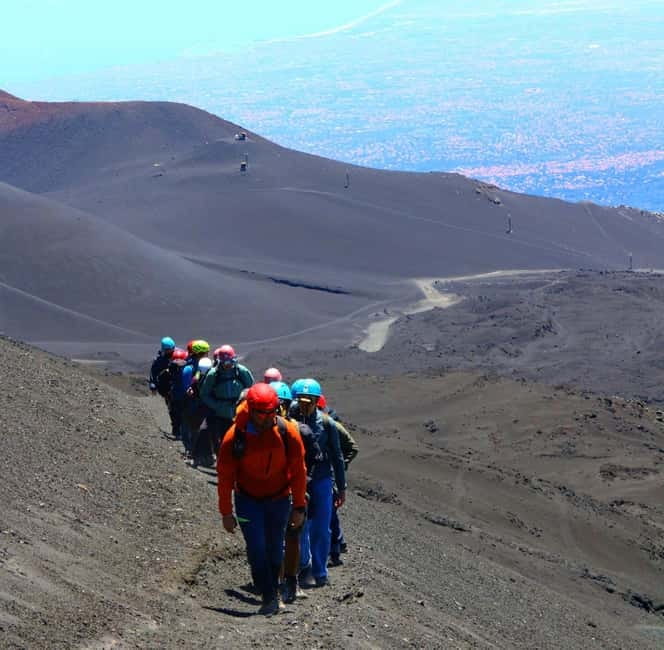
- Authorized volcanological guide with explanations in English, Italian, and French
- Cable car to about 2,500 meters to save time and energy
- Highest point follows risk-level rules, which can change day to day
- Barbagallo craters (2002/03) and views toward Valle del Bove
- Small-group feel so you’re not lost in a crowd
- Helmets included, plus walking sticks available on request
Getting to Rifugio Sapienza without turning it into a chore
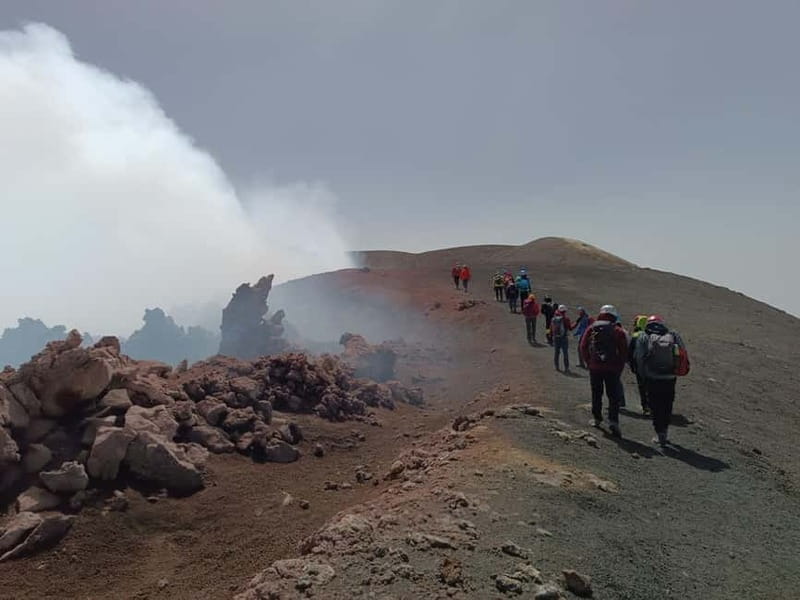
Your day starts in the Rifugio Sapienza area (around 1,900 meters). You’ll connect with the team right at Rifugio Sapienza square, where promoters wear fuchsia jackets and carry orange flags in a chalet opposite the refuge. It’s the kind of meeting point that helps a lot when roads and weather are doing their own thing.
Pickup is optional. If you want a transfer, you can request it by shuttle or car to your hotel in much of the Catania province. The round-trip cost is listed as $35 per person, paid separately. If you’re traveling from nearby towns, you’ll still need to arrange it in advance via WhatsApp.
This matters because Etna days can be weather-dependent, and having a clear plan reduces stress. The more you can remove the “how do I get there” question, the more you can focus on the walk itself.
You can also read our reviews of more tours and experiences in Nicolosi.
Cable car to altitude: the easy win before the hike
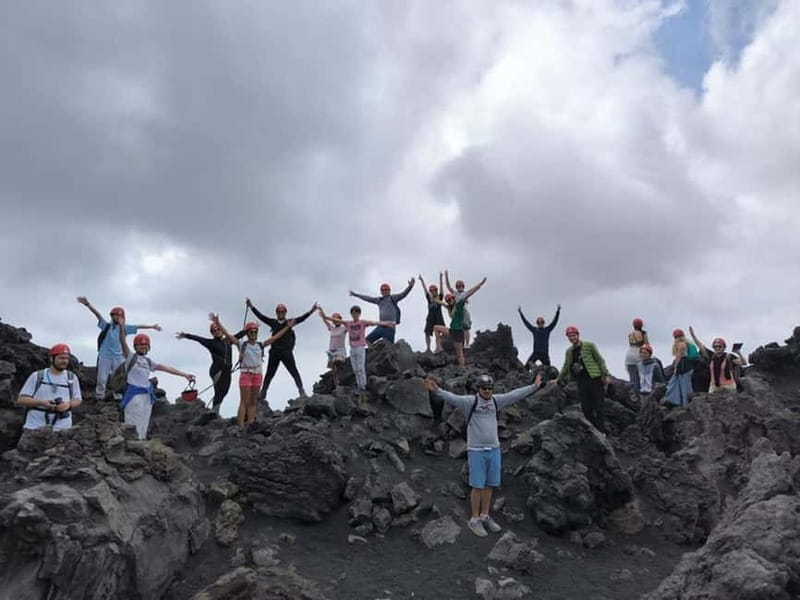
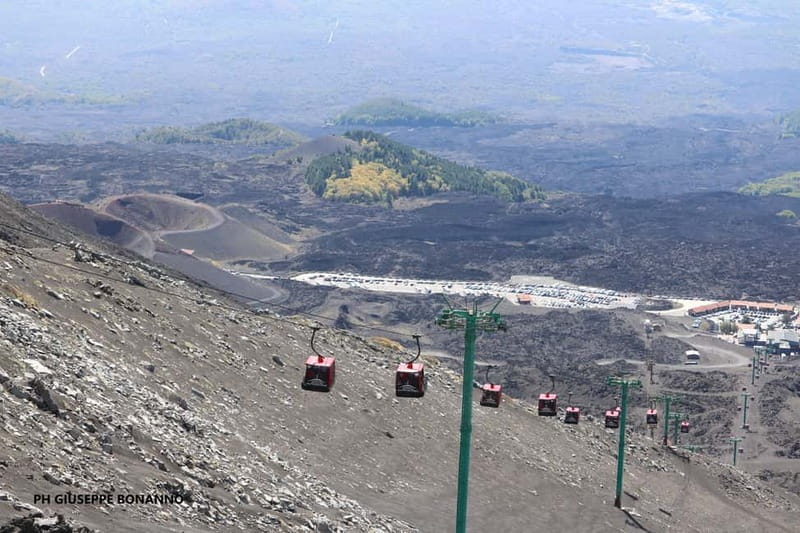
Right away, you take the cable car from about 1,900 meters up to roughly 2,500 meters. Even if you’re not afraid of heights, this step is a comfort upgrade. You spend less time climbing just to reach the zone where the geology starts to make sense.
The cable car ticket is not included in the main tour price. It’s listed as €52 per person (and €30 for children up to age 10). You pay directly to the guide for the cable car ticket. The day also includes a skip-the-ticket-line benefit, so you shouldn’t waste a big chunk of time waiting.
Here’s the practical upside: that time you save on the cable car side goes straight into walking and stopping. And because the trek duration is listed as about 5.5 to 6 hours, every chunk of time that feels efficient is a win.
Walking the recent eruption zones with safety rules that change
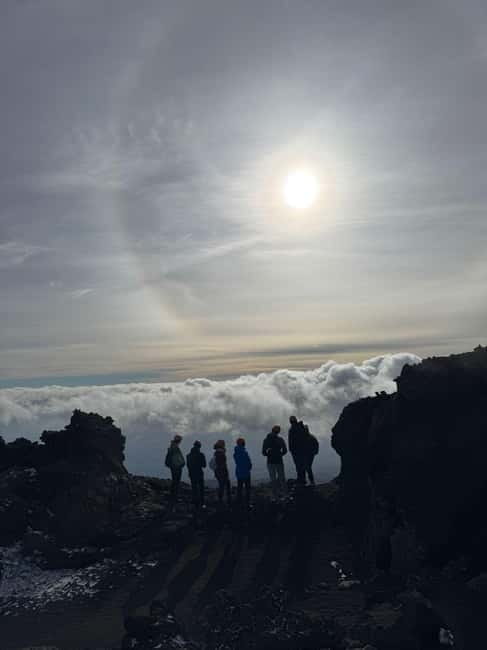
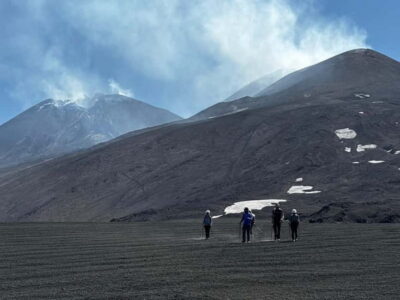
The trek begins after the cable car, moving across sites tied to the most recent and important eruptions. The key point is not just that the ground is volcanic. It’s that you’re walking under safety guidance, with an authorized guide who works within the limits set for that day.
The itinerary describes reaching the highest point allowed by current regulations. These rules are based on volcanic risk levels and can change constantly. That means the exact high point and some details may vary depending on conditions, but the overall structure stays the same: walk, observe, pause, then continue.
This is the part I’d call “real value,” because safety on an active volcano isn’t a slogan. It’s the difference between simply seeing Etna and understanding why the route is what it is.
The planned break: photos, snacks, and getting your breath back
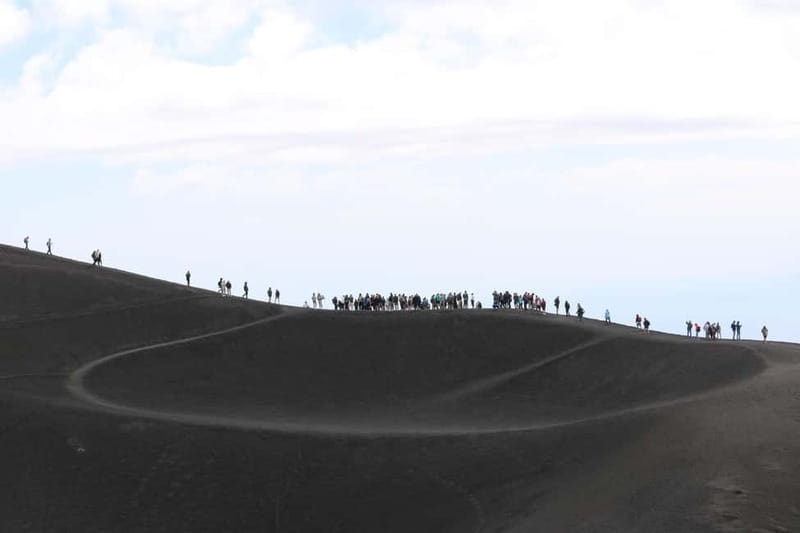
There’s a roughly 30-minute break built into the trek. You’ll have time to eat something and take in the area around you. Bring your food and drinks, because the tour description does not list meals as included.
This break is more important than it sounds. At altitude, you can feel winded even if the climb is steady. A real pause helps you reset so you can enjoy the next sections instead of rushing through them.
The clothing guidance is simple: wear comfortable clothes and plan for cold conditions at elevation. Even on a good weather day, Etna can feel chilly up high, and your best defense is preparing like it’s winter light rather than planning like it’s a summer hike.
Barbagallo craters (2002/03): where you can see the volcano up close
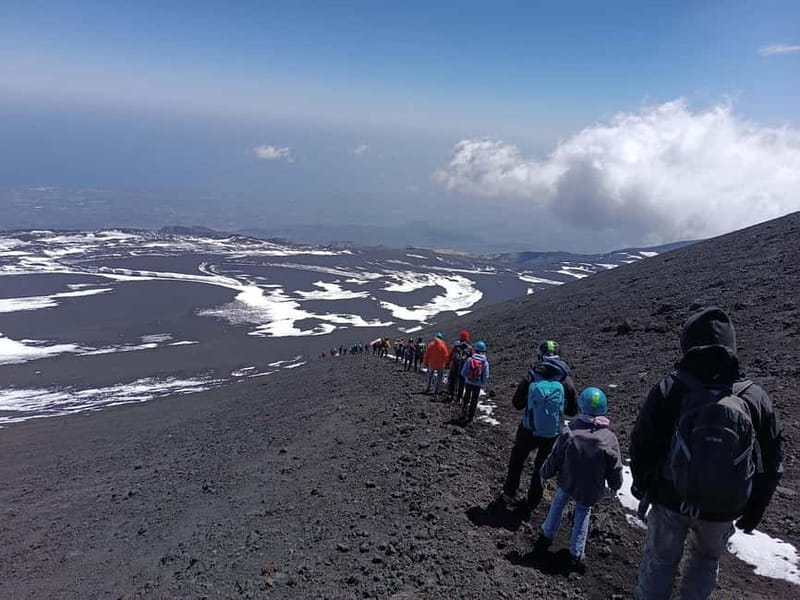
After the break, the route climbs toward the Barbagallo craters, described as erupting in 2002/03. This is one of the most specific “this is where the volcano did this” sections of the day.
Then comes the descent on the eastern side. Walking down can feel easier on paper, but it’s still real hiking work, especially if the ground is uneven or if wind is pushing against you. The good news is that the trek is built as a guided loop rather than a “just keep going” approach.
One helpful angle from the experience feedback: the hike portion is often described as a few hours and not overly hard for people in okay fitness. That doesn’t mean it’s a flat stroll. It means the guiding and pacing are set up so you’re not struggling nonstop.
If you ask questions, expect solid answers. In one group, the guide named Giuseppe was especially praised for teaching a lot about Etna and volcanoes, including in a way that makes the scenery easier to interpret.
Valle del Bove: the ancient caldera you can understand by walking it
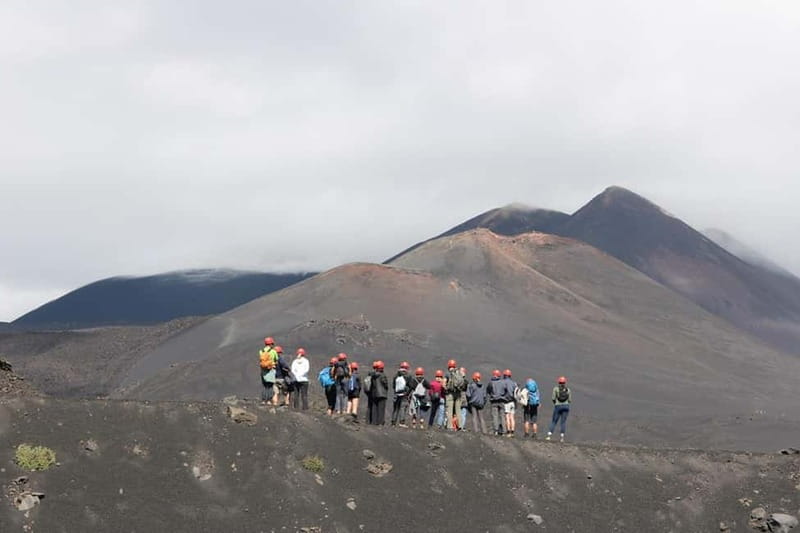
Next, you head toward Valle del Bove, an ancient caldera. The description says studies show it formed about 9,000 years ago due to the collapse of Etna’s older eruptive centers.
This is where the guide’s role becomes more than “pointing at things.” When you walk across a volcanic system, it’s easy to see only dramatic edges and forget what you’re looking at. Valle del Bove helps you connect the dots: the shape of the land comes from collapse and shifting eruption centers over time.
Even if you’re not a geology person, this section is designed to be understandable on the go. You see where the terrain suggests past events, then you move through it at a controlled pace instead of trying to map it yourself.
Toward the 2001 crater base: the route keeps tightening the story
After crossing toward the south, the plan brings you to the base of the crater formed during the great eruption of 2001. You cross it as you continue, and then you start working back toward the cable car.
This “newer event” to “older structure” storytelling is what makes the day feel coherent. You’re not just walking to random viewpoints. The route links major eruption moments to the shapes they left behind.
Again, the exact steps can vary with day conditions, but the themes stay the same: eruptions, structures, and then a practical return to the cable car.
Paying attention to what’s included (and what you’ll spend extra)
Let’s break down value in plain terms. The main package includes:
- A multilingual volcanological guide
- Insurance
- Helmet
- Walking sticks (on request)
- Shoes
What is not included:
- The cable car ticket cost: €52 per person (and €30 for children up to age 10), paid directly to the guide
- Food and drinks (bring your own)
- Optional transfer to your hotel area: $35 per person round trip from Catania or neighboring towns
So is it worth it? For most people, yes, if you care about doing Etna in a structured and safe way. A volcanological guide plus insurance plus included safety gear can take pressure off your planning. The extra cable car fee is clear up front, so you’re not surprised on the day.
The best value signal is the time you get with the guide. You’re essentially buying a long guided window—nearly the full day portion—during which you can ask questions and learn what you’re looking at instead of treating it like a self-guided sightseeing pass.
What to bring: cold-proof clothing and real hiking basics
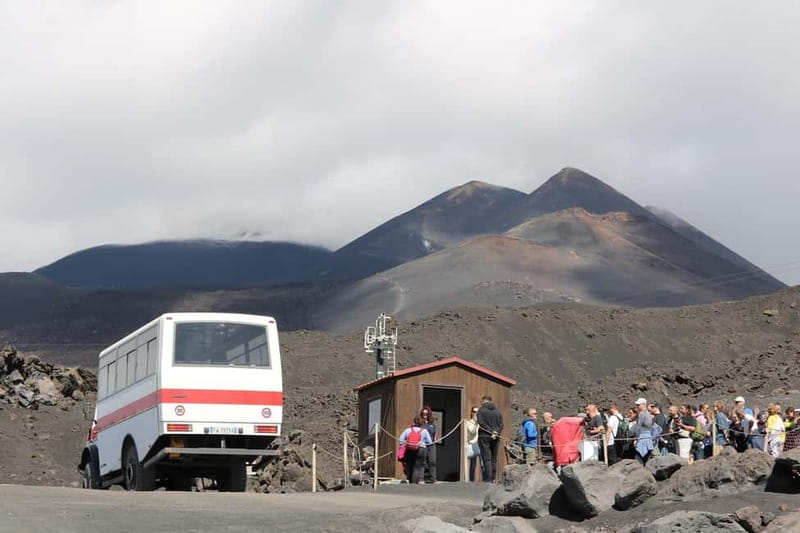
Etna isn’t just “outdoors.” It’s outdoors at altitude with wind potential. Plan for comfortable clothes that you can layer. The tour info also clearly points you to bring food and drinks, plus (of course) a comfortable mindset for a hike.
You may also want:
- A warm layer you can actually zip or put on fast
- Something to protect from wind
- Your own water and snacks for the break and the walk itself
The tour rules also list what’s not allowed:
- Red wine
- Alcohol and drugs
- Alcoholic drinks in the vehicle
- Nudity
That’s a real-world hint: keep it simple and keep your focus on the hike and the group.
Pace and comfort: who will feel good on this trek?
The trek lasts about 5.5 to 6 hours. That includes the drive time and the walking time with stops, plus the return via cable car. In terms of effort, the experience feedback describes it as a hike for a couple of hours and doable for people with an okay fitness level—as long as you meet eligibility requirements.
This tour is not suitable for:
- Children under 10 years
- People with heart problems
- People with vertigo
- People with respiratory issues
- People with motion sickness
- People with pre-existing medical conditions
- People over 80 years (and it also lists people over 95 years as not suitable)
If you’re on the fence, take these limits seriously. An active volcano is not the place for “I’ll push through.” Ask yourself whether wind, uneven ground, altitude, and the walking pace are comfortable for you.
Group size and guide language: your comfort depends on the info
This is a small group experience, which makes it easier to hear explanations and ask questions. The tour guide is available in English, Italian, and French, and the experience includes a multilingual volcanological guide.
That matters a lot on Etna because a label on a viewpoint doesn’t explain eruption behavior. A good guide can connect the visuals to what caused them, and that connection is the difference between a “cool photo” and a day that sticks with you.
If your group includes people who like to talk, this setting works. The feedback on guides points to an ability to answer questions and teach in a way that makes the volcano feel less random.
Should you book this Etna trek with cable car?
Book it if you want:
- A guided walk with an authorized volcanological guide
- A structured route that follows volcano risk rules and current access limits
- A day that mixes key volcanic features, including Barbagallo craters and the Valle del Bove caldera
Think twice or pick a different option if:
- You have vertigo or motion sickness
- You have heart, respiratory, or other medical limits listed as not suitable
- You’re trying to do Etna without cold-weather prep or without being able to handle uneven ground
My take: this is a smart way to experience Etna safely and meaningfully. Yes, you’ll pay the cable car ticket separately, and yes, it can feel cold up at altitude. But the value comes from the long, guided time on the volcano itself—especially if you enjoy learning while you walk.
FAQ
How long is the Etna trek?
The experience runs about 5.5 to 6 hours total. Starting times depend on availability.
Where do we meet at the start of the tour?
You meet at Rifugio Sapienza square. Promoters wearing fuchsia jackets and orange flags will help you find the right chalet area.
Is pickup from Catania available?
Optional pickup is available for a fee by shuttle bus or car to your hotel in almost the entire province of Catania. The listed round-trip cost is $35 per person.
What is included in the tour price?
Included are a multilingual volcanological guide, insurance, helmet, and walking sticks (on request). Shoes are also listed as included.
Do I need to pay extra for the cable car?
Yes. The cable car ticket costs €52 per person (€30 for children up to age 10) and is paid directly to the guide.
What languages are the guides?
The guide operates in English, Italian, and French.
What should I bring for the trek?
Bring food and drinks, and wear comfortable clothes suitable for hiking at altitude.
Is the tour suitable for children?
No. It is not suitable for children under 10 years old.
Is the trek okay if I have vertigo or heart problems?
No. It is not suitable for people with vertigo or heart problems, and it also isn’t recommended for people with respiratory issues or certain pre-existing medical conditions.
What’s the cancellation policy?
You can cancel up to 24 hours in advance for a full refund.