REVIEW · CHEFCHAOUEN
4 days trekking in the Rif mountains
Book on Viator →Operated by Chefchaouen Adventures · Bookable on Viator
Rif trails feel worlds away. This 4-day private trek from Chefchaouen is all about getting your boots dirty in the Rif Mountains while still sleeping well in mountain lodges. I loved the steady mix of fir-tree forests and big waterfall scenery. I also liked how the route pulls you past small rural homes, not just viewpoints.
The best part for your planning: dinner and breakfast are included, so you’re not constantly solving the food question after a long walk. One heads-up: this is a heavy 4-day effort. Expect full days of hiking with real altitude gain, and come prepared with the right shoes and a pack you can carry comfortably all day.
In This Review
- Key points to know before you go
- Why this Rif trek starts in the right place: Chefchaouen
- Price and value: what $329.63 buys you
- Day 1: From the national park to Gîte Montagne Azilane
- Day 2: Afaska’s rural house, and the trek that tests your legs
- Day 3: Viewpoints, God’s Bridge Canyon, and Akchour waterfalls
- Day 4: The panoramic finish back to Chefchaouen
- What you’ll actually feel on the trail: effort, pacing, and gear
- Food and lodging: the half-board rhythm that makes trekking easier
- Wildlife and local culture: small moments that add up
- Who this Rif trek is best for
- Should you book Chefchaouen Adventures for the 4-day Rif trek?
- FAQ
- Where does the trek start in Chefchaouen?
- How long is the trek each day?
- Are meals included?
- Where do we stay overnight?
- Is this tour private?
- Do we get a guide?
- What physical fitness level do I need?
- What wildlife might we see?
- Are there any ticket costs during the trek?
- Is cancellation allowed?
Key points to know before you go
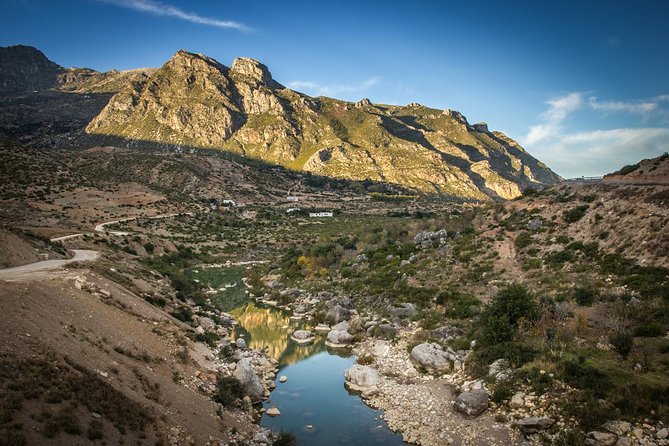
- Tissouka fir trees and rural paths on Day 1: a long first day that sets the tone for the whole trek.
- A tough 10-hour Day 2: plan your pace accordingly and don’t bank on a short day.
- Akchour is a simple base after the waterfall stretch: you trade trail time for local meals and rest.
- God’s Bridge Canyon plus viewpoints: short stop, big scenery payoff.
- Barbary macaques can show up: if you’re quiet, you might hear or spot them along the way.
- Half-board guesthouse nights: you’ll sleep in mountain refuges and eat without searching for restaurants.
Why this Rif trek starts in the right place: Chefchaouen
Chefchaouen is a smart launch point. The town gives you that easy-to-love start—easy navigation, lots of energy in the morning—then the trail quickly takes you out of sight of traffic and into a quieter Morocco. You’ll either get picked up in Chefchaouen Medina or meet your team at a chosen point, which keeps the start from feeling chaotic.
What I like about this trek is how it balances nature and human scale. You’re not just walking through scenic spots. You’re moving through national parks, fir forests, and rural dwellings, the kind of scenery that changes as you go—path to path, valley to valley. That matters on a trek like this, because you’ll remember the variety, not just the final photo.
You can also read our reviews of more tours and experiences in Chefchaouen.
Price and value: what $329.63 buys you
At $329.63 per person for about 4 days, the price makes sense if you think in terms of real costs. You’re getting a local mountain guide, three nights of accommodation with dinner and breakfast, and a private setup where it’s only your group. On a multi-day hike, that “included base” is worth a lot, because it saves you from scrambling for lodging and evening meals while you’re tired.
The one thing not included is lunches. That’s common on treks, and it’s also why you’ll want to be ready with a picnic plan. The upside: you’re not stuck buying lunch at a random spot that may or may not match your hiking schedule. If you pack sensibly, you’ll keep energy high and stress low.
Booking about 36 days in advance is a good rhythm for a trekking product like this. It gives you time to sort gear, choose a meeting point, and not panic if the weather shifts.
Day 1: From the national park to Gîte Montagne Azilane
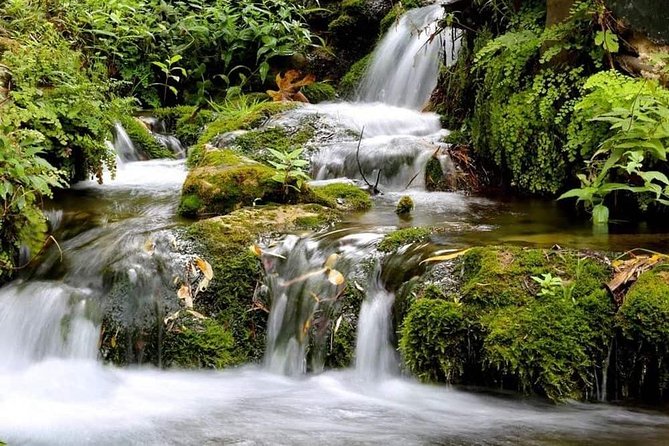
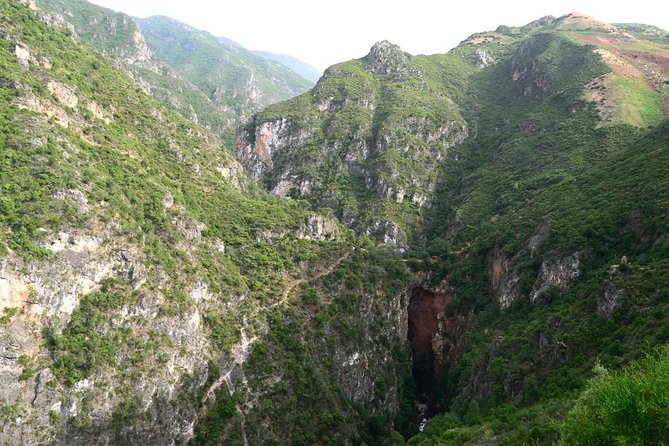
Day 1 is a long one: a 7 to 8 hour trek after breakfast. You start in the national park area and work your way through Tissouka fir trees and rural dwellings. This is the day that teaches you the feel of the route—steady effort, changing ground, and a constant sense that the Rif Mountains are bigger than the photos.
You’ll pack lunch as a picnic during the hike. That’s a small detail, but it’s a big comfort factor. Eating on the trail means you don’t lose time and you don’t have to wait for a restaurant. It also keeps your timing more predictable when the trail keeps going.
By the end of the day, you reach Gîte montagne Azilane (the refuge at Azilane). This is where half-board shows up in a practical way: you get accommodation plus dinner and breakfast, so you can stop thinking about logistics and start thinking about recovery. The “mountain lodge/refuge” style stay also means the trip feels like it belongs to the area, not like a standard hotel tour.
Day 2: Afaska’s rural house, and the trek that tests your legs
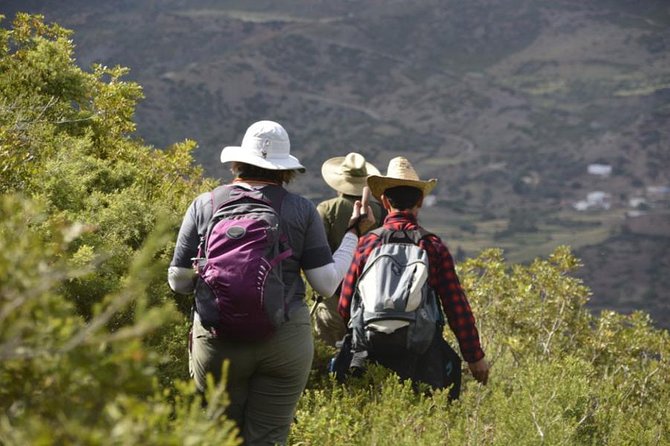
Day 2 is where the trek earns its reputation. You’re looking at about 10 hours of hiking, with an overnight at Gite d’Etape Affaska. This is the kind of day where your pace matters more than your ambition.
The route on Day 2 isn’t described in stop-by-stop detail, but the structure tells you what to expect: full-day walking, then a rural guesthouse-style stop for sleep and meals. That’s the rhythm of the Rif trekking experience here—work hard, then let the guesthouse take care of the evening.
If you’re the type who loves long walks and steady gradients, you’ll likely enjoy this day. If you’re used to short sightseeing strolls, this will feel like a real commitment. The most useful thing you can do is go into Day 2 with a calm mindset and don’t try to “make up time” in the first half.
Day 3: Viewpoints, God’s Bridge Canyon, and Akchour waterfalls
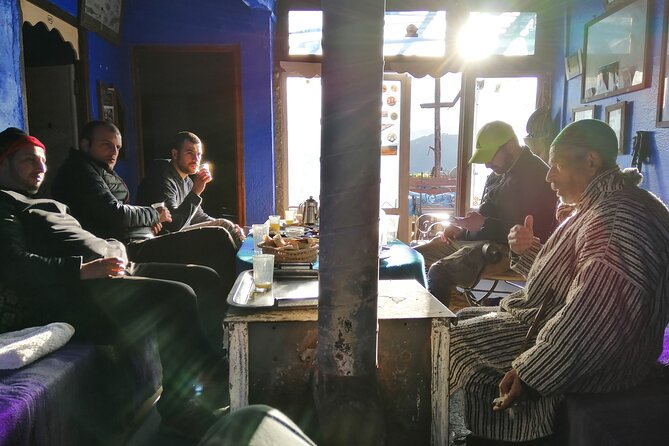
Day 3 is the scenic payoff day, built around viewpoints and the chance to see wildlife. You’ll come across viewpoints over stunning little cascades, plus wider Rif scenery. One of the fun realistic possibilities here is monkeys. The Rif Mountains are home to the Barbary macaque, found in Morocco and Algeria, with a small population in Gibraltar. If you keep quiet, you might hear them jumping and calling out, and you might even see a family near the trail.
Next comes God’s Bridge Canyon, which is a short visit—around 20 minutes—with admission information listed as free. It’s the kind of stop that’s easy to oversimplify, but on a trek it works well: you get a break, a visual moment, then you keep moving with the next goal in sight.
After you head toward the big waterfalls, you’ll arrive to Akchour about two hours after the waterfalls stretch. Akchour is a small town with one street where you’ll find a few restaurants, but the bigger draw is the natural area around it. Overnight is at an Akchour refuge-style lodging, so you wake up already placed for another day rather than traveling again.
Day 4: The panoramic finish back to Chefchaouen
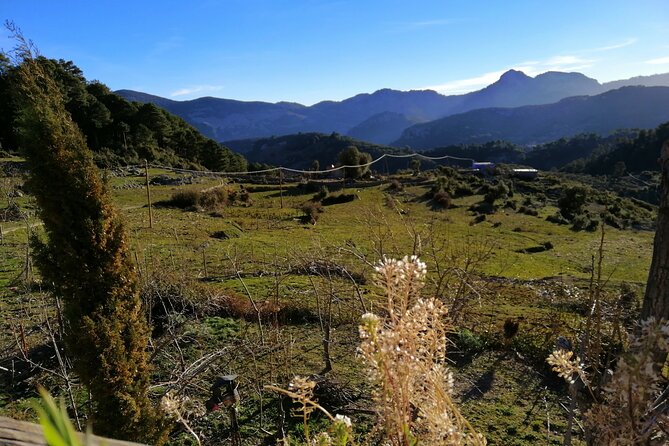
Day 4 is the easier landing. You end with a panoramic view of Chefchaouen, which is a fitting way to close a Rif trek. After walking mountain paths for days, you get a view that connects the whole experience back to where you started.
This final day also includes the human side of the trip. Your team works with Chefchaouen Adventures to make the experience flow well, and that matters most at the end—when you’re tired and just want the finish to feel smooth.
Once you’re back with the team, you’re effectively done with the trek story, not still in the middle of it. That’s a big deal on a multi-day hike: a good ending helps you feel satisfied, not rushed.
What you’ll actually feel on the trail: effort, pacing, and gear
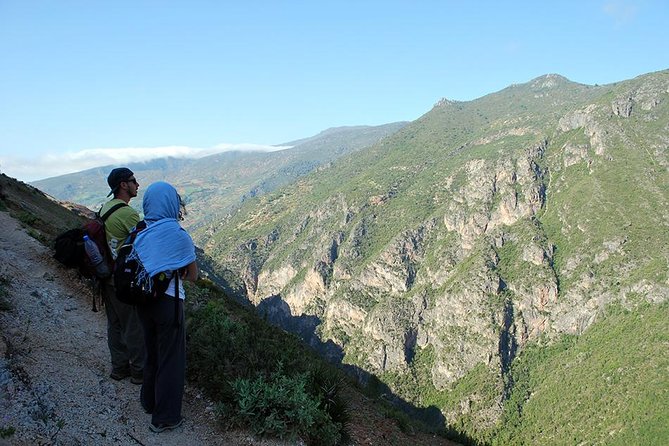
This trek isn’t sold as a casual walk. It’s described as needing moderate physical fitness, and the timing confirms it: a 7–8 hour day, a 10 hour day, and additional segments across the other days. The key is to match your pace to the full schedule, not just the first day.
From real feedback, the biggest challenge is how the walking adds up. The route can feel like a 4-day full effort, with many miles and altitude meters. That’s why your gear choice matters more than most people think:
- Wear shoes that are already broken in.
- Bring a backpack you can comfortably carry for long hours.
- Keep your daypack light enough that you can still move well on the long Day 2.
You don’t want to learn this the hard way. On a trek like this, an ounce of planning beats a pound of suffering.
Food and lodging: the half-board rhythm that makes trekking easier
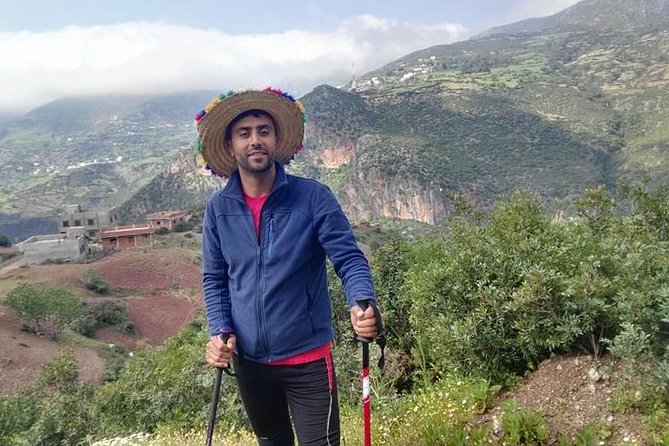
You’ll stay three nights in mountain lodge/refuge style accommodations with dinner and breakfast included. That’s a practical win. After a long hike, you don’t want to negotiate where to eat or worry if the timing will work with daylight.
Lunches aren’t included. The trek is set up for picnic-style lunches during the walking, so you’ll want to plan your own. If you pack well, you can keep your energy steady and avoid the common trek problem of eating too late or too little.
What I like about this setup is how it supports the local experience. The overnight stops are in guesthouses and refuges that fit the landscape and schedule, instead of forcing you to switch back and forth between trekking and city life.
Wildlife and local culture: small moments that add up
This trek gives you chances for wildlife and human contact without turning it into a show. The route crosses Tissouka fir trees and rural dwellings, so you’re not just walking alone in scenery. And on Day 3, the Barbary macaque possibility is real enough to keep your eyes open, especially if you’re quiet and respectful of the area.
Culture also appears through shared meals and the presence of a private guide. A private guide can keep the day from feeling like a guided walk with no story. In this kind of terrain, your guide’s quiet, practical explanations can turn a long day into a more meaningful one. You’re hearing about customs and local life while you’re already moving through it.
Who this Rif trek is best for
This is best for you if you:
- want a true multi-day hike in the Rif Mountains, not a day trip
- like staying in mountain refuges and living on the trek schedule
- appreciate private guiding and a slower, more personal pace
- are comfortable with long walking days like 7–8 hours and 10 hours
It’s also a good match if you’re excited by waterfalls, viewpoint breaks, and the chance of seeing Barbary macaques along the trail.
If you want lots of short stops and light walking, you may find this too demanding.
Should you book Chefchaouen Adventures for the 4-day Rif trek?
I think you should book this if you’re serious about hiking days and you want your money to go toward guiding and included mountain lodging, not just sightseeing. The value sits in the half-board structure, the private guide, and the fact that you’re walking deep into the Rif rather than doing a quick loop.
Skip it (or at least rethink) if long days on foot sound like punishment. This is a heavy walking itinerary. Plan your fitness, your footwear, and your packing strategy, and you’ll be rewarded with fir-forest paths, waterfall scenery, and a satisfying return view over Chefchaouen.
FAQ
Where does the trek start in Chefchaouen?
You can be picked up from your hotel in Chefchaouen Medina, or you can meet at a point you choose.
How long is the trek each day?
Day 1 is listed as 7 to 8 hours. Day 2 is listed as 10 hours. The schedule on Day 3 includes short timed viewpoints and walking segments toward waterfalls and Akchour. Day 4 focuses on ending with a panoramic view.
Are meals included?
Dinner and breakfast are included with your mountain lodge stays. Lunches are not included, so you should bring a picnic.
Where do we stay overnight?
You’ll spend three nights in mountain-style lodging: a half-board stay at Gîte montagne Azilane, an overnight at Gite d’Etape Affaska, and an overnight at an Akchour refuge.
Is this tour private?
Yes. It’s private and exclusive, meaning only your group participates.
Do we get a guide?
Yes. You’ll have a local mountain guide.
What physical fitness level do I need?
The trek is recommended for travelers with moderate physical fitness.
What wildlife might we see?
On the trail you might encounter Barbary macaques. If you’re quiet, you might hear them and possibly spot them.
Are there any ticket costs during the trek?
Admission is listed as included for the main lodging-day stops, and God’s Bridge Canyon is listed as free for the short stop time.
Is cancellation allowed?
Free cancellation is available up to 24 hours in advance for a full refund. Weather can also affect the schedule, with a different date offer or a full refund.