REVIEW · FUJIKAWAGUCHIKO MACHI
Private Local Hiking to enjoy the nature and culture of Mt.Fuji
Book on Viator →Operated by Yuki(ゆうき) · Bookable on Viator
Mt. Fuji feels different up close.
This private nature-and-culture hike takes you away from the busiest sights at the foot of the mountain, with a guide who knows the area’s stories beyond the obvious photo spots. I love that it pairs real trail time with Fuji-focused moments like Saiko Lake and the Sankodai viewpoint, and I especially like the way you end with a calm garden and matcha instead of rushing straight back to town. One possible drawback: the route is weather-dependent, and if clouds roll in, the views of Mt. Fuji can be less dramatic.
You’re signing up for a morning that mixes shrine tradition with volcanic geology and forest legend. Expect a moderate hike (about 1 hour up and 30 minutes down for the main stretch), plus a longer viewpoint walk on the day’s route. The tour is private, and it includes free rental gear, but lunch and some snacks are extra.
If you’re staying outside the Kawaguchiko or Fujiyoshida area, pickup may be limited—though you can still make your own way to the meeting area.
In This Review
- Key highlights worth planning around
- A private Mt. Fuji hike with Yuki: the vibe you’re really buying
- Pickup, timing, and how the day stays smooth (even with a hike)
- The morning shrine start: Fuji Omuro Sengen’s purpose
- Lake Kawaguchiko’s icon and the calmer switch to Saiko Lake
- Aokigahara (Jukai) forest: “sea of trees” and eruption-made terrain
- Ryugudoketsu-iriguchi cave: goddess prayer before the climb
- Sankodai viewpoint hike: moderate effort with a multi-layer view
- Menkyo-kaiden local meal: Yoshida udon and where you actually eat
- Fujisan Onsen Hotel Kaneyamaen garden: matcha, calm, and a scenic finish
- Price and value: why $131.38 can make sense for a private day
- Weather and view expectations: your best plan for Mt. Fuji clarity
- Who this tour is perfect for (and who should think twice)
- Should you book this Mt. Fuji nature-and-culture hike?
- FAQ
- Is this tour private?
- How long is the hike and overall experience?
- What time does the tour start?
- Do I get pickup?
- What’s included in the price?
- What is not included?
- Is Yoshida udon included?
- Is there matcha at the end?
- What happens if the weather is bad?
Key highlights worth planning around
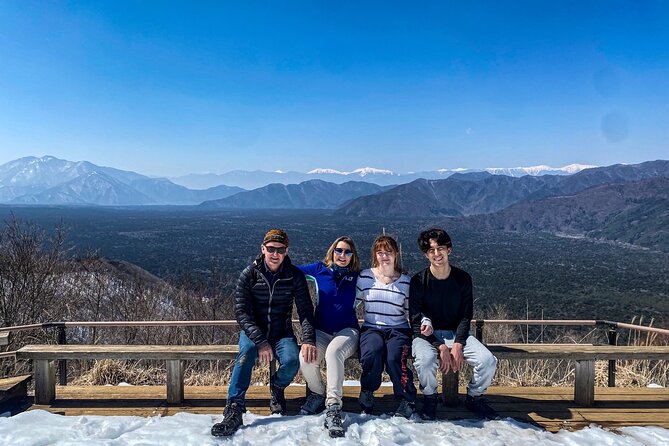
- Private, guide-led walking with a local mountaineer (Yuki is described as climbing Mt. Fuji 40+ times, and other guides like Danny also show up in past outings)
- Quiet lake contrast: Lake Kawaguchiko’s iconic pull, then a calmer Saiko Lake stop
- Aokigahara (Jukai) forest on a volcanic backdrop: you’ll walk through a “sea of trees” tied to eruption history
- Sankodai viewpoint time: a leg-stretcher that pays off with Fuji, forest, and lake views in one frame
- Food and decompression built in: Yoshida udon after the hike, then matcha in a garden at Fujisan Onsen Hotel Kaneyamaen
A private Mt. Fuji hike with Yuki: the vibe you’re really buying
This isn’t a grab-a-bus, snap-a-photo tour. It’s built around the feeling of being at the mountain—walking where locals come for faith, scenery, and time outdoors, not just checking a box.
The guiding is a big deal here. Yuki (ゆうき) is described as a certified mountain guide who has climbed Mt. Fuji over 40 times. He also has a licensed hunter background, which can explain why the tour reads like it understands the land, not just the schedule. In other days, guides like Danny show up in feedback, and the common thread is the same: friendly, patient, and ready with history and route tweaks.
You’ll start at 9:00 am, with a full morning flow that stays on pace for a 5–6 hour experience. Since it’s private, the guide can slow down when you want photos, shorten a segment when your group prefers it, and generally keep the day from feeling like an assembly line.
Pickup, timing, and how the day stays smooth (even with a hike)
Here’s the practical setup: the tour includes private transportation, and pickup is offered only if you’re already staying in the Kawaguchiko or Fujiyoshida area. If you’re elsewhere, you’ll need to get yourself to the start area.
Either way, the day is designed to be manageable. The main hike portion is described as moderate—about 1 hour up and 30 minutes down—which makes it realistic for many travelers, including families who can handle a steady walk. On top of that, there’s a longer viewpoint hike segment on the route (Sankodai is about an hour one way, depending on your pacing).
Gear is handled for you. You get trekking shoes, poles, rain jackets/pants, and gloves included. That matters because Mt. Fuji weather can swing fast. Having the right layers and traction turns the hike from a question mark into a plan.
The morning shrine start: Fuji Omuro Sengen’s purpose
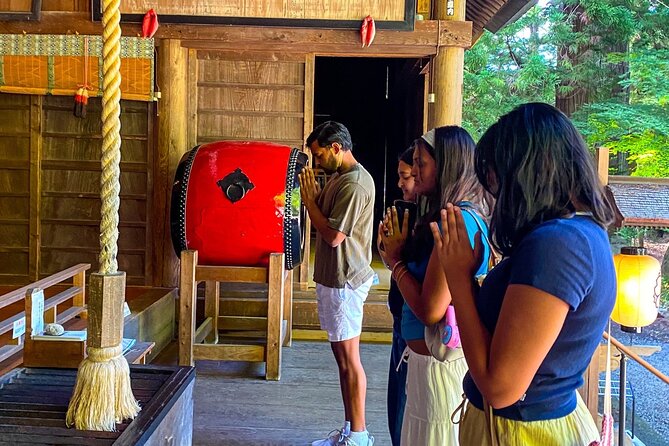
The day kicks off at Fuji Omuro Sengen Shrine, an ancient shrine connected to Mt. Fuji worship and one of the biggest eruption events. The point of this stop isn’t just the buildings—it’s why the shrine exists at all. Your guide explains how earlier people built this site to help “settle” an eruption and start worship that continues through the region’s traditions.
You’ll have a short visit—about 15 minutes—and admission is free. So it doesn’t eat your hiking time, but it does give you a lens: Mt. Fuji here isn’t only a peak. It’s something people have responded to for a very long time.
Lake Kawaguchiko’s icon and the calmer switch to Saiko Lake
After the shrine, you’ll shift into scenery mode. Lake Kawaguchiko is the most popular of the Fuji Five Lakes, and the combination of the lake with Mt. Fuji is the reason. Even if you’ve seen photos before, the experience feels different when you’re standing there with a guide pointing out what to watch for when the sky clears.
Then comes the change of pace: Saiko Lake. It’s quieter than Lake Kawaguchiko, and that quiet is the point. You’ll get the view with less crowd energy, with Mt. Fuji and the water acting like a calmer backdrop for the rest of your hike day.
Expect around 10 minutes at Saiko Lake, and again admission is free. If you’re the type who gets more excited by how it feels than by just how it looks, this stop is a strong one.
Aokigahara (Jukai) forest: “sea of trees” and eruption-made terrain
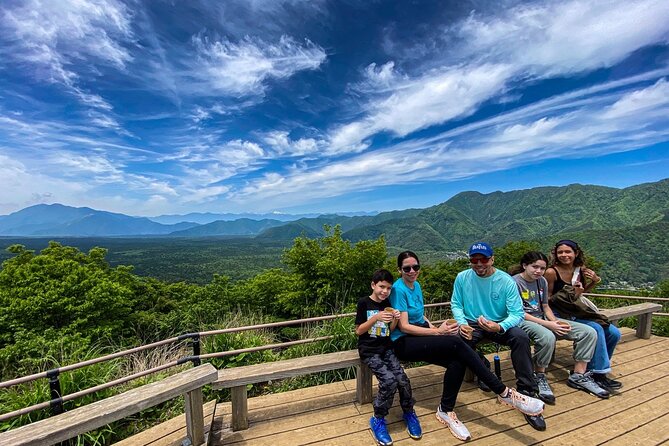
Next up is Aokigahara Forest, known as Jukai, meaning sea of trees. The guide will likely help you understand the shape of it: from viewpoints, it can feel like an endless ocean of green. In plain terms, you’re walking through a massive forest that grew after major eruption activity.
A key detail on the day: one of the biggest eruptions happened about 1200 years ago, and that event is part of how this forest formed. That geology connection is what makes this stop more than a scenic walk. You’re seeing a living outcome of volcanic history.
The time here is brief—around 15 minutes—so you don’t get tired before the day’s walking. But it sets you up for the next stop, where the spiritual tone turns a bit darker and stranger.
Ryugudoketsu-iriguchi cave: goddess prayer before the climb
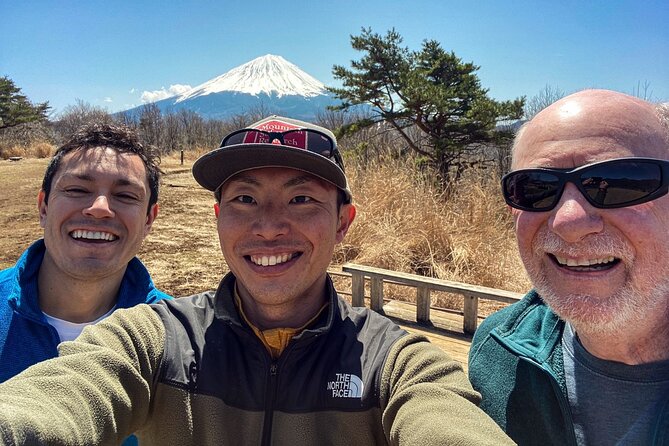
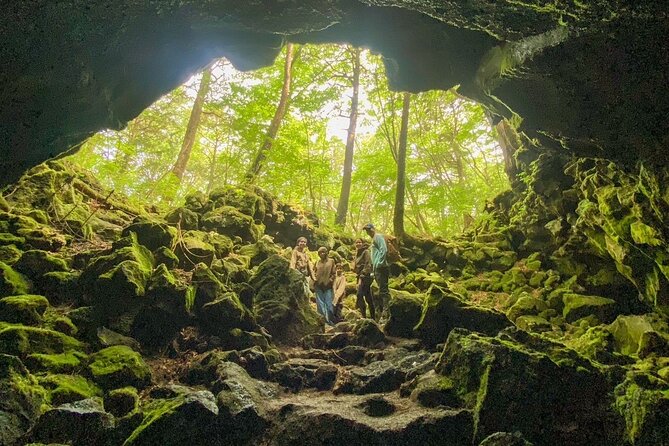
At Ryugudoketsu-iriguchi, you’ll reach a sacred cave people visited to pray for the goddess of Mt. Fuji before climbing. The tradition here is straightforward: they believed the inside of the cave was like being inside the goddess herself. Whether you take the story literally or as cultural belief, the effect is the same—you slow down.
This stop lasts about 30 minutes, with free admission. It’s also a nice contrast to the earlier lake-and-shrine stops. You’re moving from landscape beauty to a place with a strong “people came here to ask for something” energy.
If your group likes story-driven travel (and if you like myth that’s tied to specific places, not vague legends), this stop is a highlight.
Sankodai viewpoint hike: moderate effort with a multi-layer view
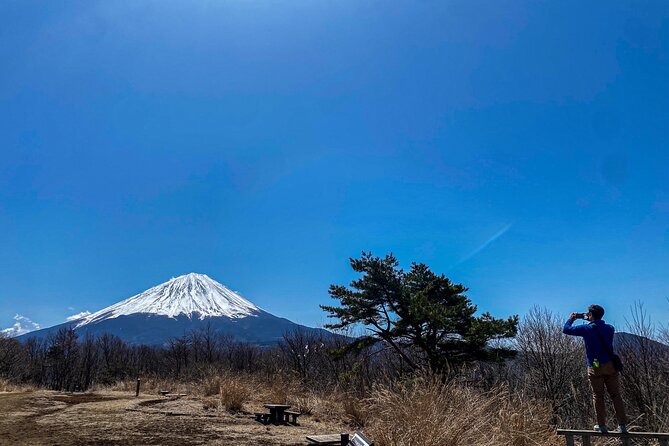
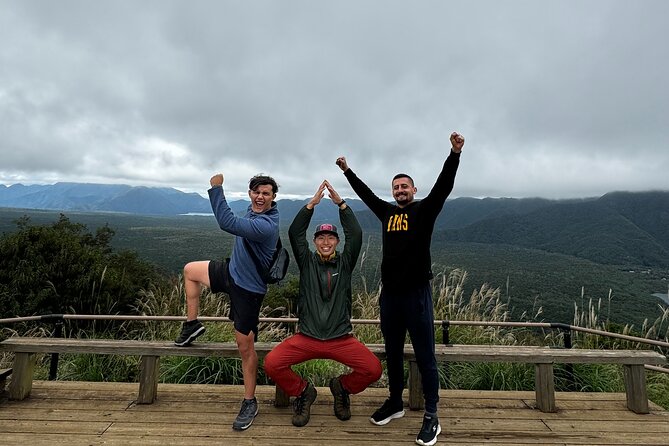
Sankodai is where your legs get a real workout. The route is described as suitable for outdoor beginners, but don’t confuse “beginner” with “no effort.” It’s about an hour hike one way to the viewpoint, and you’ll be walking with sights in mind: Mt. Fuji (when the sky cooperates), the sea of trees, and Lake Saiko all at once.
In past experiences shared from the trip, the hike rhythm often lands around a couple of hours total for the up-and-down portion, with breaks at the top. Your guide may also help choose where you stop so you get the best view angle without wasting energy.
One practical note: this is a weather situation. When it’s sunny, the iconic Fuji experience can be very strong. When it’s cloudy, you might still enjoy the forest and the walk, but the signature view may be muted. The tour runs with a weather requirement for that reason.
Menkyo-kaiden local meal: Yoshida udon and where you actually eat
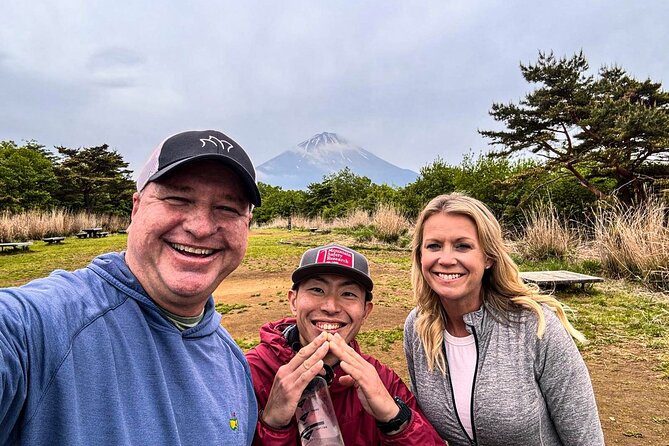
After the viewpoint, you’ll refuel with local food at a restaurant connected to the area’s signature flavors—Yoshida udon. The cost is described as about 1,000 yen per person, so plan for that extra meal budget on top of the tour price.
The best part is where you eat. Your guide takes you to a place where tourists might not find themselves. That’s a subtle value-add: it’s not just eating food, it’s eating the right food in the right context.
If you’re hoping for an experience that feels like it belongs to locals rather than only to visitors, this stop helps a lot.
Fujisan Onsen Hotel Kaneyamaen garden: matcha, calm, and a scenic finish
To close the day, you head to Fujisan Onsen Hotel Kaneyamaen, described as one of the oldest hotels in Fujiyoshida, with a big Japanese garden that’s open for public time. This is your decompression period.
You can enjoy matcha with a Japanese sweet (optional 1,000 yen per person) or simply chill in the garden and enjoy the quiet. If the hike has you tired, this ending can feel like someone planned it for your body, not just the photos.
In a tour day that starts with shrine faith and moves through forest legend, the garden stop is the emotional reset.
Price and value: why $131.38 can make sense for a private day
At $131.38 per person, this tour is priced in a way that can feel fair—especially because it’s private and includes several costs that add up fast when booked separately.
What you get for that price:
- Private transportation
- Guide fee
- Free rental gear (shoes, poles, rain protection, gloves)
- A route that blends multiple stops with free admissions listed for each key site
What costs extra:
- Lunch is about 1,000 yen
- An optional matcha-and-sweet add-on is about 1,000 yen
- Insurance isn’t included
Is it a bargain compared to a group bus tour? Not exactly. But you’re paying for fewer crowds, a guided route, and equipment that can save you both money and hassle. If you plan to hike anyway, and you want the story-and-culture layer that a guide provides, the value comes from how the day is assembled, not from any single component.
Weather and view expectations: your best plan for Mt. Fuji clarity
This tour needs good weather. Since the itinerary includes iconic Fuji viewpoints (and even a sunny-trail moment where you can see the mountain from the path), clouds can change the experience.
If it’s foggy or overcast, the day still has meaning because you’re walking through shrines, caves, lake edges, and forests with cultural context. But if your main goal is a crystal-clear Mt. Fuji photo, be ready for the tour to adjust—your experience can be offered on a different date or refunded if canceled due to poor weather.
Who this tour is perfect for (and who should think twice)
This tour is a great fit if you want:
- Nature and culture together in one morning
- A private guide who can explain what you’re seeing
- Moderate walking that’s still beginner-friendly overall
- A calmer end of day with garden time and matcha
It might be less ideal if:
- You want lots of downtime with no walking
- You can’t handle steady uphill segments at all
- You’re outside the pickup-friendly areas and don’t want to travel to the start point yourself
Should you book this Mt. Fuji nature-and-culture hike?
I’d book it if your ideal Mt. Fuji day includes more than just a single viewpoint. The combination of a shrine with an eruption story, a quieter lake stop, the Aokigahara sea of trees, a sacred prayer cave, and then Yoshida udon plus garden matcha is a strong “whole-day feeling” for a manageable hiking level.
Also: the guide experience matters here. If you like guides who are friendly, patient, and ready with helpful details—like route choice, pacing, and small comfort moments such as snacks and warm drinks you might see mentioned—this tour seems built for that.
If you’re flexible with weather and want a day that feels local rather than tour-bus standard, you’ll likely love it.
FAQ
Is this tour private?
Yes. It’s a private tour/activity, so only your group participates.
How long is the hike and overall experience?
The experience runs about 5 to 6 hours. The main hiking portion is described as moderate, with about 1 hour up and 30 minutes down, plus additional walking on the route.
What time does the tour start?
The start time is 9:00 am.
Do I get pickup?
Pickup is offered only if you’re staying in the Kawaguchiko or Fujiyoshida area. If you’re not, you’ll need to come to the areas on your own.
What’s included in the price?
Included items are trekking shoes, trekking poles, rain jackets and pants, gloves, private transportation, and the guide fee. Admission is listed as free for the stops mentioned.
What is not included?
Lunch is not included (around 1,000 yen). Insurance is also not included.
Is Yoshida udon included?
Yoshida udon is part of the local meal stop, but the cost is about 1,000 yen per person, so you should plan to pay for the meal.
Is there matcha at the end?
You can enjoy matcha with a Japanese sweet as an optional add-on (about 1,000 yen per person), or you can simply relax in the garden without the sweet.
What happens if the weather is bad?
The tour requires good weather. If it’s canceled due to poor weather, you’ll be offered a different date or a full refund.