REVIEW · ULAANBAATAR
Mongolia Nomad Trek • On-Foot & Horseback ~ 15 Day
Book on Viator →Operated by Tusker Trail Kilimanjaro Adventures · Bookable on Viator
Altai mountains and horse training, all in one run. With founding guide Eddie Frank leading the way, you’ll hike and ride through Mongolia’s western Altai border country, plus get real cultural contact with living nomadic traditions. I love the practical horseback riding clinics that help you get into the rider seat, and I also love how the route keeps feeding you big scenery, from lake life at Khoton Nuur to the glacier drama near Potanin.
One thing to consider: this is not a relaxed stroll. You’ll need strong fitness for long days on mixed terrain, including a mountain pass day where snow is possible, and camping for nights out in the open.
In This Review
- Key things that make this trek work
- Ulaanbaatar to the Altai edge: where the trip starts feeling remote
- The flight west to Bayan-Olgii: markets, eagle hunters, and packing for real
- Khoton Nuur: lake calm first, then riding games and gift crafts
- From Cheben Hill to the Tsagaan Gol gorge: choose hike or ride with purpose
- Tsagaan Gol community stop, petroglyphs, and a rest day that resets your body
- Potanin Glacier day: treeline tundra, tundra swamps, and the triple-border idea
- Back to UB: one night out, one last goodbye, and your remaining energy for the town
- Price and value: what $8,250 buys in the real world
- Who this trek is for (and what you should be honest about)
- Should you book the Mongolia Nomad Trek with Eddie Frank?
- FAQ
- How long is the Mongolia Nomad Trek • On-Foot & Horseback?
- Where does the trek start?
- Is pickup offered?
- Do I get help if I have never ridden a horse before?
- What kinds of activities are included during the trek?
- Are meals included?
- Is this a private tour?
- What if weather is poor or the minimum number of travelers isn’t met?
Key things that make this trek work
- Eddie Frank’s hands-on riding coaching before you’re asked to ride for real
- Horse + hike balance so you choose the best fit for each day’s conditions
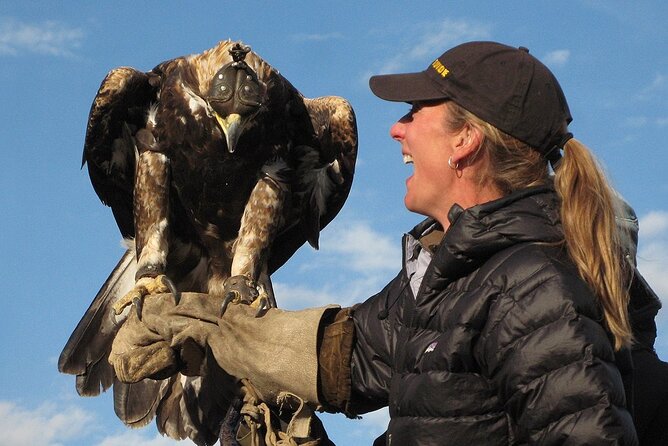
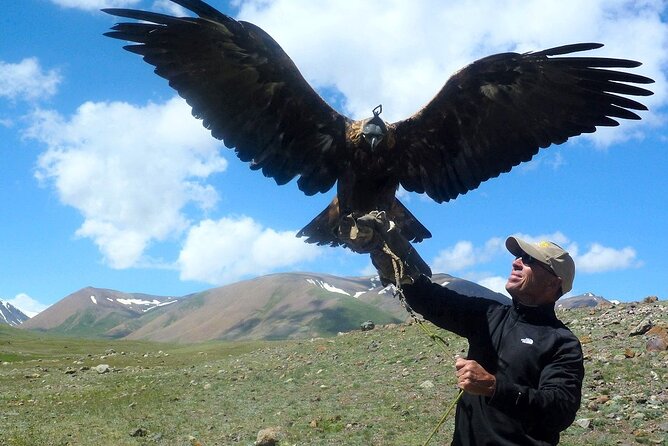
- Kazakh eagle-hunting context in Bayan-Olgii, tied to the local way of life
- Tusker Nadaam horse games and nomad hospitality in and around ger communities
- Petroglyphs and shaman traditions as more than side stops, with time to actually see them
- Potanin Glacier country above treeline, including the triple-border area mentioned on trek day
Ulaanbaatar to the Altai edge: where the trip starts feeling remote
Day 1 starts in Ulaanbaatar (UB), Mongolia’s capital, at about 1,350 meters. You land, meet your Mongolian guide, and settle into the Tuushin hotel for two nights. UB is your reset period. It’s where you get your bearings, handle whatever gear questions show up, and join the group rhythm before you swap city comforts for ger-camp living.
Day 2 is UB discovery time with your guide. Expect options like restaurants, street food, museums, and plenty of cashmere shopping. In the evening, you go to the national theater for a cultural show with colorful costumes and music tied to Mongolian history. This matters more than it sounds. When you hit the Altai later, you’ll recognize the deeper “why” behind costumes, song, and ceremony, not just the visuals.
Practical note: this early hotel window is also where you can think through your footwear and layering choices. You’ll be out for days in western Mongolia, and the trip includes long travel segments and outdoor nights. Set yourself up so you’re not solving comfort problems in the middle of the mountains.
You can also read our reviews of more tours and experiences in Ulaanbaatar.
The flight west to Bayan-Olgii: markets, eagle hunters, and packing for real
Day 3 is the big move west. You fly for about three hours to Bayan Ulgii (Bayan-Olgii Province). You drop your gear at the ger camp setup and head into the lively outdoor market. This is one of the better ways to meet the region on day one: you see what people trade, what they wear, and what’s important locally, before you disappear into the steppe and canyons.
A highlight here is the chance to locate a local Kazakh eagle hunter for an up-close encounter with a magnificent bird of prey. The eagle tradition is still part of daily life in the area, not just a staged performance. If you’re curious about hunting culture and how it fits into nomad calendars, Bayan-Olgii is where that curiosity has the best chance of becoming real.
Logistics detail that you’ll thank the guide for later: after your first day in Ulgii, you shift your gear and clothing into waterproof Tusker duffels. Those duffels are then packed onto camels for the expedition. That system matters because it keeps your “daily access” items lighter while the bulk travels more efficiently. It also reduces the stress of managing everything yourself in wet or muddy conditions.
Day 4 includes driving toward Khoton Nuur with a long travel day, passing through Tsengel, crossing the Khovd River, and reaching the lakeshore for two nights of camp. The trekking starts here, and it’s a good place to begin because the terrain is dramatic without being the harshest part of the route yet.
Khoton Nuur: lake calm first, then riding games and gift crafts
On Day 4, you camp on the magnificent lakeshore. It’s your first taste of a big western Mongolian environment: wide sky, water, and the sense that you’re moving along a real geographic system, not just “getting from point A to point B.”
Day 5 begins with basics on horseback using Australian saddles. Eddie provides riding guidance before you ride, and you start with a slow ride in the forested area above the lake. If you’ve never ridden before, this is the style of training you want: you learn what you need before you’re asked to do more than stay balanced.
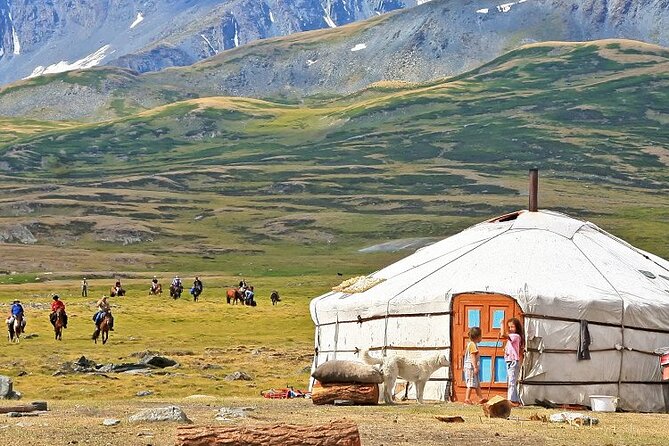
After the ride, you visit local Kazakh nomads in their gers (tents). You learn about traditions and then attend nomadic horse games, called Tusker Nadaam. This is one of the most culturally valuable parts of the trip because it’s not just watching from a distance. You’re in the orbit of the community’s celebrations, with horseback as the center of it all. Afterward, local women bring out handmade crafts, which is a practical souvenir option if you want something that actually reflects what you experienced.
Day 6 turns the lake into a starting line. The crew loads camels, and you trek through alpine forest heading north. The scenery detail here isn’t filler. You’ll pass a glacial depression with horizontal benches that reveal ancient lake levels, likely created by glacial dams that periodically built up and broke away. That kind of terrain story is exactly why this region feels geological, not generic.
From Cheben Hill to the Tsagaan Gol gorge: choose hike or ride with purpose
Days 7 and 8 are where the route begins to feel like a true “two-way” mountain trip: you’re moving through river valleys with options that change the vibe day to day.
Day 7 takes you up to a high point on Cheben Hill overlooking river-fed grassy plains below. Camp sits up there for a cool, tranquil mood. You cross to the east side of the Tsagaan Gol River and continue up the valley, setting a rhythm that’s good for acclimating mentally to high-country terrain.
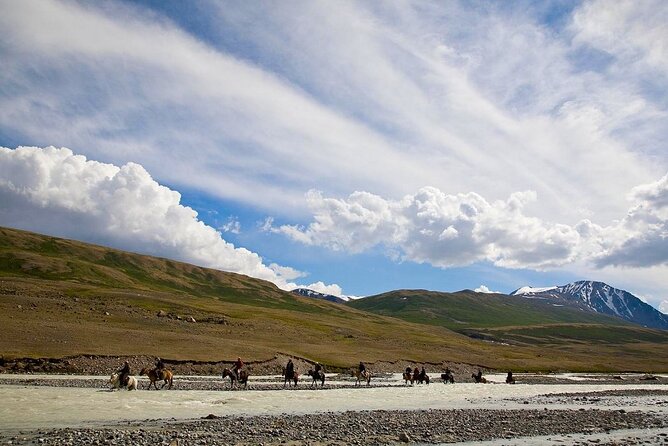
On Day 8, you descend Cheben Hill toward the mouth of a river gorge and trek up the gorge along the eastern bank of the Tsagaan Gol River. The canyon walls tower around you. This is also one of those days where hikers go high while riders stay along the banks, because river flooding can change where you can safely travel. In other words, the trip responds to conditions instead of forcing one rigid line.
Then comes the pass day pressure. Day 9 has you trekking out of the river gorge and ascending to a mountain pass at about 10,350 feet. You get spectacular views of the Sheveet Uul gorge on the other side. If there’s precipitation, you might hike through snow and be digging a path through. That’s not the kind of thing you’d want to “power through” without preparation, so strong fitness and a calm attitude really matter here. After a steep incline descent on foot, you set camp at Sheveed Uul Gorge with big glacier-and-peak views in the distance.
Tsagaan Gol community stop, petroglyphs, and a rest day that resets your body
Day 10 shifts gears for a day of cultural contact and archaeology-adjacent sightseeing. You head downhill and stop at a small ger community to visit local Tuvan people who follow traditional shamanistic beliefs. At lunch, you see ancient petroglyphs. The Mongolian Altai rock art is described as one of the largest, oldest, and most pristine concentrations of rock art in North Asia, with earliest images dating to around 11,000 years ago and extending into the 9th century.
The value here is the time you get to notice what you’re seeing. Rock art isn’t just a photo moment if you’re walking close enough to read it as a landscape of meaning. Even if you don’t know the symbols, the sheer age and placement in the natural setting helps it land differently.
Day 10 also includes a steep descent into the Tsagaan Gol river valley, then two nights camping there with glaciers and peaks visible far off. Day 11 is a rest day, and it’s not just “stay put.” You take a scenic hike to a beautiful blue lake hidden up on a plateau a few miles from camp, plus you get time to do laundry and relax. For a trip with long walking days, this kind of reset keeps you from burning out before the high mountain glacier push.
Potanin Glacier day: treeline tundra, tundra swamps, and the triple-border idea
Day 12 is your challenging day. You trek over frost-heave uphill to Potanin Glacier in the Altai Tavn Bogd area. The glacier sits near Khuiten Peak, which is listed as the highest point in Mongolia at about 14,350 feet. You’re also near Nairamdal Peak, described as the triple border point for Mongolia, Russia, and China.
This day is where you see what “high and harsh” really looks like in practice. The route is above treeline, and the area is characterized by tundra, lichen-covered rocks, alpine meadows, and high mountain swamps. That mix sounds abstract until you’re walking it. Expect conditions that feel slow and tiring, not because the distance is crazy, but because footing and elevation matter.
Day 13 is described as your last day on the trail. You leave the Tavn Bogd peaks and drive to the ranger station gate to the national park area, then end trekking. You’ll also have a final chance to give your horse its head and have a nice run before you meet the vehicles and overnight at a ger camp. That “last run” moment is one of those small but emotional trip-design touches. You’ve been learning to ride and trust the pace; now you close the loop.
Back to UB: one night out, one last goodbye, and your remaining energy for the town
Day 14 flies you back to Ulgii’s area, then you drive to Ulaanbaatar and overnight at the Tuushin hotel. You’ll get a night out on the town. It’s a simple reward, but it fits the reality of a trek like this: you’re tired, you’re sunburned or wind-chapped in some way, and you’ll appreciate a real meal and a bed that doesn’t involve a sleeping bag puzzle.
Day 15 is onward plans with a transfer to Chinggis Khaan International Airport, then a goodbye to your Mongolian guide. This is also where you can reflect on what you actually experienced: horseback skills, mountain passes, and contact with nomadic culture that still functions as living tradition.
Price and value: what $8,250 buys in the real world
At $8,250 per person for a trek of about 15 days, the price looks steep until you break down what’s actually being paid for. You’re not just paying for “sights.” You’re paying for a full operating machine in a remote region.
Here’s where the value shows up:
- Private transportation throughout and a guided program that moves you efficiently between Ulaanbaatar, Ulgii, lake country, and Altai high ground.
- Meals included for 13 breakfasts, 13 lunches, and 13 dinners, which is huge in a place where food logistics aren’t trivial.
- Horseback training included, not as a gimmick, but as a real instruction block that helps you ride safely and confidently.
- A trek format built for both hiking and riding, supported by a crew and transport system (including camels for the waterproof Tusker duffels).
What you should mentally budget outside the listed inclusions is also clear: travel from your home origin location to and from Mongolia isn’t included, and the airport transfer on the final day is also not included. If you’re coming from far away, your flights can swing the true total. Still, compared to doing all of this independently (guides, horses, camp logistics, and multi-day mountain navigation), this package style often ends up being the more responsible way to attempt a trip like this.
Who this trek is for (and what you should be honest about)
This tour is best for you if you want a serious adventure without pretending it’s easy. You’ll need strong physical fitness. The schedule includes long days (often 6 to 9 hours of activity) and a pass day where snow is possible. You also need a mindset that accepts that weather and trail conditions can change how the day runs.
It’s also a strong match if you care about horseback as a skill. Eddie’s approach is hands-on: you start with basics, use Australian saddles, and then progress. If you like learning by doing, this kind of coaching tends to stick.
It may be a poor fit if you’re looking for a fully comfortable, low-effort vacation. Camping, long travel days, and high-altitude trekking aren’t optional here. Even if you’re an experienced hiker, the horse component adds a second layer of effort and attention.
Should you book the Mongolia Nomad Trek with Eddie Frank?
If you’re drawn to Mongolia’s western Altai—river valleys, mountain passes, lake camps, nomad ceremony, and horseback learning—this is the kind of trip that can change how you view travel. I’d book it if you want real cultural contact with Kazakh and Tuvan community moments, plus the confidence-building arc of riding clinics that lead into full trekking days.
You should pause if you can’t commit to strong fitness or you’d struggle with possible snow and high-country footing. Also look hard at your total travel budget once flights into and out of Mongolia are added.
FAQ
How long is the Mongolia Nomad Trek • On-Foot & Horseback?
It’s approximately 15 days.
Where does the trek start?
It starts at Buyant Uhaa Airport in Ulaanbaatar, Mongolia.
Is pickup offered?
Yes, pickup is offered.
Do I get help if I have never ridden a horse before?
Yes. Eddie Frank provides riding clinics and you’ll learn the basics before riding with the group.
What kinds of activities are included during the trek?
You’ll hike on foot and also ride horseback. You’ll also visit nomad communities, attend horse games, and see cultural and historical sites like petroglyphs.
Are meals included?
Yes. The tour includes 13 breakfasts, 13 lunches, and 13 dinners.
Is this a private tour?
Yes. It’s private, and only your group participates.
What if weather is poor or the minimum number of travelers isn’t met?
If canceled due to poor weather, you’ll be offered a different date or a full refund. If the minimum number of travelers isn’t met, you’ll be offered a different experience/date or a full refund.