REVIEW · MU CANG CHAI
Full Day Private Trekking Mu Cang Chai
Book on Viator →Operated by Indigenous Adventure · Bookable on Viator
Rice terraces look real here.
This full-day trek links La Pán Tẩn and Mu Cang Chải with an English-speaking Hmong guide, so you’re not just walking through views. You’ll hit iconic lookouts like Đồi Mâm Xôi (Raspberry Hill), plus village paths and working fields that explain how the terraces live year-round.
I especially like that you get included lunch in the middle of the hike, and bottled water to keep the day moving. And with a cap of 12 people, the guide can actually talk and answer your questions instead of rushing you through.
One consideration: this is a moderate fitness hike in mountain terrain, and the experience depends on good weather, so cloudy or rainy conditions can affect what you see.
In This Review
- Key takeaways
- Rice terraces, but with the people who make them work
- How the 7–8 hour trek actually runs
- Pickup and start point: where timing matters
- Đồi Mâm Xôi (Raspberry Hill) and the best viewpoint rhythm
- Walking through working terraces and Hmong village life
- Headwater and waterfall: the payoff between viewpoints
- Lunch in the mountains: fuel that keeps the day enjoyable
- Price and value: what $80 covers and why it feels fair
- Who should book this Mu Cang Chai private trekking day
- Quick practical advice before you go
- Should you book Full Day Private Trekking Mu Cang Chai?
- FAQ
- Is this a private tour?
- How long is the trekking day?
- Do I get picked up and dropped off?
- What’s included in the price?
- How big is the group?
- Where does the tour start and end?
- Do I need a certain fitness level?
- Does the tour require good weather?
- What is the cancellation window?
Key takeaways
- Small group size (max 12) means real conversation with your Hmong guide, not a quick photo stop and run.
- Đồi Mâm Xôi (Raspberry Hill) viewpoint is a major photo and wow moment of the day.
- Lunch + bottled water included so you don’t waste time scrambling for food mid-trek.
- La Pán Tẩn and Mu Cang Chải viewpoints give you a wider sense of how the terraces unfold.
- Village-life stops (field work, sewing at home, buffalo, and Hmong daily routines) add meaning beyond scenery.
- Headwater and waterfall breaks up the hike with payoff scenery and a change of pace.
Rice terraces, but with the people who make them work
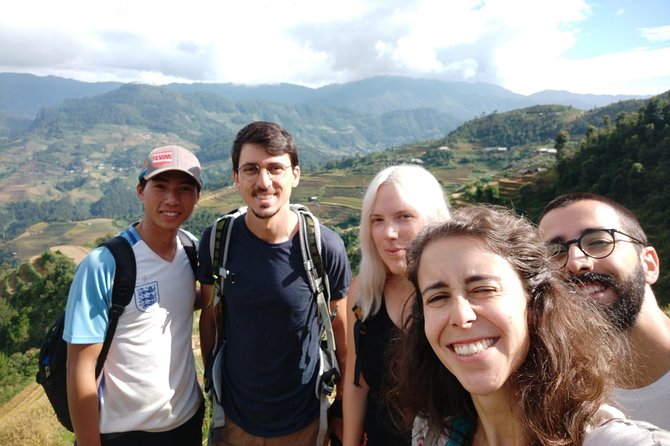
Mu Cang Chai is famous for rice terraces, but what makes this style of day special is the guide. A local Hmong guide helps you read the scenery. You’ll walk through terraced slopes while learning how families fit farming, household work, and mountain living into the seasons.
And because the group is capped at 12, the day stays human-sized. That matters in places with little signage and fewer obvious wayfinding cues. Your guide is not just leading the route; they’re also translating the rhythm of the land.
You can also read our reviews of more tours and experiences in Mu Cang Chai.
How the 7–8 hour trek actually runs
The day is built around walking time plus transfers. You’ll get picked up from your La Pán Tẩn hotel or homestay area, then head to the trekking start. After the hike, you return back to the same meeting point area in Mu Cang Chai Center homestay & ToursLa Pán Tẩn, Mù Cang Chải District, Yên Bái.
Plan on around 7 to 8 hours total. That’s plenty for a full trekking day, but not an all-day survival test. If you’re comfortable walking at a steady pace for hours and you’re not afraid of uneven paths, you’ll feel fine.
A small practical upside: the tour includes entry/admission and a local guide speaking English. So once you’re on the move, you’re mostly focused on the hiking and the stories—less admin, fewer stops to figure things out.
Pickup and start point: where timing matters
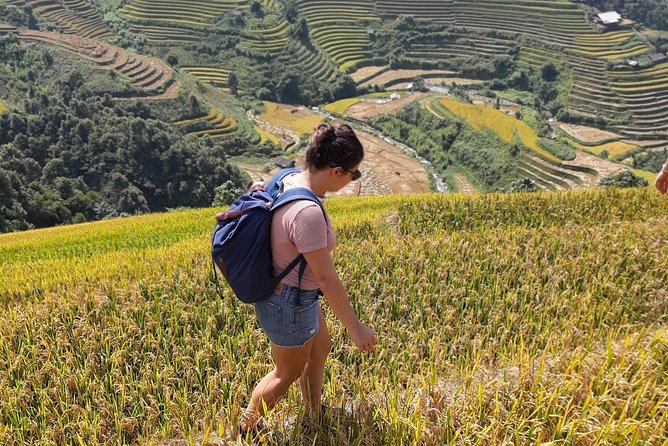
Your day starts with a pickup, which is a big deal in rural areas where roads can be slow and navigation can be confusing. The tour’s stated meeting point is Mu Cang Chai Center homestay & ToursLa Pán Tẩn, and it ends back there, so you don’t have to worry about figuring out where to meet later.
If you’re staying in a homestay, I like that the pickup is designed for that reality. Mountain travelers often lose time simply because they have to coordinate with transport on their own. Here, the transfers are part of the package.
Đồi Mâm Xôi (Raspberry Hill) and the best viewpoint rhythm
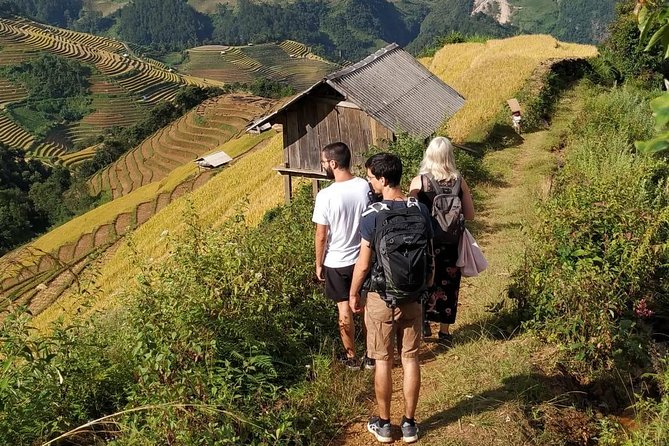
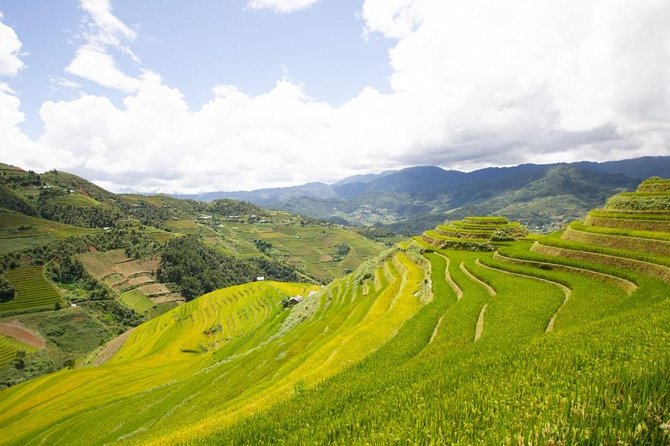
One highlight is Đồi Mâm Xôi, known as Raspberry Hill. This is the kind of place where the terraces turn into a layered pattern that looks almost unreal from the right angle—stacked curves, green slopes, and the sense that the water and soil have been shaped by hands for generations.
Your route also includes other viewpoint stops in La Pán Tẩn and Mu Cang Chải. I find this viewpoint rhythm matters. If the day only did one lookout, you’d miss the way terraces change with elevation and slope. Multiple stops help you see the pattern at different distances, and your guide can point out what to look for based on your season and conditions.
Practical tip: if the day is clear, take a slow moment. The tour is active, but some of the best results come when you pause, let your eyes adjust, and then take photos. Rushing the view usually gives you rushed photos.
Walking through working terraces and Hmong village life
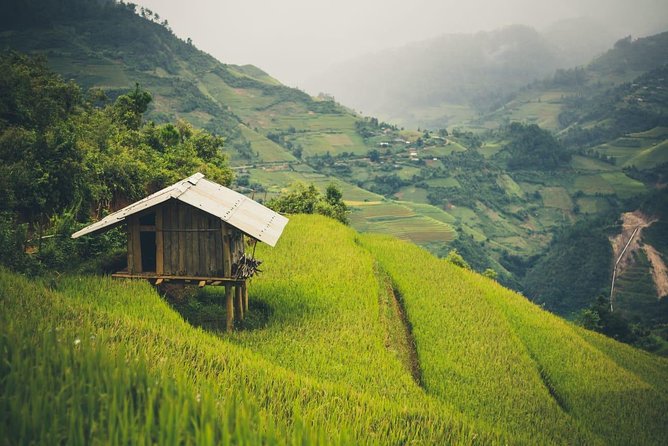
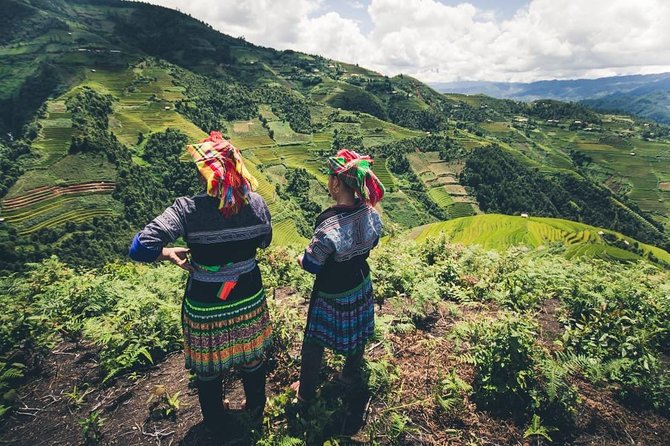
This is not a scenery-only walk. You’ll pass through Hmong villages and see daily work tied to the mountain environment. The day includes chances to notice local routines like:
- people working in the fields
- sewing at home
- tending buffalo
- seasonal rice activities (depending on timing)
Even when you’re not in the middle of a major farming event, the terraces themselves tell the story. The guide helps connect what you see—water management, terrace structure, and field work—to what families do day to day.
If you’re the kind of traveler who likes culture that you can actually see with your own eyes, this portion is the heart of the day. It’s also where your English-speaking guide adds value. A translator-style explanation beats a random guess every time.
One small drawback: village-area walking can mean fewer formal paths and more uneven ground. It’s still manageable, but keep your footwear steady and your pace calm.
Headwater and waterfall: the payoff between viewpoints
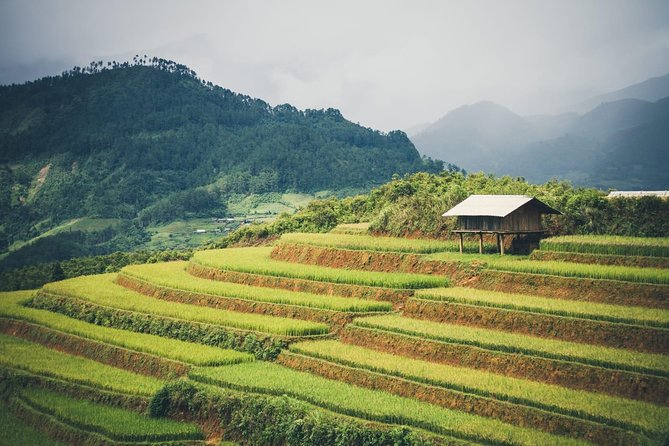
A good hike needs variety, and this route adds it with a headwater area and a waterfall. This part works like a natural reset. After stretches of terrace walking and viewpoints, you get a change in scenery and sound—water where you can feel the mountain pulling energy out of the landscape.
I also like that these stops help break up the day visually and physically. Even if you love terraces (and you will), too much of the same view can blur together. A headwater and waterfall do something different: they give you reference points for the water system behind the rice terraces.
Lunch in the mountains: fuel that keeps the day enjoyable
Lunch is included, along with bottled water. That may sound basic, but it’s practical gold. On long rural hikes, the worst-case scenario is arriving hungry and spending time hunting for food instead of enjoying your hike.
Because the lunch is built into the schedule, you can keep moving without stress. And because it’s described as an authentic local lunch, it’s a chance to eat in a way that fits the area and timing of the hike.
What to expect: you’ll eat somewhere along the route area, not back in town. So don’t plan to treat lunch like a casual restaurant break. Treat it like what it is: a recharge so you can finish the last stretch strong.
Price and value: what $80 covers and why it feels fair
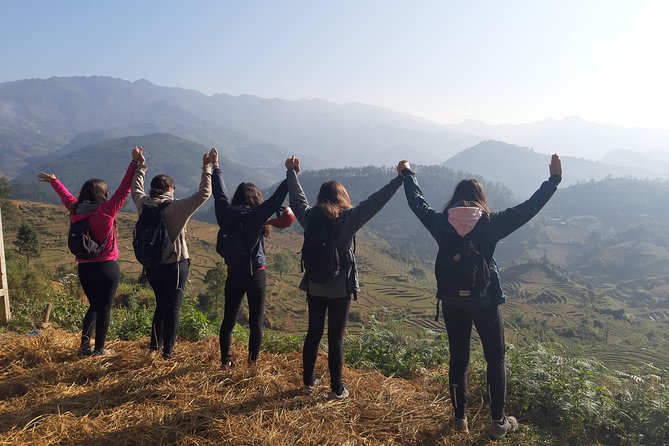
At $80 per person, this isn’t a cheap add-on, but it also doesn’t read like a tourist markup machine. Here’s what you’re paying for in plain terms:
- Private tour for your group (so you’re not negotiating your pace and attention with strangers)
- a local guide speaking English who can explain what you’re seeing
- entry/admission included
- lunch and bottled water
- 2-way transfers from La Pán Tẩn hotel and homestay areas
If you’ve ever tried to piece together a rice-terrace hike on your own, you know the hidden cost: time. Time spent finding transport, figuring out pickup points, and managing communications can turn a simple day into a chaotic one. This tour bundles those pieces so your day stays focused on the trek.
Also, the group cap of 12 is a real quality lever. It’s one reason the guide can interact properly instead of counting faces.
Who should book this Mu Cang Chai private trekking day
This is best for you if:
- you want rice terraces with human context, not just photos
- you prefer guided walking with English explanation
- you’re comfortable with a moderate hike lasting up to about 8 hours
- you value included food and water so you don’t manage logistics mid-day
It also fits couples and small groups who want the flexibility of a private experience while still benefiting from a structured plan.
If you’re looking for a totally effortless, stroller-friendly day, this probably isn’t the right match. The route is a trekking day in mountain terrain, so you’ll want to bring your walking game.
Quick practical advice before you go
You’ll enjoy the hike more if you plan like a mountain walker, not a city tourist. Wear shoes that grip on uneven ground, and keep layers handy because mountain weather can change.
Because the tour is weather dependent, bring a rain layer or something to protect your day if conditions turn. And since the itinerary is long enough to matter, pace yourself early. The best views reward calm legs, not sprinting.
One nice human detail: the guide team is known for being friendly and helpful, including English-speaking Hmong guides such as Yien, who leads with conversation and care for the day’s flow.
Should you book Full Day Private Trekking Mu Cang Chai?
Yes, if you want a full trekking day that actually explains the place as you walk it. This is the kind of experience where the guide’s context makes the terraces more than scenery, and the included lunch keeps the day comfortable and efficient.
I’d skip it only if you’re very limited on hiking ability or if you’re going at a time you’re likely to hit bad weather. When weather is good, you’ll get those classic terrace views that feel almost storybook.
If you can handle a moderate hike and you like learning from local guides, this is a strong value way to spend a day in northern Vietnam’s rice-terrace country.
FAQ
Is this a private tour?
Yes. The tour is private, meaning only your group participates.
How long is the trekking day?
It runs about 7 to 8 hours.
Do I get picked up and dropped off?
Yes, the tour offers stress-free 2-way transfers from La Pán Tẩn hotels and homestays, and it ends back at the meeting point.
What’s included in the price?
Lunch, bottled water, entry/admission, and a local guide speaking English are included.
How big is the group?
Numbers are capped at 12 travelers for quality guide interaction.
Where does the tour start and end?
It starts at Mu Cang Chai Center homestay & ToursLa Pán Tẩn, Mù Cang Chải District, Yên Bái, Vietnam, and ends back at the meeting point.
Do I need a certain fitness level?
The tour calls for a moderate physical fitness level.
Does the tour require good weather?
Yes. The experience requires good weather, and if it’s canceled due to poor weather, you’ll be offered a different date or a full refund.
What is the cancellation window?
Free cancellation is available up to 24 hours in advance for a full refund.