REVIEW · EL CHALTEN
El Chalten: Full Day Trekking to Laguna de los Tres and Mount Fitz Roy
Book on Viator →Operated by Say Hueque Travel · Bookable on Viator
Fitz Roy demands good boots. This full-day hike to Laguna de los Tres and the Mount Fitz Roy viewpoints is built for people who want big Patagonia scenery without guessing the route. I especially like the professional guide support and the glacier-hunting stops that start early and keep paying off through the day.
The main thing to consider is effort: this is a long day with rocky uphill sections, and weather (wind, cold rain) can make the last push feel sharper than the map. Plan for a steep, windy climb and bring real mountain gear.
In This Review
- Key Highlights You’ll Feel in Your Legs
- Why This Trek Works in Real Patagonia Conditions
- The Day at a Glance: Timing, Pace, and What Changes with Weather
- First Stop: Río Eléctrico Bridge and a Glacier-Focused Start
- Piedras Blancas: Forest-to-Clearings and the Morning Peak Views
- Laguna de los Tres: The 400-Meter Climb and the Wind Test
- The Second Laguna Moment: Laguna Sucia and Your Break with Purpose
- Descent Back to El Chaltén: Streams, Rocks, and Laguna Capri Photos
- Price and Value: What the $198 Covers (and What It Doesn’t)
- Gear That Keeps You Comfortable (Not Just Safe)
- Who This Trek Fits Best (and Who Should Skip It)
- Guide Style: Why It Can Make or Break Your Day
- A Practical Watch-Out: Difficulty, Distance, and Wind
- Should You Book This Trek?
- FAQ
- How long is the trek?
- What time does the tour start?
- What’s included in the price?
- Is the park entrance fee included?
- Do I need to bring lunch and water?
- What should I wear and bring?
- How big is the group?
- What happens if the tour is canceled due to weather?
Key Highlights You’ll Feel in Your Legs
- Small group size (max 10) means less waiting around and more attentive pacing.
- Professional guide (English/Spanish) with safety-first decisions when conditions change.
- Glacier views all day, from Río Eléctrico to Piedras Blancas and up to the Fitz Roy area.
- A real ascent to the top: about a 400-meter climb (roughly an hour) toward Laguna de los Tres.
- Time-on-trail is long: about 20.6 km (12.8 miles) and 8–9 hours of walking.
- Optional box lunch can help if you don’t want to rely on snacks alone.
Why This Trek Works in Real Patagonia Conditions
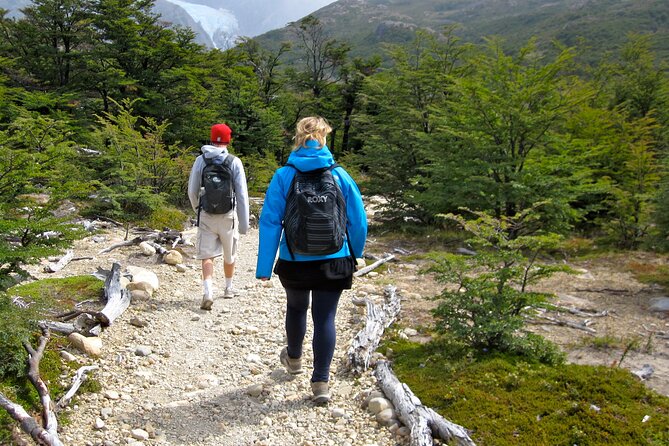
El Chaltén is the gateway. Fitz Roy is the reason you get on the trail. And Laguna de los Tres is the payoff everyone talks about, because it’s framed in a way that makes the region’s power feel close.
What makes this outing practical is that it’s structured like a mountain day, not a casual stroll. You start early, you hike in a guided group, and you get multiple “view moments” rather than banking everything on one viewpoint. I like that, because Patagonia weather can change fast. If the wind’s up at the top, you’ve still collected excellent glacier scenes earlier in the day.
Another thing I appreciate is the guide role beyond route-finding. In this part of Patagonia, the difference between a good day and a bad one is often pacing, footing advice, and knowing when to adjust. You’ll also have time to circle and shift viewpoints near Laguna de los Tres, plus a separate viewpoint for Laguna Sucia, so you’re not just walking straight to one photo and back.
The tradeoff: the hike isn’t gentle. The rocky approach to the lagoon is steep, and the wind can be intense up high. If you’re expecting an easy outing, this will teach you otherwise.
The Day at a Glance: Timing, Pace, and What Changes with Weather
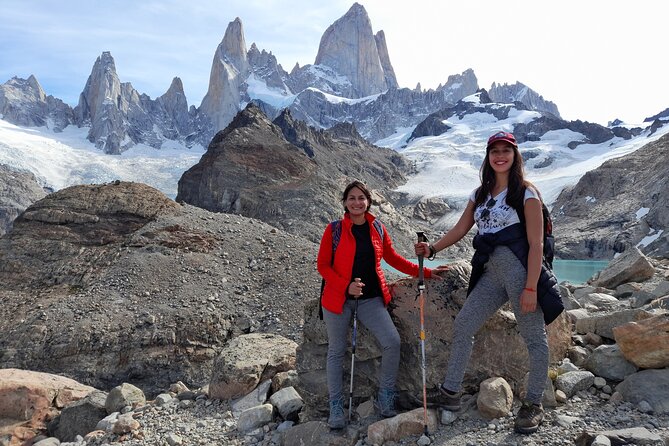
You start at 7:30 am. From there, expect roughly 9 hours total depending on conditions. The walk itself is about 20.6 km (12.8 miles) over roughly 8–9 hours on foot, with stops that add up.
Your day typically looks like this:
- A morning transfer to the trail starting area
- Several hiking sections that alternate between flat/gentle travel and uphill
- A climb toward the lagoon area that’s steep and rocky
- Time at viewpoints before descending through changing terrain
- Ending back in El Chaltén (so you’ll need to arrange any transport back to your hotel yourself)
Schedules can shift based on weather and group conditions. That’s not a small detail here. In the Fitz Roy zone, wind and precipitation can affect how comfortable people are on narrow, exposed parts. If you’ve ever tried to “power through” a slippery climb, you already know why a guide matters.
Group size is capped at 10 people, and the overall pace is adjusted so mixed fitness levels can make it. The operator also notes that if someone can’t continue on a section, the guide can’t stay behind with them. That’s a safety reality in mountain trekking, not a gimmick.
First Stop: Río Eléctrico Bridge and a Glacier-Focused Start
Your day begins with a transfer and then straight into scenery. The starting area is about 18 km north of El Chaltén, at the Río Eléctrico bridge region.
This opening portion is a strong warm-up for your eyes even if your legs still feel fresh. You’re in a corridor where glacier names and silhouettes start showing up at the edges of the views. You’ll get sights of several glaciers in the region, including Marconi, Eléctrico, Cagliero, and—on clear days—the more distant Vespignani glacier toward Lago del Desierto.
What I like about starting here is that it sets the tone without demanding maximum effort immediately. You’re not just “walking to get to the walk.” You’re already collecting the Patagonia story before the big ascent arrives later.
Also note: this part is listed as free admission, which is nice because it reduces the number of extra costs you have to think about early in the day.
Piedras Blancas: Forest-to-Clearings and the Morning Peak Views
Next comes the section toward Glaciar Piedras Blancas. The hiking here is described as having gentler climbs and mostly flat trail, which makes it a smart bridge between the morning transfer and the later steep work.
You’ll move through forest and then emerge into a clearing where the view changes fast. This is where the peaks really start lining up in a more dramatic way, including named peaks associated with the Fitz Roy massif:
- Fitz Roy (front and center in the drama)
- Saint Exupéry
- Poincenot
- and other surrounding peaks in the same visual bowl
For photographers, this is a good moment to get your bearings. For first-time hikers, it’s also a good moment to test your grip on the trail: feel how the ground is underfoot, adjust your stance, and make sure your boots and socks are doing their job.
One more practical note: this stop doesn’t list admission as included, and the bigger park fee is not included overall. So budget for the park entrance if you’re planning this as a “one fee and done” day. (More on value and costs below.)
Laguna de los Tres: The 400-Meter Climb and the Wind Test
This is the headline section: the hike continues to Laguna de los Tres. The effort ramps up here with an about 400-meter ascent over roughly one hour.
Expect a rocky and steep climb. This part is where good footwear and steady pacing beat speed. If you go too fast, your legs will punish you on the way up and again on the way down. If you go too slow, you may feel chilled while waiting in wind. A guide helps you find the middle.
When you reach the top, you’re hit with views that make all the effort feel justified: Fitz Roy dominates, and you’ll see glacier de los Tres along with the lagoon below. The day’s “scale” clicks here. Up to this point, you’ve been collecting named glaciers and peaks. At Laguna de los Tres, the system becomes one large, coherent scene.
Then comes the part that’s worth paying attention to: you don’t just stop once. You’ll typically circle around Laguna de los Tres, and you’ll also visit the viewpoint of Laguna Sucia with its glacier.
This matters because wind and light can shift. If the strongest breeze hits one spot, another viewpoint may be more comfortable. And if conditions aren’t perfect at one angle, you still get multiple chances to enjoy the main event.
This is also where people can underestimate how cold it can feel. Even if you start the day in a mild jacket, bring a layer you can put on quickly. The operator’s packing list includes warm clothes and a waterproof jacket for a reason.
The Second Laguna Moment: Laguna Sucia and Your Break with Purpose
After the main lagoon viewpoint, you’ll move to the Laguna Sucia viewpoint and glacier. You’ll also get time for a break and a bite to eat.
This is where your planning for food pays off. The tour doesn’t include lunch or snacks. That means you should either:
- bring snacks you can eat without fuss, and
- use the optional box lunch if you want the simplest plan.
I like that there’s a break built into the experience, because this isn’t the kind of hike where you can comfortably wait until you’re starving. On steep days, low energy hits your footing and your judgment, not just your mood.
If you’re sensitive to cold, this is also the time to adjust clothing. Put your gloves on early, not after your hands feel numb.
Descent Back to El Chaltén: Streams, Rocks, and Laguna Capri Photos
After the laguna time, you start descending back to El Chaltén. The route takes you through diverse terrain and alongside crystal-clear streams, which is a nice change of rhythm after the rocky steepness toward the top.
There’s also a notable photo stop: Laguna Capri. This is the kind of place where a single lookout angle can look postcard-perfect, especially if the conditions line up. One caution from the field: mosquitoes can be an issue near Laguna Capri, so you’ll be glad you have a plan for itch control and don’t arrive in shorts-only mode.
The descent is shorter than the climb, but it can still beat up tired knees—especially if you bounce from rock to rock. Your guide can help with walking rhythm, and the overall small group size means it’s easier to stay together without long gaps.
Expect to roll into El Chaltén town by around 16:00 to 18:00, depending on pace and weather.
Price and Value: What the $198 Covers (and What It Doesn’t)
The price is $198 per person for a 9-hour guided trek with transfer to the trail starting point.
Here’s the value equation that actually matters:
- You get a professional mountain guide (English/Spanish).
- You get a shared transfer to the departure area so you’re not scrambling for transport before hiking.
- You’re in a small group (max 10), which is a real quality-of-day factor on trails that can get narrow.
What’s not included:
- Park entrance fee: Los Glaciares National Park is listed as ARS 45,000 per person.
- Snacks, water, and lunch.
- Transportation back to your hotel, since the trek ends in El Chaltén town.
- Some “admission” items are marked as not included for later stops, which in practice points back to the park fee.
So is it worth it? Usually, yes—if you consider the cost of doing this day independently with correct gear, local routing, and the safety judgment a guide provides. If you’re cost-sensitive, you can still manage it, but you’ll want to budget separately for the park fee and your own food and drink.
Gear That Keeps You Comfortable (Not Just Safe)
This is a mountains day. The operator’s packing list is solid, and you should treat it as minimums:
- Sturdy walking footwear
- Warm layers and a waterproof jacket
- Sunglasses, hat, sunscreen, and gloves
- Small backpack
- Water plus a box lunch (either brought by you or added at extra cost)
- Optional snacks
If you’ve got trekking poles, bring them. More stable footing and less knee strain is a big deal on steep rocky sections and on the long descent.
Also keep an eye on the “cold-wind reality” up high. You’ll want the ability to layer fast. Patagonia doesn’t ask permission.
Who This Trek Fits Best (and Who Should Skip It)
This tour is best for you if:
- you have strong physical fitness
- you can handle 8–9 hours walking plus a steep climb
- you’re comfortable hiking on rocky terrain
- you want a guided day with route knowledge and safety pacing
It’s not recommended if you have mobility impairment that affects walking. There’s also a note that there should be no back problems affecting mobility. And if someone can’t continue on a section, the guide can’t remain behind with them, so you’ll want to be honest with yourself about your ability on steep ground.
If you’re the type who likes big viewpoints but gets anxious on exposed trails, this guided format is actually a good match, because the group and the guide help reduce decision stress.
Guide Style: Why It Can Make or Break Your Day
One of the most consistently praised parts of this kind of trek is not the “route.” It’s how the guide runs the day.
In this area, guides like Naher, Leandro, Rocío, and Virginia are described as professional, safety-focused, and good at adjusting pace. You’ll often feel it in small things: the rhythm the group settles into, how frequently the guide checks that everyone is still comfortable, and how they position you for photos without stopping for so long that you freeze.
If you care about explanation—flora, fauna, local context, and what you’re actually looking at—this tour format is built to provide that through the guide rather than leaving you with a blank screen of names.
A Practical Watch-Out: Difficulty, Distance, and Wind
The downside pattern with Fitz Roy days is simple:
- even if the official walking distance is listed at 20.6 km, the day can feel longer once the climb, footing, and wind slow your pace
- the final ascent and lagoon viewpoints can be intense in cold gusts
- rain can come sideways, making the jacket feel like your best friend
This is exactly why you want the “mountain gear” checklist to be real gear, not just a light hiking shoe and wishful thinking.
Also remember: your day starts at 7:30 am. If you’re tired, your energy won’t match the climb.
Should You Book This Trek?
Yes—book it if you want the Fitz Roy experience with structure, safety, and multiple payoff viewpoints across a long mountain day. The combination of a professional guide, a small group, and the glacier-to-lagoon progression is a strong value, especially once you factor in how hard it can be to plan this well on your own.
Skip it if you know you struggle with steep rocky climbs, if you have mobility limitations, or if you’re not prepared for wind and cold at the top. This is not a casual hike. It’s a real Patagonia day, and it rewards the people who show up equipped and steady.
If you’re ready for that bargain between effort and views, this is one of El Chaltén’s most direct ways to get to the center of the story.
FAQ
How long is the trek?
It’s about 9 hours total, with roughly 8–9 hours of walking time and a hiking distance listed around 20.6 km (12.8 miles).
What time does the tour start?
The start time is 7:30 am.
What’s included in the price?
You get a professional mountain guide (English/Spanish) and a shared transfer from El Chaltén to the trail starting point.
Is the park entrance fee included?
No. Los Glaciares National Park entrance is ARS 45,000 per person and is not included.
Do I need to bring lunch and water?
Yes. Snacks and bottled water are not included, and lunch is not included. You can bring your own or add an optional box lunch at extra cost.
What should I wear and bring?
Bring sturdy footwear, warm clothes, a waterproof jacket, sunglasses, hat, sunscreen, gloves, sunscreen, a small backpack, and water. A box lunch is also recommended.
How big is the group?
The tour has a maximum of 10 travelers.
What happens if the tour is canceled due to weather?
This experience requires good weather. If it’s canceled for poor weather, you’ll be offered a different date or a full refund.