REVIEW · WESTERN AUSTRALIA
Bungle Bungle day trek from Halls Creek – Fly, 4wd, Trek
Book on Viator →Operated by Kingfisher Tours · Bookable on Viator
Cathedral Gorge grabs you fast. This fly-in, 4WD Bungles day trek from Halls Creek pairs iconic rock formations with Aboriginal cultural guidance and the practical comfort of a small-group outing. I like that you land, meet local custodians, then spend the whole day on the ground instead of rushing past the best parts.
I also really love the way the tour mixes viewpoint time with actual walking—especially the moment Cathedral Gorge turns into a natural amphitheatre with guide song, which one guide named Bec shared in a moving way during the visit. The one caution: it’s a full day with a moderate fitness expectation, and it runs only in good weather.
You’ll be moving between the north and southern sides of the Bungles, and that variety matters. I like that the day is guided by local Gidja custodians who share stories and songs tied to country, not just facts on a sign. A possible drawback to plan for is the heat and sun—some sections are narrow and exposed, so you’ll want good water habits and a steady pace.
In This Review
- Key things to know before you go
- The fly-in setup that actually feels like value
- Meeting at Halls Creek Airport: small group, big-country pace
- Flight over Purnululu: the striped domes make sense from above
- Aboriginal guides on country: stories that change how you look
- Cathedral Gorge: the amphitheatre moment you’ll remember
- Piccaninny Lookout: panoramic views that feel worth the early start
- Echidna Chasm: narrow gorge walking with light that doesn’t reach everywhere
- Mini Palms Cave: a small oasis you’ll want to see quietly
- Halls Creek Pub meals: the most practical reason to love the tour
- Getting comfortable on a long day: what to pack and how to pace
- Price and value: what you’re really paying for
- Who this tour fits best (and who might want to rethink)
- Should you book this Bungles fly-in trek?
- FAQ
- What time does the Bungles day trek start and where does it meet?
- How long is the tour?
- How big is the group?
- What food is included during the day?
- Do I need to bring a water bottle?
- Does weather affect the tour?
Key things to know before you go
- Fly-in from Halls Creek early so you start the day with time for real walking, not just photo stops.
- North and south Bungles in one trip (Purnululu National Park), so you don’t have to choose only one side.
- Cathedral Gorge acoustics plus guide song makes the setting feel alive, not just scenic.
- Echidna Chasm is a dramatic narrow walk where sunlight only reaches the floor at certain times.
- Halls Creek Pub meals are part of the point: warm damper, tea and coffee, lunch, afternoon tea, and Matsos Beer at sunset.
- Max 12 guests keeps attention on you and helps the guide manage the day without chaos.
The fly-in setup that actually feels like value
The best part of this Bungles tour is how it uses your time. You fly from Halls Creek to Purnululu National Park and then spend about 10 hours exploring by foot and vehicle on the ground. That matters because the Bungles aren’t “quick” country. You need time for the views, time for the walks, and time for the stories that explain what you’re looking at.
The “fly, 4WD, trek” formula also changes the vibe. You’re not hopping on and off planes and then spending the day mostly in transit. Instead, the day is built around the formations: striped domes, tight gorges, and caves. If you’re trying to get the most Bungles for the day—without turning it into a rushed checklist—this style of itinerary has a lot going for it.
Meeting at Halls Creek Airport: small group, big-country pace
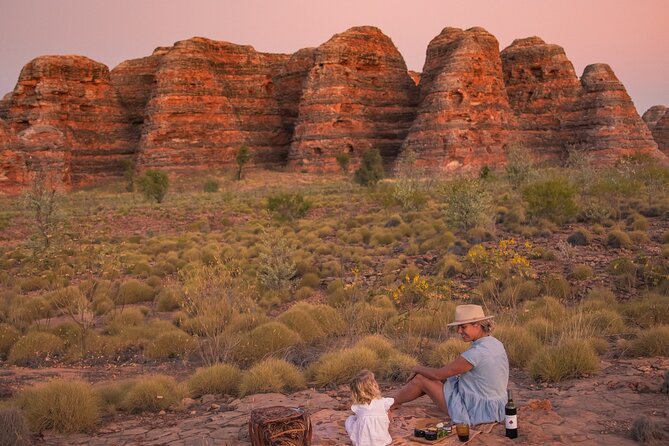
You start at Halls Creek Airport with a 7:00 am start, and the tour ends back at the same meeting point. The early start is not just for schedule. It helps you get into cooler conditions and it gives the flight and ground time room to breathe.
This is also a maximum of 12 travellers, which you’ll feel. In a small group, your guide can slow down for questions, help with footing, and manage the timing between stops so you’re not constantly waiting. One of the nicest travel comforts here is that you’re not sitting in a big bus with dozens of people competing for attention.
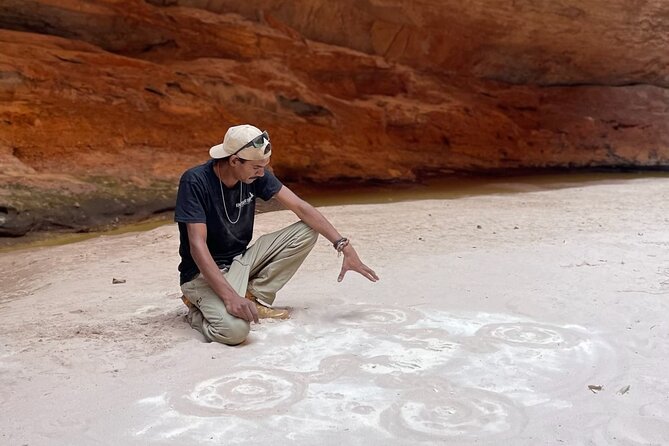
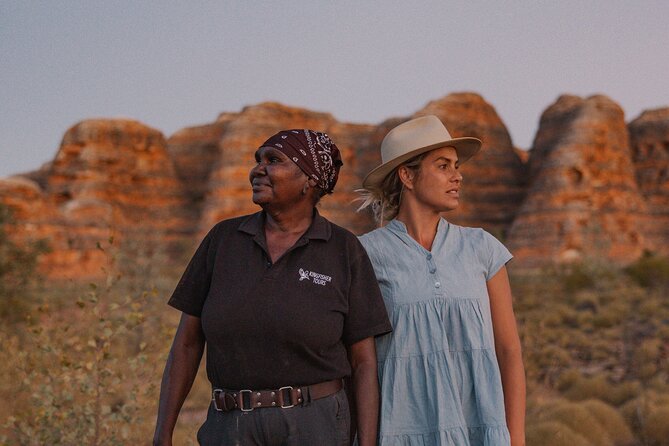
And the guide presence is immediate. When you land at the Bungles airstrip, you meet Aboriginal guides who are local custodians of the country. That welcome isn’t a generic introduction. It’s the start of the day’s theme: what the land means, how to read it, and why these places deserve more than quick photos.
Flight over Purnululu: the striped domes make sense from above
The scenic flight gives you a mental map fast. From the air, the Bungles look like ordered stripes on rock domes, and once you see the pattern, the ground stops feel easier to understand. You also get the first sense of scale—this is far bigger than a postcard.
Right after landing, you’re not left hungry or cold. The included morning setup includes tea and coffee with freshly made warm damper, plus additional food across the day. That’s a small thing, but on a long day it keeps you steady. You’re less likely to feel wiped out early and more likely to enjoy the walking sections when you reach them.
Aboriginal guides on country: stories that change how you look
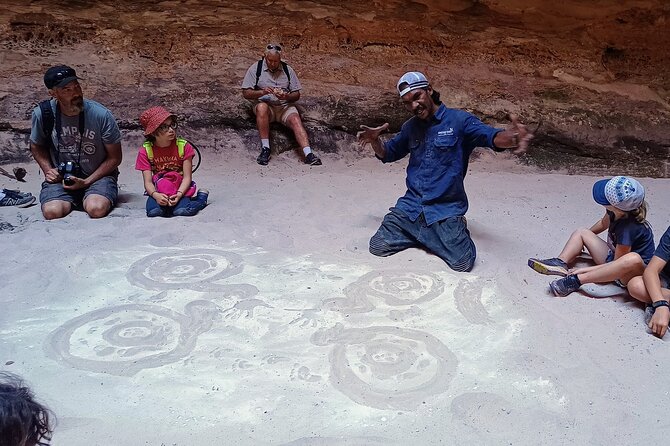
The tour’s biggest strength is the guide-led cultural and environmental interpretation. You’ll be hearing stories and songs tied to the places you visit, and you’ll likely notice how your guide connects the scenery to living knowledge—how to understand the rock patterns, the waterlines, and the seasonal feel of the canyon spaces.
In one experience I read about, a guide named Bec shared family stories and then sang two songs during the Cathedral visit—an experience that clearly stuck with the group because it fit the setting. Even if your guide’s voice and stories differ, you can still expect that same “this is personal” approach rather than a script.
Another detail I like: this isn’t just one stop and one story. The guides guide you through multiple areas—north and south—so you’re constantly learning what to notice next.
Cathedral Gorge: the amphitheatre moment you’ll remember
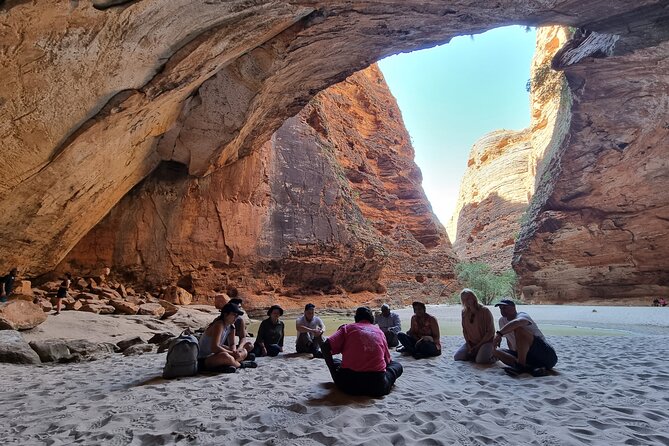
Cathedral Gorge is one of those places where the shape does half the work for you. You stand beneath tall rock walls that create a natural amphitheatre, and the acoustics are part of why this stop is so special. When a guide sings or recites stories here, it isn’t just entertainment. The setting helps carry the sound and turns the moment into something bigger than the view.
Practically, this is also where you slow down. Expect time to take in the height, the angle of the light, and the scale of the walls. It’s one of the best places on the day for a “stop and look” pause, because the canyon geometry basically forces your attention upward.
The only consideration is timing: light and sound work best when you’re not rushing. Wear something you can stand comfortably in for a while.
Piccaninny Lookout: panoramic views that feel worth the early start
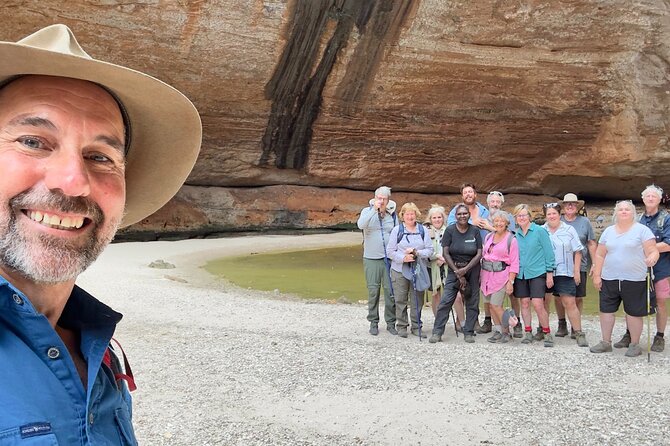
At Piccaninny Lookout, you get broad, panoramic views across the Bungle Bungle Range. This is where the famous striped domes stretch out and you finally see the pattern as a whole system rather than separate domes.
I like this stop because it’s both a reward and a reset. After walking through tighter areas, the lookout gives your eyes room and helps you connect what you saw from above earlier in the day.
Bring your phone or camera, but don’t treat it like a race. Give yourself time to adjust your angle. The stripes and shadow lines can look totally different depending on where the light lands.
Echidna Chasm: narrow gorge walking with light that doesn’t reach everywhere
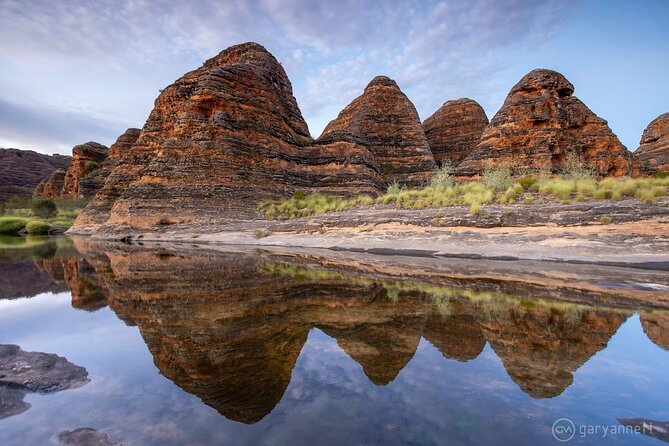
Echidna Chasm is the stop for people who like dramatic, close-up scenery. You walk through a narrow canyon where the sun only touches the canyon floor at certain times. That detail changes everything: you’re not just looking at rock walls, you’re watching light behave.
This is also a stop that rewards calm pacing. If you walk quickly to “get it over with,” you’ll miss the play of light and the moment-to-moment colours on the walls. If you slow down, you’ll notice how quickly the mood shifts as the sun angle changes through the day.
For footing, take care. Narrow gorges can feel tricky even when trails are straightforward, especially in heat and wind. If you’re prone to scrambling or quick steps, consciously switch to steady foot placement.
Mini Palms Cave: a small oasis you’ll want to see quietly
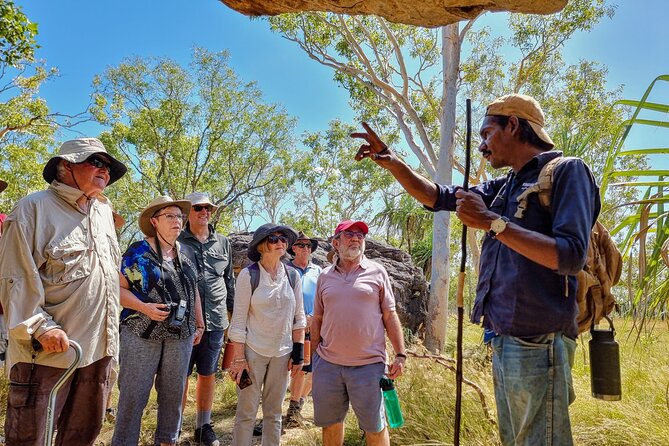
Mini Palms Cave is different from the other stops. Instead of towering walls and big open views, you’re hunting for a sheltered pocket—an oasis within the rocky country, with vegetation and ancient palms. It’s the kind of place that makes the whole day feel balanced: you’ve seen geometry and scale, and now you get a more intimate, shaded scene.
I like that it gives your body a little variety too. Even if it involves walking, the feel is calmer. It’s a good spot to slow your breathing, refocus, and absorb why the Bungles are not just stone shapes but places with living details.
Halls Creek Pub meals: the most practical reason to love the tour
Food is part of the tour style, and it’s not an afterthought. You’ll have a brunch morning tea with damper, tea and coffee, and bush honey made by your local Aboriginal guide. Then there’s lunch and afternoon tea made at the famous Halls Creek Pub. At sunset, you’ll have drinks such as Matosos Beer.
That setup matters on a fly-and-trek day because it anchors you. Instead of searching for meals on the fly, you’re carried through a plan that keeps you fueled for walking. Warm damper is simple, but it’s also comforting when conditions are changing between sun and shade.
If you like a good pub meal, this is also one of the best times to enjoy local basics without losing time to logistics.
Tip: even if meals are included, don’t let that replace your water. You’ll still be out in sun and moving.
Getting comfortable on a long day: what to pack and how to pace
The tour runs about 11 hours. That’s long enough that clothing and pacing matter as much as scenery. The comfort bonus is that you travel in an air-conditioned vehicle, which helps between stops when it’s hot outside.
Still, you should pack like you’re going into harsh Australian light. The tour notes that you should bring your own 1-litre personal water bottle. Do that. Don’t trust you’ll feel fine halfway through. Bring a bottle you can open easily, refill when prompted, and sip consistently.
Wear shoes with solid grip. Some spots in gorge country can be uneven or sloped, and you’ll enjoy Echidna Chasm more when you’re not worrying about your footing.
Also plan for sun. Even if you love hats, bring the kind that stays put during movement.
Price and value: what you’re really paying for
At $875.68 per person, this isn’t a budget day trip. The real question is what’s included and what you’re avoiding.
You’re paying for:
- a scenic flight from Halls Creek (so you save time and energy),
- ground touring across both north and south ends of the Bungles,
- Aboriginal guides who are local custodians and lead the day,
- all fees and taxes,
- air-conditioned vehicle support,
- and a full food plan: damper, lunch, afternoon tea, and sunset drinks.
That’s why it can be good value compared with options that only cover one end, or tours that spend more time in transit and less time on the key canyon/walk stops. If Bungles is your “once in a lifetime” item, paying for a full, guided day with flight access is often more efficient than stitching together partial experiences.
One more value point: the max 12 group size. You get more attention, fewer delays, and a more personal feel in culturally meaningful places. That’s hard to quantify, but it changes how the day feels.
Who this tour fits best (and who might want to rethink)
This is ideal if you:
- want to see both major sides of the Bungles in one day,
- like guided storytelling and cultural context, not just scenery,
- want a full-day plan with food handled for you,
- and you’re comfortable with a long outing (about 11 hours).
It’s noted that you should have moderate physical fitness. If you’re used to walking and can handle uneven ground without stress, you’ll likely do well. If your mobility is limited, you might still enjoy parts of the day, but you should think carefully about narrow gorge sections like Echidna Chasm and the time spent on your feet.
It also requires good weather. If you’re booking around a tight schedule, build in flexibility if you can.
Should you book this Bungles fly-in trek?
If you want the Bungles to feel complete—north and south, major lookouts, Cathedral Gorge, and a full day with Aboriginal custodians—this is a strong choice. I’d book it when you can handle a long day, want more than photo ops, and you like tours where meals and guide time are actually part of the experience.
I’d pause if you:
- dislike long days and prefer shorter, slower travel,
- have concerns about walking in narrow canyon country,
- or you’re travelling during a period where weather uncertainty could derail plans.
For most people aiming at the classic Purnululu highlights with a cultural guide-led touch, this Kingfisher Tours day trip from Halls Creek offers a smart mix of adventure and comfort—especially when you factor in the flight and the food at the Halls Creek Pub.
FAQ
What time does the Bungles day trek start and where does it meet?
It starts at 7:00 am at Halls Creek Airport. The tour also ends back at the meeting point.
How long is the tour?
The duration is listed as about 11 hours.
How big is the group?
The tour has a maximum of 12 travellers, so it stays small.
What food is included during the day?
You’ll have tea and coffee and warm damper on landing, plus lunch and afternoon tea at the Halls Creek Pub. There’s also morning tea (damper, tea and coffee with bush honey) and snacks. Sunset drinks include Matosos Beer.
Do I need to bring a water bottle?
Yes. You should bring your own 1-litre personal water bottle.
Does weather affect the tour?
Yes. The experience requires good weather. If it’s cancelled due to poor weather, you’ll be offered a different date or a full refund.