REVIEW · ANNAPURNA CIRCUIT
Annapurna Circuit Trekking 13 Days
Book on GetYourGuide →Operated by Adventure Bound · Bookable on GetYourGuide
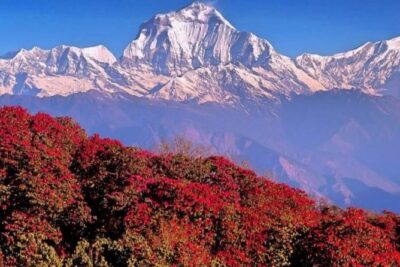
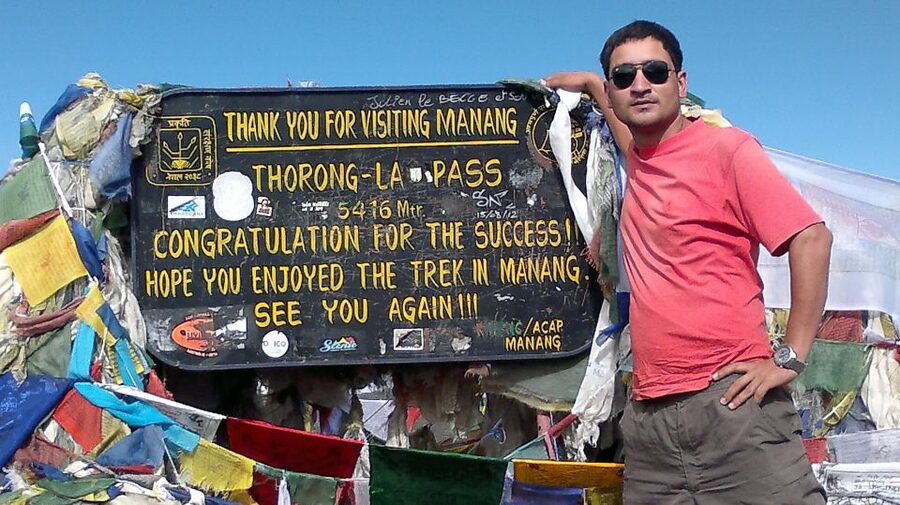
A pass at 5,416m changes you. The Annapurna Circuit feels like a whole climbing story in one trip, with river valleys, Tibetan Buddhist culture in Manang, and the big day over Thorong La.
I like that the route keeps shifting—lush lower sections, arid stretches later, and those sudden views that make your legs feel lighter for a minute.
I also like the “well looked after” side of this trek: small group size (limited to 12), a licensed guide, and included meals in basic tea houses along the way. The gear support is practical too, with a sleeping bag and down jacket available if you need them.
Even if you’re solo, you’re not just dropped in the mountains and left to figure it out.
One drawback to plan for: this trek asks real effort. The highest stretch and the long crossing day can be cold and demanding, even with provided warm layers.
In This Review
- Key points before you commit
- Annapurna Circuit in 13 days: what you’re really signing up for
- From Kathmandu to Jagat: the quiet start that matters
- Marshyangdi River Valley days: the days where your legs learn the trail
- Chame to Manang: why Pisang feels different before the culture stop
- Acclimatization in Manang: what the extra day does for you
- Yak Kharka and Thorong Phedi: where the air thins and the gear matters
- Thorong La (5,416m): the technical pass day you plan your whole trek around
- Muktinath and the Lower Mustang feel: spiritual stops in the wind
- Jomsom to Tatopani: when hot springs become a strategy
- Ghorepani and Poon Hill at 3,210m: the morning payoff
- Price and value: what $970 covers (and what you’ll likely add)
- Guides and group size: why the human part matters on tough days
- When to go: spring and autumn, plus the altitude reality
- Who this trek fits best
- Should you book this Annapurna Circuit trek?
- FAQ
- How long is the Annapurna Circuit Trek in this package?
- What is the highest point on this trek?
- Are meals included during the trek?
- Where do you stay during the trek?
- Do I need a porter?
- What seasons are best to trek the Annapurna Circuit?
Key points before you commit
- Thorong La crossing (5,416m): the technical high point that turns the whole trek into a milestone.
- Manang acclimatization day: built-in time to adjust before the big altitude jump.
- Muktinath and the Kali Gandaki winds: spiritual stop plus a lower, windier valley feel.
- Poon Hill at 3,210m: a strong payoff hike early in the morning, then you finish downhill.
- Guides who pay attention: Laxman runs a proactive operation; guides like Ganesh can make the experience feel personal and organized.
- Safety basics included: first-aid kit with an oximeter, plus real mountain support from the guide.
Annapurna Circuit in 13 days: what you’re really signing up for
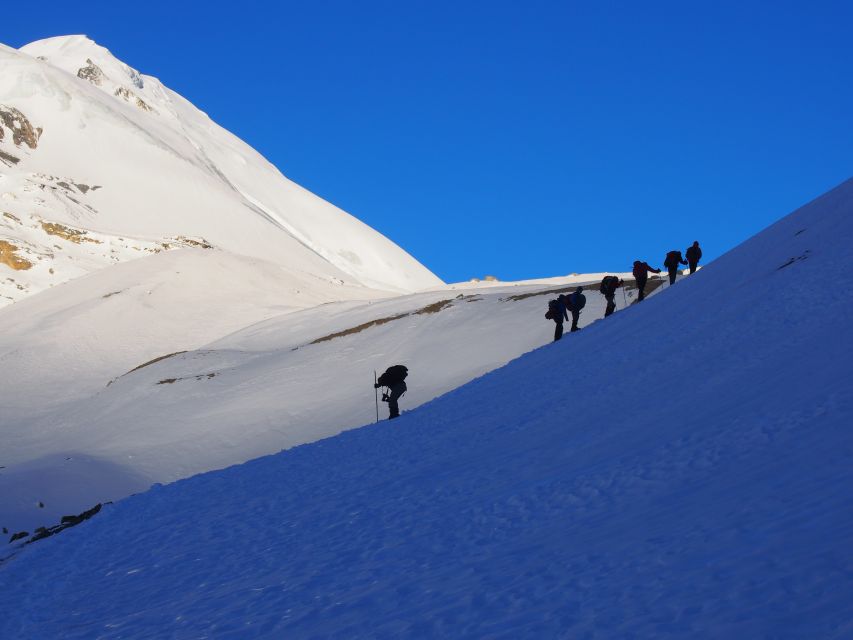
This 13-day Annapurna Circuit is built for people who want variety. You’re not doing one single “type” of trekking day. You’ll mix forested sections, river-valley walking, high passes, temple country, and that dryer Lower Mustang vibe.
The pacing is typical of the classic circuit style: long-ish hiking days, one acclimatization day in the middle, then a major altitude push. If you like a trek where the hardest part is clearly defined—rather than a slow grind with no endpoint—this route fits.
You’ll sleep in basic tea houses for 12 nights, in twin sharing. That’s a big part of the value: you’re paying to keep the logistics handled, not for a luxury hotel hopping lifestyle.
From Kathmandu to Jagat: the quiet start that matters
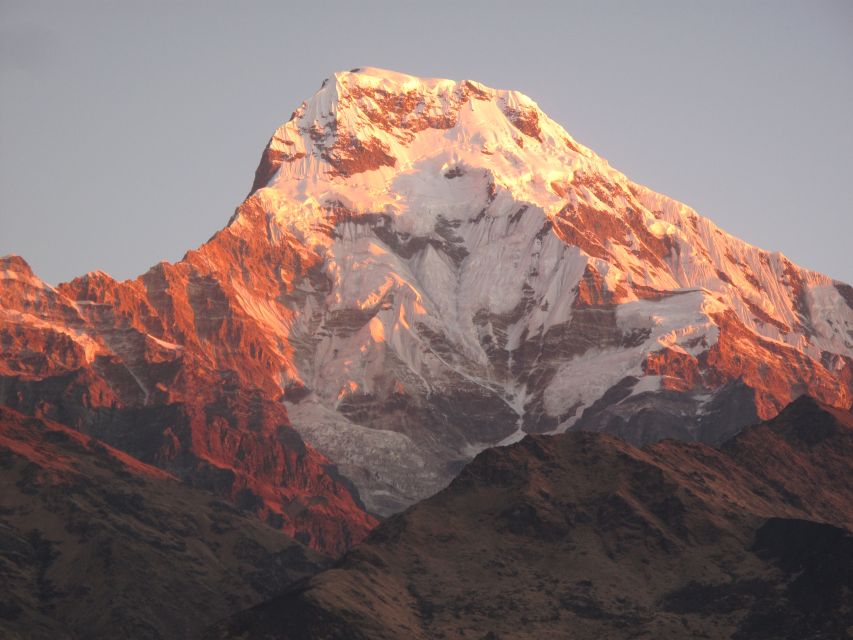
Your trip begins with a transfer from Kathmandu (including airport pickup if that’s how you arrive). You’ll drive toward Jagat via Besisahar, then settle into your first trekking altitude around 1,100m.
Day 1 is mostly about rhythm. After a long drive, you want an early win: you’re starting low enough that your body isn’t immediately under pressure. That sets you up for the first real hike the next morning.
Then comes Jagat to Dharapani, climbing to about 1,960m over roughly 6 to 7 hours. This is where the trail starts feeling like Nepal—not just a road to a viewpoint. Expect walking through the early Annapurna character: green areas, waterfalls, and local communities along the way.
Marshyangdi River Valley days: the days where your legs learn the trail
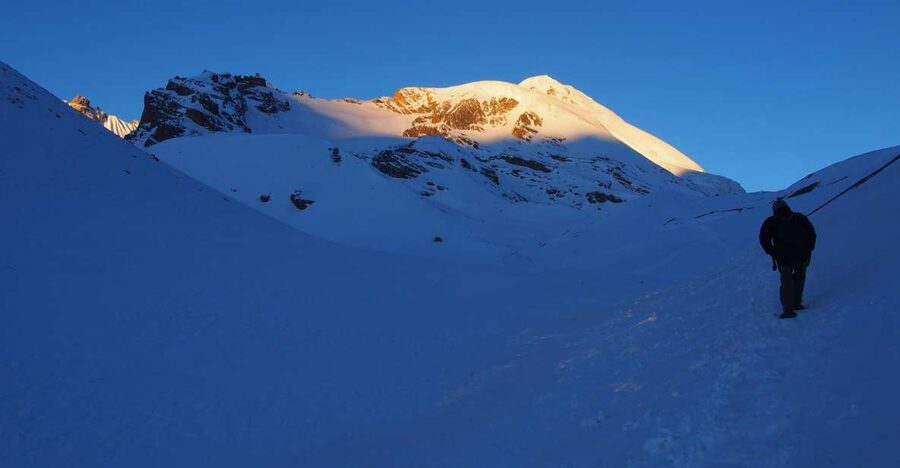
Once you’re out of the first adjustment phase, the Marshyangdi River Valley section is where the trek earns its reputation. You’ll keep gaining elevation, but the days are structured so you can keep moving without feeling like you’re sprinting uphill every hour.
By the time you reach Chame (around 2,710m), you’re in a higher trekking zone with more dramatic mountain presence. The hike from Dharapani to Chame is listed at about 5 to 6 hours. It’s long enough to feel like work, but not so long that you’re destroyed before the middle of the circuit.
From Chame to Pisang (around 3,300m) takes another 5 to 6 hours. This stretch is one of those “transitions” in the circuit—where your views expand, the air cools, and the trail begins to feel more remote. If you’re the kind of trekker who likes to notice changes in the air and light, these mid-valley days are fun.
Chame to Manang: why Pisang feels different before the culture stop
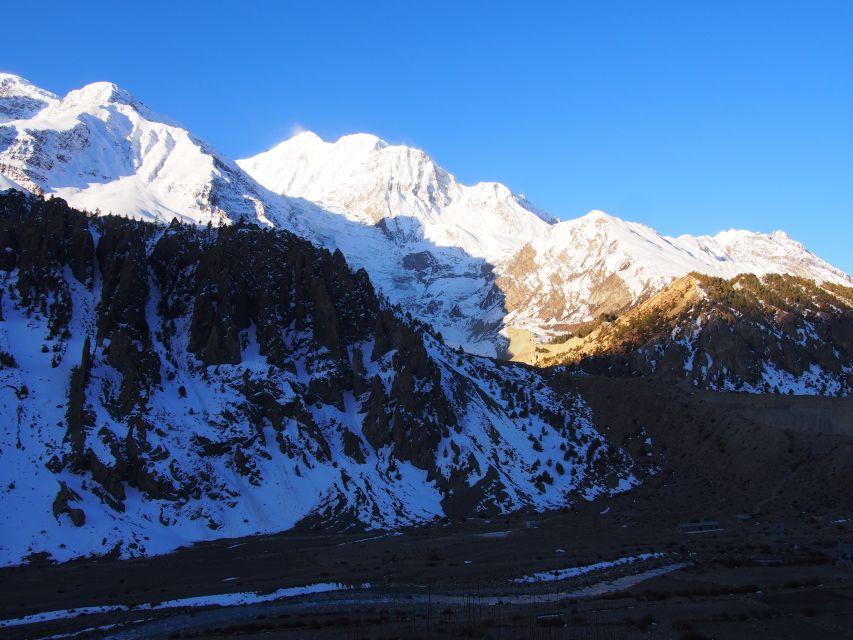
Pisang to Manang goes up to about 3,540m, with about 6 to 7 hours of hiking. This is often where the mountains start dominating your attention. You’ll notice the terrain turning more rugged, and the villages feeling more “high-country” than “river-town.”
Manang is special for two reasons. First, it’s your acclimatization stop, so it’s not just a place to pass through. Second, Manang has a strong Tibetan Buddhist cultural feel, which changes the vibe from the earlier valley days.
The trip includes an acclimatization day at Manang. That matters because the next stages climb quickly: to Yak Kharka (about 4,120m) and onward. Skipping that built-in rest day is how people get into trouble. Here, you get a chance to catch your breath—literally.
Acclimatization in Manang: what the extra day does for you
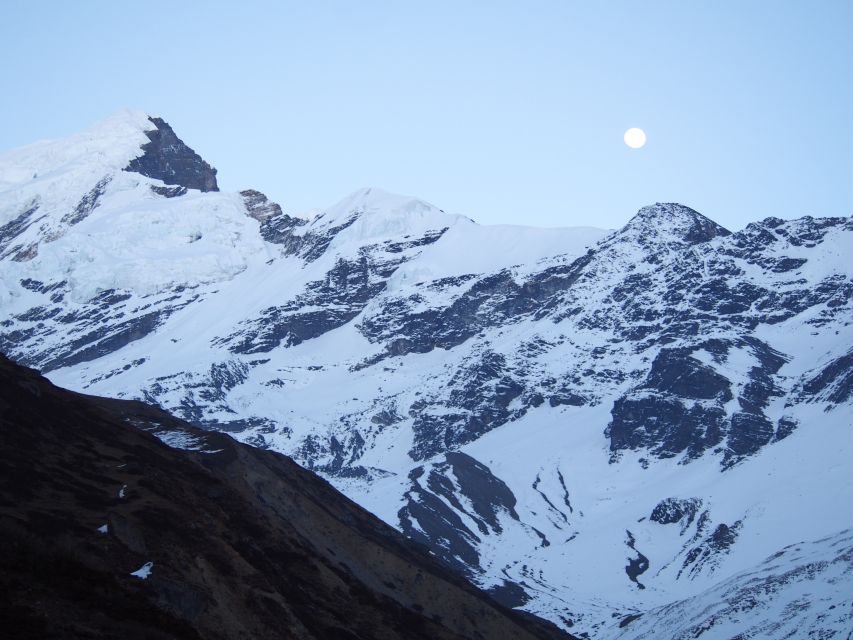
This is the portion of the trek where smart planning pays off. You’ll spend a full day in Manang at about 3,540m, which gives you time to adjust before you go higher.
The practical benefit is simple: when you arrive at the high sections already feeling steadier, your crossing day goes better. The emotional benefit is also real. You stop thinking of the trek as only a route and start thinking of it as a sequence of choices your body can handle.
If you’re trekking with a guide, this is also the best day to ask questions like: how should you pace on the next climb, and what should you watch for as altitude rises. The guide is included and licensed, and that support tends to show most in moments like this.
Yak Kharka and Thorong Phedi: where the air thins and the gear matters
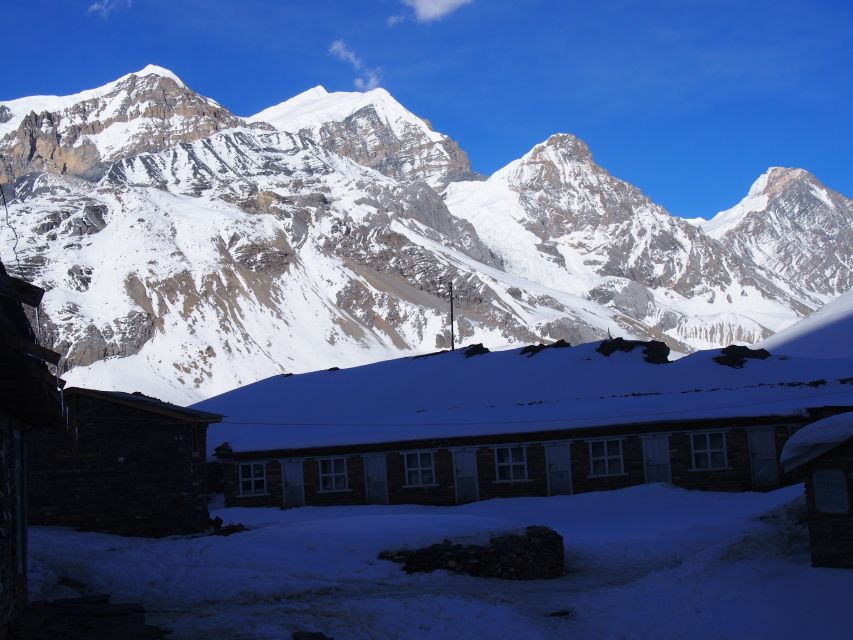
After Manang, you’ll head to Yak Kharka (around 4,120m) for about 4 to 5 hours. This isn’t the biggest altitude jump you’ll face, but it’s a clear step upward. It’s also where your trekking strategy should click: steady movement, frequent small breaks, and not treating every uphill like a personal competition.
Next is Thorong Phedi (around 4,450m) over about 4 to 5 hours. You’re getting close to the pass area now, and temperatures can swing quickly with the altitude. If you were on the fence about warm layers, this is where you’ll be thankful the trip can provide a down jacket and a sleeping bag (if you need them).
Also, you’ll be walking into the day that defines the Annapurna Circuit: the Thorong La crossing.
Thorong La (5,416m): the technical pass day you plan your whole trek around
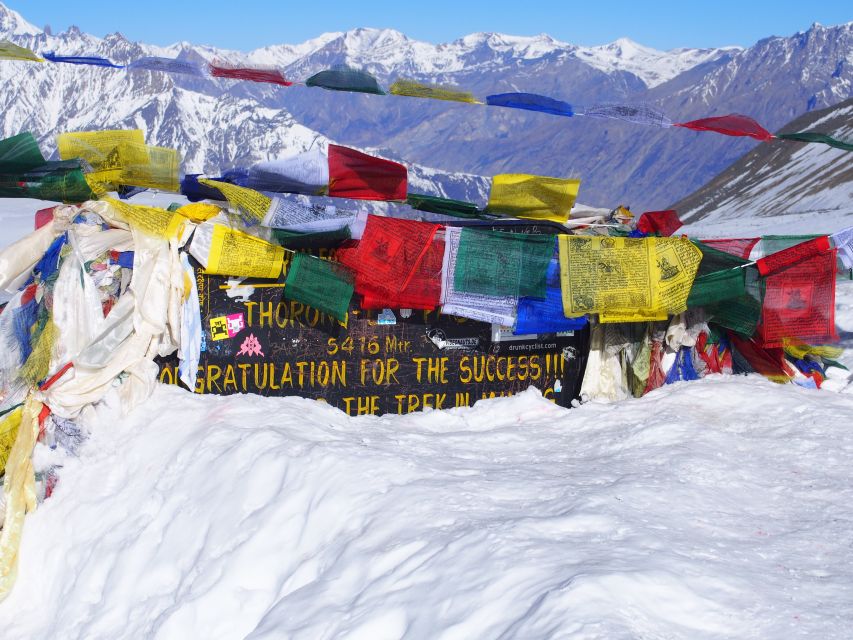
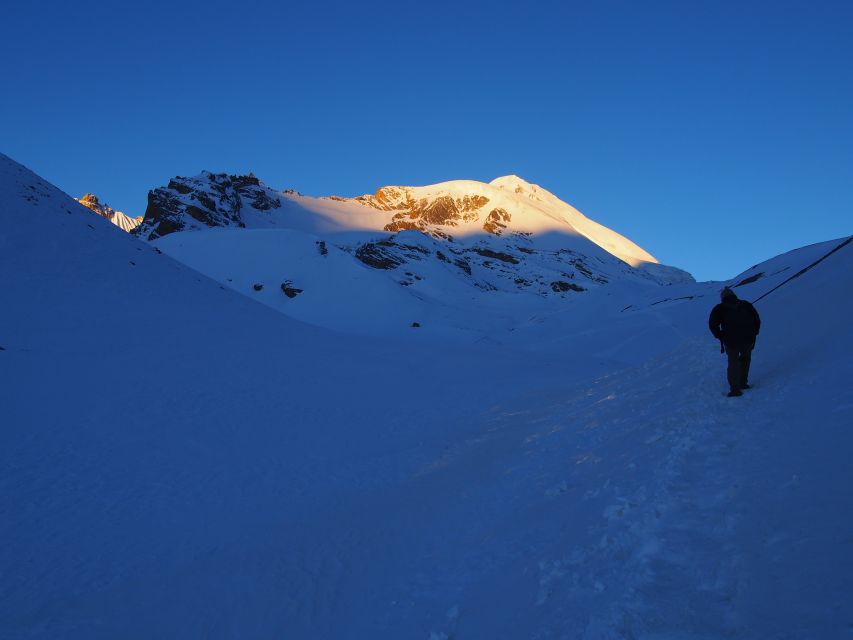
The crossing day is the heart of this trek. You go from Thorong Phedi toward Muktinath, passing over Thorong La at 5,416m, with the total day around 7 to 8 hours.
Even if you’ve hiked high before, this is still a different experience. The altitude is real, and it shows up in your breathing and your energy. It’s also where the word technical makes sense: you’re dealing with higher conditions and a route that demands care.
Here’s how I’d think about it if you’re preparing mentally. The pass is not just a number. It’s a day where you choose calm over speed. If you keep your pace controlled, you’ll arrive feeling like you earned the view instead of feeling like you survived it.
What helps on this trip is the built-in structure: you have the acclimatization day in Manang, then the higher-night staging. Plus, there’s practical safety included—there’s a first-aid kit with normal supplies and an oximeter. That doesn’t remove risk, but it does show you’re not going in blind.
Muktinath and the Lower Mustang feel: spiritual stops in the wind
After the pass, you reach Muktinath (about 3,802m) as part of that same big push. Muktinath is described as a spiritual center, and it has that “place you came for” energy. It’s one of those stops where the trek stops being only physical and becomes cultural too.
Then you continue toward Jomsom (about 2,743m), with a hike of about 5 to 6 hours. The route trends into the windy Kali Gandaki Valley vibe. You’ll also get a taste of the Lower Mustang section, described as arid and different from the earlier parts of the circuit.
This is another value moment. You’re not just getting scenery. You’re seeing how the Himalayas change their mood based on altitude and geography—green and wet lower sections give way to drier, windier country later on.
Jomsom to Tatopani: when hot springs become a strategy
From Jomsom, you switch from trekking to a drive to Tatopani (around 1,290m), roughly 4 to 5 hours. Tatopani is known for natural hot springs, and on a circuit like this, that matters.
After long high days, your body usually wants one thing: warmth and recovery. Even if you don’t treat it like a spa day, the simple fact that you go down to lower altitude and soak tired muscles can help you enjoy the final stretch instead of dragging.
Then you hike from Tatopani to Ghorepani (around 2,750m) for about 7 to 8 hours. This is a full trekking day again, so don’t assume the hot springs do all the work. They help, but you still have miles to cover.
Ghorepani and Poon Hill at 3,210m: the morning payoff
Your final day is built around an early morning hike to Poon Hill (3,210m), then you trek down to Nayapul (about 2,070m) and take a taxi to Pokhara.
This is a classic ending because you get a big viewpoint moment before you start descending. The early start is demanding, but the payoff tends to be worth it, especially after Thorong La and the long mid-trek segments.
You’ll likely feel the height in your legs early on the morning hike. That’s normal. The key is to move steadily and enjoy the fact that this is your last major summit-style push.
By the time you’re down near Nayapul and heading toward Pokhara, the trip shifts back into “normal travel mode,” which feels great after tea house living.
Price and value: what $970 covers (and what you’ll likely add)
At $970 per person for a 13-day Annapurna Circuit, the value is mostly about what’s handled for you. This price includes:
- A government-licensed, experienced guide (with the guide’s food, accommodation, salary, equipment, and insurance covered)
- Permits for the Annapurna Circuit trek
- 12 nights of basic tea house accommodation (twin sharing)
- 3 meals per day during the trek (breakfast, lunch, dinner)
- A Pokhara hotel night with breakfast
- Transfers around the start and finish, including airport pickup and transport back to Kathmandu
- Safety and support items: sleeping bag and down jacket available if you need them, plus an Oximeter in the first-aid kit
- An ACT trek map
- Free luggage storage at the outfitter store if you need it
What’s not included is just as important:
- Nepal entry visa and international airfare
- Hotel in Kathmandu (pre-trip)
- Meals in the city
- Soft and hard drinks
- Personal expenses
- Porter service if you want one (extra $250)
- Private transports
So is it good value? Yes, if you want a guided, permit-covered trek with meals and basic lodging handled. If you prefer doing the logistics yourself, or you want private transport and a porter for sure, your real total will rise. But for most people aiming for a smooth, guided circuit, it’s a reasonable package.
Guides and group size: why the human part matters on tough days
This trek is limited to 12 participants. That’s a sweet spot for me: you get group energy and shared logistics, without the chaotic feeling of huge trekking crowds.
The guide support is also a core selling point. The operation is run by Laxman, who is described as proactive—answering questions and handling formalities well before the trip begins. That kind of calm pre-planning makes a difference once you’re in motion and trying to focus on hiking.
If you get Ganesh as your guide, the feedback is that he’s attentive, patient, and adapts to what’s needed on the trail, with strong mountain knowledge. Another useful tip: if you can, ask whether Rabin can be your trekking guide. That request matters because guide style affects your day-to-day comfort, especially on the long, cold sections.
Even the small setup items show up in real life: sleeping bag and down jacket availability, a duffel bag provided if needed, and an oximeter in the first-aid kit. These details aren’t glamorous, but they reduce stress.
When to go: spring and autumn, plus the altitude reality
The best seasons for this trek are spring and autumn. Those are the times when conditions are typically more reliable and trekking feels more enjoyable rather than unpredictable.
Altitude is the other reality you have to respect. You’re going from about 1,100m into the 4,000m-plus zone, then over a 5,416m pass, and finally finishing near 3,210m at Poon Hill. The trip design helps—acclimatization in Manang and staged higher nights—but your pacing still needs to be conservative.
If you’re nervous about cold, that’s fair. The trek provides a down jacket and sleeping bag if you need them, and you’ll be in the highest pass area at 5,416m, where cold can hit harder than you expect.
Who this trek fits best
This Annapurna Circuit option is a great fit if:
- You want a classic “big pass” trek with cultural stops in Manang and Muktinath
- You prefer guided logistics with meals and tea house accommodation included
- You like small-group travel (up to 12 people)
- You want a high payoff ending at Poon Hill before returning to Pokhara
It may be less ideal if:
- You want fully private transport throughout
- You’re not comfortable with long hiking days and early starts
- You already know you’ll want a porter, and you’re budgeting for extra costs
Should you book this Annapurna Circuit trek?
I’d book it if you want a well-run, structured circuit where the hardest day (Thorong La) is supported by acclimatization and staging. The value comes from having permits, meals, tea house lodging, a licensed guide, and safety basics handled in one package.
I’d think twice if you’re the type who needs luxury comfort or private transfers, since those aren’t part of the base price. Also, if you know you’ll want porter help, factor in the $250 porter add-on so you’re not surprised later.
If you can, ask about guides before you go. Having a guide like Ganesh—or requesting Rabin—can seriously shape how smooth the trip feels on the toughest days.
FAQ
How long is the Annapurna Circuit Trek in this package?
It runs for 13 days, from transfers in and out of the trekking region to an ending in Pokhara.
What is the highest point on this trek?
The highest point is Thorong La Pass at 5,416 meters.
Are meals included during the trek?
Yes. You get breakfast, lunch, and dinner during the trekking days.
Where do you stay during the trek?
You stay for 12 nights in basic tea houses on a twin-sharing basis, plus 1 night in a hotel in Pokhara with breakfast.
Do I need a porter?
A porter is not included. If you want one, it’s an extra $250.
What seasons are best to trek the Annapurna Circuit?
Spring and autumn are the best seasons for this trek.