REVIEW · DOUZ
3-Day Tunisia Sahara Desert Camel Trek from Douz
Book on Viator →Operated by SAHARANSKY · Bookable on Viator
Three days, one big sky. A camel-powered trek from Douz gets you away from the road and into wide-open dune country, with camel-only travel and the chance to sleep under a starry Sahara sky. You also get hands-on cultural touches, like wearing a Sahara turban and djellaba while your guide explains how Berber and Bedouin meals differ.
The main thing to consider is comfort. This is a multi-day camel ride, so if you’re expecting a smooth, low-effort outing, you’ll want to think twice.
In This Review
- Key things that make this trek memorable
- Camel Trek From Douz: What You’re Really Paying For
- Day 1: 9AM Pickup, Midday Lunch, and Berber Dinner by Firelight
- Day 2: Sunrise Riding, Bedouin Lunch, and Sunset on the Dunes
- Day 3: Coffee, Final Morning Dunes, and Return to Douz
- Food and Culture: Berber vs Bedouin on a Camel Trek
- Guides and Camels: The Difference Between Nice and Smooth
- Price and Value: Is $270 a Good Deal for 3 Days in the Desert?
- Who This Trek Fits Best (and Who Might Prefer Another Style)
- Quick Practical Tips Before You Go
- Should You Book This 3-Day Tunisia Sahara Desert Camel Trek From Douz?
- FAQ
- What time is pickup from Douz?
- How long is the trek?
- Where do you ride and where does the trip end?
- What meals are included?
- Is a vegetarian option available?
- What’s included for clothing during the trek?
- What should I bring that’s not included?
Key things that make this trek memorable
- 9AM pickup in Douz, with a return around 11AM on day 3 so you know your time is accounted for
- 2 nights at a desert camp with breakfast, lunch, and dinner included throughout
- Berber and Bedouin food moments timed to mornings and midday breaks, not random stops
- Sunrise and sunset dune time built into the rhythm of the ride
- Costume culture included with a Sahara turban (head scarf) and djellaba during the trek
- Strong guide energy: Ahmed and Mohammed are specifically named for making the trip feel smooth, plus camp support from Mounir is highlighted as welcoming
Camel Trek From Douz: What You’re Really Paying For
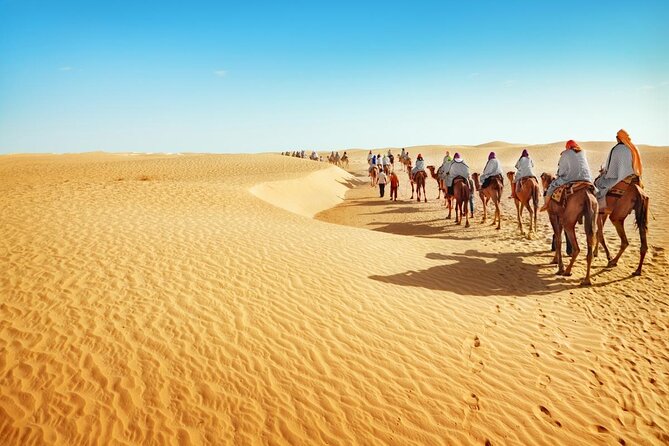
This is one of those trips where you’re not just buying transportation. You’re paying for the whole package: camel time, camp nights, and meals that are part of the desert routine, not an afterthought.
The price is $270 per person for a 3-day experience. For that, you get pickup and drop-off from Douz, a cameleer/guide, a camel for you to ride, and 2 nights of desert camp accommodation with meals included (2 breakfasts, 2 lunches, 2 dinners). You also get bottled water, coffee and/or tea, and the turban + djellaba set for the trek. The one small gap is sunscreen, which you’ll need to bring yourself.
This is a private tour/activity. That matters because it keeps the experience focused on your group instead of feeling like a cattle-round-up.
You can also read our reviews of more tours and experiences in Douz.
Day 1: 9AM Pickup, Midday Lunch, and Berber Dinner by Firelight
Your day starts early: pickup at 9:00AM from your hotel or accommodation in Douz. The day’s first goal is simple. You meet your Bedouin cameleers, get mounted, and start moving across dunes while the scenery shifts hour by hour.
A big part of the appeal on day 1 is the pacing. You ride through golden dunes in the morning, then you break at midday for lunch. The food is prepared by the chef, and you get time to pause, eat, and take photos with the desert spread out around you. If you like having a clear moment to stop and reset, this lunch break is a win.
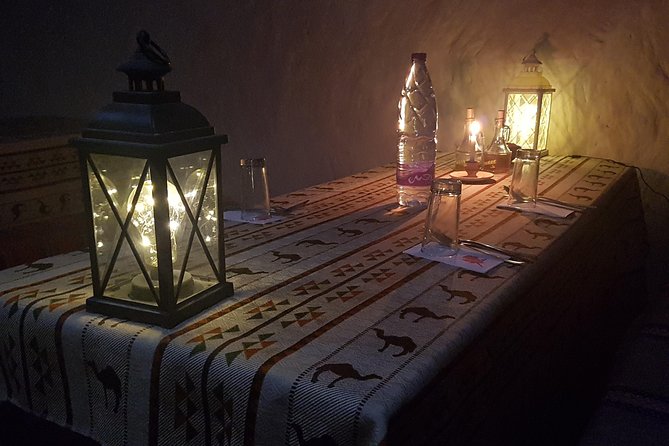
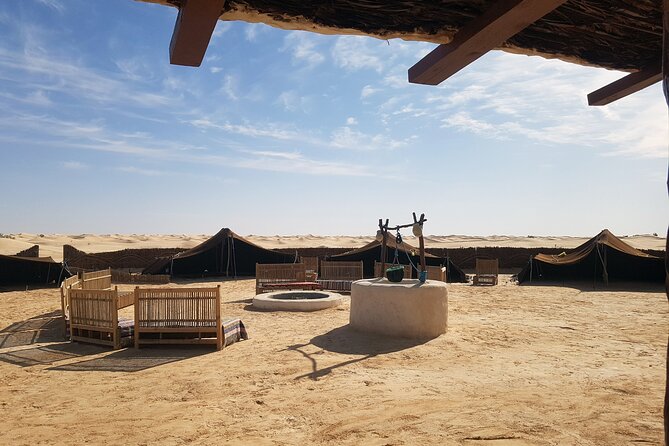
After lunch, you continue riding toward the desert camp for the night. You’ll spend your first evening under the sky, with a Berber dinner and drumming around the fire. That combination is what turns a long day of riding into a full memory, because it gives you something sensory beyond just the view—sound, warmth, and the feeling of settling into desert life.
Practical note: you’ll likely spend a good chunk of the day seated on the camel. Build a little “camel patience” into your expectations, and the day feels better.
Day 2: Sunrise Riding, Bedouin Lunch, and Sunset on the Dunes
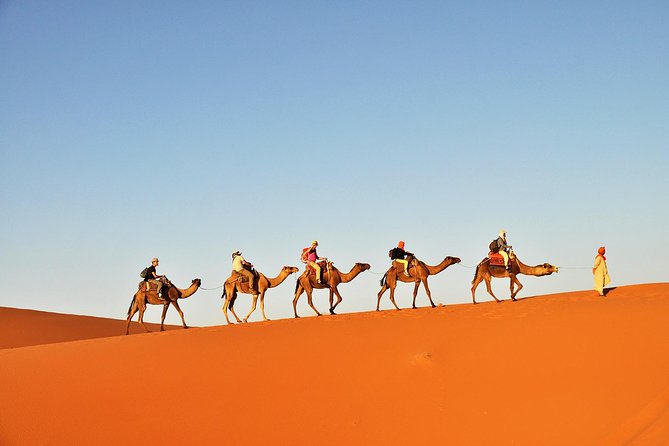
Day 2 kicks off with a classic desert rhythm: sunrise, plus coffee and/or tea. Then comes Berber breakfast, before you set out again on camelback.
The morning ride is your best chance to appreciate how the dunes change with light. Sunrise doesn’t just look pretty on a postcard. It also helps you see depth—how ridges rise and fall and how wide the desert really feels.
By midday, you head back to camp. The reason for that return is tied to food and pace, not wasted time. You can watch how a traditional Bedouin lunch is prepared, and this is where you get the cultural contrast that the trip promises: Berber vs Bedouin cuisine. Even if you don’t speak the same language, you’ll notice the differences through what’s cooked and how it’s served as part of daily desert living.
After lunch, the day shifts into golden-hour mode. You ride the camel until sunset, with a chance to enjoy the sunset on top of the dunes. After that, you finish with dinner near the campfire again, this time with the sky working overtime—millions of stars overhead.
If you’re the type who wants “best light, best timing,” day 2 is the one. It stacks sunrise, midday camp time, and then sunset riding in a way that doesn’t feel random.
Day 3: Coffee, Final Morning Dunes, and Return to Douz
On day 3, you wake up to freshly brewed coffee and breakfast. Then you head out once more to ride through dunes and enjoy the early light.
This last morning is not about doing something new—it’s about giving you a clean closing chapter. You get a final taste of the desert’s scale before the trek winds down.
Eventually you ride back to the initial meeting point, and return transport to Douz brings you back at around 11:00AM. That early finish is helpful if you still want to eat, stretch, or do a little exploring back in town the same day.
Food and Culture: Berber vs Bedouin on a Camel Trek
Food is more than fuel on this trek. It’s how you learn the desert rhythm.
You’ll get Berber breakfast and Berber dinner, and you’ll also see Bedouin lunch preparation during the day 2 return to camp. The trip specifically builds in the difference between Berber and Bedouin cuisine, so you’re not just eating. You’re learning why meals feel different depending on the community and the desert lifestyle.
One small detail I really like: meals aren’t squeezed into the ride with zero downtime. There’s structure. Midday lunch gives you a full break. Day 2 camp time lets you watch preparation. That means the food feels intentional, not rushed.
If you have dietary needs, the tour states a vegetarian option is available, as long as you request it during booking.
Guides and Camels: The Difference Between Nice and Smooth
On a camel trek, your guide is half the experience. The other half is the animals themselves.
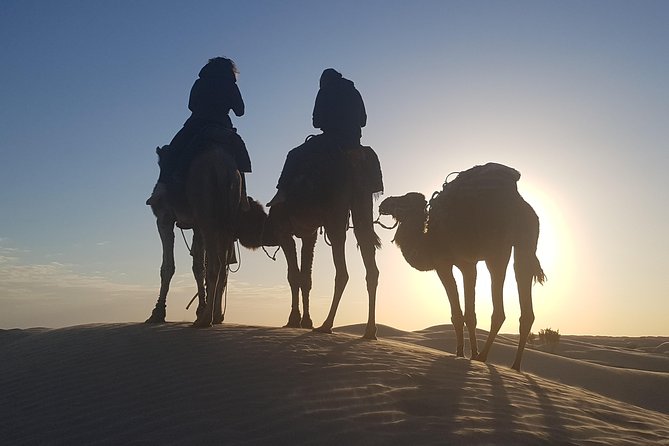
This trip includes a cameleer tour guide, and the camels are part of the core value: you ride during the trek rather than walking most of it. That matters because it’s the whole point—slow travel across dunes with a sense of connection to the land and the people guiding you through it.
In feedback tied to this experience, the names Ahmed and Mohammed show up as standout guides, with people highlighting that the trip felt unforgettable and well organized. Camp support from Mounir is also specifically noted as making arrivals and camp evenings feel welcoming.
What you can do to make this go smoothly:
- Wear comfortable clothing that you don’t mind getting dusty.
- Keep your expectations realistic: hours on a camel are part of the deal.
- Use the turban and djellaba at the right times (photos and evening comfort). You’ll feel more like you belong in the setting.
Price and Value: Is $270 a Good Deal for 3 Days in the Desert?
Let’s talk value in plain terms.
At $270 per person, you’re covering:
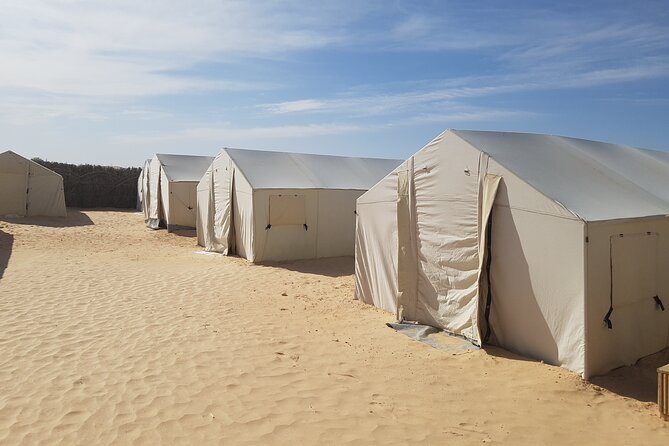
- 2 nights desert camp accommodation
- 2 breakfasts, 2 lunches, 2 dinners
- Pickup and drop-off in Douz
- Camel for riding
- Cameleer guide
- Bottled water
- Coffee and/or tea
- Turban + djellaba
- (Plus) a private group setup, meaning only your group participates
When you subtract what those things typically cost if you piece them together yourself, the price starts looking more reasonable. You’re essentially paying for a guided, all-in desert system that handles food, shelter, and transport from town.
Two practical “value checks” for you:
- You’ll still want to bring sunscreen, since it’s not included.
- If you need a vegetarian meal, request it early during booking so the camp can prepare properly.
Who This Trek Fits Best (and Who Might Prefer Another Style)
This is a strong choice if you want:
- A camel trek that moves beyond the edge of town
- Overnight desert time with star views and campfire evenings
- Food that’s tied to the people and the culture of the region
- A trip that’s paced around sunrise and sunset, not just driving and quick photo stops
It may be less ideal if you:
- Expect a low-movement day. You’ll ride across dunes across multiple parts of each day.
- Have mobility concerns that make long periods seated difficult. In that case, you’ll want to think carefully before choosing camel time.
Children can go, but they must be accompanied by an adult. Service animals are allowed as well.
Quick Practical Tips Before You Go
Here’s what I’d do to make the experience feel easy.
First, plan for dusty conditions. Desert travel comes with sand in places you did not think about. Comfortable, washable layers help.
Second, use what’s included. The turban and djellaba can be more than costume. They help you handle sun and evening chill while making the setting feel real.
Third, be ready for a daily rhythm. You’ll start with breakfast and then ride, break for lunch, continue toward camp or sunset, and repeat. It’s not a “check off three stops” tour. It’s a full 3-day flow.
Should You Book This 3-Day Tunisia Sahara Desert Camel Trek From Douz?
If your dream is simple—camel riding, desert camp nights, sunrise and sunset dunes, and Berber/Bedouin meals—this is a very solid fit. The schedule is clear, the inclusions are strong, and the private group setup keeps things from feeling rushed.
I’d especially recommend it if you value cultural touches over pure sightseeing. The turban and djellaba, the chef-prepared meals, and the Bedouin lunch preparation make the desert feel like a living place, not a theme park.
On the other hand, if your top priority is comfort-first travel with minimal time on a camel, you may want to consider a different style of desert outing and compare durations and riding time.
FAQ
What time is pickup from Douz?
Pickup is offered from your hotel or accommodation in Douz at 9:00AM.
How long is the trek?
The experience runs for 3 days (approximately).
Where do you ride and where does the trip end?
You start in Douz, ride through the dunes during each day’s planned segments, sleep at a desert camp for 2 nights, and then ride back to the initial meeting point with return transportation to Douz. You return around 11:00AM on day 3.
What meals are included?
The package includes 2 breakfasts, 2 lunches, and 2 dinners, plus coffee and/or tea and bottled water.
Is a vegetarian option available?
Yes. A vegetarian option is available, and you should advise at booking if you need it.
What’s included for clothing during the trek?
You’ll receive a Sahara Desert turban (head scarf) and a djellaba (robe) to use during the trek.
What should I bring that’s not included?
Sunscreen is listed as not included, so you’ll want to bring it.